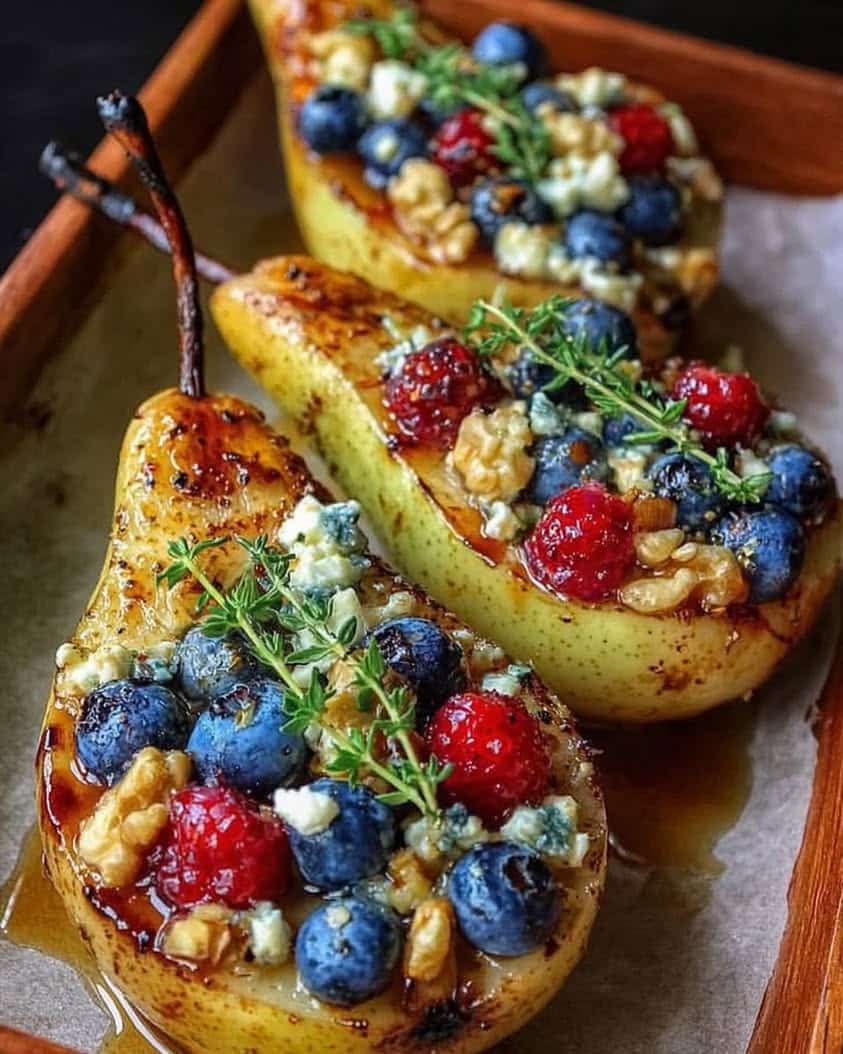
Baked Pears with Berries and Blue Cheese: A Sweet & Savory Dessert
Imagine a dessert that feels both comforting and elegant, one that fills your kitchen with the warm scent of cinnamon and caramelizing fruit. This recipe for baked pears with berries and blue cheese delivers exactly that experience. It transforms simple, wholesome ingredients into a stunning dish that dances perfectly between sweet and savory. Moreover, it requires minimal effort for a maximum payoff, making it ideal for both busy weeknights and special dinner parties.
The magic of these baked pears lies in their beautiful balance. Honey and berries provide a natural, floral sweetness that softens and intensifies in the oven. Meanwhile, toasted walnuts add a crucial crunch, and the blue cheese introduces a bold, creamy, and tangy counterpoint. Consequently, each bite offers a complex symphony of flavors and textures. Ultimately, this dish proves that dessert can be sophisticated without being fussy.
Furthermore, this recipe celebrates seasonal produce at its finest. You can use firm autumn pears like Bosc or Anjou, or opt for juicier varieties in the summer. Similarly, the berry component adapts beautifully to whatever looks best at the market. As a result, you can enjoy this delightful baked pears with berries and blue cheese creation year-round. It is a versatile, crowd-pleasing finale to any meal.
Quick Recipe Highlights
- Flavor Profile: This dish masterfully balances sweet and savory notes. The natural sugars in the pears and honey caramelize during baking, creating a deep, rich sweetness. The pungent, salty blue cheese cuts through that sweetness, while the berries add a bright, tart acidity that ties everything together.
- Texture: You experience a wonderful contrast in every spoonful. The baked pears become tender and almost buttery, while the toasted walnuts provide a satisfying, earthy crunch. The berries soften into a jammy consistency, and the blue cheese offers a creamy, crumbly finish that melts slightly from the warmth.
- Aroma: As the pears bake, your kitchen will fill with an irresistible fragrance. Warm notes of cinnamon and vanilla mingle with the caramelizing honey and the earthy scent of roasting fruit. The aroma is deeply comforting and promises a delicious, homely dessert.
- Visual Appeal: This dessert presents beautifully on the plate. The golden-brown pear halves cradle a vibrant mix of berries. Subsequently, the snowy crumbles of blue cheese and the rustic chopped walnuts create a stunning, restaurant-worthy presentation that looks far more complex than it actually is.
- Skill Level Needed: This is a beginner-friendly recipe that requires no advanced techniques. Essentially, you need basic knife skills for halving the pears and the ability to mix simple ingredients. There is no fussy pastry work or precise tempering required, making it accessible for cooks of all levels.
- Special Equipment: You only need a standard baking dish and a small bowl. A melon baller or small spoon helps to core the pears neatly. Otherwise, common kitchen tools like a knife, cutting board, and measuring spoons are all you require to prepare this elegant dish.
Recipe Overview
- Difficulty Level: We rate this recipe as “Easy” because it involves straightforward preparation. The steps are simple: halve and core pears, mix a filling, bake, and garnish. There is no complex chemistry or timing-critical stages. Therefore, even a novice cook can achieve impressive results with minimal stress.
- Category: This dish fits perfectly into the dessert category, but it also shines as a fancy brunch item or a cheese course. Its components are wholesome enough for a healthier sweet treat, yet elegant enough for a celebratory meal. It truly straddles multiple dining occasions with grace.
- Cuisine: While not tied to one specific tradition, this recipe draws inspiration from modern American and European farmhouse cooking. It utilizes a classic flavor pairing—fruit with cheese and nuts—common in French and Italian desserts. The approach is rustic yet refined, focusing on high-quality, simple ingredients.
- Cost: This is a relatively economical dessert to prepare, especially when pears and berries are in season. Pears, honey, walnuts, and basic spices are pantry staples for many. The blue cheese is the potential splurge, but a small amount delivers big flavor. Overall, it offers gourmet taste without a gourmet price tag.
- Season: This recipe is fantastic in the fall and winter when pears are at their peak. However, it adapts wonderfully to spring and summer by using different pear varieties and fresh seasonal berries like strawberries or raspberries. Consequently, it is a versatile dish for any time of year.
- Occasion: Serve it for an intimate dinner party to impress guests, or make it for a cozy family night in. It works beautifully for Thanksgiving or Christmas meals as a lighter dessert option. Furthermore, it is an excellent choice for a romantic date night at home.
Why You’ll Love This Recipe
First and foremost, the taste and texture appeal is undeniable. These baked pears with berries and blue cheese offer a sophisticated flavor profile that feels both indulgent and wholesome. The warm, soft fruit paired with the tangy cheese and crunchy nuts creates a sensory experience that is far more interesting than a standard cake or pie. Every element complements the others, resulting in a dessert that is complex yet harmonious. You will love how the ingredients sing together in perfect balance.
Next, consider the sheer convenience and preparation benefits. This dessert comes together with about 15 minutes of active prep work. You simply assemble the components and let the oven do the rest. There is no need to make a crust, cream butter and sugar, or worry about delicate baking times. It is a remarkably hands-off recipe that yields stunning results. Therefore, you can socialize with guests or prepare the rest of your meal without being chained to the kitchen.
Additionally, this dish boasts several nutritional advantages compared to traditional desserts. Pears and berries are packed with fiber, vitamins, and antioxidants. Walnuts provide healthy fats and protein. Using honey as a natural sweetener offers a more nuanced sweetness than refined sugar. While blue cheese adds richness, a little goes a long way. Consequently, you can enjoy a satisfying dessert that contributes beneficial nutrients to your diet.
From a social perspective, the entertaining value is high. This recipe looks incredibly impressive on the table, sparking conversation and delight. It feels special and thoughtfully prepared. Moreover, it is easy to scale up for a crowd by simply using a larger baking dish and more pears. You can prepare elements ahead of time, minimizing last-minute fuss. Your guests will remember this unique and delicious finale long after the meal is over.
Finally, the cost-effectiveness and accessibility are major wins. You do not need any rare or expensive ingredients. The recipe utilizes items you can find at any grocery store. Even out of season, pears and frozen berries work perfectly. This accessibility means you can create a gourmet-tasting dessert anytime the craving strikes, without a special shopping trip or breaking the bank. It democratizes fine dining at home.
Historical Background and Cultural Significance
The practice of baking fruit with sweeteners and spices spans centuries and continents. Ancient Romans often poached or baked fruits in honey and wine. During the Middle Ages in Europe, baked fruits served as a common way to preserve and enjoy the harvest, especially when combined with precious spices like cinnamon, which were traded along expansive routes. These early dishes laid the groundwork for the modern concept of a baked fruit dessert. They were simple, resourceful, and celebrated the natural sweetness of the ingredients.
Culturally, the combination of fruit and cheese holds deep significance, particularly in European culinary traditions. In France, serving cheese after a meal or with fruit is a standard practice. Meanwhile, in Italy, pairing pears with sharp cheeses like pecorino or gorgonzola is a classic end to a feast. This recipe for baked pears with berries and blue cheese directly draws from this timeless tradition. It elevates the pairing by warming the elements, which intensifies their flavors and melds them together beautifully.
The recipe has evolved significantly with the global exchange of ingredients. The use of honey is ancient, but the incorporation of New World berries like blueberries created new variations. Similarly, the cultivation of specific pear varieties suitable for baking allowed for more reliable results. The modern version represents a fusion of Old World technique and New World ingredients. It is a testament to how recipes adapt and improve over time through cultural exchange and ingredient availability.
Regional variations of this concept abound. In the American South, you might find baked peaches with bourbon and pecans. In the UK, baked apples with custard are a staple. The Mediterranean might use figs or quince. Our version with pears, walnuts, and blue cheese has a particularly Pacific Northwest or modern Californian feel, celebrating local produce and artisanal cheese. This adaptability shows the recipe’s core strength: it is a formula that welcomes regional ingredients and personal touches.
Ingredient Deep Dive
Pears: Pears have been cultivated for over 4,000 years, originating in Asia and spreading through Europe. They symbolize longevity and comfort in many cultures. Nutritionally, they are an excellent source of dietary fiber, particularly in the skin, and provide vitamin C and potassium. For this recipe, choose firm, ripe pears like Bosc or Anjou that will hold their shape during baking. Avoid overly soft pears, as they will become mushy. Store unripe pears at room temperature and refrigerate ripe ones to slow further ripening.
Mixed Berries: Berries have been foraged and enjoyed by humans since prehistoric times. They are nutritional powerhouses, loaded with antioxidants like anthocyanins, which give them their vibrant colors, and vitamin C. They offer anti-inflammatory benefits. For baking, you can use fresh or frozen berries; frozen berries often release more juices, creating a lovely sauce. Select berries that are plump and brightly colored. Store fresh berries in the refrigerator and wash them just before using to prevent mold.
Honey: Honey’s history as a sweetener dates back to ancient cave paintings. It has cultural and religious significance across civilizations. As a natural sweetener, it contains trace enzymes, minerals, and antioxidants. Its flavor varies dramatically based on the flowers visited by the bees. For this recipe, a mild, floral honey like clover or orange blossom works well, but a richer buckwheat honey can add depth. Store honey at room temperature in a sealed container. If it crystallizes, gently warm the jar in hot water.
Walnuts: Walnuts are among the oldest tree foods, with remnants found in Neolithic sites. They are revered for their brain-like shape, leading to ancient beliefs about their cognitive benefits. Modern science confirms they are rich in omega-3 fatty acids, which support heart and brain health. Toasting walnuts is crucial for this recipe, as it deepens their flavor and improves crunch. Store walnuts in an airtight container in the refrigerator or freezer to prevent their oils from turning rancid.
Blue Cheese: The discovery of blue cheese is often attributed to accidental mold growth in caves. Culturally, it is a celebrated product of specific European regions like Roquefort, France. It provides protein, calcium, and beneficial bacteria, though it is high in sodium and saturated fat. For baking, a creamy, crumbly blue like Gorgonzola Dolce or a domestic blue cheese works perfectly. The heat mellows its pungency. Store blue cheese tightly wrapped in the refrigerator’s cheese drawer.
Common Mistakes to Avoid
- Using Overly Ripe Pears: Overly soft pears will collapse into mush during baking. You want pears that yield slightly to pressure at the stem but are still firm. This ensures they become tender yet maintain a pleasing, spoonable texture that holds the filling.
- Skipping the Toasting Step for Walnuts: Raw walnuts can taste bitter and have a soft, sometimes rubbery texture. Toasting them in a dry pan or the oven for a few minutes unlocks their nutty, rich flavor and gives them the necessary crunch to contrast the soft pears and berries.
- Overfilling the Pear Cavities: Packing too much filling into the pears can cause it to spill over and burn in the baking dish. Furthermore, it prevents the heat from penetrating the pear flesh evenly. Use a modest amount of the berry mixture, as it will expand slightly as the berries cook.
- Baking at Too High a Temperature: A very hot oven will cause the honey to burn before the pears have a chance to soften properly. A moderate oven temperature around 375°F (190°C) allows the pears to cook through gently while the sugars caramelize beautifully without scorching.
- Adding Blue Cheese Before Baking: If you add the blue cheese at the beginning, it will melt completely and lose its distinctive crumbly texture. Instead, sprinkle it on during the last few minutes of baking or immediately after removing the dish from the oven. The residual heat will soften it perfectly.
- Not Using the Baking Juices: After baking, a delicious syrup of pear juices, honey, and berry liquids will collect in the dish. A common mistake is not spooning this syrup over the plated dessert. This liquid gold is packed with flavor and is essential for moistening each bite.
- Cutting the Pears Incorrectly: Slicing the pears unevenly or not creating a stable base can cause them to tip over in the dish. Always cut a small slice off the rounded back of each pear half to create a flat, stable surface for even baking and elegant presentation.
- Using Stale Spices: Ground cinnamon and vanilla extract lose their potency over time. Using stale spices will result in a bland, lackluster flavor. Ensure your spices are fresh for the brightest, most aromatic results. Consider using a cinnamon stick or vanilla bean for an extra flavor boost.
Essential Techniques
Coring and Halving Pears: This technique is vital for creating edible vessels for the filling. Use a sharp paring knife or a melon baller. First, slice the pear in half lengthwise. Then, carefully scoop out the fibrous core and seeds from the center, creating a neat, bowl-like cavity. Be careful not to dig too deep and puncture the bottom. A stable, well-cored pear half ensures even cooking and a beautiful final presentation.
Toasting Nuts: Toasting is a dry-heat method that transforms nuts. It drives off moisture, deepens flavor by browning the natural oils, and creates a crispier texture. Spread walnuts in a single layer on a baking sheet. Toast in a 350°F (175°C) oven for 5-8 minutes, shaking the pan once, until fragrant and slightly darkened. Watch them closely, as they can burn quickly. Always let them cool before chopping to prevent them from becoming oily.
Maceration (for berries): Macerating means soaking fruit in a sweet liquid to soften it and draw out its natural juices. In this recipe, tossing the berries with a little honey and spice before baking serves this purpose. The sugar in the honey pulls moisture from the berries, creating a light syrup that mingles with the pear juices. This process intensifies the berry flavor and prevents them from drying out during baking.
Basting with Pan Juices: During baking, spooning the accumulated juices in the dish back over the pears is a simple but crucial technique. This basting keeps the exposed surfaces of the pears moist, promotes even caramelization, and infuses them with the combined flavors of honey, spice, and berry. Do this once or twice during the baking process for the most flavorful and succulent result.
Pro Tips for Perfect Baked Pears with Berries and Blue Cheese
- Choose pears that are all about the same size and shape. This ensures they cook at an identical rate, so some halves are not undercooked while others are over-softened.
- If your pears are very hard, you can poach them gently in a simple syrup or even apple juice for 5-10 minutes before baking. This guarantees a tender result, especially with out-of-season fruit.
- Add a splash of dessert wine, like a late-harvest Riesling or Moscato, to the baking dish with the berries. The alcohol will cook off, leaving behind a wonderful complexity that elevates the entire dish.
- For an extra layer of flavor, mix a pinch of freshly grated nutmeg or a tiny bit of cardamom with the cinnamon. These warm spices pair exceptionally well with both pears and blueberries.
- Let the baked pears rest for 5-10 minutes after removing them from the oven. This allows the flavors to settle and the fruit to firm up slightly, making them easier to plate without falling apart.
- If using frozen berries, do not thaw them first. Add them directly to the mix frozen; this prevents them from turning into a complete mush and helps control the amount of liquid released.
- For a beautiful glossy finish, brush the cut sides of the pears with a little melted butter or additional honey before adding the filling. This encourages a gorgeous, caramelized top.
- Serve each pear half on a small pool of Greek yogurt, crème fraîche, or vanilla bean ice cream. The cool, creamy base contrasts wonderfully with the warm, spiced fruit and adds another dimension of luxury.
Variations and Adaptations
Regional Variations: Embrace local ingredients. In the South, use peaches and pecans with a bourbon-honey glaze. In the Northeast, try apples with cranberries and a sharp cheddar. A Mediterranean twist could feature figs, pistachios, and a drizzle of pomegranate molasses with a feta-like cheese. Each region’s bounty can inspire a unique version of this baked fruit concept.
Seasonal Adaptations: Tailor the recipe to the calendar. In fall, use Bosc pears with blackberries and a sprinkle of pumpkin pie spice. For winter, try Forelle pears with frozen cranberries and a star anise infusion. Spring welcomes Bartlett pears with strawberries and a touch of lemon zest. Summer is perfect for juicy Comice pears with raspberries and fresh mint.
Dietary Modifications: Make this dessert fit various needs. For a vegan version, use maple syrup instead of honey and a vegan blue cheese or omit the cheese entirely, topping with coconut yogurt. For a nut-free dish, substitute toasted pumpkin seeds (pepitas) or sunflower seeds for the walnuts. A gluten-free adaptation requires no changes, as the recipe is naturally free of gluten-containing ingredients.
Flavor Variations: Experiment with different flavor profiles. Add orange zest and a splash of Grand Marnier to the berries for a citrus note. Infuse the honey with fresh thyme or rosemary for an herbal twist. Swap the blue cheese for a creamy goat cheese or a sharp aged gouda for a different savory element. A sprinkle of chili powder with the cinnamon can add a surprising and delightful kick.
Texture Modifications: Adjust the textures to your preference. For more crunch, add a streusel topping of oats, flour, brown sugar, and butter halfway through baking. For a smoother component, blend some of the baked berries into a coulis to drizzle on the plate. If you prefer less crunch, simply chop the walnuts more finely or use walnut halves as a garnish instead of mixing them in.
Presentation Alternatives: Think beyond the baking dish. For individual servings, bake each prepared pear half in a ramekin. For a deconstructed version, slice the baked pears and arrange them on a platter with the berries, cheese, and nuts scattered artistically over the top. You can also chop the baked pears and mix everything together for a warm fruit compote served in glasses.
Serving and Presentation Guide
Plating is key for visual impact. Place one or two pear halves in the center of a shallow bowl or dessert plate. Spoon the warm berries and any pan juices generously around and over the pears. The vibrant berry sauce creates a beautiful contrast against the pale pear flesh. Ensure each plate gets a share of the delicious syrup from the bottom of the baking dish.
Garnishing adds the final touch. Sprinkle the toasted walnuts and crumbled blue cheese over the top just before serving. You can also add a few fresh, whole berries or a delicate mint leaf for a pop of color and freshness. A final, light drizzle of high-quality honey over everything adds shine and reinforces the sweet note.
Consider traditional and modern accompaniments. A classic pairing is a dollop of lightly sweetened whipped cream or crème fraîche. For a modern twist, serve with a scoop of vanilla bean ice cream, honey ice cream, or even black pepper ice cream. A simple side of shortbread cookies or biscotti provides a buttery crunch that complements the soft fruit.
Temperature considerations are important. This dessert is best served warm, not piping hot. The warmth softens the blue cheese slightly and makes the flavors more pronounced. However, it is also delicious at room temperature, making it suitable for buffets. Avoid serving it cold, as the textures can become less appealing and the flavors muted.
Portion control is easy. One large pear half per person is typically sufficient for a dessert course following a meal. For a more substantial offering, such as a brunch item, serve two halves. If presenting as part of a cheese board, you can slice the baked pears and arrange them alongside other cheeses and fruits for guests to assemble themselves.
Wine and Beverage Pairing
Wine pairings should complement the sweet and savory balance. A classic choice is a late-harvest Riesling or Gewürztraminer, whose natural sweetness and acidity mirror the fruit and cut through the cheese. A Sauternes or other dessert wine is a luxurious match. For a red option, a lighter, fruit-forward Pinot Noir with low tannins works surprisingly well without overpowering the dish.
Non-alcoholic alternatives can be just as thoughtful. Sparkling apple cider or a pear nectar spritzer echoes the primary fruit. A honey-sweetened herbal tea, like chamomile or rooibos, served warm or iced, complements the spices. For a creamy option, a chai latte or a steamer with a dash of vanilla and cinnamon pairs beautifully with the warm, baked flavors.
Coffee and tea pairings are excellent. Serve with a medium-roast coffee that has nutty or chocolatey notes, avoiding bitter dark roasts. A French press or pour-over method works well. For tea, choose a black tea like Earl Grey, whose bergamot citrus notes are lovely with the fruit, or a spiced chai tea that echoes the cinnamon in the recipe.
Consider the serving temperature of your beverage. Chilled dessert wines and sparkling ciders should be served well-chilled. Coffee and tea should be hot to provide a comforting contrast to the warm dessert. Iced teas or spritzers should be very cold. Matching or contrasting the temperature of the drink to the dessert can enhance the overall dining experience.
Presentation of the beverage matters. Serve wine in appropriate stemware to appreciate its aroma. Pour non-alcoholic spritzers into tall, elegant glasses with a berry garnish. Present coffee in a nice carafe with cream and sugar on the side. These small touches make the entire dessert course feel more special and complete.
Storage and Shelf Life
Store any leftovers properly. Cool the baked pears completely, then transfer them and any berries and sauce to an airtight container. They will keep in the refrigerator for up to 3 days. The blue cheese and walnuts are best stored separately and added fresh when reheating to maintain their distinct textures.
Understand the temperature requirements. Always refrigerate leftovers promptly. Do not leave the baked fruit at room temperature for more than two hours, as the dairy and moist environment can promote bacterial growth. When reheating, ensure the internal temperature reaches at least 165°F (74°C) for food safety.
Choose the right containers. Glass containers with tight-fitting lids are ideal, as they do not absorb odors and allow you to see the contents. If storing components separately, use small containers for the cheese and nuts. Avoid storing in the original baking dish unless it has a very secure lid, as it takes up significant refrigerator space.
Recognize signs of spoilage. Discard the dessert if you notice an off smell, significant mold growth (beyond the intentional blue cheese mold), or a slimy texture on the pears or berries. The natural sugars may cause the sauce to ferment slightly over time, resulting in a faint alcoholic smell, which is usually a sign it is past its prime.
Reheating instructions are simple. Reheat portions in the microwave in 30-second intervals until warm, or cover with foil and warm in a 300°F (150°C) oven for about 10-15 minutes. Add the blue cheese and walnuts after reheating. Note that reheated pears will be softer than when first baked, but the flavors will still be delicious.
Freezing is not generally recommended for the assembled dish. The high water content in the pears and berries causes them to become very mushy and watery upon thawing. The texture of the walnuts will suffer, and the blue cheese will not freeze well. It is best enjoyed fresh or refrigerated for a few days.
Make Ahead Strategies
You can prep components ahead of time to streamline the process. Core and halve the pears up to a day in advance. To prevent browning, submerge them in a bowl of water with a little lemon juice, then drain and pat dry before using. You can also toast the walnuts and mix the dry spices with the honey several days ahead.
Understand the storage between steps. Keep prepped pears in lemon water in the fridge. Store toasted nuts at room temperature in an airtight container. Keep the honey-spice mixture in a small jar. The berries should be washed and dried just before assembling to prevent them from getting moldy or mushy in the fridge.
Assess the quality impact. Prepping the pears ahead has minimal impact, especially with the acidulated water bath. Toasting nuts ahead actually improves their flavor as it stabilizes the oils. Assembling the entire dish and refrigerating it unbaked for more than an hour is not ideal, as the pears may begin to oxidize and the berries will release too much liquid prematurely.
Assembly tips for make-ahead. The best strategy is to do all the component prep in advance. Then, 45 minutes before you want to serve, assemble the pears and berries in the baking dish, drizzle with the honey mixture, and bake. This way, everything is fresh, hot, and perfectly textured when it hits the table.
Reheating guidelines for pre-assembled dishes. If you must assemble and refrigerate the unbaked dish, let it sit at room temperature for 20-30 minutes before baking. You may need to add a few extra minutes to the baking time since it is starting from a colder state. Watch for the usual visual cues of doneness.
Plan for fresh element additions. Always plan to add the blue cheese and the final sprinkle of walnuts after baking, even if you prepped everything else. These elements provide crucial fresh texture and flavor that diminish if baked for the full time or stored on the cooked dish.
Scaling Instructions
Halving the recipe is straightforward. Use two pear halves, halve all other ingredient quantities, and use a smaller baking dish. The bake time may be slightly reduced by 5-7 minutes, so start checking for doneness early. This is perfect for a romantic dinner for two.
Doubling or tripling for a crowd is easy. Simply multiply all ingredients by your desired factor. Use a very large baking dish or two standard dishes, ensuring the pears are in a single layer and not overcrowded. You may need to increase the bake time by 5-10 minutes and rotate the dishes in the oven for even cooking.
Consider equipment adjustments when scaling. A larger batch requires a larger baking dish with enough surface area so the pears are not steaming. If doubling, you might need to use two racks in the oven and switch their positions halfway through baking. Ensure your oven can accommodate the extra dishes before you begin.
Timing modifications are minimal. While a larger volume may require a slightly longer bake time, the difference is not linear. Check for doneness based on the tenderness of the pears, not just the clock. A good rule is to add 5 minutes per extra full batch, then check every 3 minutes thereafter.
Storage considerations change with scale. Leftovers from a large batch will take up more refrigerator space. Plan to have enough airtight containers. Also, consider that reheating a large amount will take longer. It is often better to reheat individual portions as needed rather than the entire batch at once.
Nutritional Deep Dive
This dessert offers a favorable macro breakdown compared to many traditional options. Pears and berries provide complex carbohydrates and fiber, which aid in slow sugar absorption. Walnuts contribute healthy fats and a modest amount of protein. The blue cheese adds more protein and fat. Honey is a simple sugar, but its strong flavor means you use less than you might with refined sugar. Overall, it is a more balanced dessert choice.
The micronutrient profile is impressive. Pears offer vitamin C and copper. Berries are antioxidant powerhouses. Walnuts are one of the best plant sources of omega-3 fatty acids (ALA). Blue cheese provides calcium, phosphorus, and vitamin B12. The spices, like cinnamon, may offer anti-inflammatory benefits. This makes the dish nutrient-dense, contributing vitamins and minerals alongside pleasure.
Specific health benefits are worth noting. The high fiber content supports digestive health and promotes satiety. Antioxidants from the berries and walnuts combat oxidative stress. The monounsaturated and polyunsaturated fats in walnuts support heart health. The probiotics in blue cheese can benefit gut health, though the amount consumed here is small. It is a dessert that feels indulgent while still offering functional benefits.
Consider dietary markers. This recipe is naturally gluten-free. It can be high in natural sugars from the fruit and honey, so those monitoring blood sugar should be mindful of portion size. The sodium content comes primarily from the blue cheese. The saturated fat content is moderate, mostly from the cheese and walnuts. It is not a low-calorie dish, but the calories come from nutritious sources.
Portion analysis is key. One serving (one large pear half with toppings) is a satisfying dessert portion. It is more filling than a slice of cake due to the fiber and protein. This can help prevent overeating. Enjoying it slowly allows you to savor the complex flavors and feel satisfied with a reasonable portion, supporting weight management goals.
Dietary Adaptations
Gluten-Free: This recipe is naturally gluten-free as written. No flour, grains, or gluten-containing ingredients are used. Always double-check that your vanilla extract is gluten-free (most pure extracts are), and ensure no cross-contamination occurs if you have celiac disease. It is a safe and delicious option for those avoiding gluten.
Dairy-Free: To make this dairy-free, omit the blue cheese. You can replace the creamy, tangy element with a dollop of dairy-free coconut yogurt or a cashew-based “cheese” crumble. Another option is to use a sprinkle of nutritional yeast for a savory note, though the flavor profile will be different. The rest of the recipe remains unchanged.
Vegan: For a vegan version, substitute the honey with maple syrup, agave nectar, or vegan brown rice syrup. Omit the blue cheese or use a store-bought vegan blue cheese alternative if available. Ensure any accompaniments, like ice cream or whipped cream, are also plant-based. The toasted walnuts and spices remain perfect for this adaptation.
Low-Carb / Keto: This recipe is not inherently low-carb due to the natural sugars in pears and berries. For a keto adaptation, use a very small amount of low-carb berry like blackberries or raspberries, and swap the pear for a lower-carb fruit like rhubarb or a small amount of baked apple. Use a keto-friendly sweetener like monk fruit or erythritol instead of honey, and keep the blue cheese and walnuts, which are keto-friendly.
Paleo: The paleo adaptation requires omitting the blue cheese, as dairy is not typically included in a strict paleo diet. Replace the honey with raw honey if desired, though regular honey is generally accepted. All other ingredients—pears, berries, walnuts, cinnamon—are paleo-approved. Serve with a dollop of coconut cream for richness.
Low-FODMAP: Pears and honey are high in FODMAPs. To adapt, use a low-FODMAP fruit like firm, ripe kiwi or papaya in place of pears. Use maple syrup instead of honey. Blue cheese is typically low-FODMAP in small servings (1 tbsp), and walnuts are fine. Use only a small number of blueberries or strawberries, as other berries can be higher in FODMAPs.
PrintBaked Pears with Berries, Honey, Walnuts & Blue Cheese
- Total Time: 45 minutes
- Yield: 4
Description
A sweet and savory dessert featuring tender baked pears topped with fresh berries, crunchy walnuts, and creamy blue cheese, all drizzled with honey for a perfect balance of flavors.
Ingredients
- 4 ripe pears, halved and cored
- 1 cup mixed fresh berries (such as blueberries and raspberries)
- 1/2 cup chopped walnuts
- 1/4 cup honey, plus extra for drizzling
- 1/4 cup crumbled blue cheese
- 2 tablespoons unsalted butter, melted
- 1 teaspoon ground cinnamon
- 1/2 teaspoon vanilla extract
- Pinch of salt
Instructions
- Preheat oven to 375°F (190°C). Arrange pear halves cut-side up in a baking dish.
- In a small bowl, mix melted butter, cinnamon, vanilla extract, and salt. Brush this mixture over the pear halves.
- Sprinkle chopped walnuts evenly over the pears, then top with mixed berries and crumbled blue cheese.
- Drizzle honey over the pears and berries. Bake for 25-30 minutes, until pears are tender and slightly caramelized.
- Remove from oven, let cool for 5 minutes, then serve warm with an extra drizzle of honey if desired.
Notes
You can customize the seasonings to taste.
- Prep Time: 15 minutes
- Cook Time: 30 minutes
- Method: Dessert
- Cuisine: American