Ginger-Maple Roasted Carrots with Cranberry Butter: A Sweet and Savory Side Dish
If you want a side dish that steals the spotlight at dinner, this Ginger-Maple Roasted Carrots with Cranberry Butter recipe delivers bold flavor in every bite. Roasting carrots caramelizes their natural sugars, and the combination of ginger and maple syrup adds warmth and richness that transforms a simple vegetable into something memorable. The cranberry butter melts over the hot carrots, creating a glossy, tangy-sweet finish that ties everything together beautifully. Whether you serve these carrots for a weeknight dinner or a holiday feast, this Ginger-Maple Roasted Carrots with Cranberry Butter recipe proves that vegetables can be the best part of the meal.
The flavors in this Ginger-Maple Roasted Carrots with Cranberry Butter recipe balance sweet, savory, and tart notes in a way that appeals to almost everyone at the table. Fresh ginger brings a gentle heat, maple syrup adds depth, and dried cranberries contribute a bright chewy texture. The butter adds richness and helps the seasonings cling to the carrots as they roast. Even picky eaters tend to reach for seconds when these carrots hit the table. Because the dish comes together with minimal effort, you can focus your energy on the main course while the oven works its magic.
Beyond flavor, this Ginger-Maple Roasted Carrots with Cranberry Butter recipe offers impressive nutrition and versatility. Carrots deliver fiber, vitamin A, and antioxidants, while ginger supports digestion and adds anti-inflammatory benefits. You can serve these carrots alongside roasted chicken, grilled steak, or a vegetarian grain bowl with equal success. The recipe scales easily for crowds, which makes it a reliable choice for holidays and potlucks. Once you master this Ginger-Maple Roasted Carrots with Cranberry Butter recipe, you will likely add it to your regular rotation of go-to side dishes.
Quick Recipe Highlights
- Flavor Profile: Sweet maple syrup pairs with spicy fresh ginger and tart cranberries for a balanced taste. The cranberry butter adds a rich, tangy finish that complements the caramelized carrots perfectly.
- Texture: Roasting gives the carrots a tender interior with lightly caramelized edges. Dried cranberries add a pleasant chew, while the melted butter creates a silky coating.
- Aroma: Warm ginger and sweet maple fill the kitchen as the carrots roast. The cranberry butter releases fruity notes that make the dish smell as good as it tastes.
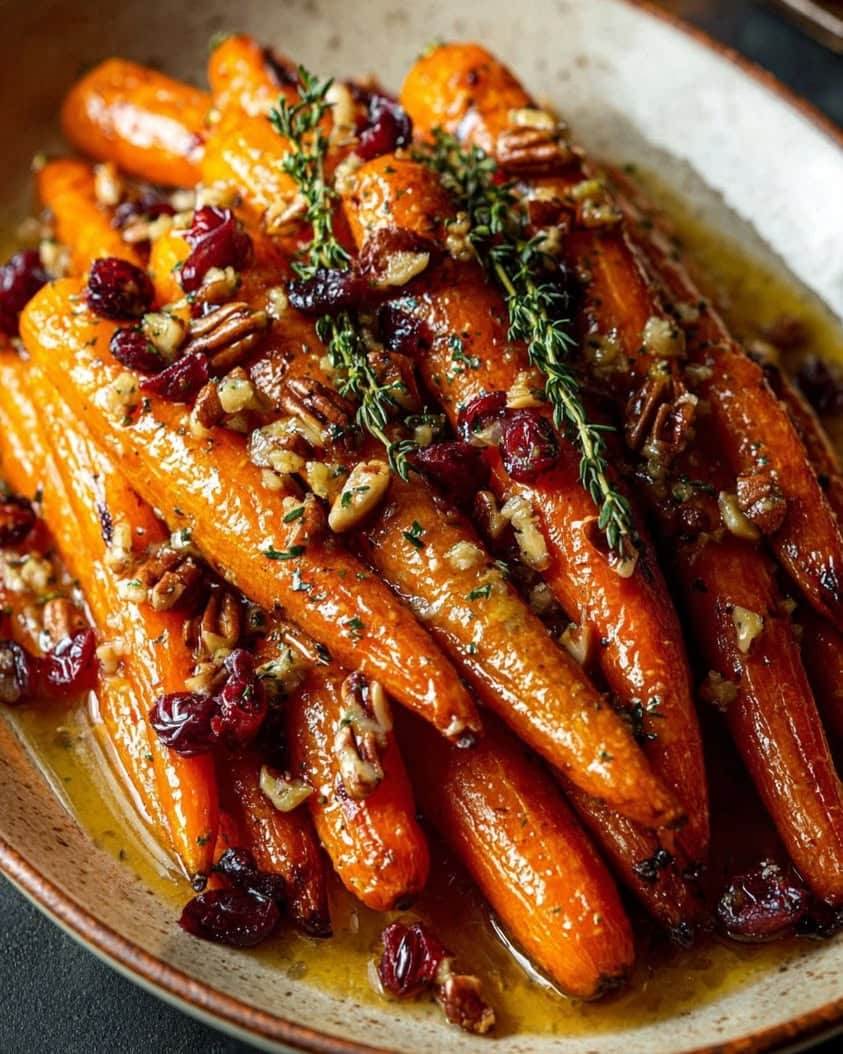
- Visual Appeal: Bright orange carrots contrast with jewel-toned cranberries and a glossy butter glaze. A sprinkle of fresh herbs adds a pop of green for a polished presentation.
- Skill Level Needed: This recipe suits beginners because it requires only basic knife skills and oven timing. Anyone comfortable with peeling and chopping vegetables can execute it successfully.
- Special Equipment: You need a rimmed baking sheet and parchment paper or foil for easy cleanup. A small saucepan handles the cranberry butter, and a vegetable peeler speeds up prep.
Recipe Overview
- Difficulty Level: This dish rates as easy because it involves straightforward roasting and a simple stovetop butter. The steps are forgiving, and the oven does most of the work. You can adjust seasonings freely without risking failure. Even first-time cooks can serve impressive results.
- Category: This recipe works as a side dish, a holiday accompaniment, or a vegetarian main when paired with grains. It fits brunch, lunch, and dinner menus. You can also serve it as an appetizer portion for entertaining.
- Cuisine: American comfort cooking inspires this recipe, though it draws on global flavors. Ginger reflects Asian culinary traditions, while maple syrup and cranberries celebrate North American ingredients. The combination feels modern and seasonal without belonging to one strict tradition.
- Cost: The ingredients are affordable and widely available at any grocery store. Carrots cost little, and pantry staples like maple syrup and dried cranberries stretch across many meals. The total cost per serving stays low even when you buy premium maple syrup.
- Season: Fall and winter suit this recipe best because cranberries and maple flavors feel cozy and festive. However, you can make it year-round with fresh carrots from the market. The dish brightens spring tables and works well for summer cookouts too.
- Occasion: Holidays like Thanksgiving and Christmas love this dish, and it also shines at Easter and dinner parties. Weeknight family meals benefit from its quick prep. Potlucks and buffets welcome it because it holds up well at room temperature.
Why You’ll Love This Recipe
The taste of these Ginger-Maple Roasted Carrots with Cranberry Butter hits every note you want from a side dish. Sweet maple syrup mingles with spicy ginger for a flavor that feels warm and comforting. The cranberry butter adds tang and richness, cutting through the sweetness with bright acidity. Each bite delivers something new, and the flavors keep you coming back for more. Even people who claim not to like cooked carrots change their minds after tasting this dish.
Convenience sets this recipe apart because it requires minimal hands-on time. You peel and cut the carrots, toss them with oil and seasonings, and let the oven handle the rest. While the carrots roast, you whip up the cranberry butter in a few minutes. Cleanup stays manageable with a single baking sheet and one small saucepan. This hands-off approach frees you to prepare other dishes or simply relax before dinner.
Nutrition gives you another reason to love these carrots. Carrots rank among the best sources of beta-carotene, which supports eye health and immunity. Ginger offers digestive benefits and anti-inflammatory compounds. Cranberries contribute antioxidants and vitamin C. Because the dish uses only a modest amount of butter and maple syrup, it stays relatively light while tasting indulgent.
Social and entertaining value makes this recipe a reliable crowd-pleaser. The vibrant colors look stunning on a holiday table, and guests appreciate the familiar yet elevated flavors. You can serve the dish family-style or plated for a more formal touch. It travels well to potlucks because it tastes good warm or at room temperature. Hosts love recipes that look impressive yet demand little effort, and this dish fits that description perfectly.
Cost-effectiveness keeps this recipe accessible for everyday cooking and special occasions alike. Carrots are among the most budget-friendly vegetables at the store. Dried cranberries last for months in the pantry, and maple syrup goes a long way. You can swap in ingredients you already have, such as honey for maple syrup or raisins for cranberries. The dish delivers a premium taste without a premium price tag, which makes it ideal for feeding families and crowds.
Historical Background and Cultural Significance
Roasted root vegetables trace back centuries in European and North American cooking traditions. Before modern stoves, communities roasted carrots and other roots in open fires and hearth ovens. The caramelization that occurs during roasting has always brought out the natural sweetness of carrots. These early preparations laid the groundwork for the glazed carrot dishes that appear on tables today.
Maple syrup holds deep cultural importance in North American history. Indigenous communities in the northeastern United States and Canada harvested and processed maple sap long before European settlers arrived. They used maple syrup as a sweetener and trade good, and the tradition continues in modern maple production. Incorporating maple into vegetable dishes celebrates this heritage and connects the recipe to regional foodways.
The evolution of glazed carrots into this Ginger-Maple Roasted Carrots with Cranberry Butter recipe reflects modern tastes for bold, globally inspired flavors. Traditional recipes often relied on brown sugar and butter alone. Today, cooks add ginger for heat and cranberries for tang, drawing on ingredients from different culinary traditions. The dish represents how recipes adapt over time while honoring their roots.
Regional variations of glazed and roasted carrots exist across the country. Southern cooks sometimes add pecans and brown sugar, while New England recipes lean on maple syrup. Midwestern versions may include dill or honey, and West Coast cooks experiment with citrus and chili. This Ginger-Maple Roasted Carrots with Cranberry Butter recipe draws inspiration from these traditions while offering its own distinct character.
Ingredient Deep Dive
Carrots form the heart of this dish and have sustained communities for thousands of years. Originally cultivated in Central Asia, carrots spread across Europe and eventually the Americas. They come in many colors, including purple and yellow, though orange dominates modern markets. Today, carrots rank among the most consumed vegetables worldwide thanks to their versatility and storage life.
Nutritionally, carrots deliver remarkable benefits. Beta-carotene converts to vitamin A in the body, supporting vision and immune function. Carrots also provide fiber, potassium, and antioxidants. Choose firm, bright carrots with smooth skin and attached green tops when possible. Store them in the refrigerator crisper drawer in a perforated bag, and they will keep for weeks. If you lack carrots, parsnips or sweet potatoes make excellent substitutes.
Fresh ginger brings warmth and complexity to this dish. Asian culinary traditions have used ginger for centuries as both food and medicine. Traditional Chinese and Ayurvedic practices prize ginger for digestive support and anti-inflammatory properties. Its pungent flavor brightens sweet and savory dishes alike. Look for plump ginger with smooth skin and a spicy aroma. Store it in a cool, dry place or freeze it for longer storage. Ground ginger substitutes in a pinch, though fresh delivers superior flavor.
Nutrients in ginger include gingerol, a compound linked to anti-inflammatory effects. The root also supports digestion and may ease nausea. Select ginger that feels heavy for its size with no soft spots or mold. Wrap it loosely and refrigerate for up to three weeks. If fresh ginger is unavailable, use one-quarter teaspoon of ground ginger for each tablespoon of fresh called for in the recipe.
Maple syrup sweetens this dish with a flavor that refined sugar cannot match. Indigenous North American communities pioneered maple harvesting, and the tradition remains central to northeastern food culture. Maple syrup contains trace minerals like manganese and zinc, and it brings a depth of flavor that enhances roasted vegetables. Choose pure maple syrup, preferably dark amber or grade B for stronger flavor. Store it in the refrigerator after opening, where it keeps for months. Honey or agave syrup work as substitutes.
The sweet profile of maple syrup balances the savory elements in this Ginger-Maple Roasted Carrots with Cranberry Butter recipe. Pure syrup offers a more complex taste than pancake syrup blends, which often contain corn syrup. Darker grades carry caramel notes that pair beautifully with roasted vegetables. If you watch sugar intake, reduce the amount slightly and increase the ginger for balance.
Common Mistakes to Avoid
- Cutting carrots unevenly causes some pieces to burn while others stay raw. Aim for uniform thickness so everything cooks at the same rate.
- Crowding the baking sheet steams the carrots instead of roasting them. Spread pieces in a single layer with space between them for proper caramelization.
- Skipping the preheat leaves the oven at the wrong temperature when the carrots go in. Always preheat fully to ensure even cooking from the start.
- Adding the cranberry butter too early causes it to burn. Wait until the carrots finish roasting, then toss them with the butter for a fresh finish.
- Under-seasoning the carrots results in flat flavor. Use enough salt and pepper before roasting to draw out natural sweetness.
- Overcooking turns the carrots mushy and loses texture. Check them a few minutes early and remove them when fork-tender with slight resistance.
- Using stale dried cranberries delivers a tough texture. Check expiration dates and plump them briefly in warm water if they feel hard.
- Forgetting to stir halfway through causes uneven browning. Flip the carrots once during roasting so all sides caramelize.
- Mincing ginger into large chunks creates bursts of heat instead of even distribution. Grate or mince it finely so it blends into the glaze.
- Serving immediately without resting prevents the butter from absorbing. Let the dish sit one minute after tossing so the flavors settle.
Essential Techniques
Proper roasting technique forms the foundation of this Ginger-Maple Roasted Carrots with Cranberry Butter recipe. Roasting uses dry heat to caramelize sugars and concentrate flavors, unlike steaming, which preserves moisture. The key involves high heat, usually around 425 degrees Fahrenheit, and adequate space around each carrot piece. When carrots roast, their edges darken and crisp while the interior turns tender and sweet.
Mastering roasting requires attention to pan selection and placement. Rimmed baking sheets work best because they catch drips and allow air circulation. Place the pan in the center of the oven for even heat distribution. Avoid glass dishes, which can cause uneven browning. Visual cues for success include browned edges, a glossy surface, and a knife sliding easily into the thickest part of the carrot.
Creating compound butter teaches a technique that elevates countless dishes. Compound butter simply means softened butter mixed with flavorings, then chilled or used immediately. For this recipe, you fold together cranberries, maple, and spices until evenly combined. The technique matters because it distributes flavor throughout the butter rather than leaving pockets of seasoning.
To master compound butter, start with truly softened butter, not melted butter. Melted butter separates and loses the ability to hold air. Mash the ingredients with a fork until smooth, then taste and adjust. Common pitfalls include using cold butter, which leaves lumps, and overmixing, which can make the butter greasy. Visual cues include a uniform color and a smooth, spreadable texture.
Pro Tips for Perfect Ginger-Maple Roasted Carrots with Cranberry Butter
- Choose carrots of similar size so they cook evenly, and cut thicker ones in half lengthwise for consistent results.
- Toss carrots with oil and seasonings in a bowl before placing them on the pan so every piece gets coated.
- Roast at high heat for caramelized edges, and resist the urge to open the oven door often since heat escapes quickly.
- Warm the cranberry butter slightly before tossing so it melts evenly across the hot carrots.
- Reserve a few fresh cranberries or orange zest to scatter on top for color and freshness.
- Taste a carrot before serving and adjust salt, maple, or ginger to balance the flavors.
- Let the dish rest a moment before serving so the butter absorbs and the flavors meld together.
- Double the cranberry butter and store the extra in the refrigerator for future batches.
Variations and Adaptations
Regional variations let you tailor this Ginger-Maple Roasted Carrots with Cranberry Butter recipe to local tastes. Southern cooks might add toasted pecans and a pinch of cayenne for warmth. New England versions might feature darker maple syrup and fresh thyme. Southwestern cooks could incorporate chili powder and lime zest for a bright kick. Each variation keeps the core technique while adjusting the flavor profile.
Seasonal adaptations change the dish throughout the year. In spring, swap dried cranberries for fresh raspberries or omit the butter and drizzle with lemon. Summer versions benefit from grilled carrots finished with the same cranberry butter. Fall calls for apple cider in place of some maple syrup. Winter welcomes dried figs and orange zest for a festive touch.
Dietary modifications make the recipe work for different needs. Use coconut oil or olive oil instead of butter for a dairy-free version. Swap maple syrup for honey if you prefer, though the flavor changes slightly. Vegan cooks can use a plant-based butter with excellent results. Each swap preserves the dish’s spirit while meeting specific requirements.
Flavor variations expand the recipe’s range dramatically. Add orange juice and zest for a citrus-forward version. Stir in Dijon mustard for a savory twist. Sprinkle smoked paprika for depth, or finish with balsamic glaze for tang. Each addition layers new dimensions onto the base recipe, and you can mix and match based on the main course.
Texture modifications suit different preferences. For softer carrots, roast at a lower temperature for a longer time. For crisper edges, increase the heat and watch closely. Add toasted nuts for crunch, or finish with pomegranate seeds for a juicy pop. The dish adapts easily, which keeps it interesting across many meals.
Serving and Presentation Guide
Plating techniques matter because people eat with their eyes first. Arrange the carrots on a warm platter in a loose pile rather than a flat layer. Drizzle any remaining cranberry butter from the pan over the top. Scatter a few whole cranberries and herb sprigs for contrast. A sprinkle of flaky sea salt adds texture and visual interest.
Garnishing ideas range from simple to elegant. Fresh thyme or rosemary sprigs add green contrast against the orange carrots. Orange zest curls bring brightness and aroma. Toasted pecans or walnuts add rustic charm. For holidays, a few sugared cranberries make the dish look festive and photo-ready.
Traditional accompaniments include roasted chicken, turkey, and ham, which pair naturally with the sweet and savory flavors. Mashed potatoes and stuffing round out a holiday plate. Modern serving suggestions include grain bowls with farro or quinoa, or a salad topped with these carrots and goat cheese.
Temperature considerations affect flavor and texture. Serve the carrots warm for the best experience, though they taste good at room temperature within an hour of cooking. Avoid serving them cold, which mutes the flavors and firms the butter. If you must hold them, keep them covered in a warm oven at low heat.
Portion control tips help with meal planning. Plan about three-quarters cup of carrots per person for a side dish, or one cup for heartier appetites. For buffets, plan slightly more since guests often return for seconds. The recipe doubles easily, and leftovers reheat well for lunches.
Wine and Beverage Pairing
Wine pairings enhance this Ginger-Maple Roasted Carrots with Cranberry Butter recipe beautifully. A dry Riesling balances the sweetness with bright acidity. Chardonnay with light oak complements the butter and ginger notes. For red wine lovers, a light Pinot Noir works without overpowering the dish. Sparkling wine adds festive energy to holiday meals.
Non-alcoholic alternatives suit guests who avoid alcohol. Sparkling apple cider echoes the maple and fruit flavors. Ginger ale with lime offers a refreshing match. Cranberry spritzers mirror the dish’s ingredients. Iced tea with lemon provides a crisp, neutral option.
Coffee and tea pairings work surprisingly well with this dish at brunch. A medium-roast coffee brings out the maple notes. Chai tea echoes the ginger spice. Green tea offers a clean contrast. Herbal teas with citrus or spice complement the cranberry butter.
Temperature considerations matter for beverages too. Serve white wines well chilled and reds slightly below room temperature. Cold sparkling drinks refresh the palate between bites. Warm tea comforts during winter meals. Match the beverage temperature to the season and occasion.
Storage and Shelf Life
Storage methods preserve the flavor and texture of leftovers. Transfer cooled carrots to an airtight container within two hours of cooking. Keep the container in the refrigerator, where the dish stays fresh for three to four days. Separate any excess butter before storing if you want to reduce richness later.
Temperature requirements matter for food safety. Refrigerate leftovers promptly below 40 degrees Fahrenheit. Avoid leaving the dish at room temperature for more than two hours. When reheating, bring the carrots to 165 degrees Fahrenheit to ensure safety.
Container recommendations make storage easier. Glass containers resist staining and odors better than plastic. Use shallow containers so the carrots cool quickly. Label containers with the date to track freshness. Portion leftovers into meal-sized amounts for easy reheating.
Signs of spoilage include off smells, sliminess, and mold. Discard leftovers that show any of these signs. The butter may separate during storage, which is normal. Reheat gently and stir to recombine.
Reheating instructions keep leftovers tasting good. Warm carrots in a 350-degree oven for ten minutes or microwave in short bursts. Add a small pat of fresh butter to restore richness. Avoid overcooking, which turns the carrots mushy.
Freezing guidelines extend storage if needed. Freeze carrots in freezer-safe bags for up to two months. Thaw in the refrigerator overnight before reheating. Texture softens after freezing, so use thawed carrots in soups or purees rather than serving them whole.
Make Ahead Strategies
Prep timelines help busy cooks plan ahead. Peel and cut carrots up to two days in advance and store them in water in the refrigerator. Make the cranberry butter up to a week ahead and keep it chilled. Combine the seasonings ahead of time for faster assembly.
Storage between steps keeps ingredients fresh. Keep cut carrots submerged in cold water to prevent drying. Store the butter tightly wrapped to avoid absorbing odors. Label everything with dates so you know what to use first.
Quality impact assessment helps you decide what to prep early. Cut carrots hold up well for a couple of days. The butter stays fresh for a week. Fresh herbs lose quality quickly, so chop them close to serving time.
Assembly tips streamline the cooking day. Set out all ingredients before you start. Preheat the oven while you toss the carrots. Make the butter while the carrots roast. This sequence keeps the process smooth and efficient.
Reheating guidelines apply to make-ahead versions too. Reheat fully cooked carrots gently so they retain texture. Add the cranberry butter after reheating for the freshest flavor. A quick broil restores caramelized edges if needed.
Fresh element additions brighten make-ahead dishes. Add fresh herbs, citrus zest, or toasted nuts just before serving. These touches restore vibrancy and make the dish taste freshly made. Small additions make a big difference in presentation and flavor.
Scaling Instructions
Halving the recipe works easily for smaller households. Use half the carrots and butter, and reduce the seasonings slightly. Keep the same roasting temperature but check the carrots a few minutes earlier since a smaller batch cooks faster. The method remains identical.
Doubling or tripling suits holidays and gatherings. Use two baking sheets rather than crowding one pan. Rotate the pans halfway through roasting for even cooking. Increase the butter proportionally and keep extra on hand for serving.
Equipment adjustments help with larger batches. Use additional rimmed baking sheets and share the oven space evenly. Avoid stacking pans, which blocks heat circulation. If oven space is limited, roast in batches and reheat before serving.
Timing modifications account for larger volumes. Expect slightly longer roasting times for bigger batches, though the difference is small. Check the carrots early and rely on visual cues rather than strict timing. Stir once or twice to promote even browning.
Storage considerations change with larger batches. Have enough containers ready for leftovers. Cool large batches quickly by spreading them on trays before refrigerating. This prevents condensation and keeps the carrots fresh longer.
Nutritional Deep Dive
The macro breakdown of this Ginger-Maple Roasted Carrots with Cranberry Butter recipe shows a balanced profile. Carrots provide carbohydrates and fiber, while butter contributes fat. Maple syrup adds sugar, though in modest amounts. Protein stays low, so pair the dish with protein-rich foods for a complete meal.
Micronutrient analysis reveals impressive benefits. Carrots deliver high levels of beta-carotene and vitamin K. Ginger adds trace minerals and gingerol. Cranberries contribute vitamin C and antioxidants. The dish supports eye health, immunity, and digestion.
Health benefits extend beyond basic nutrition. The fiber in carrots supports gut health. Antioxidants in cranberries and ginger fight oxidative stress. The fat in butter helps the body absorb fat-soluble vitamins from the carrots. This combination makes the dish nutritionally smart.
Dietary considerations matter for special eating plans. The recipe fits vegetarian and gluten-free diets naturally. Dairy-free and vegan versions require only simple swaps. Portion awareness helps those watching sugar or fat intake.
Portion analysis guides serving sizes. A three-quarter-cup serving contains roughly 120 calories, depending on butter quantity. Doubling the serving adds nutrients but also calories and sugar. Balance the dish with lean proteins and leafy greens for a well-rounded plate.
Weight management tips help you enjoy the dish mindfully. Use less butter for a lighter version without losing flavor. Rely on ginger and cranberries for taste rather than extra syrup. Fill half your plate with vegetables to stay satisfied with fewer calories.
Dietary Adaptations
For gluten-free needs, this recipe works as written since it contains no wheat products. Verify that dried cranberries and maple syrup are processed in gluten-free facilities if you have celiac disease. Serve with gluten-free mains to keep the meal safe.
Dairy-free versions swap butter for coconut oil, olive oil, or plant-based butter. Use about three tablespoons of oil in place of the butter. The flavor changes slightly, but the dish remains delicious. Add a pinch of salt to compensate for the missing butter.
Vegan adaptations follow the same swaps as dairy-free versions. Choose maple syrup certified vegan, which most pure syrups are. Check cranberry packaging for added ingredients. The dish then fits fully plant-based diets.
Low-carb eaters can reduce maple syrup to one tablespoon and add extra ginger. Carrots contain natural sugars, so portion awareness matters. The dish still fits moderate low-carb plans when served in smaller amounts.
Keto adaptations require significant changes because carrots contain carbs. Consider substituting roasted radishes or green beans for some carrots. Use sugar-free syrup and reduce cranberries. The dish then fits ketogenic macros more comfortably.
Paleo versions use ghee or coconut oil instead of butter and omit refined sugar. Pure maple syrup fits some paleo interpretations, though strict versions avoid it. Dried fruit fits paleo guidelines in moderation.
Low-FODMAP diets tolerate carrots well, making this dish a good fit. Ginger is also low-FODMAP. Watch portion sizes of dried cranberries, which contain concentrated fruit sugars. Adjust amounts based on personal tolerance.
Troubleshooting Guide
Texture issues arise when carrots turn out mushy or undercooked. Mushy carrots usually mean overcooking or too much moisture on the pan. Undercooked carrots need more time or smaller cuts. Dry the carrots thoroughly before tossing with oil, and spread them in a single layer.
Flavor balance problems include excessive sweetness or overwhelming ginger. Add salt to tame sweetness, or squeeze lemon juice for acidity. Too much ginger calls for extra maple or butter to soften the bite. Taste as you go and adjust gradually.
Temperature problems cause uneven cooking. Ovens vary, so use an oven thermometer to confirm accuracy. Rotate the pan halfway through roasting. If the edges brown too fast, lower the heat slightly and extend the time.
Equipment challenges include pans that warp or stick. Use sturdy rimmed baking sheets and line them with parchment. Avoid dark pans, which brown food too quickly. If your pan runs hot, reduce the oven temperature by 25 degrees.
Ingredient substitutions require small adjustments. Honey substitutes for maple syrup at a one-to-one ratio. Ground ginger replaces fresh at one-quarter teaspoon per tablespoon. Raisins or cherries swap for cranberries with similar results.
Timing concerns arise when guests arrive late or schedules shift. Keep roasted carrots warm in a low oven, covered loosely. Add the cranberry butter just before serving. The dish holds well for up to thirty minutes without losing quality.
Recipe Success Stories
Community feedback highlights how this Ginger-Maple Roasted Carrots with Cranberry Butter recipe wins over skeptics. Readers report that children who avoid vegetables ask for seconds. Hosts say guests request the recipe after holiday meals. The consistent praise centers on the balanced sweet-tart flavor and easy preparation.
Variation successes show the recipe’s flexibility. One reader added toasted pecans for crunch and called it a new family tradition. Another swapped oranges for cranberries during citrus season. Cooks appreciate that the dish adapts without losing its identity.
Adaptation stories include dietary swaps that worked beautifully. A dairy-free cook used coconut oil and reported excellent results. A low-sugar version with reduced maple syrup still impressed guests. These stories confirm the recipe’s reliability across preferences.
Reader suggestions improve the recipe further. Some recommend preheating the pan for extra caramelization. Others suggest doubling the cranberry butter for extra sauce. These tips show how community input strengthens a recipe over time.
Photography tips help readers capture the dish’s beauty. Natural light works best for showing the orange and red tones. Shoot from a low angle to highlight the glossy glaze. Add fresh herbs right before the photo for maximum color contrast.
Frequently Asked Questions
Can I use baby carrots instead of whole carrots? Yes, baby carrots work in this Ginger-Maple Roasted Carrots with Cranberry Butter recipe, though they cook faster. Check them after fifteen minutes and adjust the time as needed. Baby carrots also caramelize nicely and save prep time on busy days.
How do I make this dish ahead for a holiday? Roast the carrots earlier in the day and refrigerate them. Reheat in a 350-degree oven for ten minutes, then toss with the cranberry butter. Prepare the butter up to a week ahead to streamline the process.
What can I use instead of dried cranberries? Dried cherries, raisins, or chopped dried apricots substitute well. Fresh pomegranate seeds work as a garnish for similar tang. Each option changes the flavor slightly but keeps the sweet-tart balance.
Is this recipe gluten-free? Yes, the ingredients contain no gluten, making the dish naturally gluten-free. Check labels on packaged products like cranberries if you have celiac disease. Serve with gluten-free sides to keep the meal safe.
Can I grill the carrots instead of roasting? Grilling works well for this recipe and adds smoky flavor. Parboil the carrots first for even cooking, then grill over medium heat until charred. Finish with the cranberry butter off the heat.
How spicy is this dish? The ginger adds gentle warmth rather than heat. Most people find the spice level mild and pleasant. Increase the ginger if you want more kick, or reduce it for a subtler flavor.
Can I freeze the cranberry butter? Yes, cranberry butter freezes well for up to three months. Roll it into a log, wrap tightly, and slice off portions as needed. Thaw in the refrigerator before using.
What main dishes pair well with these carrots? Roasted chicken, glazed ham, turkey, and grilled steak all pair beautifully. Vegetarian mains like lentil loaf or grain bowls work too. The dish complements most proteins and grains.
How do I prevent the carrots from burning? Cut them evenly and toss with enough oil to coat. Roast at the correct temperature and check early. If edges darken too fast, cover loosely with foil and lower the heat.
Can I prepare this dish in an air fryer? Yes, an air fryer works for smaller batches. Cook at 400 degrees for about fifteen minutes, shaking the basket halfway. Toss with cranberry butter after cooking for the same delicious finish.
Are the carrots kid-friendly? Most children enjoy the sweet maple flavor and tender texture. The ginger stays mild, and cranberries add familiar fruitiness. Many parents report that kids eat these carrots without complaint.
What is the best maple syrup grade for this recipe? Dark amber or grade B maple syrup delivers the strongest flavor. These grades carry deeper caramel notes that stand up to roasting. Lighter grades work too but offer subtler taste.
Additional Resources
Related recipes expand your vegetable repertoire. Try honey-glazed parsnips or balsamic roasted Brussels sprouts for similar flavor profiles. A maple-roasted squash recipe complements this dish on holiday tables. Each recipe shares techniques that build your roasting skills.
Technique guides deepen your understanding of roasting and glazing. Learn how caramelization works and why high heat matters. Study knife skills to cut vegetables evenly for consistent results. These guides help you cook with confidence beyond this single recipe.
Ingredient information helps you shop smarter. Learn how to select the best ginger and store it properly. Explore maple syrup grades and their flavor differences. Understanding cranberry varieties improves your cooking and reduces waste.
Equipment recommendations streamline your kitchen. A sturdy rimmed baking sheet ranks among the most useful tools for roasting. Invest in a good vegetable peeler and a microplane for ginger. These affordable tools make prep faster and safer.
Seasonal variations inspire year-round cooking. Spring brings fresh herbs and lighter glazes. Summer welcomes grilled versions with citrus. Fall highlights squash and apples alongside carrots. Winter features warming spices and festive fruits. Following the seasons keeps your table fresh and exciting.
PrintGinger-Maple Roasted Carrots with Cranberry Butter
- Total Time: 45 minutes
- Yield: 4
Description
Sweet and savory roasted carrots with a hint of ginger and maple, finished with a rich cranberry butter.
Ingredients
- 2 pounds carrots, peeled and cut into 2-inch pieces
- 2 tablespoons olive oil
- 2 tablespoons maple syrup
- 1 teaspoon grated fresh ginger
- 1/2 teaspoon salt
- 1/4 teaspoon black pepper
- 4 tablespoons unsalted butter, softened
- 1/4 cup dried cranberries, finely chopped
- 1 tablespoon honey
- 1/2 teaspoon orange zest
Instructions
- Preheat oven to 400°F (200°C). Line a baking sheet with parchment paper.
- In a large bowl, toss carrots with olive oil, maple syrup, ginger, salt, and pepper until evenly coated.
- Spread carrots in a single layer on the prepared baking sheet. Roast for 25-30 minutes, until tender and caramelized, stirring halfway.
- Meanwhile, in a small bowl, mix softened butter, chopped cranberries, honey, and orange zest until well combined.
- Transfer roasted carrots to a serving dish and dot with cranberry butter. Serve warm.
Notes
You can customize the seasonings to taste.
- Prep Time: 15 minutes
- Cook Time: 30 minutes
- Method: Side Dish
- Cuisine: American