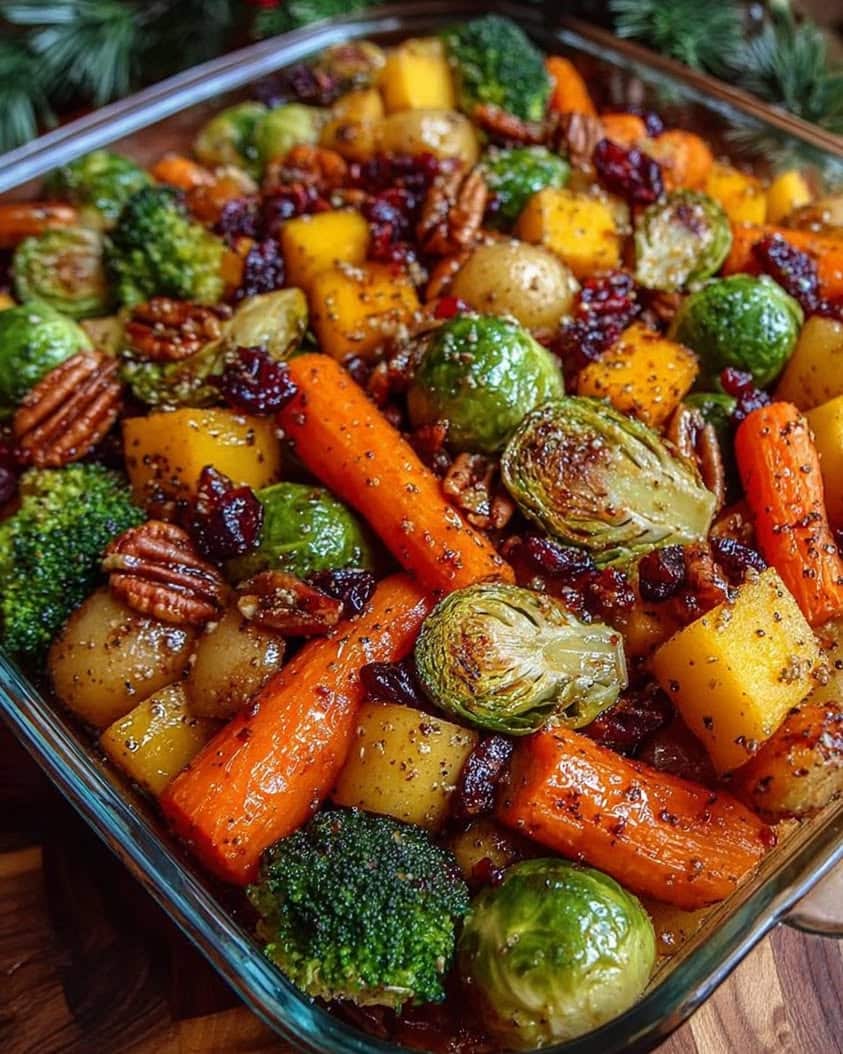
Caramelized Butternut Squash, Carrots, Broccoli and Yukon Potatoes with Feta, Pecans and Cranberry-Honey Glaze: A Colorful Holiday Side Dish
Caramelized Butternut Squash, Carrots, Broccoli and Yukon Potatoes with Feta, Pecans and Cranberry-Honey Glaze brings together the best of autumn and winter produce in one unforgettable roasting pan. Therefore, when you pull this dish from the oven, the sweet aroma of caramelized butternut squash fills your kitchen and draws everyone to the table. The cranberry-honey glaze clings to every vegetable, and the salty feta and crunchy pecans add contrast that keeps each bite interesting. This recipe transforms simple vegetables into a showstopping side that works just as well on a weeknight as it does on a holiday table.
If you have been searching for a caramelized butternut squash recipe that delivers bold flavor without hours of work, this is the one. In addition, the combination of roasted carrots, broccoli and Yukon potatoes means you get four vegetables in a single pan, which saves time and cleanup. The cranberry-honey glaze caramelizes in the heat of the oven, so the vegetables develop deep, golden edges while staying tender inside. Meanwhile, the feta and pecans go on at the end, so they keep their texture and never turn soggy.
Perhaps the best part of this caramelized butternut squash and roasted vegetable medley is how flexible it becomes in your kitchen. For example, you can swap the feta for goat cheese, leave out the pecans for a nut-free version, or add extra cranberries for a tarter finish. The recipe scales easily for a crowd, and it holds up well at room temperature, which makes it perfect for potlucks and buffets. Above all, it proves that healthy side dishes can taste indulgent and look beautiful on any plate.
Quick Recipe Highlights
- Flavor Profile: The caramelized butternut squash delivers natural sweetness, while the cranberry-honey glaze adds tartness and depth. Roasted carrots bring earthiness, and the feta contributes a salty, tangy finish that balances every bite.
- Texture: You get crispy, caramelized edges on the squash and potatoes, tender broccoli florets, and crunchy toasted pecans. The feta adds a creamy crumble that softens slightly against the warm vegetables.
- Aroma: Sweet honey, tart cranberry and earthy roasted vegetables fill the air as this dish bakes. The toasted pecans release a warm, nutty scent that signals the dish is nearly ready.
- Visual Appeal: Deep orange squash, bright green broccoli, purple-red cranberries and snowy feta create a stunning contrast. The glossy glaze gives everything a jewel-like shine that looks impressive on any table.
- Skill Level Needed: This caramelized butternut squash recipe suits beginners because it relies on simple roasting and tossing. If you can chop vegetables and set a timer, you can make this dish successfully.
- Special Equipment: You need one or two large sheet pans, a sharp chef’s knife, a cutting board and a small saucepan for the glaze. Parchment paper makes cleanup easier, but it is optional.
Recipe Overview
- Difficulty Level: This caramelized butternut squash dish earns an easy rating because the oven does most of the work. The only real skills involved are cutting the squash safely and stirring the glaze, both of which take just a few minutes to learn. Furthermore, the recipe forgives small mistakes, so you can adjust seasoning at the end without ruining the result. Even a first-time cook can serve this dish with confidence.
- Category: This recipe works as a side dish, a holiday vegetable, or even a light main course when paired with grains or protein. In addition, it fits brunch menus, dinner parties and meal prep rotations. Because it covers so many categories, it earns a permanent spot in your recipe collection.
- Cuisine: The dish draws from American comfort cooking, where roasted root vegetables star in autumn and winter meals. Meanwhile, the cranberry-honey glaze nods to New England traditions, and the feta adds a Mediterranean touch. This blend of influences makes the recipe feel both familiar and fresh. Consequently, it appeals to a wide range of palates.
- Cost: You can make this caramelized butternut squash recipe for roughly twelve to eighteen dollars, depending on your region and season. The vegetables cost the most, while feta, pecans and cranberries add a few dollars each. Overall, it feeds eight people generously, which brings the per-serving cost quite low.
- Season: Fall and winter suit this dish best because butternut squash, cranberries and pecans all peak during those months. However, you can find the ingredients year-round in most U.S. grocery stores. Therefore, you can serve it at Thanksgiving, Christmas, or a random Tuesday in March.
- Occasion: This caramelized butternut squash side fits holiday feasts, potlucks, Sunday dinners and meal prep alike. Additionally, it works as a vegetarian centerpiece when you add a grain like farro or wild rice. Because it looks beautiful and travels well, it shines at gatherings of any size.
Why You’ll Love This Recipe
The taste of this caramelized butternut squash dish hits every note you want in a side. Sweet, earthy squash meets tart cranberries, and salty feta cuts through the honey glaze. Meanwhile, roasted carrots add a subtle sweetness that deepens as they caramelize. Because the flavors balance so well, you never feel like one ingredient overwhelms another. As a result, even picky eaters come back for seconds.
Convenience sets this recipe apart from other holiday vegetable dishes. You roast everything on sheet pans, so you avoid babysitting multiple pots on the stove. In addition, the glaze takes five minutes to stir together while the vegetables bake. Cleanup stays minimal because parchment paper catches the sticky bits. Therefore, you spend less time scrubbing and more time enjoying your guests.
Nutrition gives you another reason to love this caramelized butternut squash and roasted vegetable recipe. Butternut squash delivers vitamin A and fiber, while broccoli adds vitamin C and antioxidants. Carrots and Yukon potatoes contribute potassium and complex carbohydrates for steady energy. Furthermore, pecans provide healthy fats, and cranberries add polyphenols. Consequently, this dish supports your health without tasting like a compromise.
Socially, this recipe shines because it looks and smells impressive, yet it requires almost no last-minute attention. You can roast the vegetables ahead and finish them right before serving, which frees you to mingle. Additionally, the colors make it a natural centerpiece that sparks conversation. Guests often ask for the recipe before they finish their first plate. Thus, it builds your reputation as a confident host.
Cost-effectiveness makes this caramelized butternut squash recipe practical for everyday cooking, too. The vegetables are affordable and easy to find, and the pantry items like honey, pecans and dried cranberries last for many batches. Meanwhile, the dish feeds a crowd, so you get more value per dollar than most side dishes. Because leftovers taste great, you stretch your budget even further. Therefore, it earns a spot in your regular rotation.
Historical Background and Cultural Significance
Winter squash like butternut has fed people in the Americas for thousands of years. Indigenous communities grew squash alongside beans and corn in the famous Three Sisters system. When European settlers arrived, they learned to roast and stew squash, and the tradition spread across the continent. Consequently, caramelized butternut squash became a staple of American autumn cooking.
Cranberries hold deep cultural importance in the northeastern United States. Native American tribes used them for food, dye and medicine long before colonists arrived. Later, cranberry sauce became a Thanksgiving tradition, and the berry earned a permanent place on holiday tables. Therefore, pairing cranberries with roasted squash connects two beloved American ingredients.
Honey has sweetened human food for millennia, and its use in glazes dates back to ancient cooking traditions across Europe and the Middle East. When home cooks began roasting vegetables at high heat, they discovered that honey helps them caramelize beautifully. Over time, the technique evolved into modern glazed vegetable dishes like this one. As a result, the cranberry-honey glaze carries history in every spoonful.
Regional variations of this caramelized butternut squash dish appear across the country today. In the South, cooks might add pecans and a touch of bourbon to the glaze. In New England, maple syrup sometimes replaces honey for a deeper flavor. Meanwhile, Mediterranean-inspired versions skip the cranberries and lean on feta, herbs and olive oil. Each region leaves its mark, yet the core idea stays the same.
Ingredient Deep Dive
Butternut squash originated in Central and South America and spread north through trade and cultivation. Today, it symbolizes fall cooking in the United States and appears in soups, casseroles and roasted sides. Nutritionally, it delivers massive amounts of vitamin A, plus vitamin C, potassium and fiber. When you shop, choose squash that feels heavy and has a matte, unblemished skin. Store it whole in a cool, dark place for up to a month, or refrigerate cut pieces for four days. If you cannot find butternut, acorn, delicata or kabocha squash all work well.
Carrots trace their history to Central Asia and the Middle East, where people first cultivated them for their leaves and seeds. Over centuries, they spread across Europe and Asia, and today they rank among the most popular vegetables worldwide. Carrots provide beta-carotene, fiber and antioxidants that support eye and skin health. Select firm carrots with bright color and no cracks or soft spots. Keep them in the refrigerator, wrapped in a bag, for up to three weeks. Parsnips or sweet potatoes make good substitutes if needed.
Broccoli grew first in the Mediterranean region and reached the United States through Italian immigrants in the early twentieth century. Since then, it has become a staple of American cooking and a symbol of healthy eating. It offers vitamin C, vitamin K, folate and fiber, along with compounds linked to cancer prevention. Look for tight, dark green florets and firm stalks when buying. Refrigerate broccoli in a loose bag for up to five days. Cauliflower or broccolini can replace it in this recipe.
Yukon potatoes trace their roots to Canada, where growers developed the variety for its buttery flavor and creamy texture. They became a favorite in American kitchens for mashing, roasting and gratins. Nutritionally, they provide potassium, vitamin C and complex carbohydrates for lasting energy. Choose potatoes that feel firm and have smooth, unblemished skin. Store them in a cool, dark spot for up to two weeks. Baby gold potatoes or red potatoes work as substitutes.
Feta cheese originated in Greece and has been made for thousands of years using sheep’s milk or a blend of sheep and goat milk. It appears throughout Mediterranean cuisine and adds a salty, tangy punch to salads, pastries and roasted vegetables. Feta offers calcium, protein and probiotics that support bone and gut health. Buy feta packed in brine for the best flavor and texture. Keep it refrigerated in its brine for up to two weeks. Goat cheese or ricotta salata make fine alternatives.
Pecans come from North America and have fed people on the continent for centuries. Today, they star in pies, salads and roasted dishes across the United States, especially in the South. They deliver healthy fats, vitamin E and antioxidants that support heart health. Select pecans that smell fresh and feel firm, avoiding any that look shriveled. Store them in the refrigerator or freezer to prevent rancidity. Walnuts or almonds can substitute if you prefer.
Common Mistakes to Avoid
- Cutting vegetables into uneven pieces leads to uneven cooking, so some pieces burn while others stay raw. Take a few extra minutes to chop everything into similar one-inch chunks. This small effort makes a big difference in the final texture.
- Crowding the sheet pan traps steam and prevents browning, which means your caramelized butternut squash never truly caramelizes. Use two pans if needed and spread the vegetables in a single layer. Consequently, hot air circulates freely around each piece.
- Skipping the drying step causes vegetables to steam instead of roast. Pat everything dry with a clean towel before you toss it with oil. This step helps the edges crisp and brown properly.
- Adding the glaze too early causes the honey to burn before the vegetables finish cooking. Wait until the last ten to fifteen minutes of roasting, then drizzle and toss. As a result, the glaze caramelizes without turning bitter.
- Using too little oil leaves vegetables dry and prone to sticking. Use enough oil to coat every piece lightly but not so much that they swim. Consequently, they roast evenly and develop golden edges.
- Forgetting to toast the pecans means you miss out on their full nutty flavor. Toast them in a dry pan for a few minutes until fragrant. Then add them at the end so they stay crunchy.
- Adding feta at the start of roasting makes it melt and disappear into the pan. Sprinkle it over the hot vegetables right before serving instead. This keeps the salty crumbles intact and visible.
- Underseasoning the vegetables leaves the dish flat, even with a sweet glaze. Season with salt and pepper before roasting and taste again at the end. Adjust as needed for the best flavor.
- Ignoring oven temperature fluctuations leads to inconsistent results. Use an oven thermometer to confirm your oven runs at the right temperature. Then rotate the pans halfway through for even browning.
- Letting the dish sit too long before serving causes the pecans to soften and the glaze to dull. Add the final toppings just before you carry the dish to the table. Therefore, every element stays at its best.
Essential Techniques
Caramelization happens when the natural sugars in vegetables break down under high heat and turn golden brown. This process creates the deep, sweet flavor that defines caramelized butternut squash and roasted carrots. To master it, dry your vegetables well, coat them lightly in oil, and give them space on the pan. Use a hot oven around 425 degrees Fahrenheit, and resist the urge to stir too often. You will know it works when the edges turn amber and the kitchen smells nutty and sweet.
Proper knife skills keep your fingers safe and your pieces uniform, which matters for even roasting. Grip the knife firmly, curl your guiding fingers into a claw, and let the blade do the work. Cut squash in half first, scoop the seeds, then slice into planks before cubing. For carrots, trim the ends and cut on a bias for pretty shapes. Practicing these cuts speeds up your prep and improves the final dish.
Balancing sweet and salty flavors turns a good dish into a great one. The cranberry-honey glaze brings sweetness and tartness, while feta delivers salt and tang. Taste the glaze before you drizzle it and adjust the honey or vinegar to your liking. Then taste the finished dish and add a pinch of salt if the flavors feel flat. This habit of tasting as you go sharpens your cooking instincts.
Pro Tips for Perfect Caramelized Butternut Squash and Roasted Vegetables
Preheat your oven fully before the vegetables go in, because a hot oven starts the caramelization immediately. Give it at least fifteen minutes to reach temperature. In addition, place racks in the upper and lower thirds so both pans cook evenly. This small step prevents soggy results.
Use a heavy-duty sheet pan that conducts heat well and will not warp at high temperatures. Thin pans cause hot spots that burn some pieces while others lag behind. If you only have thin pans, line them with parchment and rotate them more often. Heavy pans reward you with consistent browning.
Cut the butternut squash slightly smaller than the potatoes, since squash cooks faster. This trick ensures everything finishes at the same time. Similarly, cut broccoli florets larger than you think, because they shrink as they roast. Thoughtful sizing pays off.
Drizzle the cranberry-honey glaze in two stages for deeper flavor. Add half midway through roasting, then the rest in the final minutes. Consequently, the glaze builds layers of sweetness instead of just sitting on top. The vegetables absorb more flavor this way.
Toast the pecans while the vegetables roast so you save time and keep the kitchen warm. A dry skillet over medium heat works perfectly, and the nuts need only three to four minutes. Stir often and pull them when they smell nutty. Then chop them roughly for the best texture.
Save a handful of fresh cranberries to scatter raw over the finished dish for color and tartness. They add a bright pop that complements the roasted flavors. In addition, a squeeze of orange zest brightens everything. These small touches make the dish look and taste restaurant quality.
Variations and Adaptations
Regional variations let you tailor this caramelized butternut squash dish to your roots. For a Southern twist, add a splash of bourbon to the glaze and use toasted pecans generously. In New England, swap honey for maple syrup and add dried cranberries for extra chew. Meanwhile, a Mediterranean version skips the cranberries and finishes with fresh herbs like oregano and mint.
Seasonal adaptations keep the recipe fresh all year. In spring, substitute asparagus and radishes for the broccoli and squash. During summer, use zucchini, bell peppers and cherry tomatoes with a lighter glaze. When fall arrives, return to squash and carrots, and lean into warm spices like cinnamon and nutmeg.
Dietary modifications make this dish accessible to nearly everyone. For a vegan version, replace honey with maple syrup and omit the feta or use a dairy-free alternative. To make it dairy-free, skip the cheese entirely and add extra toasted nuts for richness. For a gluten-free dish, simply confirm your feta and pecans carry no additives.
Flavor variations let you play with the glaze and toppings. Try a balsamic-maple glaze for deeper acidity, or a spicy honey with chili flakes for heat. Add smoked paprika to the vegetables before roasting for a subtle smokiness. Then finish with fresh herbs like thyme, rosemary or parsley.
Texture modifications suit different preferences. If you like extra crunch, roast the vegetables a few minutes longer and add more pecans. For a softer, more comfort-food feel, cover the pan with foil for the first fifteen minutes. You can also puree leftovers into a soup with broth for a completely new meal.
Presentation alternatives help you serve this dish in creative ways. Spoon it over farro, quinoa or wild rice for a hearty grain bowl. Pile it onto a platter and crumble feta over the top for a family-style spread. Alternatively, serve it in individual ramekins for elegant plated portions.
Serving and Presentation Guide
Plating techniques matter when you want this caramelized butternut squash to impress. Choose a wide, shallow platter so the colors show, and spread the vegetables in an even layer. Scatter feta and pecans over the top rather than stirring them in. Then drizzle any pan juices over everything for shine.
Garnishing ideas elevate the dish with minimal effort. Fresh parsley or thyme adds green contrast, while orange zest brings brightness. Pomegranate seeds offer a jewel-like finish that mirrors the cranberries. A final crack of black pepper ties the flavors together.
Traditional accompaniments include roast turkey, ham or chicken for holiday meals. Mashed potatoes, stuffing and green beans round out the plate. For a vegetarian feast, pair the dish with lentil loaf or a wild rice pilaf. The vegetables complement almost any main course.
Modern serving suggestions include grain bowls, tacos and flatbreads. Spoon the roasted vegetables over warm naan and top with yogurt for a quick dinner. Or fold them into a wrap with hummus and greens. These casual options make the recipe weeknight friendly.
Temperature considerations affect how the dish tastes. Serve it hot for the crispiest texture, or at room temperature for buffets and potlucks. If you serve it cold, the flavors mellow and the feta firms up, which some guests prefer. Either way, add the pecans right before serving.
Portion control tips help you plan for a crowd. A generous half-cup serving suits most plates alongside a protein. For a vegetarian main, plan on one and a half cups per person. Doubling the recipe fits two large sheet pans and feeds sixteen.
Wine and Beverage Pairing
Wine pairings for this caramelized butternut squash dish should balance sweetness and acidity. A dry Riesling handles the honey glaze beautifully, while a lightly oaked Chardonnay matches the roasted flavors. For red drinkers, a Pinot Noir offers soft fruit that complements the cranberries. Avoid heavy tannins, since they clash with the sweet glaze.
Non-alcoholic alternatives include sparkling apple cider, which echoes the autumn flavors. Cranberry spritzers with lime add tartness that mirrors the glaze. In addition, a ginger beer brings spice that cuts through the richness. These options please guests who skip alcohol.
Coffee and tea pairings work surprisingly well with roasted vegetables. A medium roast coffee brings smoky notes that complement the caramelized edges. Chai tea adds warmth and spice that match the season. Green tea offers a clean finish between bites.
Temperature considerations matter for both wine and alternatives. Serve white wines well chilled and reds slightly below room temperature. Sparkling options taste best cold, while cider shines at refrigerator temperature. These details sharpen the overall experience.
Serving suggestions include offering two options so guests can choose. Set out wine glasses and a pitcher of cider on a side table. Add a small card describing each pairing for a thoughtful touch. Guests appreciate the extra care.
Storage and Shelf Life
Storage methods determine how well this caramelized butternut squash keeps its texture. Transfer leftovers to an airtight container within two hours of serving. Keep the feta and pecans separate if possible, since they soften over time. Then label the container with the date for easy tracking.
Temperature requirements keep food safe and flavorful. Refrigerate leftovers at 40 degrees Fahrenheit or below. Do not leave the dish at room temperature for more than two hours. In warm weather, cut that window to one hour.
Container recommendations include glass containers with tight lids, which resist stains and odors. BPA-free plastic works too, but glass preserves flavor better. For larger batches, use shallow containers so the vegetables cool quickly. Avoid stuffing the container, since trapped steam makes everything soggy.
Signs of spoilage include sour smells, sliminess and visible mold. If the vegetables look dull or feel sticky, discard them. Feta that turns yellow or smells off should also go. When in doubt, throw it out.
Reheating instructions keep leftovers tasty. Spread the vegetables on a sheet pan and warm them at 375 degrees Fahrenheit for ten minutes. The oven restores some crispness that the microwave cannot. Add fresh pecans and a drizzle of glaze after reheating.
Freezing guidelines help you plan ahead. Freeze the roasted vegetables without the feta and pecans in a freezer bag for up to three months. Thaw overnight in the refrigerator, then reheat in the oven. Expect slightly softer texture, but the flavor holds up well.
Make Ahead Strategies
A prep timeline keeps holiday cooking calm. Two days ahead, wash and chop the vegetables, then store them in separate bags. One day ahead, whisk the glaze and toast the pecans. On the day of serving, roast everything and finish with the toppings.
Storage between steps protects quality. Keep cut squash, carrots and potatoes in water in the refrigerator for up to two days. Store broccoli dry in a bag, since moisture makes it mushy. Label each bag so you grab the right one quickly.
Quality impact assessment helps you decide what to prep early. Chopped vegetables hold well, and the glaze improves overnight as flavors meld. However, toasted pecans lose crunch after a day, so toast them fresh if you can. Feta should stay sealed until serving.
Assembly tips streamline the final steps. Pull all prepped items from the refrigerator thirty minutes before roasting. Preheat the oven and line your pans while the vegetables come to room temperature. Then toss, season and roast without stress.
Reheating guidelines matter if you roast ahead. Warm the vegetables at 400 degrees Fahrenheit for eight to ten minutes to revive the edges. Add the glaze in the last few minutes. Finish with feta, pecans and cranberries right before serving.
Fresh element additions lift make-ahead dishes. A squeeze of lemon, a sprinkle of herbs or a drizzle of honey restores brightness. These small touches make the dish taste newly made. Guests will never guess you prepped it days earlier.
Scaling Instructions
Halving the recipe works well for smaller households. Use one sheet pan and reduce the glaze by half, but keep the oven temperature the same. Cooking time may drop by five minutes, so check early. Leftovers keep for four days.
Doubling or tripling suits holiday crowds. Use two or three sheet pans and rotate them halfway through roasting. Increase the glaze proportionally, and toast extra pecans. Keep an eye on the oven, since more pans slow the cooking slightly.
Equipment adjustments matter when you scale up. If your oven cannot fit multiple pans on one rack, use two racks and swap positions midway. Heavy-duty pans handle larger batches better. A second timer helps you track both pans.
Timing modifications keep results consistent. Add five to ten minutes for larger batches, and check doneness by piercing the squash with a knife. The blade should slide in easily. Then adjust the final glaze timing to prevent burning.
Storage considerations change with bigger batches. Cool leftovers quickly in shallow containers before refrigerating. Freeze portions you cannot eat within four days. Label everything with dates so nothing gets lost.
Nutritional Deep Dive
The macro breakdown of this caramelized butternut squash dish shows a balanced profile. Each serving delivers complex carbohydrates from the squash, potatoes and carrots, plus healthy fats from olive oil and pecans. Protein comes from feta, and natural sugars come from honey and cranberries. This mix supports steady energy and satisfaction.
Micronutrient analysis reveals impressive numbers. Butternut squash and carrots load the dish with vitamin A, while broccoli brings vitamin C and vitamin K. Potatoes add potassium, and pecans supply vitamin E and magnesium. Cranberries contribute polyphenols that fight inflammation.
Health benefits extend beyond basic nutrition. Fiber from the vegetables supports digestion and heart health. Healthy fats from pecans and olive oil help your body absorb fat-soluble vitamins. Meanwhile, antioxidants from cranberries and broccoli support immune function.
Dietary considerations vary by eater. The dish is naturally gluten-free and vegetarian, and it adapts easily to vegan and dairy-free diets. People watching sodium should ease back on the feta. Those managing blood sugar should moderate the glaze.
Portion analysis helps you plan balanced plates. A half-cup serving provides roughly one cup of vegetables when you count the mix. Pair it with lean protein for a complete meal. Larger portions work for athletes and active adults.
Weight management tips include using less oil and skipping the feta for a lighter version. Add extra broccoli for volume and fiber. The dish satisfies hunger well, which helps prevent overeating later. Small tweaks keep it aligned with your goals.
Dietary Adaptations
Gluten-free eaters can enjoy this caramelized butternut squash recipe without changes, since none of the core ingredients contain gluten. However, check labels on the feta, pecans and cranberries for additives. Some brands process nuts in facilities that handle wheat. Choose certified gluten-free products when in doubt.
Dairy-free versions simply omit the feta or use a plant-based alternative. Cashew-based cheese crumbles mimic feta well, and nutritional yeast adds a savory note. The glaze needs no dairy, so the rest of the recipe stays the same. Taste and adjust salt to replace what the feta provided.
Vegan cooks swap honey for maple syrup or agave in the cranberry glaze. Skip the feta and add extra toasted pecans for richness. A sprinkle of flaky sea salt at the end replaces some of the salty punch. The result tastes just as vibrant.
Low-carb and keto adaptations reduce the potatoes and honey. Use extra broccoli and squash, which have fewer carbs than potatoes. Replace honey with a sugar-free sweetener that holds up to heat. Then keep portions moderate to stay within your macros.
Paleo eaters skip the feta and use maple syrup sparingly. The vegetables, nuts, olive oil and cranberries all fit paleo guidelines. Confirm your dried cranberries contain no added sugar. This version works beautifully for paleo holiday menus.
Low-FODMAP diets require smaller portions of butternut squash, since large amounts can trigger symptoms. Broccoli florets also contain FODMAPs, so use the stalks or reduce the amount. Carrots and potatoes sit well for most people. Consult your dietitian for personal guidance.
Troubleshooting Guide
Texture issues usually trace back to moisture or crowding. If your vegetables turn out soggy, dry them thoroughly next time and use two pans. If they burn on the edges but stay raw inside, cut smaller pieces and lower the heat slightly. Adjustments like these solve most problems.
Flavor balance problems happen when one element dominates. If the glaze tastes too sweet, add a splash of apple cider vinegar or lemon juice. If the dish feels flat, add salt and a squeeze of citrus. Taste at every stage and trust your palate.
Temperature problems stem from oven inconsistencies. An oven thermometer reveals whether your oven runs hot or cold. Rotate pans halfway through roasting and use the middle racks. These habits produce even results every time.
Equipment challenges include pans that warp or stick. Heavy aluminum pans resist warping and brown vegetables beautifully. Parchment paper prevents sticking and simplifies cleanup. If your pan is thin, line it and check the vegetables more often.
Ingredient substitutions can change cooking times. Denser vegetables like sweet potatoes need extra minutes, while tender ones like zucchini cook faster. Add quick-cooking items later in the process. This approach keeps everything perfectly done.
Timing concerns arise when you cook for a crowd. Roast the vegetables in batches and hold them warm in a low oven. Add the glaze and toppings just before serving. This strategy keeps the dish at its peak.
Recipe Success Stories
Community feedback on this caramelized butternut squash recipe has been overwhelmingly positive. Readers report that the dish disappears at holiday gatherings and that guests request the recipe. Many say it converted vegetable skeptics in their families. These stories motivate us to keep sharing simple, flavorful recipes.
Variation successes include a reader who added apples for extra sweetness and another who used goat cheese instead of feta. Both versions earned rave reviews at potlucks. One cook swapped pecans for pistachios and loved the color contrast. The recipe welcomes creativity.
Adaptation stories highlight how flexible the dish becomes. A vegan reader replaced honey with maple syrup and skipped the cheese, then served it over quinoa. Another made it keto-friendly with less potato and a sugar-free glaze. Each version kept the spirit of the original.
Reader suggestions include adding a pinch of cinnamon to the glaze and roasting the vegetables on a preheated pan for extra crispness. Another reader recommended squeezing orange juice over the top before serving. We love hearing how home cooks make the recipe their own.
Photography tips help readers capture the dish at its best. Shoot in natural light near a window, and arrange the vegetables on a neutral platter so the colors pop. Add the feta and pecans right before the photo. A slight overhead angle shows off the variety.
Frequently Asked Questions
Can I make this caramelized butternut squash recipe ahead of time? Yes, you can roast the vegetables up to two days ahead and refrigerate them in an airtight container. Reheat on a sheet pan at 400 degrees Fahrenheit for eight to ten minutes. Then add the glaze, feta, pecans and cranberries right before serving so everything stays fresh and crisp.
How do I cut butternut squash safely? First, trim the ends and cut the squash in half lengthwise. Then scoop out the seeds and place each half flat on the cutting board. Slice into planks and cube them into one-inch pieces. A sharp knife and a stable board make the process safe and quick.
Can I use frozen butternut squash instead of fresh? You can, but frozen squash releases more moisture and tends to turn soft. If you use it, roast at a higher temperature and expect less caramelization. For the best texture and flavor, fresh squash works far better in this roasted recipe.
What can I use instead of feta? Goat cheese, ricotta salata or shaved Parmesan all work well. For a dairy-free option, try cashew-based cheese crumbles or skip the cheese and add extra toasted nuts. Each swap changes the flavor profile slightly but keeps the dish delicious.
Is this caramelized butternut squash dish vegan? Not as written, because it includes honey and feta. However, you can easily make it vegan by swapping honey for maple syrup and omitting the feta or using a plant-based alternative. The result tastes just as vibrant and satisfying.
How do I keep the broccoli from getting mushy? Cut the florets large, pat them dry and add them to the pan later than the squash and Print
Caramelized Butternut Squash, Carrots, Broccoli & Yukon Potatoes with Feta, Pecans & Cranberry-Honey Glaze
- Total Time: 45 minutes
- Yield: 4
Description
A vibrant medley of roasted vegetables, caramelized to perfection and topped with tangy feta, crunchy pecans, and a sweet-tart cranberry-honey glaze. This dish is a stunning side or a hearty main course for any occasion.
Ingredients
- 1 small butternut squash, peeled, seeded, and cut into 1-inch cubes
- 3 large carrots, peeled and cut into 1-inch chunks
- 2 cups broccoli florets
- 1 pound Yukon gold potatoes, scrubbed and cut into 1-inch cubes
- 3 tablespoons olive oil
- 1 teaspoon salt
- 1/2 teaspoon black pepper
- 1/2 cup dried cranberries
- 1/4 cup honey
- 2 tablespoons balsamic vinegar
- 1/2 cup crumbled feta cheese
- 1/2 cup pecan halves, toasted
Instructions
- Preheat oven to 425°F (220°C). Line a large baking sheet with parchment paper.
- In a large bowl, combine butternut squash, carrots, broccoli, and potatoes. Drizzle with olive oil, salt, and pepper; toss to coat evenly.
- Spread vegetables in a single layer on the prepared baking sheet. Roast for 25-30 minutes, stirring halfway, until tender and caramelized.
- While vegetables roast, make the glaze: In a small saucepan, combine dried cranberries, honey, and balsamic vinegar. Cook over medium heat, stirring, until cranberries plump and mixture thickens slightly, about 5 minutes. Remove from heat.
- Transfer roasted vegetables to a serving platter. Drizzle with the cranberry-honey glaze and sprinkle with crumbled feta and toasted pecans. Serve warm.
Notes
You can customize the seasonings to taste.
- Prep Time: 15 minutes
- Cook Time: 30 minutes
- Method: Main
- Cuisine: American