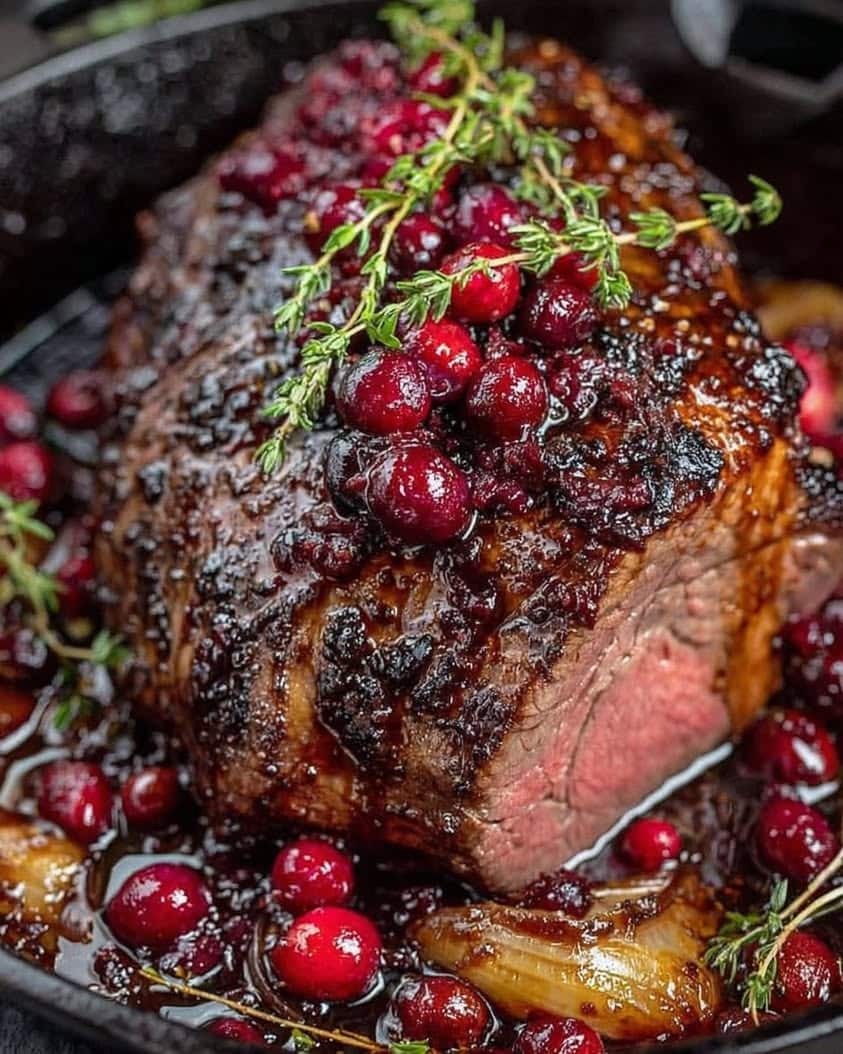
Ribeye Roast with Cranberry Balsamic Glaze: A Perfect Holiday Feast
If you want a showstopping centerpiece for your next gathering, this Ribeye Roast with Cranberry Balsamic Glaze delivers on every level. The rich, beefy flavor of a perfectly roasted ribeye meets the sweet-tart brightness of cranberries and the deep complexity of balsamic vinegar. Together, they create a glaze that caramelizes beautifully and transforms an already luxurious cut of meat into something truly unforgettable. Whether you serve it for Christmas dinner, Thanksgiving, or a special anniversary, this recipe earns rave reviews every single time.
Moreover, this Ribeye Roast with Cranberry Balsamic Glaze balances elegance with approachability. You do not need culinary school training to pull it off. In fact, the oven does most of the heavy lifting while you focus on the glaze, which comes together in a single saucepan. The result is a tender, juicy roast with a glossy, ruby-red finish that looks like it came straight from a fine-dining kitchen. Additionally, the leftovers taste incredible in sandwiches, salads, and wraps, so nothing goes to waste.
Furthermore, this dish fits seamlessly into holiday menus because cranberries and balsamic both shine during the colder months. The acidity in the glaze cuts through the natural richness of the ribeye, while a hint of sweetness rounds out every bite. Consequently, even guests who usually avoid red meat find themselves going back for seconds. If you want a reliable, impressive main course that works for both intimate dinners and larger celebrations, this Ribeye Roast with Cranberry Balsamic Glaze deserves a permanent spot in your recipe rotation.
Quick Recipe Highlights
- Flavor Profile: The glaze delivers a bold balance of sweet, tangy, and savory notes. Balsamic vinegar adds depth, cranberries bring brightness, and fresh herbs round out the finish. Together, they complement the natural beefiness of the ribeye without overpowering it.
- Texture: The roast offers a tender, buttery interior with a beautifully caramelized crust. Because the glaze thickens as it cooks, every slice gets a glossy coating that clings to the meat. The contrast between the crisp exterior and juicy center keeps each bite interesting.
- Aroma: As the roast rests, the kitchen fills with the scent of roasted garlic, rosemary, and caramelized sugar. The cranberry balsamic glaze adds a fruity, slightly acidic note that makes the whole house smell like the holidays. This aroma alone builds anticipation before the meal begins.
- Visual Appeal: The deep mahogany crust and ruby-red glaze create a stunning presentation. When you slice into the roast, the rosy pink interior contrasts beautifully with the dark exterior. A few fresh rosemary sprigs and cranberries on the platter complete the look.
- Skill Level Needed: This recipe suits home cooks who feel comfortable roasting meat and working with a thermometer. You do not need advanced techniques, but you should understand carryover cooking and resting. Beginners can succeed by following the temperature guidelines closely.
- Special Equipment: You need a heavy roasting pan, a wire rack, and an instant-read thermometer. A small saucepan handles the glaze, while a sharp carving knife ensures clean slices. None of these tools are exotic, so most home kitchens already have them.
Recipe Overview
- Difficulty Level: This recipe lands at an intermediate level because it involves roasting a large, expensive cut of meat. You must monitor internal temperature and let the roast rest properly. However, the glaze itself is simple and forgiving. With a thermometer and a little patience, most cooks can execute this dish confidently.
- Category: This dish works as a main course for holiday dinners, Sunday suppers, and special celebrations. It pairs well with starches, greens, and warm bread. You can also slice it thin for sandwiches or serve it cold on charcuterie boards.
- Cuisine: The recipe draws from American holiday cooking traditions while borrowing from Italian and New England influences. Balsamic vinegar reflects Italian culinary heritage, while cranberries represent classic American flavors. This fusion creates a dish that feels both familiar and refined. It celebrates the best of both worlds on a single platter.
- Cost: A ribeye roast costs more than most cuts, often ranging from forty to eighty dollars depending on weight and quality. The glaze ingredients add only a few dollars. Overall, this dish costs less than a comparable restaurant meal for six people. Therefore, it delivers strong value for special occasions.
- Season: Fall and winter suit this recipe best because cranberries reach peak freshness then. The hearty, warming flavors also match cooler weather. However, you can make it year-round with frozen cranberries. The glaze tastes just as vibrant regardless of season.
- Occasion: Christmas, Thanksgiving, New Year’s Eve, and anniversaries all call for this roast. It also shines at dinner parties where you want to impress without stress. Because it serves six, it fits both small family gatherings and larger celebrations. Any occasion that deserves a memorable centerpiece works perfectly.
Why You’ll Love This Recipe
First and foremost, the taste and texture of this Ribeye Roast with Cranberry Balsamic Glaze make it a standout. Ribeye comes from the rib section, which means it carries rich marbling that melts during roasting. That marbling bastes the meat from within, producing a juicy, tender result that practically falls apart under a fork. Meanwhile, the glaze adds layers of flavor that keep every bite exciting. You get sweet, tangy, savory, and herbal notes all at once. Consequently, this dish satisfies even the most discerning meat lover at your table.
Secondly, the convenience and preparation benefits make this recipe surprisingly manageable. You season the roast, blend the glaze, and let the oven handle the rest. The active work takes only about twenty minutes, which means you can focus on side dishes or greet guests. Additionally, the recipe uses basic pantry staples like balsamic vinegar, brown sugar, and dried cranberries. Therefore, you avoid last-minute grocery runs. The simple process delivers impressive results without demanding professional skills.
Thirdly, the nutritional advantages deserve attention. Ribeye provides high-quality protein, iron, zinc, and B vitamins, all of which support energy and immune health. Cranberries contribute antioxidants and vitamin C, while balsamic vinegar adds flavor without excessive fat. Because you control the sugar in the glaze, you can keep it moderate. Consequently, this dish fits into a balanced diet when you enjoy it in reasonable portions. It nourishes your body while treating your taste buds.
Fourthly, the social and entertaining value of this roast cannot be overstated. A large, glazed ribeye roast commands attention when you carry it to the table. Guests ooh and aah as you carve it, and the aroma builds excitement. Furthermore, the dish encourages gathering and conversation because it sits at the center of the meal. People linger over second helpings and ask for the recipe. In short, it turns an ordinary dinner into a celebration.
Finally, the cost-effectiveness and accessibility of this recipe make it practical for home cooks. Although ribeye costs more than chicken or pork, it still costs far less than dining out. One roast feeds six people generously, and the leftovers stretch into additional meals. Additionally, every ingredient is easy to find at standard supermarkets. You do not need specialty shops or mail-order products. Therefore, this Ribeye Roast with Cranberry Balsamic Glaze delivers restaurant-quality results at a fraction of the price.
Historical Background and Cultural Significance
The origin story of this dish blends two distinct culinary traditions. Roasted beef has anchored American and European tables for centuries, especially during holidays and harvest celebrations. Meanwhile, cranberries have grown in North American bogs for thousands of years, and Native American tribes used them for food, medicine, and dye. When European settlers arrived, they adopted cranberries into their cooking. Later, balsamic vinegar arrived from Italy and gradually entered American kitchens. The combination of these three elements eventually produced the modern glazed roast we enjoy today.
Cultural importance plays a major role in how this dish appears on tables. In the United States, cranberries symbolize Thanksgiving and winter holidays. Prime rib and ribeye roasts often signal celebration, abundance, and hospitality. When you serve this Ribeye Roast with Cranberry Balsamic Glaze, you participate in a long tradition of festive feasting. Moreover, the dish bridges generations because grandparents and grandchildren alike enjoy it. It carries emotional weight alongside its rich flavor.
The evolution of the recipe reflects changing American tastes over decades. Early versions of glazed roasts relied on simple pan drippings and flour thickening. By the late twentieth century, cooks began experimenting with fruit glazes, wine reductions, and vinegar-based sauces. Balsamic vinegar gained huge popularity in the 1990s, which encouraged home cooks to pair it with sweet elements. Cranberry balsamic glaze emerged from this trend and quickly became a holiday favorite. Today, food blogs and cooking shows continue to refine and share variations.
Regional variations add further richness to the story. In New England, cooks often use local cranberries and maple syrup in the glaze. In the Midwest, some families add orange zest or apple cider for extra sweetness. On the West Coast, chefs may incorporate red wine or fresh thyme. Southern cooks sometimes add a touch of bourbon or pecans. Regardless of region, the core idea remains the same: a bold, glossy glaze that elevates a premium cut of beef.
Ingredient Deep Dive
Ribeye roast serves as the star of this dish, and its cultural significance runs deep in American beef culture. This cut comes from the rib primal, specifically the section between the sixth and twelfth ribs. Butchers prize it for its abundant marbling, which delivers exceptional flavor and tenderness. Historically, ribeye and prime rib have appeared at celebratory meals since the nineteenth century. Today, it remains one of the most requested cuts for holiday dinners and steakhouse menus.
From a nutritional standpoint, ribeye roast provides an excellent source of complete protein, which supports muscle repair and satiety. It also supplies heme iron, zinc, vitamin B12, and riboflavin. These nutrients contribute to energy production, immune function, and red blood cell health. When you select your roast, look for fine white marbling distributed evenly through the meat. Choose a roast with a bright red color and a firm texture. Store it in the coldest part of your refrigerator and cook it within three to four days of purchase. Alternatively, freeze it for up to six months. For substitutions, consider prime rib, strip loin, or tenderloin, though each changes the flavor and texture profile.
Cranberries bring tartness, color, and history to the glaze. Native Americans introduced cranberries to European settlers, who quickly recognized their versatility. These berries thrive in acidic bogs and reach peak harvest in autumn. Nutritionally, cranberries deliver vitamin C, fiber, and powerful antioxidants called proanthocyanidins. These compounds support urinary tract health and fight inflammation. When you buy cranberries, choose firm, glossy berries with deep red color. Avoid shriveled or soft ones. Store fresh cranberries in the refrigerator for up to two weeks or freeze them for a year. Dried cranberries work well as a substitute, and frozen cranberries perform beautifully in the glaze.
Balsamic vinegar adds depth, acidity, and sophistication to this recipe. Originating in Modena, Italy, traditional balsamic vinegar ages in wooden barrels for years. This aging process creates complex, syrupy sweetness with notes of cherry, fig, and caramel. Nutritionally, balsamic vinegar contains minimal calories and may support blood sugar regulation. When selecting balsamic, look for the word “Modena” or “traditional” on the label. Cheaper versions often contain added caramel color and sugar. Store balsamic vinegar in a cool, dark pantry, where it keeps for years. In a pinch, red wine vinegar mixed with a pinch of sugar works as a substitute.
Brown sugar sweetens the glaze and helps it caramelize under heat. This ingredient results from mixing white sugar with molasses, which adds moisture and depth. Historically, brown sugar has sweetened American baked goods and sauces since colonial times. It contributes calories and trace minerals but no significant vitamins. When buying brown sugar, choose a brand that feels soft and moist. Store it in an airtight container to prevent hardening. If your brown sugar turns rock hard, place a slice of bread in the container overnight. For substitutions, try coconut sugar, honey, or maple syrup, though each alters the flavor slightly.
Common Mistakes to Avoid
- Roasting the meat straight from the refrigerator. A cold roast cooks unevenly, which means the outside overcooks before the center reaches temperature. Always let your ribeye roast sit at room temperature for thirty to sixty minutes before cooking. This step promotes even cooking throughout the meat.
- Skipping the sear. Searing creates a flavorful crust through the Maillard reaction, which adds color and complexity. If you skip this step, the roast tastes flat and looks pale. Always sear the roast in a hot pan or roast it at high heat first. Then lower the temperature to finish cooking gently.
- Not using a meat thermometer. Guessing doneness leads to overcooked or undercooked beef. An instant-read thermometer removes all doubt. Insert it into the thickest part of the roast, avoiding bone and fat. Target 120 to 125 degrees Fahrenheit for medium-rare.
- Forgetting to rest the roast. Resting allows juices to redistribute throughout the meat. If you slice immediately, those juices run onto the cutting board and leave the meat dry. Rest the roast for at least twenty minutes under foil. This step makes a noticeable difference in juiciness.
- Burning the glaze. Balsamic vinegar and brown sugar both contain sugars that burn quickly at high heat. If you apply the glaze too early or at too high a temperature, it turns bitter and black. Brush the glaze on during the final fifteen to twenty minutes of roasting. Watch it closely.
- Overcrowding the roasting pan. A crowded pan traps steam and prevents proper browning. Use a pan large enough to give the roast space on all sides. If needed, roast vegetables in a separate dish. Proper air circulation produces a better crust.
- Using cold glaze. Cold glaze does not spread evenly and cools the surface of the meat. Warm the glaze gently before brushing it onto the roast. Room-temperature or slightly warm glaze clings better and caramelizes more evenly.
- Neglecting to season early. Salting the roast at least forty-five minutes before cooking allows the salt to penetrate the meat. This step enhances flavor from within. If you salt right before cooking, the seasoning stays on the surface. Plan ahead for the best results.
- Cutting against the grain incorrectly. Ribeye has a relatively tender grain, but slicing against it still improves texture. Look at the direction of the muscle fibers before carving. Cut perpendicular to those fibers for the most tender slices.
- Discarding the pan drippings. Those drippings contain concentrated flavor and make an excellent sauce or gravy. Pour them into a small saucepan, skim the fat, and whisk in a splash of balsamic or broth. Serve this sauce alongside the sliced roast.
Essential Techniques
Proper roasting technique forms the foundation of this Ribeye Roast with Cranberry Balsamic Glaze. Roasting uses dry, indirect heat to cook meat evenly while developing a flavorful exterior. To master this technique, preheat your oven thoroughly and place the roast on a rack inside a shallow pan. This setup allows hot air to circulate around the entire roast. Common pitfalls include using the wrong temperature and skipping the preheat. Visual cues for success include a deeply browned crust and clear juices. When you press the center, it should feel firm but yield slightly.
Searing ranks as another essential technique for this recipe. Searing creates the Maillard reaction, a chemical process that browns proteins and sugars while building complex flavors. To master searing, heat a heavy skillet or roasting pan until it nearly smokes. Add a high-smoke-point oil like avocado or grapeseed. Place the roast in the pan and leave it undisturbed for two to three minutes per side. Common pitfalls include moving the meat too soon and using insufficient heat. Visual cues for success include a deep brown crust and a sizzling sound that continues throughout.
Glaze reduction transforms simple ingredients into a glossy, clingy sauce. This technique concentrates flavors by simmering liquid until it thickens. To master reduction, combine your glaze ingredients in a saucepan over medium heat. Stir frequently and watch for bubbles that grow larger and slower as the mixture thickens. Common pitfalls include boiling too vigorously, which can scorch the sugars. Visual cues for success include a syrupy consistency that coats the back of a spoon. The glaze should drip slowly, not run like water.
Resting meat allows muscle fibers to relax and reabsorb juices. This technique matters enormously for large cuts like ribeye roast. To master resting, transfer the cooked roast to a cutting board and tent it loosely with foil. Let it sit for twenty to thirty minutes. Common pitfalls include skipping the rest entirely or covering too tightly, which traps steam. Visual cues for success include juices that stay inside the meat when you slice it. The roast should feel warm, not hot, when you begin carving.
Carving requires a sharp knife and steady hands. This technique determines how each slice looks and feels on the plate. To master carving, use a long, thin blade and slice against the grain. Use smooth, drawing motions rather than sawing. Common pitfalls include using a dull knife and cutting with the grain. Visual cues for success include clean, uniform slices with no ragged edges. Each piece should hold together and show a rosy interior.
Pro Tips for Perfect Ribeye Roast with Cranberry Balsamic Glaze
First, bring your roast to room temperature before cooking. This step takes thirty to sixty minutes but pays off in even cooking. A cold center forces you to leave the roast in the oven longer, which dries out the exterior. Consequently, room-temperature meat cooks more uniformly from edge to center.
Second, salt the roast generously and early. Apply kosher salt at least forty-five minutes before cooking, or even the night before. The salt draws out moisture, dissolves, and then reabsorbs into the meat. This process seasons the roast from within and improves texture.
Third, use a two-stage cooking method. Start the roast at high heat to develop a crust, then lower the temperature to finish gently. This approach gives you the best of both worlds: a beautifully browned exterior and a juicy, evenly cooked interior. Many restaurants rely on this technique.
Fourth, make the glaze ahead of time. The glaze keeps in the refrigerator for up to a week. When you prepare it in advance, you reduce stress on the day of serving. Simply warm it on the stove before brushing it onto the roast during the final minutes of cooking.
Fifth, tent the roast loosely during resting. Tight foil traps steam and softens the crust you worked hard to create. Instead, drape foil lightly over the top and leave the sides open. This approach keeps the roast warm without sacrificing texture.
Sixth, save the drippings for an extra sauce. Those pan juices carry intense flavor from the meat, herbs, and glaze. Strain them, skim the fat, and whisk in a little balsamic vinegar. Drizzle this sauce over the sliced roast for an extra layer of richness.
Seventh, slice only what you plan to serve. A whole roast stays warmer and juicier than pre-sliced meat. Carve portions as needed and keep the rest intact. This strategy works especially well for buffets and large gatherings.
Eighth, let leftovers cool completely before storing. Warm meat releases condensation, which makes it soggy. Once cooled, wrap slices tightly and refrigerate. This step preserves texture and flavor for several days.
Variations and Adaptations
Regional variations offer endless ways to reinterpret this dish. In New England, cooks often add maple syrup and fresh orange zest to the glaze for a brighter, sweeter profile. In the South, a splash of bourbon or a handful of toasted pecans brings warmth and texture. On the West Coast, chefs might incorporate Pinot Noir and fresh rosemary for an earthy twist. Meanwhile, Italian-inspired versions use aged balsamic and a touch of honey. Each region puts its own stamp on the same core concept.
Seasonal adaptations allow you to enjoy this Ribeye Roast with Cranberry Balsamic Glaze all year. In spring, swap cranberries for fresh cherries or strawberries. During summer, try a glaze made with peaches and white balsamic. In autumn, stick with cranberries and add roasted apples or pears to the pan. For winter, deepen the flavor with dried figs and port wine. These tweaks keep the dish fresh and exciting regardless of the calendar.
Dietary modifications make this recipe accessible to more guests. For a gluten-free version, verify that your balsamic vinegar contains no added caramel color or gluten-based thickeners. Most balsamic vinegar is naturally gluten-free, but check labels. For a dairy-free version, simply omit any butter used in the glaze and replace it with olive oil. For a low-carb or keto adaptation, replace brown sugar with a sugar-free sweetener like erythritol or monk fruit. Each change preserves the essence of the dish while meeting specific needs.
Flavor variations let you customize the glaze to your preferences. Add Dijon mustard for tang, horseradish for heat, or garlic for savory depth. A teaspoon of soy sauce or tamari adds umami. Fresh ginger introduces a warm, spicy note. Smoked paprika brings subtle smokiness. Therefore, you can adjust the glaze to match any menu or mood.
Texture modifications change how the dish feels in your mouth. For a crunchier crust, broil the roast for the final two minutes. For a softer, saucier result, add extra broth to the pan and cover loosely during the last ten minutes. You can also serve the glaze on the side instead of brushing it on, which lets guests control the amount. These small adjustments create noticeably different experiences.
Presentation alternatives help you serve this roast in creative ways. Slice it thin and fan it over creamy polenta for an elegant plated dinner. Alternatively, pile slices onto crusty rolls with horseradish cream for a casual sandwich bar. You can also cube leftover roast and toss it into salads or grain bowls. Each presentation suits a different occasion and energy level.
Serving and Presentation Guide
Plating techniques matter when you serve a premium roast. Place the sliced ribeye in the center of a warm platter and shingle the pieces slightly. Spoon a ribbon of glaze over the top and let it drip down the sides. Add a sprinkle of flaky sea salt right before serving. This simple approach highlights the meat and glaze without clutter.
Garnishing ideas elevate the visual appeal of this Ribeye Roast with Cranberry Balsamic Glaze. Fresh rosemary sprigs add height and color. Scatter whole cranberries around the platter for a festive touch. Toasted walnuts or pecans bring texture and warmth. A few orange peel curls introduce a pop of brightness. Choose two or three garnishes and keep the arrangement clean.
Traditional accompaniments include mashed potatoes, roasted root vegetables, and green beans. Yorkshire pudding pairs beautifully with the rich juices. Creamed spinach or scalloped potatoes add comfort. A simple wedge salad with blue cheese balances the richness. These classics complement the roast without competing for attention.
Modern serving suggestions offer lighter, trendier options. Try farro salad with dried cranberries and feta. Serve the roast over whipped cauliflower for a low-carb base. Add charred broccolini with lemon for brightness. A kale and apple slaw brings crunch and acidity. These pairings feel fresh while still honoring the holiday spirit.
Temperature considerations affect how guests experience the meal. Serve the roast warm, around 130 degrees Fahrenheit, for the best flavor and texture. Cold roast tastes fine in sandwiches, but hot roast shines at dinner. Keep extra glaze warm in a small pitcher. Warm plates also help maintain temperature during the meal.
Portion control tips help you stretch the roast further. A six-ounce portion of cooked meat satisfies most adults. For heartier appetites, plan for eight ounces. Slice thinner for sandwiches and thicker for plated dinners. By carving carefully, you can serve six generous portions with leftovers to spare.
Wine and Beverage Pairing
Wine pairings for this Ribeye Roast with Cranberry Balsamic Glaze should match the bold flavors on the plate. A Cabernet Sauvignon offers structure and dark fruit notes that stand up to the beef. Merlot brings softer tannins and plum flavors that echo the cranberry. Zinfandel adds jammy fruit and spice that complement the glaze. For a lighter option, Pinot Noir works beautifully with the herbal and acidic elements.
Non-alcoholic alternatives keep the meal inclusive and refreshing. Sparkling cranberry juice with lime feels festive and mirrors the glaze. Pomegranate spritzer adds tartness and color. Iced hibiscus tea brings floral notes and a ruby hue. Ginger ale with a splash of orange juice offers sweetness and zip. These options pair just as thoughtfully as wine.
Coffee and tea pairings surprise many guests but work remarkably well. A medium-roast coffee with notes of cocoa and cherry complements the beef. Earl Grey tea adds bergamot and citrus that brighten the palate. Chai tea brings warm spices that echo the holiday season. Serve these beverages after the meal for a cozy finish.
Temperature considerations apply to beverages too. Red wines taste best between sixty and sixty-five degrees Fahrenheit. White wines and sparkling options should stay chilled. Non-alcoholic spritzers taste best ice cold. Serve coffee and tea hot but not scalding. Proper temperatures enhance every sip.
Serving suggestions include offering two or three beverage choices at the table. Guests appreciate options, especially during long holiday meals. Set glasses near the platter so people can refill easily. For buffet service, place beverages at a separate station. These small touches improve flow and enjoyment.
Storage and Shelf Life
Storage methods determine how well leftovers hold up. Wrap cooled slices tightly in plastic wrap or place them in airtight containers. Store the glaze separately to prevent sogginess. Keep the meat and glaze in the refrigerator within two hours of serving. Proper storage preserves flavor and texture for several days.
Temperature requirements matter for food safety. Your refrigerator should stay at or below forty degrees Fahrenheit. Store the roast on a middle shelf where air circulates freely. Avoid placing it near the door, where temperatures fluctuate. The glaze also needs refrigeration once opened or prepared.
Container recommendations improve results. Glass containers with locking lids keep moisture in and odors out. Vacuum-sealed bags extend shelf life even further. For large batches, divide the meat into meal-sized portions. Label each container with the date so you know when to use it.
Signs of spoilage include sour odors, slimy texture, and discoloration. If the meat looks gray or feels tacky, discard it. The glaze should smell sweet and tangy, not fermented or musty. When in doubt, throw it out. Food safety always comes first.
Reheating instructions help you enjoy leftovers without drying them out. Warm slices gently in a covered skillet with a splash of broth. Alternatively, reheat in the oven at 300 degrees Fahrenheit for ten to fifteen minutes. Avoid the microwave, which toughens meat. Add fresh glaze after reheating for the best flavor.
Freezing guidelines allow you to save leftovers for months. Wrap slices tightly in foil and place them in freezer bags. Squeeze out excess air before sealing. Freeze the glaze in ice cube trays, then transfer cubes to a bag. Frozen roast keeps for two to three months. Thaw overnight in the refrigerator before reheating.
Make Ahead Strategies
A prep timeline keeps everything organized on the day of your event. Two days ahead, prepare the glaze and refrigerate it. One day ahead, season the roast with salt and keep it uncovered in the refrigerator. On the day of serving, let the roast sit at room temperature for an hour before cooking. This schedule reduces stress and improves results.
Storage between steps matters when you break the recipe into phases. Keep the seasoned roast in the coldest part of the refrigerator. Store the glaze in a sealed jar. If you roast vegetables ahead, keep them separate from the meat. This separation prevents flavors from mingling and textures from softening.
Quality impact assessment helps you decide what to make ahead. The glaze actually improves after a day, as the flavors meld. Seasoned meat also benefits from overnight salting. However, roasted vegetables lose crispness when reheated. Therefore, focus your make-ahead efforts on the glaze and the meat.
Assembly tips streamline the final steps. Have your roasting pan, rack, and thermometer ready before you start. Preheat the oven while the roast rests on the counter. Warm the glaze on low heat so it spreads easily. Set out your carving board and knife. This preparation makes the process smooth and stress-free.
Reheating guidelines for make-ahead roasts differ from fresh cooking. If you fully cook the roast ahead, slice it and store it with its juices. Reheat gently in a covered pan with broth or glaze. If you prefer, cook the roast halfway ahead, then finish it right before serving. This approach delivers fresher results.
Fresh element additions balance make-ahead dishes. Add fresh herbs, citrus zest, or a drizzle of new glaze right before serving. These touches brighten the flavors and make the dish taste freshly made. A handful of pomegranate seeds or dried cranberries adds color and pop. Small fresh additions make a big difference.
Scaling Instructions
Halving the recipe works well for smaller households. Choose a three-pound ribeye roast instead of six pounds. Reduce the glaze ingredients by half. Cooking time shortens to about sixty to seventy minutes. Check the internal temperature earlier, around the fifty-minute mark. The same technique applies regardless of size.
Doubling or tripling the recipe suits large gatherings and holiday parties. Buy two or three roasts of equal size so they cook at the same rate. Use a larger roasting pan or two pans side by side. Increase the glaze accordingly, but keep in mind that larger batches reduce more slowly. Allow extra time for reduction.
Equipment adjustments keep things running smoothly at larger volumes. A bigger roasting pan fits two roasts comfortably. You may need two thermometers to monitor each roast. For the glaze, use a wide saucepan to encourage faster evaporation. Ensure your oven has enough space and even heat distribution.
Timing modifications prevent overcooking when you scale up. Two roasts in one oven may slow cooking slightly because of increased moisture and crowding. Add ten to fifteen minutes to your estimated time. Check temperatures frequently and rely on the thermometer rather than the clock. Resting time stays the same regardless of quantity.
Storage considerations change with larger batches. You will need more containers and more refrigerator space. Plan ahead and clear shelves before cooking. Label everything with dates and contents. If you freeze portions, divide them into meal-sized packages for easier thawing.
Nutritional Deep Dive
The macro breakdown of this Ribeye Roast with Cranberry Balsamic Glaze reveals a protein-rich main course. A six-ounce serving of cooked ribeye provides roughly forty grams of protein and thirty grams of fat. Carbohydrates come mainly from the glaze, adding about twelve to fifteen grams per serving. Total calories land around four hundred to four hundred fifty per portion. These numbers vary based on roast size, glaze quantity, and trimming.
Micronutrient analysis shows impressive contributions from both the beef and the cranberries. Ribeye supplies heme iron, zinc, vitamin B12, niacin, and selenium. Cranberries add vitamin C, fiber, and polyphenol antioxidants. Balsamic vinegar contributes small amounts of potassium and magnesium. Together, these nutrients support immune function, heart health, and cellular repair.
Health benefits extend beyond basic nutrition. The protein in ribeye supports muscle maintenance and satiety. Iron prevents fatigue and supports oxygen transport. Antioxidants in cranberries fight oxidative stress. Meanwhile, balsamic vinegar may help regulate blood sugar when consumed with meals. This combination makes the dish satisfying and nourishing.
Dietary considerations include fat content and sodium levels. Ribeye carries more fat than lean cuts like sirloin, so portion control matters. The glaze adds sugar, though you can reduce it. Sodium comes mainly from added salt, which you can control. People with specific health conditions should consult their doctor or dietitian.
Portion analysis helps you plan balanced meals. A six-ounce portion of roast paired with vegetables and a small starch creates a complete plate. If you watch calories, choose a four-ounce portion and load up on vegetables. The glaze adds flavor, so you need less of it per bite. Thoughtful portions keep the meal satisfying without excess.
Weight management tips include focusing on protein first, then vegetables, then starch. This order promotes fullness and stabilizes blood sugar. Save half your portion for lunch the next day. Drink water between bites to slow eating. These habits help you enjoy the meal while staying on track with your goals.
Dietary Adaptations
Gluten-free adaptation requires minimal changes because the core ingredients are naturally gluten-free. However, always check your balsamic vinegar label for additives. Some inexpensive brands use caramel color made from gluten-containing grains. Choose a Print
Ribeye Roast with Cranberry Balsamic Glaze
- Total Time: 1 hour 45 minutes
- Yield: 6
Description
A tender and juicy ribeye roast, roasted to perfection and glazed with a sweet and tangy cranberry balsamic reduction. This impressive main course is perfect for holidays or special occasions.
Ingredients
- 1 (4-pound) boneless ribeye roast, tied
- 2 tablespoons olive oil
- Salt and freshly ground black pepper, to taste
- 1 cup fresh or frozen cranberries
- 1/2 cup balsamic vinegar
- 1/4 cup honey
- 1/4 cup brown sugar
- 1 clove garlic, minced
- 1 sprig fresh rosemary (optional)
Instructions
- Preheat oven to 450°F (230°C). Pat the ribeye roast dry with paper towels and season generously with salt and pepper on all sides.
- Heat olive oil in a large oven-safe skillet or roasting pan over high heat. Sear the roast on all sides until browned, about 3-4 minutes per side. Transfer the skillet to the oven and roast for 15 minutes.
- Reduce oven temperature to 350°F (175°C) and continue roasting until the internal temperature reaches 120°F (49°C) for medium-rare, about 1 hour to 1 hour 15 minutes. Remove from oven and transfer roast to a cutting board, tent with foil, and let rest for 20 minutes.
- While the roast rests, make the glaze: In a small saucepan, combine cranberries, balsamic vinegar, honey, brown sugar, garlic, and rosemary. Bring to a simmer over medium heat and cook, stirring occasionally, until cranberries burst and the sauce thickens, about 10-15 minutes. Remove rosemary sprig and discard.
- Slice the rested roast against the grain and serve with the cranberry balsamic glaze drizzled over the top.
Notes
You can customize the seasonings to taste.
- Prep Time: 15 minutes
- Cook Time: 1 hour 30 minutes
- Method: Main
- Cuisine: American