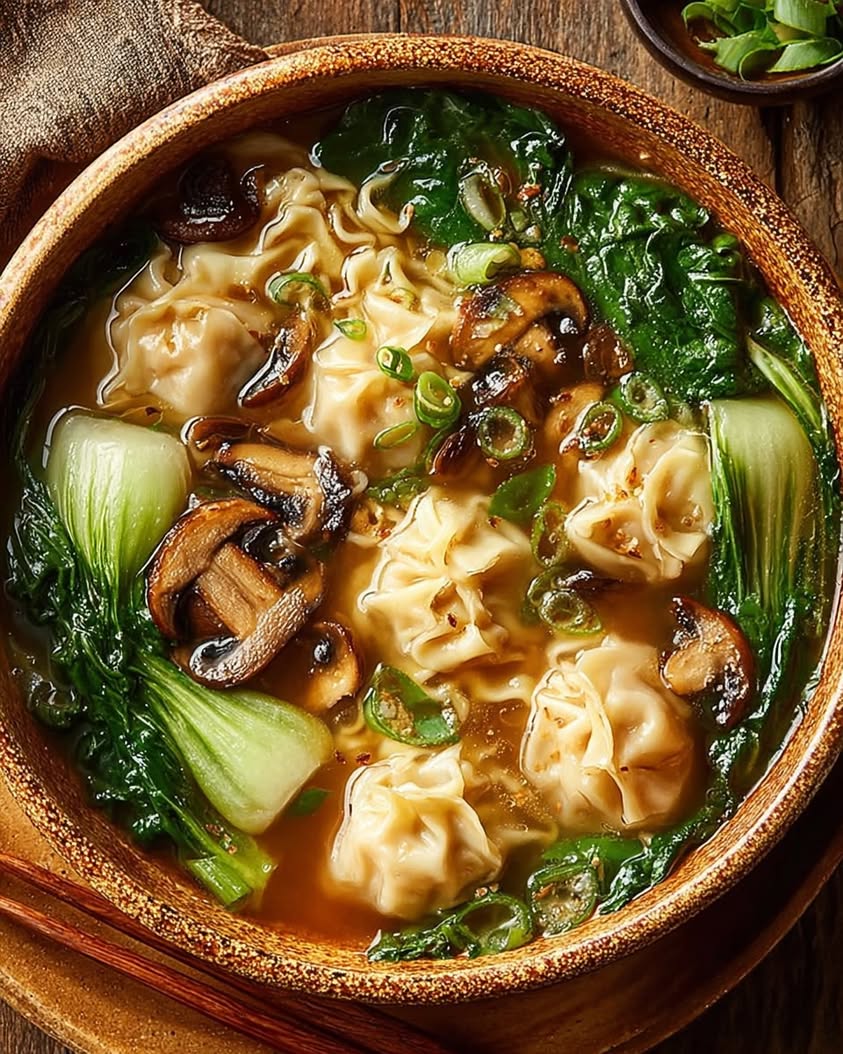
Easy Wonton Noodle Soup with Mushrooms for Cozy Nights
There is something deeply soothing about a steaming bowl of Easy Wonton Noodle Soup with Mushrooms for Cozy Nights. Picture this: tender pork and shrimp wontons floating in a fragrant ginger garlic broth, chewy egg noodles tangled around your chopsticks, and earthy mushrooms adding a rich depth that warms you from the inside out. This Easy Wonton Noodle Soup with Mushrooms for Cozy Nights delivers restaurant quality flavor right in your own kitchen without requiring years of culinary training or a trip to a specialty market.
The first time you ladle that golden broth over a nest of noodles and plump wontons, you will understand why this bowl has comforted generations of families across Asia and beyond. The aroma alone, a blend of toasted sesame, fresh scallions, and simmering ginger, fills your home with an invitation to slow down and savor. Whether you are nursing a cold, winding down after a long workweek, or simply craving something nourishing, this Easy Wonton Noodle Soup with Mushrooms for Cozy Nights fits the moment perfectly. It is the kind of meal that hugs you back.
Even better, this recipe simplifies the process so anyone can make it. You can use store-bought wrappers and pre-made broth shortcuts, or go fully homemade when you have extra time. The mushrooms add an unexpected umami punch that elevates the dish beyond the typical wonton soup you might find at a takeout counter. By the end of this guide, you will have every tool, tip, and technique needed to create a bowl that feels both nostalgic and impressively gourmet.
Quick Recipe Highlights
- Flavor Profile: The broth balances savory soy, bright rice vinegar, aromatic ginger, and a hint of toasted sesame. The wontons bring a savory pork and shrimp filling, while the mushrooms add deep earthy notes.
- Texture: Each spoonful offers a delightful contrast of silky broth, bouncy wonton wrappers, springy egg noodles, and tender mushroom slices. The crisp scallions on top add a satisfying snap.
- Aroma: Ginger and garlic hit your senses first, followed by the nutty fragrance of sesame oil. Fresh scallions and cilantro round out the bouquet with bright herbal notes.
- Visual Appeal: A golden broth cradles pale wontons and amber noodles, while dark mushrooms and vivid green scallions create a beautiful color contrast. A drizzle of chili oil adds a ruby red accent.
- Skill Level Needed: This recipe suits beginners who can boil water and fold a simple wonton. The folding technique is forgiving, and even imperfect shapes taste wonderful.
- Special Equipment: You need a large pot, a mixing bowl, a small spoon, and a sharp knife. A slotted spoon helps lift wontons gently, and a ladle makes serving clean and easy.
Recipe Overview
- Difficulty Level: This dish earns an easy rating because the steps are straightforward and the ingredients are accessible. The wonton folding looks fancy but requires only a few practice folds. Even if your wontons look rustic, they will taste fantastic. The broth simmers largely unattended, giving you time to focus on assembly.
- Category: This recipe works as a main course soup, a light dinner, or a hearty lunch. You can also serve it as a starter for a larger Asian-inspired meal. It fits brunch, dinner, and late-night cravings equally well.
- Cuisine: Wonton noodle soup originates from Cantonese culinary traditions in southern China. Over centuries, it spread across Hong Kong, Taiwan, and Southeast Asia, picking up regional twists along the way. The mushroom addition nods to both Chinese and Japanese umami traditions. Today, it stands as a beloved comfort food worldwide.
- Cost: A pot serving four people costs roughly eight to twelve dollars when using store-bought wrappers and ground pork. Shrimp raises the cost slightly but adds tremendous flavor. Mushrooms, especially cremini or shiitake, remain affordable and widely available.
- Season: This soup shines brightest in autumn and winter when cold weather calls for warming bowls. However, its light broth and fresh garnishes make it welcome in spring and summer too. Rainy days year-round provide the perfect excuse to simmer a pot.
- Occasion: Serve this soup for casual family dinners, cozy date nights, or meal prep lunches throughout the week. It also impresses at dinner parties when you set up a build-your-own bowl station. Sick days and recovery meals become far more bearable with this bowl in hand.
Why You’ll Love This Recipe
The taste and texture appeal of this Easy Wonton Noodle Soup with Mushrooms for Cozy Nights hits every note you want from comfort food. The broth delivers a savory, slightly salty, gently aromatic experience that coats your tongue without feeling heavy. Meanwhile, the wontons pop with juicy pork and sweet shrimp, and their thin wrappers slip against your teeth in the most satisfying way. The noodles add a chewy backbone, and the mushrooms contribute a meaty, almost steak-like bite that surprises and delights. Every spoonful offers a new combination of flavors and textures, which keeps the meal exciting from the first taste to the last drop.
Convenience and preparation benefits make this recipe a weeknight hero. You can fold a batch of wontons in twenty minutes flat, and they freeze beautifully for months. The broth comes together with pantry staples you likely already own, such as soy sauce, sesame oil, garlic, and ginger. Cleanup involves one pot and one mixing bowl, which means less time scrubbing and more time enjoying your meal. Additionally, you can prep components ahead of time and assemble everything in under ten minutes when hunger strikes. This flexibility transforms a seemingly involved dish into a practical everyday option.
Nutritional advantages give this soup a wholesome edge over heavier comfort foods. Lean ground pork and shrimp provide high-quality protein, while the mushrooms deliver fiber, B vitamins, and antioxidants. Ginger and garlic contribute anti-inflammatory compounds that support immune health. The broth hydrates and satisfies without excessive calories, and you control the sodium level by using low-sodium soy sauce and homemade stock. Adding bok choy or spinach boosts the vitamin and mineral content even further, making this a well-rounded meal you can feel good about serving.
Social and entertaining value sets this dish apart from typical weeknight fare. A pot of wonton soup invites interaction, whether you host a dumpling folding party or set out toppings for guests to customize their bowls. The recipe scales easily for crowds, and the presentation looks impressive with minimal effort. Children love helping fold wontons, which turns dinner preparation into a family activity. For date nights, the intimate act of sharing a warm, nourishing bowl creates connection and conversation that takeout simply cannot match.
Cost effectiveness and accessibility round out the reasons this recipe deserves a permanent spot in your rotation. Compared to ordering wonton soup delivery, which often costs twelve to fifteen dollars per person, this homemade version feeds four for the same price. The ingredients live in the international aisle of most grocery stores, and you can substitute items freely based on what is available. Nothing about this recipe demands a trip to a specialty market or a high-end kitchen store. It proves that extraordinary flavor does not require an extraordinary budget.
Historical Background and Cultural Significance
The origin story of wonton noodle soup traces back to northern China, where wheat-based dumplings have been enjoyed for over two thousand years. Traders and travelers carried these dumplings southward, and by the Qing dynasty, Cantonese cooks had developed their own style featuring thin wrappers and pork fillings. The addition of noodles transformed the dish from a simple dumpling soup into a complete meal. Street vendors in Guangzhou began selling bowls to workers and passersby, cementing wonton noodle soup as a beloved staple of daily life.
Cultural importance surrounds this dish in many Asian communities. In Cantonese culture, wontons symbolize family unity and good fortune because their shape resembles ancient gold ingots. Families gather to fold hundreds of wontons before Lunar New Year, filling freezers and hearts alike. In Hong Kong, wonton noodle shops operate as neighborhood institutions, some spanning multiple generations of the same family. The dish represents hospitality, nourishment, and the enduring bond between food and community.
The evolution of the recipe reflects centuries of migration and adaptation. As Chinese communities settled in Southeast Asia, Thailand, Malaysia, and Singapore, they adapted wonton soup to local palates. Thai versions added fish sauce and chilies, while Malaysian cooks introduced dark soy sauce and pickled greens. When wonton soup reached Western shores, restaurants tailored the broth to milder tastes but kept the essential dumpling and noodle combination intact. Today, hundreds of variations exist, each telling a story of place and people.
Regional variations showcase the dish’s remarkable versatility. Hong Kong style features thin shrimp wontons and a clear, delicate broth. Sichuan versions turn up the heat with chili oil and numbing peppercorns. Taiwanese beef wonton soup swaps pork for rich braised beef and thickens the broth. Shanghai style uses larger, heartier wontons with a savory pork and vegetable filling. Meanwhile, Japanese interpretations incorporate dashi and miso, creating a unique umami profile. This recipe draws inspiration from several traditions while keeping preparation simple for home cooks.
Ingredient Deep Dive
Wonton wrappers provide the essential vessel for the filling, and their history stretches back to ancient China where wheat dough became a canvas for creativity. These thin squares or circles offer a neutral flavor that lets the filling shine. Nutritionally, they contribute carbohydrates and a small amount of protein, forming the energy backbone of the meal. When selecting wrappers, look for ones with smooth, pliable texture and no dry or cracked edges. Store them in the refrigerator for up to two weeks or freeze for six months. If you cannot find wonton wrappers, gyoza skins work well, though they are thicker.
Ground pork serves as the traditional base for wonton filling, prized for its juiciness and mild flavor. In Chinese culture, pork symbolizes prosperity and abundance, making it a fitting centerpiece for celebratory meals. This protein delivers B vitamins, zinc, and iron, supporting energy and immune function. Choose pork with about twenty percent fat for the best texture, and avoid extra-lean varieties that produce dry wontons. Fresh ground pork keeps in the refrigerator for two days or the freezer for three months. Ground chicken or turkey offers a lighter substitute, though you should add a bit of oil to maintain moisture.
Shrimp elevates the filling with natural sweetness and a springy bite that distinguishes great wontons from average ones. Coastal Chinese communities have long paired shrimp with pork, a combination that represents harmony and balance in traditional cooking philosophy. Shrimp provides lean protein, selenium, and iodine, which support thyroid and metabolic health. Select firm, translucent shrimp with a clean sea smell, and avoid any that appear mushy or gray. Fresh shrimp lasts one to two days refrigerated, while frozen shrimp keeps for six months. If shrimp is unavailable, chopped scallops or extra pork make fine alternatives.
Mushrooms, the star addition in this recipe, bring earthy depth and a satisfying meaty texture that transforms the broth. Asian cultures have revered mushrooms for centuries as both food and medicine, associating them with longevity and vitality. Shiitake mushrooms contain beta-glucans, which support immune health, along with B vitamins and vitamin D. Cremini mushrooms offer similar benefits at a lower price point. Choose mushrooms that feel firm and dry, never slimy, and store them in a paper bag in the refrigerator for up to a week. Portobello, oyster, or even dried porcini mushrooms make excellent substitutes.
Egg noodles provide the chewy, springy foundation that makes this dish a complete meal rather than just a soup. Chinese cooks have made wheat noodles for over four thousand years, and their versatility has made them a global staple. They supply carbohydrates for energy, along with some protein and iron. Fresh egg noodles deliver the best texture, but dried varieties work perfectly well. Look for noodles labeled wonton noodles or thin egg noodles for authentic results. Rice noodles make a gluten-free substitute, and soba noodles offer a nutty Japanese twist.
Fresh ginger and garlic form the aromatic backbone of the broth, infusing it with warmth and complexity. These roots have anchored Asian cooking for millennia, valued both for flavor and medicinal properties. Ginger aids digestion and reduces inflammation, while garlic supports cardiovascular health and immune function. Select ginger that feels heavy and firm with smooth skin, and garlic heads that are tight and compact. Both keep for weeks in a cool, dark place. If fresh ginger is unavailable, use a teaspoon of ground ginger, though the flavor will be less bright.
Common Mistakes to Avoid
- Overfilling the wontons causes the wrappers to tear during boiling, which releases the filling into the broth and creates a cloudy, messy result. Use just a teaspoon of filling per wrapper and resist the urge to add more.
- Skipping the seal on wonton edges leads to unwrapping during cooking. Moisten the edges with water before pressing firmly, and pinch out any air bubbles trapped inside the wrapper.
- Boiling wontons too vigorously breaks delicate wrappers and toughens the filling. Maintain a gentle simmer and stir occasionally to prevent sticking without damaging the dumplings.
- Underseasoning the broth results in a bland soup that disappoints even perfect wontons. Taste the broth before serving and adjust soy sauce, salt, and sesame oil as needed for a balanced, savory profile.
- Overcooking the noodles turns them mushy and destroys their pleasant chew. Cook them separately if possible, and always err on the side of slightly underdone since they continue softening in hot broth.
- Adding all ingredients to the pot at once creates uneven cooking and muddled flavors. Cook wontons, noodles, and mushrooms separately or in stages, then combine them in individual bowls for the best results.
- Using stale or dried-out wonton wrappers causes cracking and filling leaks. Check freshness before starting, and keep wrappers covered with a damp cloth while you fold to prevent drying.
- Neglecting to taste the filling before wrapping leaves you with bland wontons and no chance to fix them. Cook a small spoonful of filling in the microwave or a pan, taste it, and adjust seasonings accordingly.
- Reheating the entire pot of soup repeatedly overcooks the noodles and wontons. Store components separately and combine only what you plan to eat in each serving for the best texture every time.
- Forgetting the finishing garnishes leaves the soup flat and one-dimensional. Scallions, cilantro, sesame oil, and chili oil add brightness, aroma, and visual appeal that complete the dish.
Essential Techniques
Folding wontons properly ensures they hold their shape and cook evenly without leaking. Start by placing a wrapper in your palm and adding a teaspoon of filling to the center. Dip your finger in water and moisten all four edges, then fold the wrapper in half to form a triangle or half-moon. Press firmly to seal, eliminating air pockets, then bring the two bottom corners together and pinch them to create the classic wonton shape. This technique matters because a well-sealed wonton stays intact through boiling and delivers a clean, professional appearance. Practice with a few wrappers before committing to the whole batch.
Building a flavorful broth requires layering aromatics before adding liquid. Heat a tablespoon of oil in your pot, then sauté minced ginger and garlic for thirty seconds until fragrant but not browned. Add mushrooms and cook until they release their moisture and begin to brown, which deepens their flavor. Pour in chicken or vegetable stock, soy sauce, and a splash of rice vinegar, then simmer for fifteen minutes to meld the flavors. This step is critical because a rushed broth tastes thin and uninspired. Taste and adjust before adding wontons, since the dumplings will absorb some seasoning as they cook.
Boiling wontons gently prevents them from breaking apart and ensures the filling cooks through. Bring a separate pot of water to a gentle boil, then add wontons in small batches without crowding. Stir once to prevent sticking, then reduce heat to a simmer. Wontons are done when they float to the surface and the wrappers turn slightly translucent, usually three to four minutes for fresh wontons. Using a separate pot keeps the broth clear and prevents starch from clouding it. This technique makes the difference between a pristine bowl and a murky one.
Pro Tips for Perfect Easy Wonton Noodle Soup with Mushrooms for Cozy Nights
Freeze your wontons on a parchment-lined tray before transferring them to a freezer bag. This prevents them from sticking together and lets you cook only what you need. Frozen wontons go directly into boiling water without thawing and take about five minutes to cook.
Add a piece of kombu or a few dried shiitake mushrooms to the broth while it simmers. These ingredients boost umami dramatically and give the soup a restaurant-quality depth that surprises guests. Remove the kombu before it becomes slimy, usually after ten minutes.
Cook noodles separately and rinse them briefly under warm water to remove excess starch. This keeps the broth clear and prevents the noodles from turning gummy. Toss noodles with a drop of sesame oil to stop them from clumping while you assemble bowls.
Use a combination of fresh and dried mushrooms for maximum flavor complexity. Dried mushrooms contribute intense umami to the broth, while fresh ones provide texture in the bowl. Soak dried mushrooms in warm water for twenty minutes and use the soaking liquid in the broth.
Finish each bowl with a drizzle of toasted sesame oil and a spoonful of chili oil right before serving. These finishing oils add aroma and a glossy sheen that makes the soup look as good as it tastes. Do not add them during cooking, as heat diminishes their fragrance.
Taste your filling before wrapping by cooking a small test patty in a pan. This simple step catches seasoning problems before they affect the entire batch. Adjust salt, soy sauce, and aromatics based on the test result for consistently delicious wontons.
Keep wonton wrappers under a damp cloth or plastic wrap while folding to prevent them from drying out. Dry wrappers crack easily and ruin the seal. Work quickly, and return unused wrappers to the package immediately.
Serve soup in warmed bowls to maintain temperature throughout the meal. Run hot water into each bowl, let it sit for a minute, and dry before ladling in the soup. This small detail keeps every spoonful hot until the last bite.
Variations and Adaptations
Regional variations offer endless ways to explore this dish. For a Sichuan-inspired version, add chili bean paste and Sichuan peppercorns to the broth for a numbing, spicy kick. A Thai adaptation uses coconut milk, lemongrass, and fish sauce for a creamy, aromatic twist. Japanese-style wonton soup incorporates miso paste and dashi for a deeply savory profile. Korean cooks might add gochugaru and kimchi for a fermented, spicy punch. Each variation reflects local ingredients and tastes while preserving the comforting essence of wonton noodle soup.
Seasonal adaptations keep this recipe fresh year-round. In summer, use fresh corn, tomatoes, and basil in the broth for a lighter, brighter bowl. Autumn calls for squash, kale, and warming spices like cinnamon and star anise. Winter welcomes root vegetables, hearty greens, and extra ginger for immune support. Spring brings peas, asparagus, and fresh herbs that celebrate the season’s bounty. Adjusting ingredients with the calendar ensures you always eat at peak flavor.
Dietary modifications make this soup accessible to nearly everyone. Swap pork for ground chicken, turkey, or crumbled tofu to reduce fat or eliminate meat entirely. Use gluten-free tamari and rice noodles for a celiac-friendly version. Vegan cooks can use mushroom broth, plant-based wonton wrappers, and finely chopped vegetables or plant-based protein in the filling. Low-carb eaters substitute zucchini noodles or shirataki noodles for traditional egg noodles. Each adaptation maintains the soul of the dish while meeting specific needs.
Flavor variations let you customize the broth to your mood. Add a spoonful of peanut butter and chili oil for a satay-inspired bowl. Stir in miso and sake for a Japanese izakaya feel. Finish with lime juice, cilantro, and jalapeño for a bright, Mexican-inspired take. A splash of coconut milk and red curry paste creates a Thai curry version that tastes entirely new. Do not be afraid to experiment with what you have on hand.
Texture modifications address different preferences. Some people prefer silky, thin wonton wrappers, while others enjoy the heartier bite of gyoza skins. Crispy fried wonton strips added at the end provide crunch. Soft-boiled eggs or poached eggs add richness and extra protein. Toasted nuts or fried shallots contribute a satisfying crunch that contrasts the soft noodles and dumplings.
Presentation alternatives suit different occasions. Serve the soup in a large communal bowl and let guests serve themselves. Arrange individual bowls on a tray with garnishes in small dishes for a dinner party feel. For a modern twist, plate noodles in the center of a shallow bowl, arrange wontons on top, and pour broth tableside. A deconstructed version lets picky eaters assemble their own bowls.
Serving and Presentation Guide
Plating techniques transform a simple soup into a visual experience. Place a nest of noodles in the center of a deep bowl, then arrange wontons around the noodles in a circular pattern. Ladle broth gently over the top, allowing it to pool around the ingredients. This arrangement ensures every component remains visible and inviting. Add mushrooms and vegetables around the edges for color and texture. A clean rim on the bowl makes the presentation look intentional and professional.
Garnishing ideas elevate the final look and flavor. Scatter thinly sliced scallions across the surface for a pop of green. Add fresh cilantro leaves or Thai basil for herbal brightness. A drizzle of chili oil creates an attractive red swirl and adds heat. Toasted sesame seeds contribute texture and a nutty aroma. Pickled vegetables, such as radish or cucumber, add tang and visual interest. Each garnish should serve both form and function.
Traditional accompaniments round out the meal. Serve with a side of steamed bok choy drizzled with oyster sauce. A small dish of chili oil, soy sauce, and vinegar lets guests adjust seasoning. Steamed rice makes the meal heartier for big appetites. Chinese pickles or kimchi add a fermented, tangy contrast. A pot of hot jasmine tea completes the traditional experience.
Modern serving suggestions bring contemporary flair. Offer a build-your-own bowl bar with various broths, proteins, and toppings. Pair the soup with a crisp Asian slaw or cucumber salad for a lighter meal. Serve in mason jars for a trendy lunch presentation. For a dinner party, pre-portion components and let guests assemble at the table. These approaches make the meal interactive and memorable.
Temperature considerations matter for food safety and enjoyment. Serve broth piping hot, around one hundred eighty degrees Fahrenheit, to release aromas and satisfy. Cold garnishes should stay chilled until the moment of serving. If you offer multiple broths, keep them in insulated carafes at the table. Never let soup sit at room temperature for more than two hours to avoid bacterial growth.
Portion control tips help you serve balanced bowls. Aim for four to six wontons per person as a main course, or two to three as an appetizer. Use one cup of cooked noodles per serving, and let broth fill the bowl about three-quarters full. This ratio ensures every bite includes noodles, wontons, and broth. Adjust portions based on appetite and whether the soup serves as the sole dish or part of a larger meal.
Wine and Beverage Pairing
Wine pairings enhance the savory, aromatic notes of wonton noodle soup. A dry Riesling offers crisp acidity and subtle sweetness that complements the ginger and sesame. An off-dry Gewürztraminer brings floral and spice notes that echo the broth’s complexity. For red wine lovers, a light Pinot Noir provides soft tannins without overwhelming the delicate flavors. Sparkling wine or Champagne adds celebratory effervescence that cuts through the richness of the pork filling.
Non-alcoholic alternatives suit every guest and occasion. Jasmine or oolong tea offers a traditional pairing that cleanses the palate between bites. Sparkling water with lime or cucumber refreshes without competing with the soup’s flavors. A ginger beer or homemade ginger lemonade echoes the broth’s spicy notes. Asian-style barley tea provides a nutty, caffeine-free option that feels authentic and comforting.
Coffee and tea pairings, though unconventional with soup, can work beautifully. A light green tea like sencha brings grassy notes that complement the mushrooms. Genmaicha, with its roasted rice, mirrors the toasted sesame oil. For a bolder option, a light roast pour-over coffee pairs surprisingly well with the savory broth. Skip dark roasts and heavy cream, which overpower delicate Asian flavors.
Temperature considerations apply to beverages as well as food. Serve white wines well chilled, around forty-five degrees Fahrenheit, to maximize crispness. Red wines taste best slightly below room temperature, around sixty degrees. Serve teas hot but not boiling to avoid scalding. Cold beverages should be genuinely cold to provide contrast with the warm soup. Match beverage temperature to the season and the drinker’s preference.
Storage and Shelf Life
Storage methods determine how well leftovers hold up. Always store components separately for the best results. Keep broth in one container, noodles in another, and wontons in a third. This separation prevents the noodles from absorbing all the broth and turning mushy. Use airtight containers that seal properly to maintain freshness. Label containers with dates so you know exactly when to use them.
Temperature requirements ensure food safety. Refrigerate all components within two hours of cooking, and keep the refrigerator at or below forty degrees Fahrenheit. Broth and cooked wontons last three to four days when properly chilled. Cooked noodles last two to three days before becoming sticky. Never leave soup out overnight or reheat it multiple times, as this encourages bacterial growth.
Container recommendations make storage easier and safer. Glass containers with locking lids work best because they do not stain or retain odors. BPA-free plastic containers offer a lightweight alternative for lunches. Mason jars work well for broth and individual portions. For freezing, use silicone bags or freezer-safe containers that leave headspace for expansion. Avoid storing hot food directly in cold containers, as this can crack glass.
Signs of spoilage help you know when to discard leftovers. A sour or off smell indicates bacterial growth. Cloudy broth that was once clear may signal spoilage. Slimy textures on noodles or wontons mean they should be thrown away. Mold, discoloration, or unusual bubbling also indicate unsafe food. When in doubt, throw it out. Food poisoning is never worth the risk.
Reheating instructions preserve texture and flavor. Reheat broth on the stovetop over medium heat until steaming, but avoid boiling, which can make it salty. Warm wontons in the broth for a minute or two, or steam them separately. Reheat noodles briefly in boiling water or the microwave with a splash of water. Combine everything in bowls just before serving to prevent sogginess.
Freezing guidelines extend shelf life significantly. Freeze uncooked wontons on a tray, then transfer to bags for up to three months. Freeze broth in containers for up to three months, leaving space for expansion. Cooked noodles do not freeze well and should be made fresh. When ready to eat, thaw broth overnight in the refrigerator and cook wontons from frozen. This approach makes future meals effortless.
Make Ahead Strategies
Prep timeline planning makes this recipe achievable even on busy days. Fold wontons up to two days in advance and refrigerate them on a parchment-lined tray. Make the broth up to three days ahead and store it in the refrigerator. Chop vegetables and garnishes the morning of serving. With these steps done, final assembly takes just fifteen minutes, transforming a seemingly complex dish into a weeknight reality.
Storage between steps keeps components fresh without compromising quality. Cover folded wontons with a damp paper towel and plastic wrap to prevent drying. Cool broth completely before refrigerating to avoid condensation and bacterial growth. Store chopped scallions and herbs in paper towels inside sealed bags to maintain crispness. Mushrooms should stay dry until cooking to prevent them from becoming slimy.
Quality impact assessment helps you decide what to prep ahead. Wontons and broth actually improve after a day, as flavors meld and deepen. Noodles should always be cooked fresh for the best texture. Garnishes lose brightness quickly, so chop them close to serving time. Understanding which components benefit from advance prep and which do not ensures an excellent final result.
Assembly tips streamline the final steps. Warm bowls before filling them with hot broth. Cook noodles and wontons simultaneously in separate pots to save time. Ladle broth over assembled bowls at the last moment to keep everything hot. Set out garnishes in small bowls so guests can customize their own servings. These small efficiencies add up to a smooth, stress-free meal.
Reheating guidelines ensure leftovers taste nearly as good as fresh. Reheat broth gently on the stove, never in the microwave, which heats unevenly. Warm wontons in the broth for one minute, no longer. Refresh noodles in boiling water for thirty seconds. Add fresh garnishes after reheating to restore brightness and crunch.
Fresh element additions bring leftovers back to life. A squeeze of lime juice brightens the broth. Fresh herbs restore aroma. A new drizzle of sesame oil or chili oil adds fragrance. Crispy fried shallots or wonton strips reintroduce texture. These small touches make reheated soup feel intentional rather than leftover.
Scaling Instructions
Halving the recipe works easily for smaller households. Use two servings of noodles and half the wontons, though you can freeze extras. Make the full batch of broth anyway, since it freezes beautifully and provides a quick base for future meals. Reduce aromatics slightly, but keep the ginger and garlic generous for flavor. The cooking time remains nearly the same, making this a simple adjustment.
Doubling or tripling the recipe suits parties and meal prep. Fold wontons in batches to avoid overwhelming your workspace. Use the largest pot you own for broth, or divide it between two pots. Cook noodles and wontons in multiple batches to prevent crowding. Keep finished components warm in a low oven while you work through the rest.
Equipment adjustments matter when scaling up. A wider pot exposes more surface area for evaporation, so add extra broth to compensate. Multiple sheet pans help freeze large batches of wontons. Extra bowls and ladles make serving a crowd easier. Consider borrowing equipment from friends or using disposable alternatives for very large gatherings.
Timing modifications keep large batches manageable. Start broth first since it holds well. Fold wontons while broth simmers. Cook noodles just before serving to prevent them from sitting. If you must cook noodles ahead, toss them with oil and reheat briefly in hot broth. Planning the sequence prevents bottlenecks and keeps everything hot.
Storage considerations apply to scaled recipes. Extra wontons freeze perfectly, so make more than you need and enjoy them later. Broth keeps for three months in the freezer. Leftover noodles do not store well, so cook only what you plan to eat. Portion extras into single-serving containers for grab-and-go lunches throughout the week.
Nutritional Deep Dive
Macro breakdown for this recipe provides a balanced nutritional profile. Each serving contains roughly four hundred to five hundred calories, depending on portion size. Protein reaches twenty-five to thirty grams, mostly from the pork, shrimp, and eggs in the noodles. Carbohydrates hover around fifty grams, contributed by noodles and wonton wrappers. Fat stays moderate at twelve to fifteen grams, primarily from pork and sesame oil. These macros create a satisfying, energy-sustaining meal.
Micronutrient analysis reveals impressive vitamin and mineral content. Shrimp provides selenium, iodine, and vitamin B12. Pork delivers zinc, iron, and thiamine. Mushrooms contribute vitamin D, B vitamins, and antioxidants like ergothioneine. Ginger and garlic add anti-inflammatory compounds. Scallions and cilantro supply vitamin K, vitamin C, and folate. This combination supports immune function, energy metabolism, and overall wellness.
Health benefits extend beyond basic nutrition. The ginger in the broth aids digestion and reduces nausea. Garlic supports cardiovascular health and has antimicrobial properties. Mushrooms provide immune-boosting beta-glucans. The high water content of soup promotes hydration. Protein from pork and shrimp supports muscle repair and satiety. Together, these ingredients make the dish genuinely nourishing.
Dietary considerations vary based on preparation. Standard versions contain gluten from wonton wrappers and soy sauce, plus shellfish from shrimp. Sodium can run high with commercial broth and soy sauce. Fat content depends on the pork you choose. Being aware of these factors helps you adapt the recipe to specific dietary needs without sacrificing flavor.
Portion analysis helps with meal planning. A one-and-a-half-cup serving with four wontons and one cup of noodles suits most adults as a main course. Active individuals or athletes may prefer larger portions. Those watching calories can reduce noodles and increase vegetables. Children typically eat half the adult portion, though appetites vary widely.
Weight management tips make this soup a smart choice. The high protein and water content promote fullness with fewer calories than heavier comfort foods. Loading up on mushrooms, bok choy, and other vegetables adds volume without many calories. Using lean pork and low-sodium broth trims fat and salt. Skipping fried garnishes keeps the dish light while still satisfying.
Dietary Adaptations
Gluten-free adaptations require swapping wonton wrappers for gluten-free versions made from rice flour or tapioca starch. Use tamari or coconut aminos instead of soy sauce. Choose Print
Wonton Noodle Soup with Mushrooms
- Total Time: 1 hour
- Yield: 4
Description
A comforting bowl of wonton noodle soup featuring savory pork and shrimp wontons, fresh mushrooms, and egg noodles in a flavorful broth.
Ingredients
- For the wontons: 1/2 pound ground pork
- 1/2 pound shrimp, peeled, deveined, and finely chopped
- 2 green onions, finely chopped
- 1 tablespoon soy sauce
- 1 teaspoon sesame oil
- 1 teaspoon grated ginger
- 1 teaspoon cornstarch
- 1/2 teaspoon salt
- 1/4 teaspoon white pepper
- 30 wonton wrappers
- For the soup: 8 cups chicken broth
- 1 cup sliced shiitake mushrooms
- 1 cup sliced cremini mushrooms
- 2 cloves garlic, minced
- 1 tablespoon soy sauce
- 1 teaspoon sesame oil
- Salt and white pepper to taste
- For assembly: 8 ounces thin egg noodles
- 2 green onions, thinly sliced, for garnish
- Fresh cilantro for garnish (optional)
Instructions
- In a large bowl, combine ground pork, chopped shrimp, green onions, soy sauce, sesame oil, ginger, cornstarch, salt, and white pepper. Mix well until sticky.
- Place a wonton wrapper on a clean surface. Put about 1 teaspoon of filling in the center. Moisten edges with water, fold in half to form a triangle, and press to seal. Bring the two bottom corners together and overlap, moistening to seal. Repeat with remaining wrappers and filling.
- In a large pot, bring chicken broth to a simmer. Add shiitake and cremini mushrooms, garlic, soy sauce, and sesame oil. Simmer for 10 minutes. Season with salt and white pepper.
- While broth simmers, cook egg noodles according to package instructions. Drain and set aside.
- Gently add wontons to the simmering broth. Cook for 5-7 minutes, until they float and are cooked through.
- To serve, divide noodles among bowls. Ladle broth and wontons over noodles. Garnish with sliced green onions and cilantro if desired.
Notes
You can customize the seasonings to taste. For a spicier broth, add chili oil or sliced chili peppers. You can also substitute other mushrooms like oyster or enoki.
- Prep Time: 30 minutes
- Cook Time: 30 minutes
- Method: Main
- Cuisine: Chinese