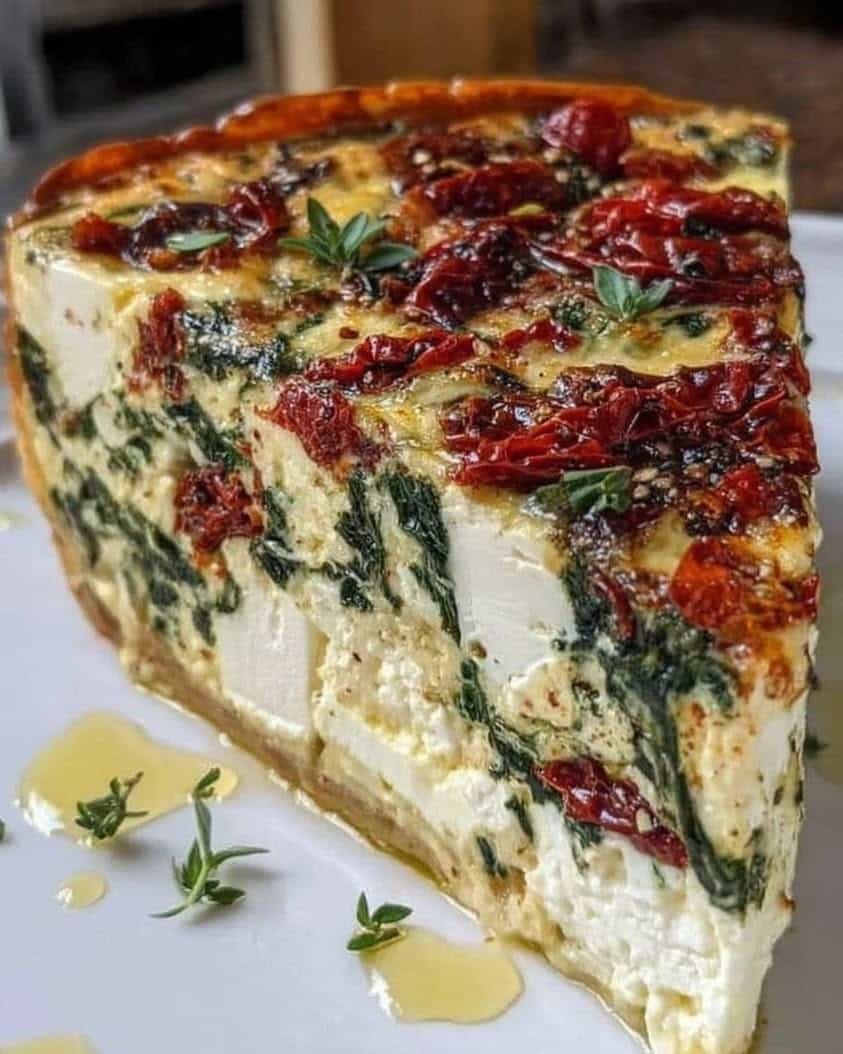
Spinach, Sun-Dried Tomato and Feta Crustless Quiche: A Mediterranean Brunch Favorite
This Spinach, Sun-Dried Tomato and Feta Crustless Quiche delivers everything you crave in a Mediterranean-inspired brunch dish without the fuss of making a pastry crust. Imagine cutting into a golden, tender wedge filled with vibrant green spinach, sweet-tangy sun-dried tomatoes, and creamy pockets of salty feta cheese. The eggs bake into a silky, custardy texture that melts in your mouth, while the vegetables and cheese add bold layers of flavor in every single bite. Whether you serve it warm from the oven or at room temperature on a buffet table, this crustless quiche recipe fits beautifully into almost any meal plan.
You might wonder why anyone would skip the crust when quiche traditionally comes wrapped in flaky pastry. The answer comes down to simplicity, nutrition, and versatility. A crustless quiche comes together in minutes with basic pantry ingredients, and it also works for gluten-free eaters without any special flour blends or complicated substitutions. This spinach, sun-dried tomato and feta crustless quiche recipe focuses entirely on the filling, so the eggs, vegetables, and cheese take center stage. Additionally, because you skip the dough, you save calories and time while gaining a dish that travels well to potlucks, brunches, and holiday gatherings.
The flavor combination here draws from Greek and Mediterranean cooking traditions. Spinach and feta form one of the most beloved pairings in that cuisine, and sun-dried tomatoes add a deep, concentrated sweetness that balances the briny cheese. Meanwhile, a touch of garlic and dried oregano rounds out the profile. Consequently, this easy spinach, sun-dried tomato and feta crustless quiche tastes impressive enough for company yet remains approachable enough for a casual weekend breakfast. If you love spinach and feta quiche but want something lighter, this recipe will quickly become a staple in your kitchen rotation.
Quick Recipe Highlights
- Flavor Profile: This crustless quiche balances the salty tang of feta cheese with the sweet, concentrated richness of sun-dried tomatoes. The spinach adds an earthy note, while garlic and oregano bring a warm Mediterranean aroma. Because the flavors meld during baking, each bite tastes savory and satisfying.
- Texture: The eggs bake into a smooth, custardy consistency that feels light rather than heavy. Meanwhile, the spinach and sun-dried tomatoes add pleasant chew, and the feta provides creamy little pockets throughout. Additionally, a slight golden crust forms on the top for a touch of contrast.
- Aroma: As this quiche bakes, the kitchen fills with the scent of warm garlic, oregano, and nutty baked eggs. The sun-dried tomatoes release a sweet, roasted fragrance that complements the savory feta. Consequently, family members often wander into the kitchen before the dish even leaves the oven.
- Visual Appeal: The bright green spinach and ruby-red sun-dried tomatoes pop against the pale golden eggs, creating a colorful, appetizing presentation. Slices reveal beautiful layers of cheese and vegetables that look almost like a savory mosaic. Furthermore, a sprinkle of fresh herbs on top brightens the whole dish.
- Skill Level Needed: This recipe requires only basic kitchen skills, such as whisking eggs and chopping vegetables. If you can sauté greens and pour a mixture into a pan, you can make this spinach, sun-dried tomato and feta crustless quiche easily. The oven handles the rest of the work for you.
- Special Equipment: You need a standard 9-inch pie dish or a round cake pan for this quiche. A large mixing bowl, a whisk, and a skillet for sautéing the spinach round out the essential tools. Also, parchment paper or cooking spray prevents sticking and makes cleanup fast.
Recipe Overview
- Difficulty Level: I classify this spinach, sun-dried tomato and feta crustless quiche as easy because it involves no dough handling, no rolling, and no blind baking. The steps flow in a simple order: sauté, whisk, combine, and bake. Even a beginner cook can achieve excellent results on the very first attempt. Consequently, this dish makes a smart choice for anyone new to quiche-making.
- Category: This recipe works as a breakfast, brunch, lunch, or light dinner option. It also functions beautifully as an appetizer when you cut it into small squares. Because it holds up well at room temperature, it suits buffets and potlucks perfectly.
- Cuisine: The recipe draws clear inspiration from Mediterranean and Greek cuisine, particularly the classic spinach and feta combination. French quiche technique influenced the egg custard base, while the sun-dried tomatoes nod to Italian cooking. As a result, this dish blends several culinary traditions into one cohesive, flavorful recipe.
- Cost: The ingredients cost roughly twelve to fifteen dollars total, which breaks down to about two to three dollars per serving. Eggs, frozen spinach, and onions remain budget-friendly staples. Although feta and sun-dried tomatoes cost a bit more, a little goes a long way in this recipe.
- Season: This dish shines in spring and summer when fresh spinach appears at farmers markets. However, since frozen spinach and jarred sun-dried tomatoes stay available year-round, you can enjoy this spinach, sun-dried tomato and feta crustless quiche any month. It also fits beautifully into holiday menus during fall and winter.
- Occasion: Serve this quiche for weekend brunches, baby showers, Easter celebrations, or casual family dinners. It also works well for meal prep because leftovers reheat gently. Consequently, you can make it for almost any gathering without stress.
Why You’ll Love This Recipe
First and foremost, the taste and texture of this spinach, sun-dried tomato and feta crustless quiche win people over immediately. The custard stays soft and creamy, yet it holds its shape when sliced. Simultaneously, the spinach adds a fresh, earthy quality that prevents the dish from feeling too rich. The sun-dried tomatoes deliver bursts of sweet-tart flavor, and the feta brings a salty, tangy punch that ties everything together. Because these ingredients complement one another so well, every bite feels balanced. In fact, even people who normally skip quiche often ask for a second slice.
Convenience also plays a huge role in this recipe’s appeal. Since you skip the crust, you eliminate the most time-consuming and finicky part of traditional quiche. There is no dough to chill, roll, or blind bake. Instead, you simply sauté the vegetables, whisk the eggs, combine everything, and bake. From start to finish, this easy spinach, sun-dried tomato and feta crustless quiche takes under an hour, including oven time. Furthermore, cleanup stays minimal because you use just one skillet and one mixing bowl.
Nutritionally, this quiche delivers impressive value. Eggs provide high-quality protein, vitamins, and healthy fats, while spinach contributes iron, calcium, and fiber. Additionally, sun-dried tomatoes offer antioxidants and vitamin C. Because there is no crust, you avoid excess refined carbohydrates and butter, which makes this dish lighter than traditional quiche. Consequently, this spinach, sun-dried tomato and feta crustless quiche fits comfortably into low-carb, keto-friendly, and gluten-free eating plans with only minor adjustments.
Socially, this dish excels as an entertaining centerpiece. It looks beautiful on a platter, slices neatly, and tastes delicious whether served hot, warm, or at room temperature. Therefore, you can bake it ahead and set it out when guests arrive without any last-minute stress. Pair it with a simple salad and fresh fruit, and you have a complete brunch spread. Because it feeds six generously, it suits everything from intimate family breakfasts to larger holiday gatherings.
Finally, this spinach, sun-dried tomato and feta crustless quiche proves remarkably cost-effective and accessible. The main ingredients come from any grocery store, and most people already have eggs, garlic, and seasonings on hand. Even the specialty items, feta and sun-dried tomatoes, cost relatively little per serving. Consequently, you can serve an elegant, restaurant-quality dish without spending a fortune. This combination of flavor, convenience, nutrition, and value makes this crustless quiche a recipe worth keeping forever.
Historical Background and Cultural Significance
Quiche originated in the Lorraine region of France, where bakers combined eggs, cream, and bacon in a pastry shell centuries ago. The word itself comes from the German word kuchen, meaning cake, which reflects the region’s Germanic influences. Over time, quiche spread across France and eventually around the world, evolving into countless variations. Consequently, the crustless version emerged as cooks sought lighter, simpler alternatives to the traditional pastry-wrapped dish.
Culturally, quiche holds a special place in brunch and lunch traditions across Europe and North America. In France, families serve quiche at casual gatherings, picnics, and cafés. Meanwhile, in the United States, quiche became a staple of elegant brunches during the mid-twentieth century. Additionally, the spinach and feta combination reflects the deep Mediterranean love for pairing greens with salty cheese, a tradition that stretches back to Greek spanakopita and similar savory pies.
The evolution of this spinach, sun-dried tomato and feta crustless quiche tells a story of adaptation and convenience. As more people adopted gluten-free and low-carb lifestyles, the crustless approach gained popularity. Simultaneously, home cooks discovered that a well-seasoned egg custard holds up beautifully without any pastry at all. Consequently, what began as a dietary accommodation turned into a delicious dish in its own right, embraced by eaters of all kinds.
Regional variations abound, and each one adds something unique. In Greece, cooks might fold in fresh dill and kalamata olives. Italian versions sometimes include ricotta and basil. Meanwhile, American cooks often add bacon or ham for extra heartiness. Nevertheless, the core idea remains the same: fresh vegetables, quality cheese, and perfectly baked eggs. This shared foundation connects home cooks across cultures and generations.
Ingredient Deep Dive
Spinach serves as the heart of this recipe, both nutritionally and visually. People have cultivated spinach for over two thousand years, beginning in ancient Persia before it spread to China, Europe, and eventually the Americas. Nutritionally, spinach delivers iron, calcium, vitamin K, and folate, making it one of the most nutrient-dense greens available. When selecting spinach, choose vibrant, crisp leaves without yellowing or sliminess. If you use frozen spinach, squeeze out excess water thoroughly before adding it to the mixture. Store fresh spinach in a breathable bag in the refrigerator for up to five days. As a substitute, kale, Swiss chard, or arugula work beautifully, though each brings a slightly different flavor and texture.
Sun-dried tomatoes bring concentrated sweetness and tang to this spinach, sun-dried tomato and feta crustless quiche. These tomatoes trace their roots to Mediterranean preservation techniques, where farmers dried ripe tomatoes under the sun to extend their shelf life. Today, they deliver lycopene, vitamin C, and antioxidants in a compact, flavorful package. When buying sun-dried tomatoes, look for plump, deep-red pieces packed in olive oil or sold dry. If you choose dry-packed tomatoes, rehydrate them in warm water for fifteen minutes before chopping. Store oil-packed tomatoes in the refrigerator for several weeks, and keep dry ones in a cool pantry for months. Roasted red peppers or chopped kalamata olives make excellent substitutes if needed.
Feta cheese provides the salty, creamy counterpoint that defines this dish. Greeks have made feta for thousands of years, and it holds protected designation of origin status in the European Union. Made from sheep’s milk or a sheep and goat blend, feta offers calcium, protein, and probiotics. When selecting feta, choose blocks packed in brine rather than pre-crumbled varieties, because blocks retain more moisture and flavor. Store feta submerged in its brine in the refrigerator for up to two weeks. For substitutions, goat cheese, ricotta salata, or a firm feta-style cheese from other regions work well.
Eggs form the structural backbone of any quiche, and they deserve careful attention. For the custard in this spinach, sun-dried tomato and feta crustless quiche, use large eggs at room temperature for the smoothest blending. Eggs provide complete protein, choline, and essential vitamins. When buying eggs, check for clean shells and a fresh smell, and store them in the refrigerator for up to five weeks. For a dairy-free version, you can replace some eggs with a chickpea flour batter, though the texture will differ slightly.
Garlic and oregano round out the Mediterranean flavor profile. Fresh garlic cloves deliver the strongest flavor, while garlic powder works in a pinch. Oregano, especially dried Greek oregano, adds an herbal, slightly peppery note. Both ingredients keep well for months in a cool, dark pantry. Fresh thyme or basil can substitute for oregano if you prefer a different herbal direction. Consequently, these simple seasonings elevate the entire dish with minimal effort.
Common Mistakes to Avoid
- Adding wet spinach to the egg mixture causes a watery quiche that never sets properly. Therefore, always squeeze thawed frozen spinach or thoroughly dry sautéed fresh spinach before combining it with the eggs. A few extra seconds of squeezing makes a huge difference in the final texture.
- Overbeating the eggs introduces too much air, which leads to a puffy quiche that collapses and turns rubbery. Consequently, whisk the eggs gently until just combined, and avoid using a high-speed blender for the custard. A fork or simple whisk works best.
- Skipping the sauté step leaves onions and garlic raw and harsh in the finished dish. Always cook aromatics until soft and fragrant before adding them. This step mellows their flavor and prevents unpleasant crunch in the custard.
- Using too much liquid creates a soupy quiche that refuses to set. Measure the milk or cream carefully, and remember that feta and vegetables release moisture during baking. Consequently, restraint with added liquid pays off in a firm, sliceable result.
- Under-seasoning the custard results in a flat, bland quiche because eggs absorb salt slowly. Season the egg mixture with salt and pepper before baking, and taste a small spoonful of the raw mixture if you feel unsure. Additionally, remember that feta adds salt, so balance accordingly.
- Overbaking causes the custard to curdle and separate into watery pools. Therefore, pull the quiche from the oven when the center still jiggles slightly, because residual heat finishes the cooking. A slight wobble signals perfect doneness.
- Cutting the quiche too soon leads to messy, crumbling slices. Let this spinach, sun-dried tomato and feta crustless quiche rest for at least ten minutes after baking so the custard sets fully. Patience here yields clean, beautiful wedges.
- Using a pan that is too small makes the quiche thick and slow to cook, while an oversized pan creates a thin, dry result. Stick with a 9-inch pie dish or equivalent round pan for consistent results. Also, grease the pan well to prevent sticking.
- Neglecting to preheat the oven leads to uneven baking and a soggy center. Always preheat fully to 350 degrees Fahrenheit before placing the quiche inside. Consequently, the custard sets evenly from the first minute.
- Adding watery vegetables like raw zucchini or tomatoes without precooking introduces excess moisture. If you experiment with variations, sauté or salt and drain watery vegetables first to keep the custard firm.
Essential Techniques
Squeezing spinach properly ranks as the most important technique for this spinach, sun-dried tomato and feta crustless quiche. Whether you use frozen or fresh spinach, excess water ruins the custard. After thawing frozen spinach, wrap it in a clean kitchen towel and wring it out over the sink until no more liquid drips. For fresh spinach, sauté it briefly, then press it against the skillet with a spatula to release moisture. This step ensures a firm, sliceable quiche every time. Visual cue: the spinach should look dry and clump together rather than glisten with water.
Whisking eggs gently, rather than vigorously, protects the custard’s silky texture. Overwhisking incorporates air that expands in the oven and then collapses, leaving a rubbery, spongy result. Instead, crack the eggs into a bowl and whisk in a circular motion just until the yolks and whites blend. You should see a uniform pale yellow color with no streaks. Common pitfall: using an electric mixer, which whips in far too much air. Visual cue: the mixture looks smooth and slightly frothy, not foamy or stiff.
Sautéing aromatics and greens before baking deepens flavor and removes excess moisture. Heat a tablespoon of olive oil over medium heat, add the garlic and onion, and cook until translucent and fragrant. Then add the spinach and stir until wilted. This step takes only a few minutes but transforms raw, sharp ingredients into mellow, sweet ones. Additionally, the salt you add during sautéing seasons the vegetables from within. Visual cue: onions turn glossy and slightly golden, while spinach shrinks dramatically and darkens.
Testing for doneness prevents both underbaking and overbaking, the two most common quiche failures. After thirty-five minutes, gently shake the pan. The center should wobble slightly like set gelatin, while the edges look firm and lightly golden. A knife inserted one inch from the edge should come out clean. If the center still sloshes, bake for five more minutes and check again. Consequently, you will pull the quiche at the perfect moment for a creamy, intact custard.
Pro Tips for Perfect Spinach, Sun-Dried Tomato and Feta Crustless Quiche
Use room-temperature eggs and dairy for the smoothest custard. Cold ingredients do not blend as easily, and they can cause uneven baking. Therefore, set your eggs and milk on the counter for twenty minutes before you start. This small step yields a noticeably silkier texture.
Toast the sun-dried tomatoes briefly in the skillet with the garlic to awaken their flavor. This quick step caramelizes their natural sugars and deepens their sweetness. Consequently, the tomatoes taste richer and more complex in the finished quiche.
Crumble the feta by hand rather than using pre-crumbled cheese. Hand-crumbling creates irregular pieces that melt into creamy pockets, while pre-crumbled feta tends to stay dry and grainy. Additionally, block feta tastes fresher and less salty.
Grease the pan generously with butter or olive oil, and consider lining the bottom with parchment paper. This precaution guarantees easy release and clean slices. Moreover, it makes cleanup faster and protects your pan.
Place the quiche on the middle rack of a fully preheated oven, and avoid opening the door during the first twenty-five minutes. Consistent heat allows the custard to set evenly. Consequently, you avoid the dreaded soufflé-like collapse.
Let the quiche rest for ten to fifteen minutes before slicing. This resting period allows the proteins to set and the juices to redistribute. As a result, each wedge holds together beautifully on the plate.
Add a layer of cheese on top during the last ten minutes of baking for a golden, bubbly finish. This extra step creates an appealing crust without any dough. Furthermore, it adds a savory punch that complements the vegetables.
Season the custard with a pinch of nutmeg, which enhances the egg flavor without tasting sweet. Classic French quiche recipes often include this secret ingredient. Consequently, your spinach, sun-dried tomato and feta crustless quiche tastes restaurant-quality.
Variations and Adaptations
Regional variations offer endless ways to customize this spinach, sun-dried tomato and feta crustless quiche. For a Greek twist, add chopped kalamata olives, fresh dill, and a handful of grated kefalotyri cheese. An Italian version might swap the feta for ricotta and add fresh basil and a pinch of red pepper flakes. Meanwhile, a French-inspired adaptation could include caramelized onions and gruyère. Each variation keeps the core custard technique intact while introducing new flavor directions.
Seasonal adaptations let you enjoy this quiche all year long. In spring, fold in fresh asparagus tips and peas along with the spinach. During summer, substitute fresh cherry tomatoes for sun-dried ones and add fresh basil. In fall, roasted butternut squash and sage make a cozy version. Consequently, this recipe never feels repetitive because you can shift its character with the seasons.
Dietary modifications make this dish accessible to nearly everyone. For a dairy-free version, replace the feta with a plant-based cheese and use unsweetened almond milk in place of dairy milk. Vegan cooks can use a chickpea flour batter or silken tofu blended with nutritional yeast. Additionally, a low-FODMAP adaptation swaps the garlic for garlic-infused oil and uses scallion greens instead of onion.
Flavor variations range from mild to bold. Add smoked paprika for a subtle smoky note, or stir in a spoonful of pesto for a basil-forward punch. A dash of harissa or sriracha brings gentle heat. Meanwhile, lemon zest brightens the whole dish for a fresh, summery feel. Because the custard base stays neutral, it accepts almost any seasoning you enjoy.
Texture modifications let you fine-tune the mouthfeel. For a denser, cheesier quiche, add an extra half cup of shredded mozzarella. For a lighter, soufflé-like texture, separate the eggs and fold in whipped whites just before baking. Add chopped nuts or toasted breadcrumbs on top for crunch. As a result, you control exactly how rich or airy the final dish becomes.
Presentation alternatives suit any occasion. Bake the quiche in a muffin tin for individual portions that work beautifully for parties. Alternatively, use a tart pan with a removable bottom for elegant wedges. You can also bake the mixture in a cast-iron skillet and bring it straight to the table. Consequently, this spinach, sun-dried tomato and feta crustless quiche adapts to casual and formal settings alike.
Serving and Presentation Guide
Plating techniques elevate this spinach, sun-dried tomato and feta crustless quiche from simple to stunning. Place a single wedge slightly off-center on a white plate to let the colors shine. Then, add a small handful of dressed greens beside it for contrast. A drizzle of balsamic glaze or a dollop of tzatziki adds visual interest. Consequently, the plate looks balanced and appetizing.
Garnishing ideas range from fresh herbs to edible flowers. A sprinkle of chopped parsley, chives, or dill brightens the top. Crumbled feta and a few extra sun-dried tomato slivers reinforce the flavors inside. For special occasions, microgreens or nasturtium petals add a delicate, elegant touch. Furthermore, a light dusting of cracked black pepper finishes the presentation.
Traditional accompaniments include a simple Greek salad, roasted potatoes, or crusty bread. A fruit salad with melon and berries balances the savory custard beautifully. For brunch, pair the quiche with crispy bacon or turkey sausage. Additionally, a bowl of yogurt with honey makes a lovely Mediterranean-style side.
Modern serving suggestions push the boundaries a bit further. Try a slice on a bed of arugula with lemon vinaigrette for a light lunch. Stack small squares on skewers with cherry tomatoes for an appetizer. You can even serve quiche slices inside warm pita with a drizzle of tahini sauce for a creative handheld meal. Consequently, this spinach, sun-dried tomato and feta crustless quiche fits countless serving styles.
Temperature considerations matter more than you might think. This quiche tastes excellent warm, but it also shines at room temperature, which makes it ideal for buffets. Avoid serving it ice-cold, because the flavors mute in the refrigerator. If you reheat leftovers, do so gently in a low oven or microwave to preserve the custard texture.
Portion control tips help you plan for any crowd. Cut six generous wedges for a main course, or twelve smaller squares for appetizers. For a buffet with many dishes, smaller portions work best. Additionally, you can pre-slice the quiche before guests arrive so serving moves quickly and cleanly.
Wine and Beverage Pairing
Wine pairings for this spinach, sun-dried tomato and feta crustless quiche focus on bright, acidic whites. A crisp Sauvignon Blanc cuts through the richness of the eggs and cheese beautifully. Similarly, a dry Pinot Grigio or Albariño offers citrus notes that complement the sun-dried tomatoes. For a slightly richer option, an unoaked Chardonnay pairs well with the creamy custard.
Non-alcoholic alternatives keep the meal refreshing and inclusive. Sparkling water with lemon and fresh mint cleanses the palate between bites. Iced herbal tea, especially a citrus or chamomile blend, complements the Mediterranean flavors. Additionally, a virgin Bloody Mary or tomato juice spritzer echoes the sun-dried tomato notes nicely.
Coffee and tea pairings suit breakfast and brunch settings especially well. A medium-roast coffee with mild acidity balances the savory custard. For tea lovers, a cup of English breakfast or a green tea with lemon works nicely. Furthermore, a chai latte adds warmth and spice that complements the oregano and garlic.
Temperature considerations play a role in how beverages interact with the food. Serve white wines well-chilled, around forty-five to fifty degrees, to maximize their refreshing quality. Coffee and tea should be hot but not scalding. Cold drinks like sparkling water should be ice-cold for maximum refreshment.
Serving suggestions for beverages follow the same casual elegance as the quiche itself. Set up a small drink station with a few options so guests can serve themselves. Offer lemon wedges, fresh mint, and sweetener on the side. Consequently, everyone finds something they enjoy alongside this spinach, sun-dried tomato and feta crustless quiche.
Storage and Shelf Life
Storage methods for this spinach, sun-dried tomato and feta crustless quiche determine how well it keeps its flavor and texture. Cool the quiche completely within two hours of baking, then transfer it to an airtight container. You can also wrap individual slices tightly in plastic wrap for easier reheating. Consequently, the quiche stays fresh and ready to enjoy for days.
Temperature requirements matter for food safety and quality. Always store quiche in the refrigerator at or below forty degrees Fahrenheit. Leaving it at room temperature for more than two hours invites bacterial growth. Therefore, refrigerate leftovers promptly, especially in warm weather.
Container recommendations help preserve texture. Use a shallow, airtight container with a lid rather than a deep bowl, which can crush the slices. Alternatively, place slices on a plate and cover tightly with plastic wrap or a reusable beeswax wrap. For longer storage, vacuum-sealed bags work well for freezing.
Signs of spoilage include a sour smell, sliminess, or visible mold. If the quiche develops any of these signs, discard it immediately. Additionally, if the texture turns watery or the color dulls significantly, the quiche has passed its prime. Trust your senses when in doubt.
Reheating instructions keep the custard tender rather than rubbery. Warm individual slices in the microwave for thirty to forty-five seconds on medium power. For larger portions, reheat in a 300-degree oven for ten to fifteen minutes, covered with foil. Consequently, the quiche tastes almost as good as fresh.
Freezing guidelines extend the shelf life considerably. Wrap cooled slices tightly in plastic wrap, then place them in a freezer bag. Freeze for up to two months. When ready to eat, thaw overnight in the refrigerator, then reheat gently. As a result, you always have a homemade meal ready when you need it.
Make Ahead Strategies
Prep timelines make hosting easier when you plan ahead. You can chop the onion, mince the garlic, and crumble the feta a day in advance and store each in a separate container. Sauté the spinach and aromatics up to two days ahead, then refrigerate. Consequently, assembling the quiche on the day of serving takes only minutes.
Storage between steps protects quality and flavor. Keep cooked vegetables in an airtight container in the refrigerator for up to three days. Whisk the egg mixture no more than a few hours before baking for the best texture. If you must mix earlier, store it covered and give it a gentle stir before pouring.
Quality impact assessment helps you decide what to prep ahead. The custard tastes best when baked soon after mixing, so avoid assembling the entire quiche more than a few hours in advance. However, you can bake the quiche a day ahead and reheat it gently with excellent results. Meanwhile, fresh garnishes should always be added just before serving.
Assembly tips streamline the process. Layer the vegetables and cheese in the prepared pan first, then pour the egg mixture over the top. This order distributes the fillings evenly and prevents them from sinking. Additionally, pressing the spinach gently into the pan creates a level surface for even baking.
Reheating guidelines ensure the make-ahead quiche tastes fresh. Cover with foil and warm in a 300-degree oven for fifteen to twenty minutes, or until heated through. Avoid high heat, which toughens the custard. Consequently, the reheated quiche retains its creamy texture.
Fresh element additions bring life back to a made-ahead dish. Add a handful of fresh herbs, a squeeze of lemon, or a dollop of yogurt right before serving. These small touches make the quiche taste newly made. As a result, no one guesses that you prepared it in advance.
Scaling Instructions
Halving the recipe works well for smaller households. Use three eggs instead of six, and reduce the milk to one-third cup. Cut the spinach, sun-dried tomatoes, and feta in half. Bake in a smaller pan, such as a 6-inch round dish, and reduce the baking time by about ten minutes. Consequently, you get a perfectly portioned quiche for two or three people.
Doubling or tripling suits crowds and holiday gatherings. Doubling works smoothly if you have a large enough pan or two standard pie dishes. Use six eggs per pan rather than twelve in one pan, because a very deep quiche bakes unevenly. Tripling requires baking in batches or using several pans at once. Therefore, plan your oven space carefully.
Equipment adjustments accompany any scaling effort. For doubled recipes, use two 9-inch pie dishes and rotate them halfway through baking. For larger batches, enlist a sheet pan underneath to catch any drips. Additionally, a stand mixer or large bowl saves time when whisking many eggs.
Timing modifications prevent underbaking or overbaking at different scales. Smaller quiches bake faster, so start checking at twenty minutes. Larger or doubled batches may need an extra ten minutes. Always rely on visual cues, such as a slight jiggle in the center, rather than a strict timer.
Storage considerations change with larger batches. Doubled or tripled quiches produce plenty of leftovers, so plan freezer space accordingly. Wrap individual slices for easy reheating, and label with the date. As a result, you enjoy this spinach, sun-dried tomato and feta crustless quiche for weeks.
Nutritional Deep Dive
Macro breakdown for this spinach, sun-dried tomato and feta crustless quiche shows a balanced profile. Each serving contains roughly fourteen grams of protein, ten grams of fat, and six grams of carbohydrates. The eggs and feta supply most of the protein and fat, while the vegetables contribute the majority of the carbs. Because there is no crust, the carbohydrate count stays remarkably low.
Micronutrient analysis reveals a wealth of vitamins and minerals. Spinach delivers vitamin K, vitamin A, folate, and iron. Eggs add choline, vitamin D, and B vitamins. Meanwhile, feta contributes calcium and phosphorus. Sun-dried tomatoes boost vitamin C and lycopene, an antioxidant linked to heart health. Consequently, this dish packs impressive nutritional value into every slice.
Health benefits extend beyond basic nutrition. The protein and fat in this quiche promote satiety, helping you feel full for hours. Additionally, the fiber from spinach supports digestion and gut health. Because the recipe avoids refined carbohydrates, it helps stabilize blood sugar. Therefore, this spinach, sun-dried tomato and feta crustless quiche suits many health-conscious eating plans.
Dietary considerations vary by individual needs. People watching sodium should note that feta contributes a fair amount of salt, so adjust other seasonings accordingly. Those with lactose intolerance may choose a dairy-free feta alternative. Meanwhile, egg allergies require a different binder, such as chickpea flour. Always review the ingredient list against your personal dietary requirements.
Portion analysis helps with meal planning. A sixth of the quiche makes a satisfying main course for breakfast or lunch. For appetizers, cut each serving into two or three smaller pieces. If you follow a calorie-controlled diet, pair a smaller slice with a large salad to stay satisfied. Consequently, you enjoy the flavors without overindulging.
Weight management tips make this dish a smart choice. Because it is high in protein and low in carbohydrates, it supports muscle maintenance and steady energy. Serve it with plenty of non-starchy vegetables for volume. Additionally, watch the cheese quantity if you aim for a lighter calorie count, and choose reduced-fat feta if desired.
Dietary Adaptations
Gluten-free eaters can enjoy this recipe without any changes because it contains no crust or flour. However, always check labels on feta and sun-dried tomatoes for added thickeners or gluten-containing additives. Most plain feta and oil-packed sun-dried tomatoes are naturally gluten-free. Consequently, this spinach, sun-dried tomato and feta crustless quiche fits celiac and gluten-sensitive diets beautifully.
Dairy-free versions require swapping the feta and milk. Use a plant-based f Print
Spinach, Sun-Dried Tomato & Feta Crustless Quiche
- Total Time: 45 minutes
- Yield: 4
Description
A savory, low-carb crustless quiche filled with nutritious spinach, tangy sun-dried tomatoes, and creamy feta cheese. Perfect for brunch or a light dinner.
Ingredients
- 6 large eggs
- 1 cup milk
- 1/2 teaspoon salt
- 1/4 teaspoon black pepper
- 1/4 teaspoon garlic powder
- 5 oz fresh spinach, chopped
- 1/2 cup sun-dried tomatoes, chopped
- 3/4 cup crumbled feta cheese
- 1/4 cup grated Parmesan cheese
- 1 tablespoon olive oil
Instructions
- Preheat oven to 375°F (190°C). Grease a 9-inch pie dish with olive oil.
- In a large skillet, heat olive oil over medium heat. Add spinach and cook until wilted, about 2 minutes. Remove from heat and let cool slightly.
- In a large bowl, whisk together eggs, milk, salt, pepper, and garlic powder until well combined.
- Stir in the cooked spinach, sun-dried tomatoes, feta, and Parmesan cheese.
- Pour the mixture into the prepared pie dish.
- Bake for 30-35 minutes, or until the center is set and the top is lightly golden.
- Let cool for 5 minutes before slicing and serving.
Notes
You can customize the seasonings to taste.
- Prep Time: 15 minutes
- Cook Time: 30 minutes
- Method: Main
- Cuisine: American