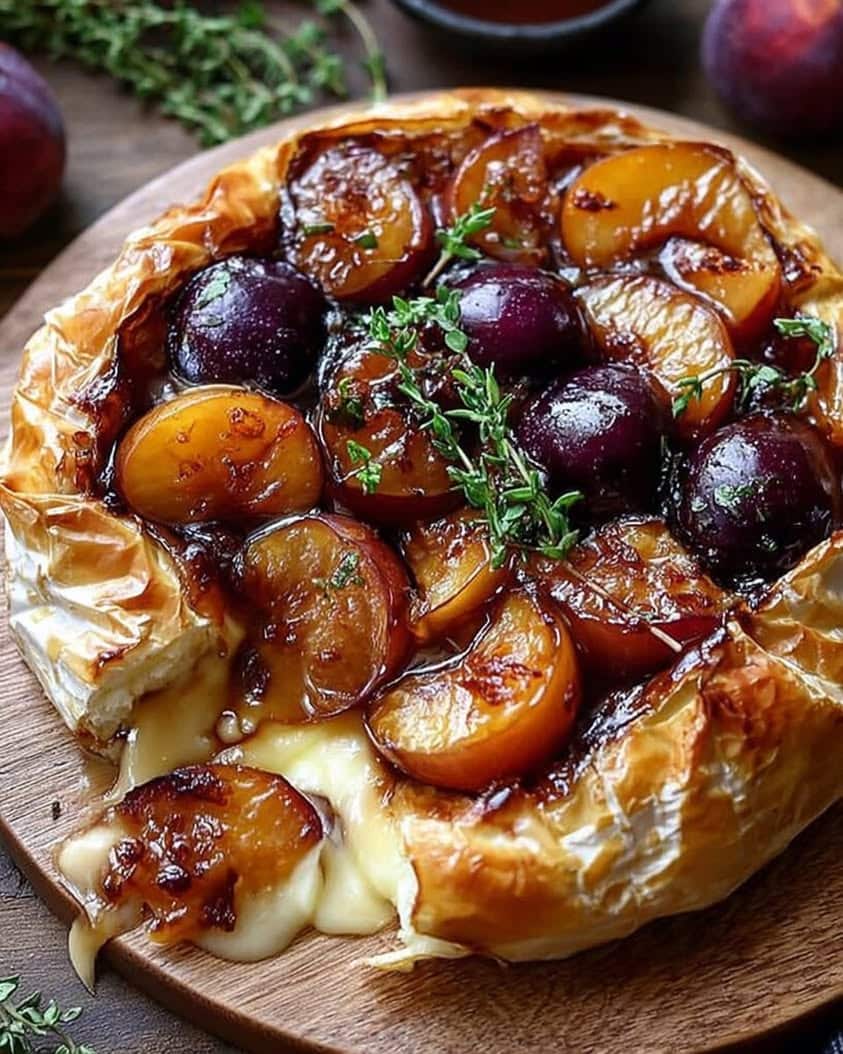
The Ultimate Baked Brie with Roasted Plums and Thyme Recipe: A Sweet and Savory Sensation
The ultimate baked brie with roasted plums and thyme recipe transforms a humble wheel of cheese into a centerpiece worthy of any gathering. Imagine a creamy, molten brie crowned with jammy, caramelized plums and fragrant thyme, all baked to perfection in one skillet. This baked brie with roasted plums and thyme recipe delivers an elegant appetizer that tastes like it took hours of effort, yet comes together in just about thirty-five minutes. The combination of rich, buttery cheese with sweet-tart fruit and earthy herbs creates a flavor experience that is simply unforgettable.
This baked brie with roasted plums and thyme recipe has become my go-to for entertaining, and I am confident it will become yours too. The process is wonderfully simple, making it perfect for both beginner cooks and seasoned hosts. You will start by halving fresh plums and tossing them with a touch of honey, balsamic vinegar, and fresh thyme sprigs. While the plums roast and soften in the oven, the brie bakes alongside them until perfectly gooey and warm. The final result is a stunning dish that fills your kitchen with an incredible aroma and looks absolutely gorgeous on any table.
What truly sets this baked brie with roasted plums and thyme recipe apart is its incredible versatility and balance. The velvety texture of the brie melts beautifully, creating a luxurious dip that pairs perfectly with crusty bread, crackers, or crisp apple slices. The roasted plums offer a concentrated sweetness with a slight tang, while the thyme adds a subtle savory note that elevates the entire dish. Furthermore, this recipe is endlessly adaptable, easily switching up the fruit based on season or adding a drizzle of honey for extra sweetness. It is a reliable and impressive choice for any occasion, from casual weeknight treats to festive holiday parties.
Quick Recipe Highlights
- Flavor Profile: This dish delivers a beautiful contrast of flavors, featuring the buttery, savory richness of baked brie balanced perfectly with the sweet, slightly tart, and honeyed notes of roasted plums. A hint of balsamic vinegar adds subtle depth, while fresh thyme contributes a gentle earthiness and aroma.
- Texture: The texture journey is a true delight, starting with the creamy, molten interior of the baked brie that flows luxuriously. The roasted plums become soft, jammy, and tender, creating a wonderful contrast with the smooth cheese and the satisfying crunch of a toasted baguette slice.
- Aroma: As the dish bakes, your kitchen will fill with a sweet and savory fragrance. You will clearly detect the fruity aroma of plums intensifying and caramelizing, mingled with the unmistakable scent of warm, melted cheese and the fragrant, slightly piney notes of fresh thyme.
- Visual Appeal: The visual presentation is stunning and looks far more complex than the effort required. You will see a golden-brown wheel of brie surrounded by glossy, deep purple-red plum halves, with vibrant green thyme sprigs scattered throughout. A final drizzle of honey and a sprinkle of thyme leaves add a beautiful finishing touch.
- Skill Level Needed: This recipe is exceptionally approachable and is perfect for beginner cooks. It requires only basic skills like halving fruit and measuring simple ingredients, while the oven does all the hard work. There is no complicated technique involved, making it a foolproof option for anyone.
- Special Equipment: You will only need a few basic kitchen tools that you likely already own. A small baking dish or a cast-iron skillet works perfectly for roasting and serving. A small bowl for mixing the honey and balsamic, a knife, and a cutting board are all that is required.
Recipe Overview
- Difficulty Level: I rate this recipe as easy because the steps are straightforward and require minimal hands-on time. The primary tasks involve mixing a simple glaze, halving plums, and placing everything in the oven. There is little room for error, and the result is consistently impressive, making it an ideal recipe for cooks of all skill levels.
- Category: This dish comfortably falls into several categories, most prominently as an appetizer or an hors d’oeuvre. It can also be served as a light lunch paired with a fresh salad or used as a component of a larger cheese board or grazing table. Its versatility allows it to shine in any of these roles.
- Cuisine: While baked brie has French origins, this specific preparation with roasted fruit and thyme has a distinctly modern American rustic style. It showcases seasonal ingredients with simple preparations, a hallmark of contemporary American cooking. The combination of sweet, savory, and creamy elements is universally appealing, but the technique of baking cheese in a skillet feels perfectly at home in American home kitchens.
- Cost: The overall cost for this dish is moderate and depends largely on the quality of the brie you choose. A quality double or triple-cream brie is the primary expense, but it is often affordable. Plums are generally inexpensive, especially when in season, and pantry staples like honey, balsamic, and thyme add minimal cost. You can easily create this impressive appetizer without a significant budget.
- Season: This recipe is absolutely at its peak during late summer and early autumn when plums are in their prime and at their most flavorful and juicy. However, you can easily make it year-round by using slightly firm plums or substituting with other stone fruits like peaches, nectarines, or even apricots, which are all excellent alternatives. The cozy nature of baked cheese also makes it a welcome dish during cooler months.
- Occasion: This spectacular baked brie is perfect for a wide range of occasions, from casual get-togethers to festive celebrations. It is an elegant choice for dinner parties, holiday gatherings like Thanksgiving or Christmas, and game day spreads. Furthermore, it makes a wonderful centerpiece for a romantic date night in or a sophisticated addition to a weekend brunch table.
Why You Will Love This Recipe
The first reason you will absolutely love this baked brie with roasted plums and thyme recipe is the incredible flavor combination that tantalizes the taste buds. The creamy, slightly nutty flavor of the brie is the perfect canvas for the sweet and tart roasted plums. The honey and balsamic reduction creates a glossy, flavorful coating that seeps into the fruit and mingles beautifully with the melted cheese. Each bite is a symphony of tastes, moving from savory to sweet to earthy, creating a complex and deeply satisfying experience that people will rave about long after the party is over.
Another compelling reason to make this baked brie with roasted plums and thyme recipe is the amazing convenience and simple preparation it offers. With just a handful of ingredients and about ten minutes of active prep time, you can have a restaurant-quality appetizer ready for the oven. There is no complicated dough to make, no fussy sauces to whisk, and no advanced culinary skills required. It is the kind of recipe that allows you to be a relaxed host, spending more time with your guests and less time slaving away in the kitchen. You simply assemble, bake, and serve a stunning dish that looks and tastes like it took hours of effort.
From a nutritional standpoint, this appetizer offers some surprising benefits amid its indulgent nature. Plums are a good source of vitamins, particularly vitamin C and vitamin K, as well as dietary fiber and antioxidants. While brie is rich in fat and calories, it also provides calcium and protein, which are essential nutrients. Furthermore, the recipe uses natural sweeteners like honey and fruit, avoiding processed sugars often found in other desserts or appetizers. While it is still a treat to be enjoyed in moderation, you can feel slightly better knowing you are serving something with some genuine nutritional value.
This baked brie with roasted plums and thyme is also a social and entertaining superstar. It is a shared appetizer, designed to be placed in the center of the table and enjoyed communally. It naturally encourages conversation and creates a warm, social atmosphere as people gather to scoop up the melted cheese. Its stunning presentation is a guaranteed conversation starter, making you look like a culinary expert without the stress. This is not just food; it is an experience that brings people together and creates memorable moments around the table.
Finally, the cost-effectiveness and accessibility of the ingredients make this a truly winning recipe. Brie is widely available at most grocery stores and comes in a range of price points, making it easy to find one that fits your budget. Plums, especially when in season, are inexpensive and can be found at farmers’ markets and supermarkets everywhere. The other necessary ingredients, including honey, balsamic vinegar, and thyme, are common pantry staples for many people. This means you can create an elegant and impressive appetizer without making a special trip to a gourmet store or spending a fortune on exotic ingredients.
Historical Background and Cultural Significance
To fully appreciate this baked brie with roasted plums and thyme recipe, it helps to understand the history of its star ingredient. Brie is a soft, creamy cheese that originates from the Île-de-France region in northern France. Named after the historic province of Brie, this cheese has been produced for centuries, with historical records referencing it as far back as the 8th century. It was historically a simple farmhouse cheese, made from raw cow’s milk and aged to develop its signature bloomy rind and creamy interior. For generations, it was a staple of the local diet and a source of regional pride.
The cultural importance of brie in France cannot be overstated, where it is affectionately known as “The Queen of Cheeses.” It has been a favorite of royalty and commoners alike for centuries, and legend even claims that Emperor Charlemagne first tasted it in the 8th century and immediately demanded a yearly tribute from the region. Traditionally, brie is served at room temperature to allow its full flavor and creamy texture to shine. The practice of baking brie, however, is a more modern adaptation, popularized in the latter half of the 20th century, often as a convenient and crowd-pleasing appetizer for casual entertaining and parties.
The evolution of baked brie from a simple French classic to the central recipe we enjoy today is a story of culinary innovation. This evolution reflects a shift towards more casual, shared dining experiences and a desire for impressive yet easy-to-prepare dishes. The addition of fruit, nuts, and sweet glazes quickly followed, transforming the plain baked cheese into a versatile canvas for a wide variety of flavors. Baked brie with roasted plums, specifically, is a contemporary twist, capitalizing on the natural affinity between sweet, caramelized fruit and rich, savory cheese. This modern adaptation highlights the trend of combining classic techniques with seasonal ingredients for a fresh and exciting result.
Regional variations of this baked brie with roasted plums and thyme recipe are a testament to its adaptability and widespread appeal. In the Pacific Northwest, cooks might substitute local berries like blackberries or marionberries for the plums. In the South, a touch of bourbon or pecans might be added to the mix for a distinctly regional flavor. The French might stick closer to tradition and serve the brie simply with a baguette, while Americans often embrace bolder flavor combinations and sweeter toppings. These variations demonstrate how a simple dish can be personalized and adopted by different cultures, yet always retain its core identity as a delicious and comforting baked cheese experience.
Ingredient Deep Dive
Brie cheese is the soul of this baked brie with roasted plums and thyme recipe, and understanding it is key to success. Culturally and historically, brie is a pillar of French gastronomy, celebrated for its rich, buttery flavor and its name, which comes from the region where it originated. It is made from cow’s milk and is known for its edible, white, bloomy rind that develops from a specific type of mold. The cheese begins as a soft curd that is ladled into molds, drained, and then aged for at least four weeks, during which it develops its unmistakable creamy texture. Nutritionally, brie is a good source of protein and calcium, though it is also high in saturated fat and calories. When selecting brie, look for a wheel that is slightly soft to the touch, which indicates it is ripe, and ensure the rind is evenly white and free of any dark spots. It should have a mild, mushroomy aroma rather than a strong, ammoniated smell. For storage, keep the brie wrapped in its original paper or in a loose layer of plastic wrap in the refrigerator, and be sure to remove it about thirty minutes before baking so it softens slightly.
Plums are the sweet, fruity counterpart to the rich, savory brie, and they are essential to this baked brie with roasted plums and thyme recipe. These stone fruits have a long cultural history, believed to have originated in the region around the Caucasus Mountains and in China, where they have been cultivated for thousands of years. They have since spread worldwide and hold a significant place in many cuisines, representing fertility and good luck in some cultures and serving as a key ingredient in both sweet and savory dishes in others. Nutritionally, plums are an excellent source of vitamin C and vitamin K, as well as dietary fiber and antioxidants, particularly phenolic compounds, which help fight oxidative stress in the body. For this recipe, you should select plums that are ripe but still somewhat firm so they hold their shape during roasting. They should yield slightly to gentle pressure and have a deep, sweet aroma. Store unripe plums at room temperature to encourage ripening, then move them to the refrigerator once they are ready to be used.
Thyme is the aromatic herb that provides the final, earthy layer in this baked brie with roasted plums and thyme recipe. Its cultural history is rich, as it has been used for over two thousand years by the Greeks, Romans, and Egyptians. The word thyme comes from the Greek word “thumos,” meaning courage or strength, and it was often given to soldiers to boost their spirits before battles. In cooking, thyme is a foundational herb in Mediterranean cuisine and is prized for its subtle, earthy, and slightly minty flavor that pairs beautifully with roasted meats, vegetables, and, of course, cheeses. Nutritionally, thyme is a potent source of vitamin K, iron, and manganese, and it contains a compound called thymol, which has antimicrobial properties. When buying fresh thyme, look for bright green, perky leaves with no signs of wilting or browning. It can be stored by wrapping the sprigs in a damp paper towel and placing them in a plastic bag in the refrigerator. If you do not have fresh thyme, dry thyme can be used as a substitute, but be sure to use a smaller amount, as its flavor is more concentrated.
Honey is more than just a sweetener; it is a key contributor to the complex glaze that brings this baked brie with roasted plums and thyme recipe together. Culturally, honey has been prized for its sweetness and healing properties for millennia, with a history that predates written records and is found in almost every ancient civilization, from the Egyptians to the Mayans. It appears in religious texts and folk remedies, symbolizing abundance and health. Nutritionally, honey is a natural source of antioxidants, including flavonoids and phenolic acids, which are linked to reducing inflammation and protecting against cell damage. While it is still a form of sugar, it also contains trace amounts of vitamins and minerals, considering its composition. For this recipe, choose a good quality, mild-flavored honey, such as clover or orange blossom, to allow the plums and brie to remain the stars. Strong, dark honeys like buckwheat can be overpowering. Store honey in a cool, dry place, and it will keep almost indefinitely, although it may crystallize over time.
Common Mistakes to Avoid
- Using an unripe brie is a frequent error that results in a disappointing, firm center. An unripe wheel will have a chalky, hard core and will not melt into the luscious, creamy dip you want. To avoid this mistake, gently press the center of the brie when you buy it. It should feel slightly springy and soft under the rind, not hard and solid.
- Overcooking the brie is another common problem that can ruin the texture of this baked brie with roasted plums and thyme recipe. If the brie stays in the oven for too long, it can become overly soft, lose its shape, and even start to separate, turning into a greasy puddle. Keep a close eye on it and bake it just until the center is warm, soft, and slightly molten. The key is to look for a gentle give in the middle, not a complete collapse.
- Baking the brie in a dish that is too large can also lead to issues. If the baking dish is much larger than the wheel of cheese, the excess surface area can cause the cheese to melt and spread into a thin layer, which will cook too quickly and become rubbery. Use a small ovenproof skillet or baking dish that fits the brie snugly, allowing the plums to surround it without too much empty space.
- Neglecting to remove the paper or plastic packaging from the brie before baking is a surefire way to ruin the dish. The rind is edible, but the packaging is not. Always check your brie carefully and remove any plastic wrap, paper, or wooden box before placing it in the oven. This simple step is often overlooked in a hurry to get things cooking.
- Roasting the plums at too high a temperature can cause them to burn before they have a chance to become jammy and soft. While a high heat can be good for caramelization, it can also scorch the sugars in the honey and balsamic. For this baked brie with roasted plums and thyme recipe, a moderate oven temperature of around 375°F (190°C) is best to ensure the plums cook gently and evenly.
- Using sliced plums instead of halves can lead to a washed-out, mushy texture. Thin slices will break down too much during the roasting process, turning into a jam-like puree that will not hold its shape on the plate. You should always halve the plums and use them with the skin side down. This helps them maintain their integrity and provides a beautiful presentation.
- Adding too much honey or balsamic vinegar to the plums can make the dish overly sweet and cloying. The goal is a balance of flavors, where the natural tartness of the plums and the tang of the balsamic complement the sweet honey. Start with the recommended amount and you can always add more to taste, but it is difficult to correct an overly sweet glaze.
- Forgetting to serve this baked brie with roasted plums and thyme recipe with a way to scoop it up is a classic oversight. The melted cheese is a luxury, but it needs a vessel to reach your guests’ mouths. Be sure to have a platter of crusty bread, crackers, or sliced apples and pears ready before you pull the dish from the oven so you can serve it immediately while it is warm and gooey.
- Baking the brie with the plums from the very beginning can sometimes result in the plums becoming too soft and falling apart. While a little caramelization is desired, starting them together can overcook the fruit. A good approach is to roast the plums first, and then add the brie and bake them together for a short time to melt the cheese. This keeps the fruit beautifully textured.
Essential Techniques
Roasting is the primary technique in this baked brie with roasted plums and thyme recipe, and mastering it will elevate the final dish. The process of roasting uses dry heat in the oven to cook food, which causes the natural sugars in the plums to caramelize, creating a deep, complex sweetness and a rich golden color. It is an essential step that softens the fruit, breaking down its fibers and concentrating its flavor. To master roasting, ensure you have a hot enough oven (between 375°F and 425°F), arrange the food in a single layer on a baking sheet, and do not overcrowd the pan, as this can trap steam and cause the food to steam rather than roast. A visual cue for well-roasted plums is that they look slightly wrinkled and shiny, with some of the juices beginning to concentrate and caramelize around the edges of the baking dish.
Another key technique is understanding how to properly handle and prepare the brie. The process should begin with selecting the right wheel, which should feel soft and have a fresh, milky smell. To prepare the brie for baking, you should first score the top rind. You can do this by lightly cross-hatching the top layer with a sharp knife or by simply removing the top rind entirely. This step is often overlooked, but it allows the cheese to expand as it warms without cracking, and it also creates a beautiful surface. The biggest pitfall is forgetting to remove the brie from the refrigerator beforehand. A cold brick of cheese will bake unevenly, leaving the center cold and the edges over-melted. Allowing it to come to room temperature for thirty to sixty minutes before baking is crucial for even melting.
Creating a glaze is a simple yet vital technique for this baked brie with roasted plums and thyme recipe. A glaze is a thin, flavorful coating that is applied to food to enhance its flavor and appearance. In this recipe, the glaze consists of honey, balsamic vinegar, and a touch of salt, which is whisked together until smooth. To master this, you simply need to ensure the ingredients are thoroughly combined. The importance of the glaze lies in its function: it coats the plums and bakes into a sticky, sweet-tart wrapper that adds layers of flavor and visual shine. The pitfall is letting the glaze bubble over and burn in the pan. To avoid this, keep the heat moderate and monitor the dish during the last few minutes. A visual cue for a successful glaze is that it is glossy, thickens slightly, and gently coats the back of a spoon.
Infusing flavor, particularly with fresh thyme, is a subtlety that distinguishes a great dish. For this recipe, we are not just using the thyme as a plate garnish; we are roasting it with the plums and cheese so that its essential oils perfume the entire dish. To master this, you can gently bruise the thyme sprigs with the back of a knife before adding them to the dish. This releases their aromatic oils. It is important to remember that fresh herbs have oils that are volatile, meaning they react to heat. Adding them at the beginning allows their flavor to mellow and deepen, while adding them at the end provides a burst of freshness. The visual cue for perfectly infused flavor is the vibrant green of the thyme against the deep purple of the roasted plums and the creamy white of the brie. The smell is the ultimate test, as your kitchen will fill with a wonderful, earthy fragrance.
Pro Tips for Perfect Baked Brie
Choosing the right brie can make all the difference in this baked brie with roasted plums and thyme recipe. Opt for a wheel that is noticeably soft to the touch, which guarantees a creamy, melty center. You should also look for a slight bulge in the middle, which is a sign of a well-ripened cheese. When you are slicing the brie into a wheel, do not trim the rind, as it holds the molten cheese together and is entirely edible. However, you should score the top rind to create spaces for the heat to escape and allow the cheese to melt evenly.
To achieve the most flavorful and beautiful roasted plums, make sure they are fresh and ripe but still hold their shape. The plums should feel heavy for their size and have a sweet, fragrant perfume. When you halve them, remove the pit and toss them with the glaze just before placing them in the oven. It is also beneficial to roast the plums cut-side down first, as this helps them caramelize faster and prevents them from drying out. Flip them halfway through the roasting time for even cooking and a gorgeous glossy finish.
Baking time and temperature are critical for preventing a runny mess or a hard block of cheese. Bake the brie and plums at 375°F (190°C) for about 25 minutes, but begin checking at the 20-minute mark. The brie is done when it puffs up slightly and the center is wobbly and soft to the touch, not hot and liquid. The plums should be soft and starting to release their juices. Remember that the cheese will continue to cook and firm up slightly as it rests, so it is better to remove it from the oven when the center is still slightly firm to the touch.
Since you will serve this baked brie with roasted plums and thyme recipe from the same skillet, presentation is key. Use a small, aesthetically pleasing ovenproof skillet or a cast-iron pan. This not only keeps the dish rustic and beautiful but also helps retain heat, keeping the cheese melted for longer. Before baking, make sure to arrange the brie in the center with the plums nestled snugly around it. Once it is baked, you can add extra fresh thyme sprigs, a drizzle of honey, a sprinkle of flaky sea salt, and a few crushed walnuts or pecans for added texture and a gourmet touch.
Finally, one of the most important tips is to let the baked brie rest for about five minutes before serving. This allows the cheese to slowly reabsorb some of its melted fat, resulting in a silkier, more stable texture that will not turn into a puddle on the plate. This brief rest also allows the flavors of the honey, balsamic, and thyme to meld with the plums and cheese, creating a more harmonious taste. Use this time to set out your serving platter of crusty bread slices and fresh fruit, ensuring a seamless and less stressful serving experience.
Variations and Adaptations
The beauty of this baked brie with roasted plums and thyme recipe lies in its adaptability, and regional variations are easy to create. In the South of France, where brie is a local treasure, it might be served with a drizzle of lavender honey and a few sprigs of wild thyme, giving the entire dish a floral, distinctly Provençal character. In the Pacific Northwest, cooks might swap the plums for local berries like marionberries or blackberries, creating a deeper, more intensely dark and jammy topping. Meanwhile, in New England, a sprinkle of maple syrup or a handful of chopped pecans might be added for a touch of autumnal sweetness and crunch, reflecting the region’s love for these seasonal ingredients.
Seasonal adaptations are where this recipe truly shines, allowing you to enjoy it all year round. During the summer months, you can easily substitute ripe apricots, peaches, or nectarines for the plums, as they share a similar stone fruit character and pair beautifully with honey and thyme. In the fall, you can use sliced pears or apples, which will soften and sweeten in the oven, and you might want to add a pinch of cinnamon or nutmeg for a warming spice note. When fresh, juicy fruit is not in season, you can even use a high-quality fig or apricot jam spread over the top of the brie before baking, creating an equally delicious, though simpler, treat.
For those with dietary restrictions, this recipe is surprisingly adaptable. To make this baked brie with roasted plums and thyme recipe gluten-free, simply serve it with gluten-free crackers, vegetable crudités like cucumber rounds, or thick slices of gluten-free baguette. This dish is naturally vegetarian, but to make it vegan, you can use a high-quality vegan brie alternative and substitute the honey with a rich maple syrup or agave nectar. The roasting process will still caramelize the fruit beautifully, and the thyme will infuse its delicate flavor, making it a satisfying plant-based appetizer that mirrors the original’s texture and taste.
Beyond simple substitutions, you can explore a variety of flavor variations to make this baked brie with roasted plums and thyme recipe your own. For a spicy kick, add a small pinch of red pepper flakes to the honey and balsamic mixture. For a more savory take, you can tuck a few slices of prosciutto or pancetta around the brie before baking, and the rendered fat will add an incredible depth of flavor. A sprinkle of chopped toasted pistachios or walnuts just before serving introduces a delightful crunchy texture, and a dash of smoked paprika can lend an intriguing, smoky warmth that contrasts perfectly with the sweet fruit.
You can also adapt the texture of the dish to suit your preferences. If you prefer a deeper, more intense caramelization on your fruit, you can toss the plums with the glaze and roast them on a separate sheet pan for an extra ten minutes before adding them to the brie. For a smoother, more uniform texture, you can coarsely chop or mash the roasted plums before spooning them over the melted cheese. This will create a thick, chutney-like topping that spreads beautifully on a slice of baguette. Each of these variations allows you to dial in the texture and flavor to your exact liking.
Serving and Presentation Guide
Plating techniques for this baked brie with roasted plums and thyme recipe can elevate it from a homey dish to a stunning centerpiece. The most rustic and attractive approach is to serve it directly from the small skillet or baking dish in which it was baked. This keeps the presentation simple and maintains the heat of the dish. For a more formal look, carefully transfer the molten brie and plums to a large serving board or ceramic platter using a spatula. Spoon the plums and their rich, syrupy juices over the top of the brie, letting them cascade down the sides, and then finish with a sprinkle of fresh thyme leaves and a final drizzle of best-quality honey.
Garnishing ideas can transform the visual appeal of this baked brie with roasted plums and thyme recipe. A few fresh, unbruised thyme sprigs placed artfully on top add a vibrant pop of green and a signal of the flavor within. A sprinkle of flaky sea salt, such as Maldon, over the melted cheese and plums enhances the sweetness and provides a pleasant textural contrast. For a bit of crunch and richness, scatter some candied walnuts, pecans, or almonds over the surface just before serving. These simple additions add color, flavor, and a professional finish to the dish.
Traditional accompaniments are essential for enjoying this baked brie with roasted plums and thyme recipe to the fullest. The go-to vessel is a sliced baguette, toasted until crisp, which provides a sturdy yet light base for the melted cheese. An assortment of high-quality crackers, including buttery water crackers and hearty multigrain varieties, also works wonderfully. Additionally, for a fresh and crisp contrast, offer slices of tart green apple or juicy pear. You can also include a handful of grapes for those who prefer a sweeter addition. These accompaniments provide a variety of textures and flavors to balance the richness of the cheese.
Modern serving suggestions can take this baked brie with roasted plums and thyme recipe in fresh, unexpected directions. Instead of being a standalone appetizer, you can serve it as a component of a cheese board for two, making it an interactive and indulgent centerpiece. You could also use the leftovers to create a gourmet grilled cheese sandwich the next day, spreading the cooled cheese and plum mixture between slices of sourdough. Another modern idea is to serve the baked brie in small ramekins as perfectly portioned starters for a dinner party, making it appetizers for everyone without the need for a large communal dish.
Temperature considerations are crucial for the best possible experience with this baked brie with roasted plums and thyme recipe. The dish is undoubtedly at its peak when the cheese is warm, soft, and melted, and the plums are hot and jammy. However, letting it sit for a few minutes after removing it from the oven is important, as the cheese will be molten lava-hot immediately out of the oven and can burn the mouth. This brief rest allows the cheese to set slightly, making it safe to eat but still perfectly gooey. As the brie cools, the texture will solidify, so it is best to enjoy it while it is still warm for the ultimate creamy experience.
Wine and Beverage Pairing
Finding the right wine pairing for this baked brie with roasted plums and thyme recipe can enhance the entire dining experience, and a number of excellent options exist. A great choice is a dry, aromatic white wine with a touch of sweetness, such as a Vouvray from the Loire Valley or a Pinot Gris from Alsace. These wines have enough acidity to cut through the creamy, fatty brie and enough fruitiness to complement the sweet plums. For red wine lovers, a light-bodied, low-tannin red is best, and a Cru Beaujolais, made from the Gamay grape, is a perfect match. It offers bright, juicy berry flavors and a soft texture that will not overpower the delicate flavors of the cheese.
For those who prefer something different, several non-alcoholic alternatives will pair beautifully with this baked brie with roasted plums and thyme recipe. A sparkling water with a splash of elderflower cordial offers a delicate, floral sweetness and effervescence that cleanses the palate and mirrors the floral notes of the thyme. A high-quality, unfiltered apple cider, especially a dry one, has a natural tartness and fruitiness that works wonderfully with the roasted plums and creamy cheese. You could also serve a tart and refreshing pomegranate juice, which brings a similar level of fruit depth and complexity to the pairing.
Hot beverages, particularly coffee and tea, can also be excellent companions to this baked brie. If you are serving this dish for a brunch gathering, a pot of light or medium-roast coffee is a wonderful choice, as its slight bitterness acts as a perfect contrast to the sweet fruit and rich cheese. For a tea pairing, a smoky Lapsang Souchong or an earthy Yunnan black tea can stand up to the savory and creamy elements. Alternatively, a floral jasmine or chamomile tea can complement the aromatic thyme and honey without competing for attention, making for a sophisticated and calming pairing.
The temperature of the beverage you serve is also an important consideration to keep in mind. A well-chilled white wine or a glass of cold cider provides a refreshing contrast to the hot, oozy brie and warm plums, creating a delightful sensation in your mouth. A warm cup of tea or coffee, on the other hand, can be a cozy and comforting companion on a cold day, and it can enhance the overall feeling of warmth and indulgence you Print
Baked Brie with Roasted Plums and Thyme
- Total Time: 45 minutes
- Yield: 4
Description
A rich and creamy baked brie topped with caramelized roasted plums and fresh thyme, served with crusty bread or crackers for a delicious appetizer.
Ingredients
- 1 (8 ounce) wheel of brie cheese
- 4 ripe plums, pitted and sliced
- 2 tablespoons honey
- 1 tablespoon balsamic vinegar
- 1 tablespoon olive oil
- 1 teaspoon fresh thyme leaves, plus extra for garnish
- 1/4 teaspoon salt
- 1/8 teaspoon black pepper
- Crusty bread or crackers for serving
Instructions
- Preheat oven to 375°F (190°C). Line a baking sheet with parchment paper.
- In a medium bowl, combine plum slices, honey, balsamic vinegar, olive oil, thyme, salt, and pepper. Toss well to coat.
- Spread the plum mixture evenly on the prepared baking sheet. Roast for 15-20 minutes, until plums are soft and slightly caramelized. Remove from oven and set aside.
- Place the brie wheel on a small oven-safe dish or baking sheet. Bake for 8-10 minutes, until the brie is soft and slightly melted in the center.
- Carefully transfer the baked brie to a serving platter. Top with the roasted plums and their juices. Garnish with extra fresh thyme leaves.
- Serve immediately with crusty bread or crackers.
Notes
You can customize the seasonings to taste. For a nutty flavor, add a sprinkle of chopped walnuts or pecans before serving.
- Prep Time: 15 minutes
- Cook Time: 30 minutes
- Method: Appetizer
- Cuisine: American