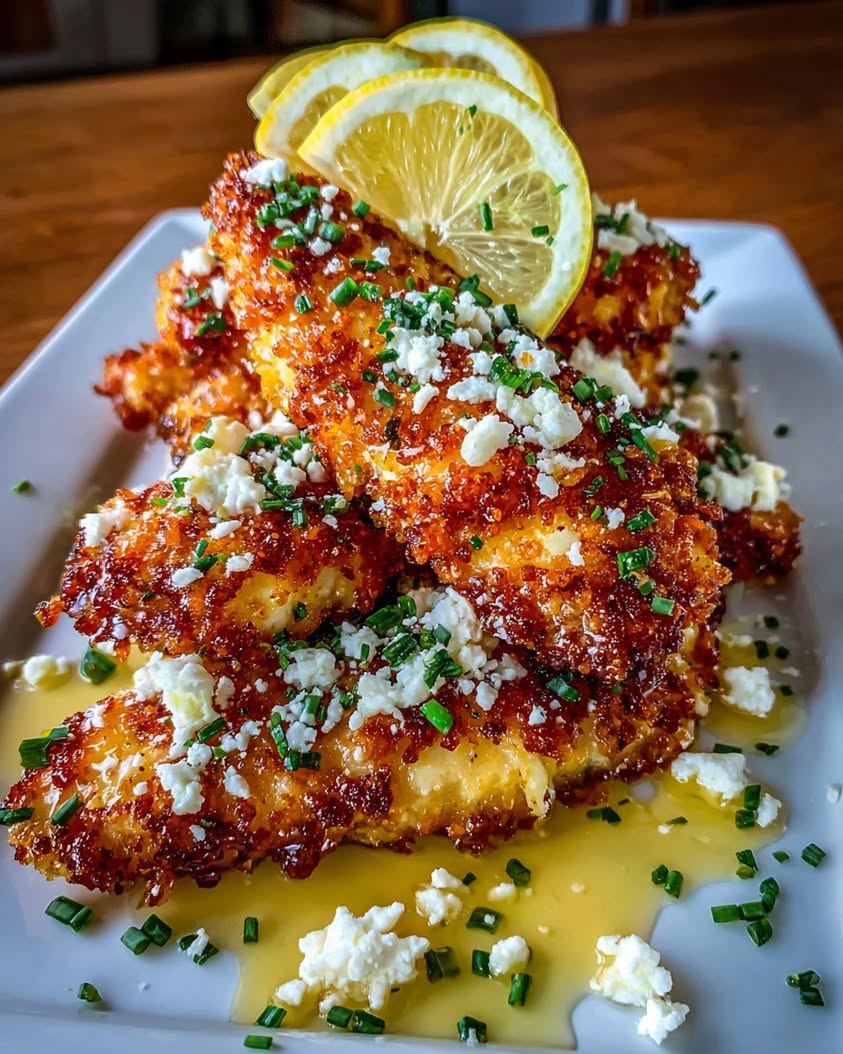
Crispy Hot Honey Lemon Feta Chicken Tenders: The Ultimate Weeknight Dinner
Imagine biting into a golden, crunchy chicken tender that shatters with every bite, then melts into savory, juicy meat. That crunch is followed by a sticky, sweet-hot honey glaze that dances on your tongue. A final burst of bright lemon and salty, tangy feta cheese ties everything together perfectly. This is the magic of these crispy hot honey lemon feta chicken tenders, a dish that turns a simple weeknight meal into a crave-worthy experience.
These chicken tenders are not just about flavor, they are about texture. The initial crunch gives way to a tender, moist interior that is never dry. The hot honey adds a gentle warmth, not a fiery burn, while the lemon zest provides a fresh, sunlit finish. The crumbled feta offers a creamy, salty contrast that cuts through the sweetness beautifully. This combination of sweet, spicy, bright, and salty makes these crispy hot honey lemon feta chicken tenders a sensory adventure that keeps you coming back for more.
What makes this recipe truly stand out is its incredible ease. You get restaurant-quality results with minimal effort and simple ingredients. The entire process, from start to finish, takes under 30 minutes. This makes it an ideal solution for busy families, weeknight dinners, or last-minute gatherings. You can feel confident serving something this impressive without spending hours in the kitchen.
Quick Recipe Highlights
- Flavor Profile: The flavor journey starts with a sweet and slightly spicy hot honey sauce. This is instantly balanced by the bright, zesty acidity of fresh lemon. The salty, creamy crumbles of feta cheese tie the whole dish together by adding a savory, tangy depth. It is a perfect harmony of sweet, heat, sour, and salt.
- Texture: Every bite starts with an exceptionally crispy, golden-brown crust that shatters with a satisfying crunch. Underneath that protective shell, the chicken is incredibly tender, moist, and juicy. The sticky honey glaze adds a slight chew on the outside, while the feta offers a soft, crumbly counterpoint that melts in your mouth.
- Aroma: The kitchen fills with the warm, inviting scent of garlic and paprika as the chicken tenders cook. You can pick up the sweet, floral notes of the honey as it caramelizes. The lemon zest adds a bright, clean, citrusy perfume that cuts through the richness and promises freshness.
- Visual Appeal: The plate features a beautiful array of colors. The chicken tenders are a deep golden brown with a glossy, tempting glaze. Bright, sunny specks of lemon zest are scattered throughout. The stark white crumbles of feta cheese contrast vividly against the golden chicken, finished with a sprinkle of fresh green herbs.
- Skill Level Needed: This recipe is designed for beginner and intermediate home cooks. There are no complicated techniques involved. As long as you can follow simple steps like mixing a breading and heating oil in a skillet, you can master this dish with confidence and success.
- Special Equipment: You will need a large, heavy-bottomed skillet, like cast iron, for even frying. A medium mixing bowl for the breading and a small bowl for the honey sauce are essential. Paper towels for draining the fried chicken and a microplane or zester for the lemon zest are also very helpful.
Recipe Overview
- Difficulty Level: The difficulty is set to easy because the recipe avoids complicated steps like marinating or deep-frying. The breading is a simple dredge, and the cooking is done in a shallow skillet. A home cook with basic kitchen skills can easily replicate this dish without any special training or stress.
- Category: This recipe fits perfectly into several categories. It is a fantastic appetizer for parties or game day spreads. It also works beautifully as a main course served with a side salad or roasted vegetables. It can even be sliced and added to wraps or salads for a lunch the next day.
- Cuisine: While the core concept of fried chicken tenders is American, this recipe draws inspiration from modern, global flavors. The use of hot honey has Southern roots. The feta and lemon point toward Greek and Mediterranean culinary traditions. The result is a creative, fusion-style dish that feels both familiar and excitingly new.
- Cost: This is a very budget-friendly meal. Chicken tenders are often one of the more affordable cuts of meat. Feta cheese is relatively inexpensive, and ingredients like honey, lemon, and common spices are pantry staples. For about the cost of a fast-food meal, you can create a gourmet dinner for a family of four.
- Season: The bright, tangy flavors of lemon and feta make this dish perfect for spring and summer. It feels light and refreshing, even though it is fried. However, the comforting warmth of the crispy chicken also makes it a welcome meal during the cooler fall months when you want something satisfying without being too heavy.
- Occasion: These chicken tenders are incredibly versatile for any occasion. They are a guaranteed hit for casual weeknight dinners. They also impress guests at a weekend gathering or a casual dinner party. Serve them as a fun, shareable appetizer for a movie night or as the star of a summer cookout.
Why You’ll Love This Recipe
You will love the incredible taste and texture combination that defines these crispy hot honey lemon feta chicken tenders. The initial crunch is deeply satisfying, followed by the tender, juicy chicken inside. Then, the hot honey sauce brings a sophisticated sweet heat that is addictive. The lemon brightness cuts through the richness, and the feta adds a final, salty, creamy finish that makes every single bite a complete experience. It is a flavor and texture journey that feels gourmet without being complicated.
The convenience is absolutely unmatched. This entire meal comes together in under 30 minutes, using one skillet and simple ingredients you likely already have. There is no need for long marinades, complicated sauces, or special equipment. The clean-up is a breeze, making it a perfect solution for those nights when you are short on time but still want a homemade, delicious, and satisfying dinner that the whole family will enjoy. It is weeknight dinner perfection.
This recipe also offers nutritional advantages over standard fried chicken. By shallow-frying in a small amount of oil, you achieve that desired crunch without all the heavy grease of deep-frying. Chicken tenders are a great source of lean protein, which keeps you feeling full and satisfied. When you pair them with a side of fresh greens or roasted vegetables, you create a balanced, wholesome meal that supports your health goals without sacrificing flavor or enjoyment.
Socially, these chicken tenders are a star. They are perfect for sharing with friends and family at any casual gathering. They are a guaranteed crowd-pleaser because the flavor profile is familiar enough to be comforting and unique enough to be exciting. You can set them out on a platter as an appetizer, or serve them as a main course. They spark conversation and everyone will be asking for the recipe, making you the hero of the party.
Finally, you will love how cost-effective and accessible this dish is. Chicken tenders are one of the most affordable proteins, and the remaining ingredients are kitchen staples. You do not need to hunt down expensive, exotic ingredients. This makes it a fantastic meal for feeding a family on a budget without compromising on quality or taste. You get a premium, restaurant-worthy dish for a fraction of the cost and effort.
Historical Background and Cultural Significance
Fried chicken holds a deep and complex history in the American South. It has roots in Scottish frying techniques and West African seasoning traditions, which blended together in the kitchens of enslaved people. Over generations, it evolved into a cornerstone of Southern comfort food, celebrated for its ability to bring families and communities together around a shared, joyful meal. The classic chicken tender, a boneless fillet, is a modern, convenient offshoot of this grand tradition, popularized in the mid-20th century for its ease of eating.
The hot honey component of this dish is a more recent invention, but it has quickly become a modern classic. Its rise in popularity can be traced to the 2010s, where it became a staple on trendy pizzas and fried chicken sandwiches. The combination of sweet and spicy speaks to a universal human preference for balanced, complex flavors. It represents a fun, innovative twist on traditional condiments, showing how simple ingredients can be transformed into something incredible.
Feta cheese, on the other hand, has a history stretching back thousands of years. It originates from Greece and is protected by the European Union as a Product of Designation of Origin. For centuries, it has been a fundamental component of the Mediterranean diet, valued for its salty, tangy flavor and crumbly texture. Its addition to this recipe is a beautiful example of culinary fusion, bringing together Southern comfort food and ancient Mediterranean dairy traditions.
The regional variations of chicken tenders are endless. In the Southern U.S., they are often buttermilk-soaked and seasoned with cayenne. In Nashville, they are known for their intense, spicy heat. Some regions prefer a more simple, salt-and-pepper crust. This recipe for crispy hot honey lemon feta chicken tenders stands out as a unique fusion creation. It takes the familiar, beloved comfort of a chicken tender and elevates it with bright, modern, and international flavors, creating a new classic for the home kitchen.
Ingredient Deep Dive
The chicken tender itself is the star of the show. Culturally, the breast tenderloin is prized in American cuisine for its lean protein and quick cooking time. Nutritionally, it is an excellent source of lean protein, which is essential for muscle building and repair. It also provides B vitamins and selenium. When selecting chicken tenders, look for plump, moist pieces that are uniform in size for even cooking. Avoid any that are slimy or have an off-smell. For storage, keep them in the coldest part of your refrigerator and cook within two days. You can substitute boneless, skinless chicken breasts, cut into strips.
Feta cheese provides the signature salty, tangy note. Culturally, this brined curd white cheese is a staple of Greek cuisine, often used in salads, pastries, and baked dishes. Nutritionally, it is a good source of calcium and protein, though it is higher in sodium. When selecting feta, choose a block stored in brine for the best texture and flavor, which will be moist and tangy rather than dry and acidic. Store it submerged in its brine in the refrigerator. For a dairy-free version, you can use a tangy, crumbled vegan feta alternative, though the texture and salt level will differ.
Hot honey is the source of the sweet heat. It is a modern condiment made by infusing honey with chili peppers. Nutritionally, honey provides natural sugars and antioxidants, though it should be used in moderation. When selecting hot honey, look for a brand that has a visible balance of sweetness and a building warmth, not just a simple burn. It is widely available in most grocery stores. If you cannot find it, you can make your own by gently warming honey with red pepper flakes or sliced chili peppers. This gives you full control over the spice level.
Lemons bring a crucial brightness to the dish. Culturally, they are a symbol of freshness and are used in cuisines worldwide to add acidity. Nutritionally, lemons are packed with Vitamin C, a powerful antioxidant that supports immune health. When selecting lemons, choose ones that feel heavy for their size, which indicates more juice. The skin should be bright yellow and smooth. Store them at room temperature for a week or in the refrigerator for longer. If you are out of lemon, a splash of white wine vinegar or champagne vinegar can mimic some of the acidity, though the flavor profile will change slightly.
Common Mistakes to Avoid
- Do not skip patting the chicken dry. Excess moisture on the chicken will create steam when it hits the hot oil. This steam will prevent the breading from becoming crispy, resulting in a soggy, pale crust instead of that perfect golden brown crunch you are aiming for.
- Do not crowd the pan. Frying too many tenders at once lowers the oil temperature significantly. This causes the chicken to cook in more of a steam than a fry, resulting in a greasy, soft exterior. Fry in batches to maintain a consistent, high temperature for the best results.
- Do not use cold chicken straight from the fridge. Cold chicken will lower the oil temperature too dramatically. It will also cook unevenly, with the outside burning before the inside is cooked through. Let the chicken sit at room temperature for 10 minutes before breading.
- Do not press down on the chicken while it is cooking. Pressing down forces out the juices and compacts the breading. This leads to a drier, tougher chicken tender with a less flaky, crunchy crust. Let the heat do the work naturally.
- Do not overdress the chicken with sauce before serving. If you coat the tenders too early, the honey glaze will cause the crispy crust to soften and become soggy. Instead, drizzle the hot honey sauce right before serving to maintain that essential crunch.
- Do not use pre-shredded or crumbled feta. These products are often coated in cellulose to prevent clumping, which affects their melt and flavor. A block of feta that you crumble yourself has a superior, creamier texture and a much more pronounced, tangy taste.
- Do not forget to season the breading. The chicken itself needs flavor, and the breading is the best way to deliver it. A bland breading will result in a bland tender. Make sure your flour mixture is well-seasoned with salt, pepper, garlic powder, and paprika.
- Do not over-fry the chicken. Chicken tenders are thin and cook very quickly, usually in about 3-4 minutes per side. Overcooking them will dry out the meat, making it tough and stringy. Use a meat thermometer to ensure they reach an internal temperature of 165 degrees Fahrenheit.
Essential Techniques
The most important technique is getting the oil temperature right. Shallow-frying requires the oil to be hot enough to instantly sear the breading, creating a crispy shell. If the oil is too cool, the breading absorbs the oil and becomes greasy instead of crunchy. If it is too hot, the breading will burn before the chicken cooks through. The ideal temperature is between 350 and 375 degrees Fahrenheit. You can test this by dropping a small pinch of flour into the oil; if it sizzles immediately and floats, the oil is ready. A kitchen thermometer is your best friend for consistent results.
Mastering the double-dredge technique is another key step for maximum crunch. First, coat the chicken strips in seasoned flour, shaking off the excess. Then, dip them into a wash of beaten egg or buttermilk. Finally, dredge them in the flour mixture again. This second layer of flour creates a craggy, textured surface that gets exceptionally crispy in the hot oil. The key is to press the final coating gently onto the chicken so it adheres well before it hits the skillet. This creates the thick, satisfying shatter crust you are looking for.
Resting the chicken after breading is a critical but often overlooked step. Once you have breaded all the pieces, let them sit on a wire rack for 5 to 10 minutes. This allows the flour mixture to absorb the moisture from the egg wash, forming a starch glue. This glue bonds the breading to the chicken, preventing it from falling off during frying. You will notice that the breading looks a little matte and set. This short rest is the secret to a durable, perfectly attached crust that stays put from the skillet to the plate.
Finally, knowing when to flip the chicken is a visual skill. Do not move or flip the chicken for the first 2 to 3 minutes after it goes into the hot oil. Let the initial crust set and brown undisturbed. You will know it is ready to flip when the edges of the tender start to turn a deep golden brown. The crust will also easily release from the bottom of the pan. If it feels stuck, it is not ready yet, and trying to flip it will tear the breading. Use a thin, offset spatula to gently lift and flip for a perfect, unbroken crust.
Pro Tips for Perfect Crispy Hot Honey Lemon Feta Chicken Tenders
For an even crispier crust, try adding a tablespoon of cornstarch to your seasoned flour mixture. Cornstarch has a lower moisture content than flour and creates a lighter, more delicate crunch. It helps the breading become exceptionally shatter-crisp without being overly thick or bready.
When you drizzle the hot honey sauce, use a spoon to do it in a zigzag motion rather than pouring it all over. This gives you more control and allows you to balance the sweet heat perfectly. Plus, it looks much more elegant when you serve the dish on a platter for a dinner party.
Fry the chicken in batches and keep the cooked pieces warm on a wire rack set inside a baking sheet. Place the sheet in a low oven, around 200 degrees Fahrenheit. This keeps the chicken hot and crisp without trapping steam, which would make the breading soggy. This allows you to cook all the tenders perfectly without rushing.
Do not underestimate the power of a final squeeze of fresh lemon juice right before serving. Even though you zest the lemon for the crust, the juice adds a bright, acidic punch that wakes up all the other flavors. This final touch balances the sweetness of the honey and cuts through the richness of the fried chicken beautifully.
For a more intense feta flavor, crumble a generous amount of feta directly onto the hot chicken tenders while they are still warm. The residual heat will slightly soften the feta, making it creamier and more integrated into the sauce. It also ensures that every tender gets a perfect, salty bite of cheese in every mouthful.
If you want an extra layer of flavor, try infusing the hot honey with a sprig of rosemary or a clove of garlic while it simmers. This creates a savory, herbal undertone that complements the lemon and feta beautifully. Just remove the herb sprig before drizzling the sauce over the chicken.
Variations and Adaptations
Regional variations can be fun to explore. For a Southern-style version, soak the chicken strips in buttermilk for 30 minutes before breading. This tenderizes the meat and adds a tangy depth that pairs wonderfully with the hot honey. You could also add a pinch of cayenne pepper to the flour for a spicier kick. For a Mediterranean twist, add dried oregano to the breading and serve the finished tenders with a side of tzatziki sauce for dipping.
Seasonal adaptations are easy to make. In the spring, serve the tenders with a fresh arugula salad and a lemon vinaigrette. In the summer, pair them with a sweet corn salad or grilled vegetables. During the fall, a side of roasted butternut squash or a warm apple slaw complements the sweet and spicy flavors perfectly. For winter, serve them over creamy mashed potatoes with a side of roasted Brussels sprouts for a comforting and hearty meal.
Dietary modifications can accommodate various needs. For a gluten-free version, use a gluten-free all-purpose flour blend or almond flour for the breading. Ensure your hot honey and any other condiments are certified gluten-free. For a lower-carb option, you can crush pork rinds or use a mixture of almond flour and parmesan cheese for the coating. This significantly reduces the carbohydrate content while still delivering a satisfying crunch.
Flavor variations are endless. You can swap the lemon for lime for a slightly different citrus profile that works well with the feta. Add a tablespoon of Dijon mustard to the honey sauce for a tangy, savory twist. For a smokier flavor, use smoked paprika in the breading instead of sweet paprika. You could also add a pinch of cinnamon or cumin to the flour for a warm, aromatic undertone that is surprisingly delightful.
Texture modifications can change the whole feel of the dish. Instead of chicken tenders, you can use boneless, skinless chicken thighs cut into strips. They will be slightly richer and more forgiving to cook. You could also cut the chicken into bite-sized pieces for chicken nuggets, which are great for kids or for serving as an appetizer. For a healthier approach, you can bake the breaded tenders on a wire rack at 425 degrees Fahrenheit until golden and cooked through.
Presentation alternatives can elevate the dish for different occasions. For a summer cookout, serve the tenders on a large wooden board with a variety of dipping sauces like ranch, blue cheese, and extra hot honey. For a fancy dinner party, arrange them neatly on a white platter, drizzle with sauce, and garnish with fresh dill or parsley. For a casual weeknight dinner, simply serve them on a plate next to a simple green salad and lemon wedges.
Serving and Presentation Guide
Plating techniques for this dish are simple but impactful. For a family-style meal, serve the tenders piled high on a large platter. Then, drizzle the hot honey sauce artfully over the top. This creates an inviting, shareable look. For a more refined individual plating, arrange three to four tenders in a fan pattern on a plate. This shows off the golden crust and allows you to control the sauce application for a cleaner presentation.
Garnishing ideas can elevate the visual appeal. A generous crumble of feta cheese is essential for both flavor and look. A sprinkle of fresh, chopped herbs like parsley, dill, or chives adds a pop of green color and freshness. Thin lemon slices or wedges placed on the side add a vibrant yellow accent. A light dusting of cracked black pepper or red pepper flakes can also add visual interest and a hint of extra heat.
Traditional accompaniments for this dish are simple and complementary. A classic coleslaw provides a cool, creamy crunch that balances the spicy tenders. French fries or potato wedges are always a welcome side. For a lighter option, a crisp green salad with a lemon vinaigrette is a perfect pairing. These sides are meant to support the chicken without overwhelming its complex flavors.
Modern serving suggestions can make the dish feel new again. Serve the tenders in a warm pita wrap with sliced tomatoes, cucumbers, and a drizzle of tzatziki for a Mediterranean-inspired sandwich. You can also serve them on top of a bed of arugula with roasted cherry tomatoes and a lemon-tahini dressing for a filling salad. For a fun appetizer, skewer a tender with a toothpick and a cube of feta for a bite-sized party snack.
Temperature considerations are critical for the best experience. These chicken tenders are best served hot and fresh from the skillet. The crust is at its peak crunch right after frying. Let them rest for just a minute or two before saucing to allow the juices to settle, but do not let them sit for long. If you need to hold them, use the oven method mentioned earlier to keep them warm and crisp without losing quality.
Portion control tips are useful for planning. A standard serving size for a main course is about three to four tenders per person. For an appetizer, plan for two to three tenders per person, as guests will be eating other items. If you are serving a buffet, estimate about half a pound of chicken per person. This ensures everyone gets a satisfying portion without excessive leftovers.
Wine and Beverage Pairing
Wine pairings for these crispy hot honey lemon feta chicken tenders are delightful. A crisp, unoaked Sauvignon Blanc is an excellent choice. Its bright acidity and citrus notes mirror the lemon in the dish and cut through the sweet heat of the honey. A dry Riesling also works wonderfully, as its minerality and subtle fruitiness complement the spicy and salty elements. For a white wine with a little more body, a Viognier brings a floral aroma that pairs beautifully with the aromatic spices.
Non-alcoholic alternatives are just as versatile. A tall glass of homemade lemonade with a sprig of mint is a classic, refreshing choice that echoes the lemon in the recipe. A spicy ginger beer or ginger ale provides a warming, fizzy counterpoint to the sweet and salty flavors. For a more sophisticated option, an iced hibiscus tea offers a tart, floral flavor that is both refreshing and interesting, complementing the entire dish perfectly.
Beer pairings are also a fantastic option. A crisp, light lager or pilsner is a classic choice that refreshes the palate between bites. The light carbonation and clean finish do not compete with the flavors. A Belgian witbier, with its notes of coriander and orange peel, can enhance the citrus elements of the dish. For those who enjoy a hoppy beer, a pale ale can stand up to the hot honey without being overpowering.
Temperature considerations for beverages are important. All of these drinks should be served very cold. The cold temperature provides a refreshing contrast to the warm, fried chicken. For wine, serve whites between 45 and 50 degrees Fahrenheit. For beer, the colder the better. Avoid room-temperature drinks, as they can make the dish feel heavier and less enjoyable. A cold beverage enhances the overall dining experience significantly.
Serving suggestions for beverages can elevate the meal. For a summer party, serve a large pitcher of lemonade or a punch made with ginger beer and fresh herbs. For a dinner party, offer a selection of white wines so guests can choose their favorite. Provide tall, ice-filled glasses for non-alcoholic drinks and proper stemware for wine. A thoughtful beverage pairing shows attention to detail and makes the meal feel more complete.
Storage and Shelf Life
Storage methods for leftover chicken tenders are straightforward but require care. First, remove the tenders from any leftover sauce. The honey glaze will make them soggy over time. Place the plain, cooked tenders in a single layer on a plate and let them cool completely. This prevents condensation from forming inside the storage container. Once cool, transfer them to an airtight container lined with paper towels to absorb excess moisture.
Temperature requirements are crucial for food safety. Leftover chicken must be refrigerated within two hours of cooking. Place the container in the coldest part of the refrigerator, which is usually the back of the bottom shelf. The ideal temperature is below 40 degrees Fahrenheit. Do not leave the chicken out at room temperature for extended periods, as this creates a breeding ground for harmful bacteria that can cause foodborne illness.
Container recommendations can help preserve texture. Use a shallow, airtight container rather than a deep one. This allows the chicken to cool more evenly and prevents it from getting crushed. If you must stack the tenders, place a layer of parchment paper or wax paper between them. This prevents the crust from sticking together and ruining the texture. For the best results, consider storing them on a wire rack inside the container to allow air circulation.
Signs of spoilage are important to recognize. Before eating leftovers, always check for any off-putting odors. A sour, sulfurous, or ammonia-like smell indicates spoilage. Also, check the texture of the chicken. If it feels slimy or sticky to the touch, it should be discarded. Any visible mold growth is also a clear sign. When in doubt, it is always safer to throw the leftovers away than to risk getting sick.
Reheating instructions will help you restore the crunch. The oven or an air fryer is the best method to revive the crispy crust. Place the tenders on a wire rack set inside a baking sheet. Reheat at 400 degrees Fahrenheit for about 5 to 8 minutes, or until heated through and the crust is crispy again. Avoid the microwave at all costs, as it will turn the breading into a soft, chewy mess. For a quick reheat, a toaster oven also works well.
Freezing guidelines can extend the shelf life. You can freeze cooked plain tenders for up to three months. Flash freeze them on a baking sheet first, then transfer them to a freezer-safe bag or container. To reheat from frozen, place them directly on a baking sheet in a 400-degree oven. Add a few extra minutes to the baking time. The texture will not be as perfect as fresh, but the flavor will still be excellent.
Make Ahead Strategies
Prep timeline is essential for a stress-free experience. You can prep all the ingredients earlier in the day. Measure out your spices and flour, and mix the breading. Zest and juice the lemon. Crumble the feta cheese and store it in a small bowl in the refrigerator. You can also mix the hot honey sauce and keep it in a jar at room temperature. This makes the actual cooking process incredibly fast and simple when you are ready to eat.
Storage between steps is important for quality. If you chop the chicken tenders ahead of time, store them in a sealed container in the refrigerator. Do not bread the chicken more than 30 minutes before cooking, as the breading can become soggy. If you must bread it earlier, place the breaded tenders on a wire rack in the refrigerator uncovered. This allows the breading to dry out slightly, which actually helps it become crispier when fried.
Quality impact assessment is necessary. The overall quality of the dish is best when it is freshly fried. However, the sauce and feta can be prepped far in advance without any loss of flavor. The breading can be mixed a day ahead and stored in an airtight container. Cooking the chicken fresh is the one step that cannot be skipped for the ideal texture. Compromising on that will sacrifice the signature crunch.
Assembly tips help you serve quickly. Have your serving platter ready and garnishes at the table. Set up your dredging station with the flour, egg wash, and breading bowls. Place the skillet on the stove with the oil heating. This organized setup allows you to move through the cooking process without any pauses. It makes the 15 minutes of active cooking feel effortless and controlled.
Reheating guidelines for make-ahead components are straightforward. The hot honey sauce can be gently warmed in a small saucepan or microwave if it has thickened in the fridge. The feta cheese should be taken out of the fridge 15 minutes before serving to take the chill off. The cooked chicken is best reheated in the oven or air fryer as described. Never reheat the chicken in the sauce, as this will ruin the texture of both.
Fresh element additions are key for a final touch. Always add the crumbled feta cheese right before serving. The same goes for the lemon zest and a final squeeze of lemon juice. These components lose their freshness and brightness if added too early. A handful of fresh herbs, like parsley or dill, should also be added just before serving. This final burst of freshness makes the dish taste like it was just made.
Scaling Instructions
Halving the recipe is simple and works perfectly. Simply divide all ingredient quantities in half. You will need one egg for the wash instead of two. The cook time remains the same, but you will have fewer tenders to fry. Make sure not to crowd the pan, as the batch size will be smaller. The dish scales down beautifully for a smaller family or a date-night dinner.
Doubling or tripling the recipe requires a bit more planning. You will need to fry the chicken in more batches to avoid overcrowding the pan. This will take longer overall, so plan your timeline accordingly. You may also need to use a larger skillet or a deeper pan to accommodate more oil. Keep the cooked batches warm in the oven as described to ensure all the tenders are served hot and crispy together.
Equipment adjustments are necessary for larger batches. If you are tripling the recipe, consider using a large Dutch oven for frying. This provides more surface area and holds heat better. You might also want to use two skillets simultaneously to speed up the process. Having a second person to help with breading and frying can also make the process much smoother and more enjoyable.
Timing modifications for large batches are inevitable. Expect the entire cooking process to take twice as long for a double batch. The oil temperature will drop more with each new batch of cold chicken. Give the oil time to come back up to temperature between batches. This patience is essential for maintaining that perfect crispy crust. Rushing this step will result in greasy chicken.
Storage considerations change with large quantities. Leftover sauce and feta can be stored easily, but leftover fried chicken needs careful handling. You will need a larger storage container and more paper towels. If you are making a huge batch for a party, consider holding the tenders on a large sheet pan in a low oven for up to 45 minutes. This keeps them warm and crispy for serving over a longer period.
Nutritional Deep Dive
Macro breakdown of these chicken tenders provides a balanced profile. A serving of three tenders typically contains around 400 to 500 calories, depending on the amount of oil absorbed. It is rich in protein, providing roughly 35 to 40 grams, which is excellent for muscle maintenance and satiety. The fat content comes from the frying oil and the feta, contributing about 20 to 25 grams. Carbohydrates come from the breading and honey sauce, totaling approximately 30 to 35 grams.
Micronutrient analysis shows the dish is a source of several important vitamins and minerals. The chicken itself provides B vitamins, particularly niacin and B6, which support energy metabolism. The lemon contributes a significant amount of Vitamin C, an antioxidant that supports immune function. Feta cheese is a good source of calcium, which is vital for bone health. The dish also provides small amounts of iron and magnesium from the spices and chicken.
Health benefits of this meal are notable. The lean protein in chicken tenders supports weight management by promoting feelings of fullness. The calcium from feta cheese supports bone density. The Vitamin C from lemon acts as an antioxidant, which helps protect cells from damage. The cayenne pepper in the hot honey can also boost metabolism. This dish is not just delicious, it provides tangible nutritional value for your body.
Dietary Print
Crispy Hot Honey Lemon Feta Chicken Tenders
- Total Time: 33 minutes
- Yield: 4
Description
Juicy chicken tenders coated in crispy panko crust, baked to perfection, and tossed in a zesty hot honey lemon sauce with crumbled feta cheese.
Ingredients
- 1 lb chicken tenders
- 1/2 cup all-purpose flour
- 2 large eggs, beaten
- 1 cup panko breadcrumbs
- 1/2 cup grated Parmesan cheese
- 1/2 teaspoon garlic powder
- 1/2 teaspoon paprika
- 1/2 teaspoon salt
- 1/4 teaspoon black pepper
- 1/4 cup hot honey
- 2 tablespoons lemon juice
- 1 tablespoon lemon zest
- 1/4 cup crumbled feta cheese
- Optional: fresh parsley for garnish
Instructions
- Preheat oven to 400°F (200°C) and line a baking sheet with parchment paper.
- Set up breading station: one bowl with flour, one with beaten eggs, and one with panko, Parmesan, garlic powder, paprika, salt, and pepper mixed together.
- Dip each chicken tender first in flour, then egg, then panko mixture, pressing gently to adhere. Place on prepared baking sheet.
- Bake for 15-18 minutes, flipping halfway through, until golden brown and internal temperature reaches 165°F (74°C).
- While chicken bakes, in a small bowl whisk together hot honey, lemon juice, and lemon zest.
- Remove chicken from oven and immediately drizzle with the hot honey lemon sauce. Sprinkle crumbled feta cheese on top. Garnish with parsley if desired. Serve warm.
Notes
You can customize the seasonings to taste. For extra crispy tenders, spray lightly with cooking oil before baking.
- Prep Time: 15 minutes
- Cook Time: 18 minutes
- Method: Main
- Cuisine: American