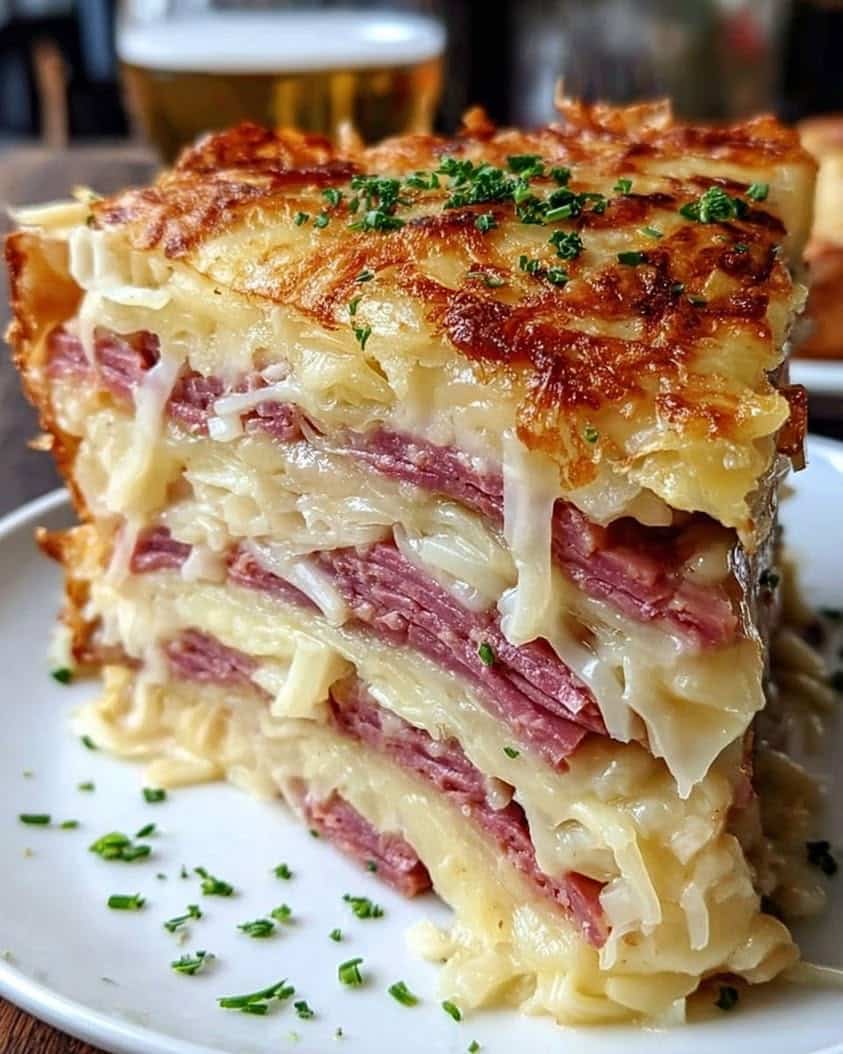
The Ultimate Reuben Bake Recipe with Corned Beef and Swiss Cheese: A Comforting Casserole
Imagine pulling a bubbling, golden casserole from the oven where layers of salty corned beef, tangy sauerkraut, and gooey Swiss cheese meld together into one irresistible dish. This post will show you exactly how to create that experience with a simple, foolproof method. This Ultimate Reuben Bake Recipe with Corned Beef and Swiss Cheese transforms a classic deli sandwich into a shareable, weeknight-friendly meal that your whole family will love. The familiar flavors are all here, but the preparation is far easier than assembling individual sandwiches. You get all the satisfaction without any of the fuss, making it a perfect choice for busy weeknights or casual gatherings.
When you lift a spoonful of this warm, layered casserole, the aromas of toasted rye bread mingling with melted cheese will fill your kitchen. The first bite delivers a perfect contrast: the tender, salty edge of corned beef, the bright, sharp pop of sauerkraut, and the creamy, rich pull of Swiss cheese. Each component shines on its own, yet they combine to create a deeply comforting and satisfying whole. This is food that feels like a warm hug, a dish rooted in tradition but designed for modern convenience. For anyone who loves the classic Reuben but wants a simpler, more crowd-friendly version, this recipe is an absolute winner.
Quick Recipe Highlights
- Flavor Profile: This dish offers a robust and tangy flavor profile. The salty corned beef and rich Swiss cheese are perfectly balanced by the distinct, vinegary tang of sauerkraut, creating a complex but harmonious taste.
- Texture: You will experience a wonderful mix of textures. The top layer of cheese and bread becomes crispy and golden, while the interior remains soft, tender, and moist from the sauerkraut and dressing.
- Aroma: As it bakes, your kitchen will fill with the intoxicating scent of toasted caraway from the rye bread, melted dairy cheese, and the savory, slightly sour notes of the simmering corned beef and kraut.
- Visual Appeal: The final dish is beautiful in its rustic simplicity. Golden brown, bubbly cheese and toasted bread crumbs top a richly colored filling of pink corned beef and pale sauerkraut, garnished with fresh parsley.
- Skill Level Needed: This is a fantastic recipe for beginner cooks. The techniques are straightforward, involving layering, mixing, and baking, with minimal active prep time and no complicated culinary skills required.
- Special Equipment: You will need a standard 9×13 inch baking dish for this recipe. A large skillet for cooking the corned beef and onions is also helpful, along with a good chef’s knife for prep work.
Recipe Overview
- Difficulty Level: We rate this dish as Easy. The process is incredibly forgiving and involves simple layering of pre-cooked or deli-sliced ingredients. There are no advanced techniques like making a roux or working with yeast, making it nearly impossible to mess up.
- Category: This dish fits perfectly as a main course for lunch or dinner. It also works wonderfully as a hearty casserole for a potluck or a comforting supper on a cold evening. It is a versatile, all-in-one meal.
- Cuisine: The roots of this dish lie in classic American and Jewish deli cuisine. The Reuben sandwich, from which this casserole is adapted, is a storied American creation, and this recipe honors those classic deli flavors in a new, convenient form.
- Cost: This is a moderate to budget-friendly recipe. Corned beef can be more expensive, but you can use leftover corned beef from a holiday meal or purchase pre-sliced deli meat to save time and money. Other ingredients are very affordable.
- Season: While delicious year-round, this comfort food is especially perfect for fall and winter. Its warm, hearty nature makes it a perfect dish to serve during the colder months, particularly around St. Patrick’s Day when corned beef is often on sale.
- Occasion: This casserole is perfect for many occasions, from a casual family dinner to a game-day party spread. It also travels well for potlucks and is a guaranteed hit for a hearty weekend brunch or lunch with friends.
Why You Will Love This Recipe
The primary reason you will adore this Reuben Bake is its incredible taste. Furthermore, it captures the exact flavor profile of the iconic sandwich without any of the structural challenges of stacking a tall, messy sandwich. In addition, the marriage of savory corned beef, tangy sauerkraut, melted Swiss cheese, and creamy dressing is incredibly satisfying. The top gets beautifully crunchy while the inside stays unbelievably juicy. However, the best part is how all these distinct flavors meld together during baking to create something even greater than the sum of its parts.
Convenience is another massive benefit. Above all, this casserole simplifies a classic dinner into a very manageable process. For instance, you can use pre-shredded Swiss cheese, jarred sauerkraut, and deli-sliced corned beef to keep the preparation time incredibly low. This means you can have a dinner that tastes like you spent hours on the stove but is assembled in about 15 minutes. Consequently, it is the perfect answer for a busy weeknight when you crave something comforting but lack the time for extensive cooking.
From a nutritional standpoint, this dish provides a good source of protein from the corned beef and cheese. In addition, sauerkraut offers beneficial probiotics and is low in calories. Moreover, you can easily control the amount of fat and sodium by selecting leaner cuts of corned beef and using a lighter dressing. As a result, you can enjoy a satisfying, balanced meal that fits into a healthy diet without feeling deprived. It is a dish that feeds both your soul and your body.
For social gatherings, this casserole is a superstar. Specifically, it serves a crowd easily and holds up well if people are eating at different times. Additionally, it is a unique dish that will impress guests who only know the classic sandwich. The presentation is beautiful, and the aroma alone draws people to the table. Indeed, it is a conversation starter and a true crowd-pleaser that disappears quickly from any buffet line or family gathering.
Finally, this recipe is remarkably cost-effective. For example, you can use leftover corned beef from a St. Patrick’s Day feast or a Sunday dinner. This gives new life to leftovers and reduces food waste. Furthermore, the other ingredients like bread, sauerkraut, and cheese are pantry staples for many home cooks. Therefore, you can create a lavish-tasting meal that feels special but fits easily within a typical grocery budget. You get maximum flavor for a minimal financial investment.
Historical Background and Cultural Significance
The story of the Reuben sandwich is a beloved and somewhat debated piece of American culinary history. The most popular origin story credits Arnold Reuben, a German-Jewish immigrant and owner of Reuben’s Delicatessen in New York City, with inventing the sandwich in the early 20th century. According to legend, he created it for a hungry actress who wanted something different. He combined ham, turkey, Swiss cheese, coleslaw, and Russian dressing on rye bread, a proto-Reuben that was a hit. This innovative spirit of creating a new classic from available ingredients is deeply embedded in American food culture.
However, another strong claim comes from Omaha, Nebraska. In the 1920s, a poker group at the Blackstone Hotel included a man named Reuben Kulakofsky. The hotel owner, Charles Schimmel, began serving him a late-night sandwich of corned beef, sauerkraut, and Swiss cheese on rye. This version, with its sauerkraut and Russian dressing, became a local sensation and eventually spread nationwide. This story highlights how regional variations and community traditions helped solidify the dish’s place in the American culinary landscape.
Our casserole version evolved from this beloved sandwich to meet the demands of modern home cooks. As casseroles became a staple of mid-20th century American cooking, cooks began adapting popular sandwich fillings into baked dishes. This adaptation made the Reuben flavors more accessible for family dinners and larger gatherings. It took the sandwich out of the deli and onto the home dinner table as a comforting, shareable meal. This evolution shows how recipes are always adapting to fit new lifestyles and cooking technologies.
Regional variations of the Reuben are numerous and reflect local tastes. In the Pacific Northwest, you find the Rachel, which uses pastrami instead of corned beef and coleslaw instead of sauerkraut. In the South, some versions add a dollop of chili or use a different type of bread. The casserole format itself is a variation, and you can easily adapt it with different meats or cheeses. This flexibility is what makes the Reuben such an enduring and adaptable dish. It is a true chameleon in the world of comfort food.
Ingredient Deep Dive
Corned beef is the soul of this dish, providing a rich, salty, and savory foundation. Its history is tied to salt-curing meats for preservation, a process that dates back centuries. The “corning” refers to the large grains of salt historically used to cure the brisket. Nutritionally, it is an excellent source of protein, iron, and B vitamins. However, it can be high in sodium and fat, so selecting a leaner cut or using it in moderation can be beneficial. When selecting corned beef, look for a piece with a deep pink color and minimal visible fat. For the best flavor and texture in this casserole, leftover home-cooked corned beef is ideal, but high-quality deli-sliced corned beef works wonderfully and saves time.
Swiss cheese brings a creamy, nutty, and slightly sweet counterpoint to the salty meat. Its popular name comes from its large, distinctive holes, though not all Swiss-style cheeses have them. It is also a good source of calcium and protein. For melting, Emmental or Gruyère are excellent choices due to their superior melting properties and rich flavor. You can substitute with any good melting cheese, like provolone or even a mild mozzarella. Store Swiss cheese tightly wrapped in the refrigerator for up to a week. Pre-shredded cheese is convenient but often contains anti-caking agents that can prevent it from melting as smoothly as freshly grated cheese.
Sauerkraut is the essential sour and tangy element that cuts through the richness of the meat and cheese. This fermented cabbage originated in China thousands of years ago and became a staple in Eastern European cuisine. It is packed with probiotics that are excellent for gut health, along with vitamins C and K. You can find it in jars or bags in the refrigerated section of the grocery store. Before using it in this casserole, it is crucial to drain and squeeze it very dry. This prevents the casserole from becoming watery. A classic tip is to rinse it quickly in a colander to reduce its acidity, but many Reuben lovers prefer its full tangy character.
Common Mistakes to Avoid
- Not draining the sauerkraut enough will result in a watery casserole. You must squeeze it dry with your hands or a clean kitchen towel after draining it in a colander. This step is vital for achieving the perfect texture.
- Overcooking the corned beef before assembly is a common error. The casserole will continue to cook in the oven, so you only need to gently warm the corned beef with the onions. Overcooking leads to dry, tough meat.
- Using pre-shredded cheese can affect the texture. These cheeses are often coated with anti-caking agents that prevent smooth melting. For the best results, grate your own Swiss cheese from a block.
- Skipping the step of toasting the rye bread cubes leads to a soggy bottom. Toasting them first helps them absorb the dressing and juices without turning into a mushy paste. It also adds a wonderful crunch.
- Not using enough Russian or Thousand Island dressing will result in a dry casserole. The dressing provides necessary moisture and flavor. Do not be shy with it; the bread will absorb it during baking.
- Over-baking the casserole is a frequent problem. You only need to bake it until it is hot, bubbling, and the top is golden brown. Over-baking will dry out the meat and make the bread tough.
- Adding the cheese too early can cause it to burn before the casserole is fully heated. You should add the final layer of cheese only for the last 10 to 15 minutes of baking.
- Using a baking dish that is too small will make the casserole overflow. A standard 9×13 inch dish provides the perfect amount of space for all the ingredients.
- Not letting the casserole rest after baking makes for sloppy slices. Let it sit for 5 to 10 minutes so the juices can set and the layers become easier to cut and serve.
- Forgetting to season the corned beef while cooking it before assembly. A simple dash of black pepper and a pinch of garlic powder enhances its flavor before it gets layered in the dish.
Essential Techniques
Mastering the technique of properly preparing the sauerkraut is non-negotiable for a perfect casserole. The key here is moisture removal. After you drain the sauerkraut in a colander, you must take the extra step of squeezing it firmly with your hands to remove as much liquid as possible. This step prevents your casserole from turning into a soupy mess. A great visual cue is that the sauerkraut should look dry and clump together slightly when you have squeezed out enough liquid. If you see water pooling in the bottom of the bowl after you have squeezed it, you are not done yet.
Creating the perfect bread layer is another crucial skill for this Reuben Bake. You should start with good-quality rye bread, preferably a day or two old so it is slightly stale. Cut it into evenly sized cubes and then toast them in the oven or a dry skillet until they are just beginning to turn golden and crisp. This toasting is a safeguard against sogginess. When the toasted cubes are mixed with the dressing and wet ingredients, they will absorb the liquid without becoming a mushy paste. The result is a firm, flavorful base that holds up beautifully to all the other rich components.
Pro Tips for Perfect Ultimate Reuben Bake Recipe with Corned Beef and Swiss Cheese
Always use freshly grated Swiss cheese for the superior melt it provides. Pre-shredded cheese from a bag often contains starches that prevent it from melting smoothly into a cohesive layer. The extra minute you spend grating is worth the creamy, stringy result.
Toast your rye bread cubes until they are bone-dry and lightly browned. This step is your primary defense against a soggy casserole. Dry cubes will absorb the dressing and juices evenly without falling apart, creating a perfect texture throughout the bake.
Layer your ingredients thoughtfully. Start with a layer of bread cubes, then half the sauerkraut, half the corned beef, and half the cheese. Repeat these layers to build a tall, visually appealing casserole with even distribution of flavors in every serving.
Do not skip the step of squeezing the sauerkraut very dry. This is perhaps the single most important detail. Excess liquid from the kraut can ruin the consistency of the entire casserole, making it watery rather than rich and cohesive.
Let the casserole rest for at least 5 to 10 minutes once it comes out of the oven. This resting period allows the juices to settle and the layers to firm up slightly. Cutting into it immediately will result in a messy, soupy serving.
Season the corned beef lightly with black pepper and a touch of garlic powder before you cook it. While corned beef is already flavorful, a small boost of seasoning in the pan will enhance its savory profile and make the entire dish taste more complex.
Use a rimmed baking sheet under your casserole dish to catch any potential overflow. This recipe is forgiving, but bubbling up over the edge is always a possibility. A simple baking sheet will save you from a messy oven clean-up.
For an extra crispy top, broil the casserole for the last 1 to 2 minutes of cooking. Watch it closely as broilers vary in intensity. This final blast of heat will create a beautiful, golden-brown crust on the cheese and bread crumbs.
Variations and Adaptations
Regional variations on the Reuben are a great source of inspiration for your casserole. The classic California version, known as a Rachel, substitutes pastrami for corned beef and creamy coleslaw for sauerkraut. This creates a sweeter, spicier flavor profile that is equally delicious. For a true New York twist, use a generous amount of Russian dressing and a mix of caraway and poppy seeds on top of the bread. You can also try adding a layer of thinly sliced dill pickles for an extra acidic crunch that cuts through the richness.
Seasonal adaptations can make this dish perfect for any time of year. In the fall, you can use a roasted red pepper and garlic dressing to add a smoky sweetness. During the summer, consider adding fresh herbs like chives or dill to the cheese layer for a bright, fresh note. In the winter, you can bulk up the casserole with some cooked and shredded root vegetables like parsnips or carrots. This adds sweetness and makes the dish even more hearty and satisfying during the colder months.
Dietary modifications can make this casserole accessible to more people. For a gluten-free version, simply use gluten-free rye-style bread or a sturdy gluten-free white bread. For a dairy-free adaptation, you can use a high-quality dairy-free Swiss cheese substitute, though it will change the flavor and texture slightly. A low-carb option involves skipping the bread layer entirely and using a base of cauliflower rice or steamed cabbage leaves. These modifications allow everyone to enjoy the core flavors of the Reuben.
Flavor variations are limited only by your imagination. For a spicier kick, add a teaspoon of horseradish to the dressing or sprinkle some red pepper flakes into the sauerkraut. You can also experiment with different types of cheese. A mix of Swiss and Gruyère adds incredible nuttiness. For a more tangy profile, try using a smoked Gouda or a sharp cheddar. Swapping the Russian dressing for a mustard-based sauce will give the dish a completely different, more piquant character.
Texture modifications can change the eating experience. For a crunchier top, mix panko breadcrumbs with melted butter and sprinkle them over the cheese before baking. If you prefer a softer texture, you can skip the initial toasting of the bread cubes. Cubing the corned beef into larger chunks instead of shredding it will give you more substantial bites of meat. You can also add a layer of thinly sliced red onions for a crisp, sharp bite that contrasts with the soft interior of the casserole.
Presentation alternatives can make this dish feel restaurant-worthy. Instead of a traditional casserole, you can assemble the layers in individual ramekins for a personal serving size. Another beautiful option is to bake the mixture in a large cast-iron skillet for a rustic presentation at the table. You can also serve the casserole open-faced on a slice of toasted rye bread. This provides a beautiful plate presentation and allows each guest to control their own portion size.
Serving and Presentation Guide
Plating techniques for this casserole are simple but effective. Use a large, flat serving spoon to scoop out a generous portion, ensuring you get all the layers in each serving. Place the casserole in the center of the plate, creating a neat, tall mound. A small offset spatula can help you lift it cleanly from the dish. For a more elegant presentation, you can use a round cookie cutter to press the casserole into a perfect cylinder on the plate, then lift the cutter away.
Garnishing ideas can elevate the visual appeal significantly. A sprinkle of fresh, chopped parsley or chives adds a pop of green that contrasts beautifully with the golden brown and pink tones. A small dollop of extra Russian or Thousand Island dressing on the side of the plate adds a glossy, professional touch. A few whole caraway seeds or a small sprig of fresh dill can also be a lovely garnish that hints at the flavors within the dish.
Traditional accompaniments for a Reuben are perfect for serving alongside this casserole. A crisp, crunchy pickle spear is an absolute must, as its acidity cuts through the richness of the dish. A simple side of potato chips or a hot, salty soft pretzel is classic. A cold, tangy coleslaw also provides a wonderful textural and flavor contrast. For a more substantial meal, serve it with a warm bowl of creamy tomato soup or a simple green salad with a vinaigrette dressing.
Modern serving suggestions can make this a trendy meal option. You can serve the casserole deconstructed, with the components laid out on a wooden board for guests to assemble themselves. This is perfect for a party. Another modern idea is to use the casserole as a filling for a baked potato or a stuffed portobello mushroom cap. This deconstruction provides a familiar flavor in a completely new and exciting format.
Temperature considerations are key for the perfect eating experience. This dish is best served hot, right out of the oven, when the cheese is still stretchy and the bread is crisp. However, it is also delicious at room temperature, making it a fantastic make-ahead dish for a buffet. If you are serving it later, you can let it cool completely and reheat it in a moderate oven until warmed through. Always let it rest for a few minutes after baking to set before you serve it.
Portion control tips are useful if you are watching your intake. This casserole is rich and satisfying, so a standard serving size is about 8 to 10 ounces. A 9×13 inch dish serves 8 people comfortably. For a lighter meal, you can serve a smaller portion alongside a large side salad. The nutritional information for this recipe is calculated for one serving of the casserole with the dressing and cheese included.
Wine and Beverage Pairing
Wine pairings for this Reuben Bake can enhance its complex flavors. A classic, crisp Riesling is an excellent choice. Its slight sweetness balances the saltiness of the corned beef and the acidity of the sauerkraut, while its high acidity cuts through the richness of the Swiss cheese. A dry, unoaked Chardonnay or a Pinot Gris from Alsace also works beautifully, offering a similar balance of fruit and acidity. For a red wine lover, a light-bodied, fruity Pinot Noir is a fantastic option. Its low tannins and bright cherry notes complement the dish without overpowering it. A juicy, low-tannin Zinfandel is another solid choice.
Non-alcoholic alternatives are plentiful for this meal. A crisp, cold glass of sparkling water with a squeeze of lemon or lime is a perfect palate cleanser. A tangy, non-alcoholic ginger ale provides a spicy kick that mirrors the zing of the sauerkraut. A high-quality, cold-brewed iced tea, especially a herbal blend with notes of mint or chamomile, offers a refreshing counterpoint to the rich casserole. For a more festive option, a simple shrub syrup (a mix of fruit, vinegar, and sugar) mixed with soda water makes a complex and flavorful non-alcoholic cocktail.
Coffee and tea pairings can also be considered. A robust, dark roast coffee with a smooth finish is a surprisingly good match for the rich flavors of the casserole. The coffee’s bitterness can stand up to the strong meat and cheese. For tea, a bold black tea like Irish Breakfast or a smoky Lapsang Souchong can provide a savory, complex flavor that complements the dish. A more subtle oolong tea can also work, offering a floral note that provides a nice contrast.
Temperature considerations for your beverages are important. The warm, rich casserole pairs best with cold, crisp drinks that provide a temperature contrast. A cold beer, a chilled white wine, or a frosty glass of iced tea are all excellent choices. If you are serving a red wine, you should serve it slightly below room temperature, around 55 to 60 degrees Fahrenheit. This ensures the wine is refreshing and not too heavy against the dish.
Serving suggestions for beverages can make the meal feel more complete. Set up a small drink station with the suggested non-alcoholic options, especially for a party. Provide a carafe of ice water with lemon slices at the table to cleanse the palate between bites. If you are serving wine, offer both a red and white option to please different palates. A simple, classic lager or pilsner beer is also a traditional and beloved pairing for this type of hearty fare.
Storage and Shelf Life
Storage methods for leftover casserole are simple and effective. You should place any leftover casserole in an airtight container. It is best to let it cool completely to room temperature before sealing the container to prevent condensation. You can also store it directly in the baking dish if you cover it tightly with aluminum foil or a lid. Properly stored, the casserole will last for 3 to 4 days in the refrigerator.
Temperature requirements for food safety are crucial. The casserole must be kept below 40 degrees Fahrenheit (4 degrees Celsius) to prevent bacterial growth. Always place leftovers in the refrigerator within two hours of cooking. If the casserole is sitting out at room temperature for a party, you should not leave it for more than two hours. If the temperature is above 90 degrees Fahrenheit, you should reduce that time to one hour.
Container recommendations for storage can help maintain quality. A glass or plastic container with a tight-fitting lid is ideal. You can also use a reusable silicone food cover to seal the baking dish itself. Avoid using containers that are too large, as extra air space inside the container can cause the food to dry out faster. A container that fits the casserole snugly will help it retain its moisture and flavor.
Signs of spoilage are important to recognize. Any off smells, such as a sour or yeasty odor, indicate the casserole has gone bad. You should also look for any visible mold growth on the surface. If the texture of the casserole feels slimy or there is a distinct, unpleasant smell, it is best to discard it. Do not taste food that you suspect might be spoiled.
Reheating instructions are key to restoring the casserole to its former glory. The best method is to reheat it in a 350 degree Fahrenheit oven until it is hot and bubbly, about 10 to 15 minutes. Covering it with foil for the first part of the reheating will prevent the top from burning. You can also reheat individual portions in the microwave for 1 or 2 minutes. The oven method yields a superior texture, keeping the top crisp while the inside heats evenly.
Freezing guidelines for this casserole are very effective. You can freeze the assembled but unbaked casserole or a fully baked and cooled one. For freezing, wrap the entire casserole dish tightly in a layer of plastic wrap, followed by a layer of aluminum foil. This double-layer protection prevents freezer burn. It can be frozen for up to 3 months. To bake from frozen, you can add about 15 to 20 minutes to the standard baking time, or you can thaw it overnight in the refrigerator and then bake it as directed.
Make Ahead Strategies
A prep timeline is very helpful for this recipe. You can easily prepare this casserole a day or two in advance. The ideal timeline is to assemble the entire casserole, without the final cheese topping, up to 24 hours before you plan to bake it. This allows the flavors to meld beautifully. On the day of serving, you simply add the cheese and bake it. This is a perfect strategy for a dinner party or a busy holiday meal.
Storage between steps is important for a make-ahead plan. If you assemble the casserole beforehand, you should cover it tightly with plastic wrap or foil and place it in the refrigerator. It is best to keep the cheese separate and add it later. The bread cubes will absorb some of the dressing, but this is actually beneficial as it softens them and allows them to become perfectly integrated into the casserole.
Quality impact assessment of making ahead is positive. In fact, many find that the flavor of the casserole improves after a day in the refrigerator. The ingredients have more time to meld together, resulting in an even more harmonious final dish. The only potential downside is that the top may not be as crisp if you assemble it too far in advance, but the flavor compensation is well worth it. You can always broil it at the end for extra crispiness.
Assembly tips for make-ahead success are easy to follow. When you are ready to bake the pre-assembled casserole, you should let it sit at room temperature for about 15 to 20 minutes while the oven preheats. This helps the casserole bake more evenly. Add the final cheese layer just before you put it in the oven. If the top looks a bit dry, you can drizzle a little extra dressing over it before you bake it to ensure it stays moist.
Reheating guidelines for a fully baked and cooled casserole are straightforward. As mentioned, the oven is the best tool for this. You can reheat a portion or the whole dish in a 325 degree Fahrenheit oven. Cover the dish loosely with foil to prevent the top from burning. A fully cooked casserole will typically need about 20 to 25 minutes to heat through from the refrigerator. This method will restore the casserole to its original delicious state.
Fresh element additions can brighten a make-ahead casserole. Before you serve a reheated dish, you can add a fresh garnish. A sprinkle of fresh parsley, chives, or dill will add a pop of color and a fresh, herbaceous note that contrasts nicely with the rich casserole. A squeeze of fresh lemon juice over the top just before serving can also add a bright, acidic lift that wakes up all the other flavors.
Scaling Instructions
Halving the recipe is simple for a smaller household. You can easily cut all the ingredient quantities in half. You will then need to use a smaller baking dish, such as an 8×8 inch square pan. The baking time will also need to be reduced by about 5 to 10 minutes, as the smaller volume will cook faster. Keep a close eye on it to ensure it does not overbake.
Doubling or tripling the recipe for a large crowd requires a bit of planning. You will need a much larger baking dish, such as a 12×18 inch sheet pan or a large roasting pan. If you double it, a standard 9×13 inch dish will be too small. You can also prepare two separate 9×13 inch casseroles side by side, which is often easier to bake evenly. The baking time will increase slightly, but check for doneness earlier rather than later.
Equipment adjustments are necessary when scaling up. You will need a larger mixing bowl to combine all the components. You may also need to cook the corned beef in batches if your skillet is not large enough. Make sure your oven can accommodate the larger dish or multiple dishes. If you are using a sheet pan, make sure it has a rim to prevent any juices from spilling over.
Timing modifications must be considered carefully. A larger casserole will take longer to heat through and for the cheese to melt. You may need to add 10 to 20 minutes to the total baking time. It is crucial to check the internal temperature of the casserole with a meat thermometer. It should reach 165 degrees Fahrenheit to ensure it is fully heated and safe to eat. A smaller casserole will cook faster, so you should start checking it early.
Storage considerations for scaled recipes are important for leftovers. If you double the recipe, you will have a lot of leftovers. Ensure you have enough refrigerator space and suitable containers to store them. Large quantities of casserole can be portioned out into multiple containers for easier storage and reheating. This is also a great way to have a grab-and-go lunch for the week.
Nutritional Deep Dive
Macro breakdown for one serving of this casserole is substantial. A typical serving provides approximately 500 to 600 calories, depending on the specific ingredients used. It is a high-protein, moderate-fat meal, with around 30 to 40 grams of protein. The fat content comes from the corned beef and cheese, and the carbohydrate content is primarily from the rye bread and the sugar in the dressing. This makes it a satisfying meal that provides lasting energy.
Micronutrient analysis reveals several key vitamins and minerals. Corned beef is an excellent source of iron, which is vital for healthy blood cells. Swiss cheese provides a good amount of calcium for bone health. Sauerkraut is rich in vitamin C, which supports the immune system, and vitamin K, important for blood clotting and bone metabolism. You also get a serving of B vitamins from the meat and bread.
Health benefits of this recipe are noteworthy. The sauerkraut is a fermented food, meaning it is a natural source of probiotics. These beneficial bacteria are great for digestive health and can boost your overall immune system. The protein content helps you feel full and satisfied, which can be helpful for weight management. The combination of nutrients supports muscle health, energy levels, and bone density.
Dietary considerations are important for many people. Print
Reuben Bake with Layers of Corned Beef, Sauerkraut, and Swiss Cheese
- Total Time: 45 minutes
- Yield: 6
Description
A hearty and delicious casserole that captures all the flavors of a classic Reuben sandwich in an easy-to-make baked dish. Layers of savory corned beef, tangy sauerkraut, Swiss cheese, and a creamy dressing are topped with a crispy rye bread crust.
Ingredients
- 1 tablespoon butter, softened
- 8 slices rye bread, cubed
- 1 1/2 pounds thinly sliced deli corned beef
- 1 (14 oz) can sauerkraut, drained and rinsed
- 2 cups shredded Swiss cheese
- 1/2 cup Thousand Island dressing
- 1/2 cup sour cream
- 3 large eggs
- 1/2 cup milk
- 1/2 teaspoon caraway seeds (optional)
- Salt and black pepper to taste
Instructions
- Preheat oven to 375°F (190°C). Grease a 9×13-inch baking dish with butter.
- Spread half of the rye bread cubes in an even layer in the prepared dish. Top with half of the corned beef, then half of the sauerkraut, and half of the Swiss cheese.
- Repeat layers: remaining bread, corned beef, sauerkraut, and cheese.
- In a medium bowl, whisk together Thousand Island dressing, sour cream, eggs, milk, caraway seeds (if using), salt, and pepper until smooth. Pour evenly over the casserole.
- Bake for 25-30 minutes, or until the top is golden brown and the filling is set. Let stand for 5 minutes before serving.
Notes
You can customize the seasonings to taste. For extra flavor, add a layer of Russian dressing instead of Thousand Island, or use deli-cut pastrami in place of corned beef.
- Prep Time: 15 minutes
- Cook Time: 30 minutes
- Method: Main
- Cuisine: American