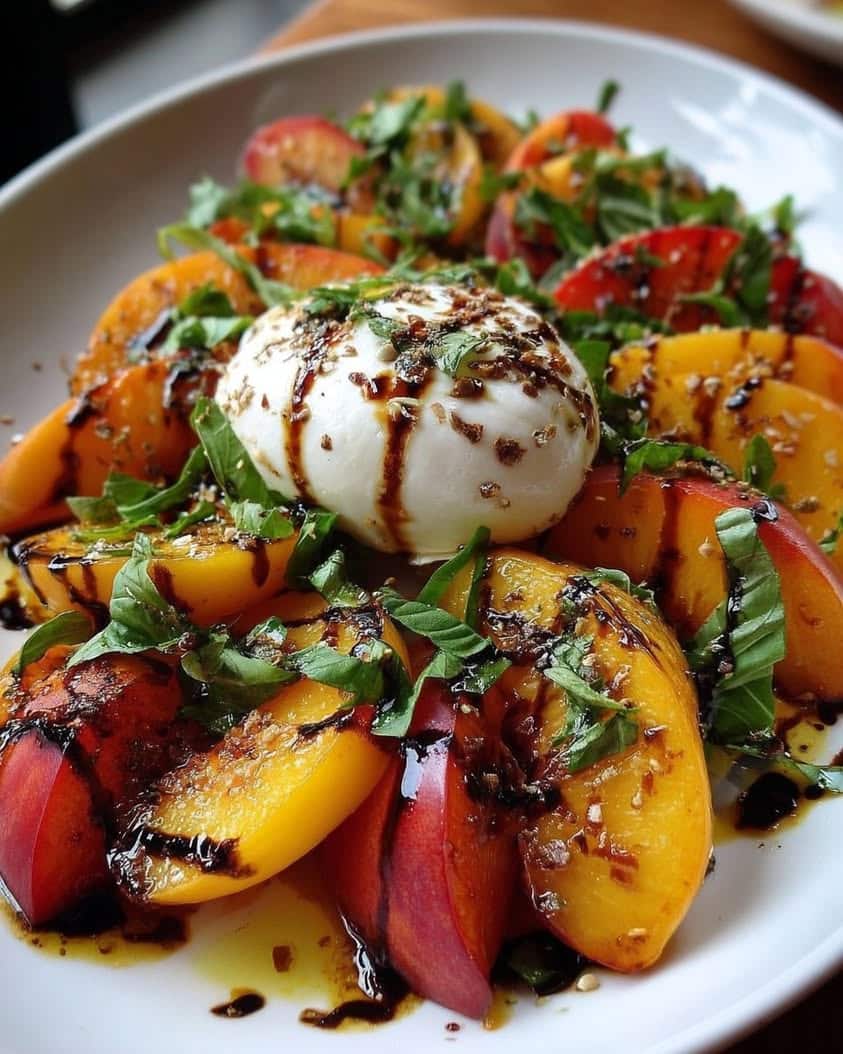
The Ultimate Grilled Peach Caprese with Burrata and Hot Honey: A Summer Symphony
There is something magical about the moment when summer fruit meets a hot grill. The sugars caramelize and the flesh softens. This creates a perfect canvas for creamy cheese. That is exactly what happens with this Grilled Peach Caprese with Burrata. It is a dish that transforms a simple salad into a show-stopping appetizer. The combination of sweet grilled peaches and rich burrata is absolutely heavenly. You will taste the warmth of the grill in every single bite. The hot honey drizzle adds a kick of spicy sweetness that ties everything together. This is not just a recipe. It is an experience that captures the very essence of al fresco dining.
Imagine a plate where vibrant colors and contrasting temperatures meet. The warm peaches sit next to cool, creamy burrata. The basil oil adds a fresh herbal note that brightens the whole dish. And then there is the hot honey dust. It provides a subtle heat that dances on your tongue. This Grilled Peach Caprese with Burrata works perfectly as a starter or a light lunch. It is incredibly simple to prepare. Yet it looks like something from a five-star restaurant. Moreover it is a fantastic way to use those perfectly ripe peaches from the farmers market. Consequently you will find yourself making this over and over again all summer long. It is truly the ultimate summer caprese salad.
The beauty of this dish lies in its simplicity. There are very few components. Therefore each one must be of the highest quality. From the ripe freestone peaches to the fresh burrata cheese every ingredient shines. The hot honey dust is a surprising twist. It is not a liquid. Instead it is a powdered version that dissolves on your tongue. This provides an even distribution of flavor. As a result you get a consistent sweet and spicy kick in every single forkful. The basil oil is also a key player. It is much more than a garnish. It adds a depth of flavor that fresh basil leaves alone cannot achieve. Together these elements create a balanced and unforgettable dish.
Quick Recipe Highlights
- Flavor Profile: The flavor profile is a masterclass in contrasts. You get the sweet and smoky flavor of the grilled peaches. The creamy richness of the burrata provides a luscious counterpoint. The basil oil brings a fresh herbaceous note. Finally the hot honey dust adds a sweet heat that lingers pleasantly. It is a harmonious blend of savory and sweet.
- Texture: This dish is a textural dream. You have the tender yet slightly firm flesh of the grilled peaches. The burrata is incredibly soft and creamy. Its center oozes out when you cut into it. The basil oil adds a silky mouthfeel. The hot honey dust provides a fine granular texture that melts away. Every bite offers a new sensation.
- Aroma: The aroma is intoxicating and complex. You can smell the caramelized sugars from the grill. The fresh basil oil releases a peppery and sweet scent. The burrata has a mild milky fragrance. The hot honey dust adds a subtle floral and spicy note. Together these aromas create an inviting and appetizing bouquet.
- Visual Appeal: The visual appeal is stunning. The golden-brown char marks on the peaches are beautiful. The pure white burrata sits like a cloud on the plate. The vibrant green basil oil is drizzled artistically. The specks of hot honey dust add a final touch of visual interest. It is a plate full of color and life.
- Skill Level Needed: This recipe is genuinely easy. The techniques are very basic. Grilling peaches requires only a few minutes per side. Plating is simple and intuitive. Even a beginner cook can create a stunning result. The main requirement is using good quality ingredients. There is no complicated technique to master.
- Special Equipment: You will need a grill or a grill pan. A grill is ideal for the best char marks. However a grill pan works perfectly on a stovetop. You will also need a small food processor or blender for the basil oil. A fine-mesh strainer is useful for straining the oil. Finally you need a spice grinder or mortar and pestle for the hot honey dust.
Recipe Overview
- Difficulty Level: The difficulty level is easy. This means that almost anyone can make it. The steps are straightforward and uncomplicated. The cooking time is very short. You do not need any advanced culinary skills. The only challenge is timing the components. However that is quite simple with a little planning. Even a novice cook will feel confident making this dish. The result looks far more complex than the effort required.
- Category: This dish falls into the appetizer or salad category. It also works well as a light main course. You can serve it as a first course for a summer dinner party. It is a fantastic starter for a grilled meat meal. Alternatively you can pair it with crusty bread for a satisfying lunch. It is versatile enough for many occasions.
- Cuisine: The cuisine is Italian-inspired with a modern twist. The caprese salad is a classic Italian combination. Tomatoes are the traditional fruit used. This recipe replaces them with peaches. That is a very popular summer variation. The burrata cheese is also traditional from the Apulia region. The basil oil is a classic Italian condiment. The hot honey dust adds a contemporary American touch. This fusion creates a globally inspired dish.
- Cost: The cost is moderate. Burrata cheese can be a bit pricey. However you only need one or two balls for this recipe. Peaches are seasonal and affordable during summer. Hot honey dust is inexpensive to make at home. Basil oil uses fresh basil which is typically affordable. Overall the cost per serving is reasonable. It is a great value for a dish that impresses so much.
- Season: The best season for this dish is undoubtedly summer. Peaches are at their peak from June to September. Their flavor is sweetest and most intense during this time. The grilling aspect also suits summer cooking. It is a perfect dish for outdoor gatherings. You can also make it with nectarines or plums later in the season. However the classic peach version is best in the height of summer.
- Occasion: This dish is perfect for many occasions. It is wonderful for a summer dinner party. It makes a great appetizer for a barbecue. It is also lovely for a romantic date night at home. You can serve it as part of a brunch spread. It is elegant enough for a holiday meal. Yet it is simple enough for a weeknight treat. It is a true all-rounder.
Why You’ll Love This Recipe
You will love this recipe first and foremost for its incredible taste and texture combination. The warm charred peaches offer a sweet and smoky flavor that is absolutely addictive. The cold creamy burrata provides a rich and decadent contrast. The aromatic basil oil adds a fresh herbal note. The hot honey dust provides a surprising sweet and spicy finish. Every single bite is a new adventure for your palate. Furthermore the textures are perfectly balanced. You have the firm yet tender fruit. You have the luscious creamy cheese. You have the silky oil and the granular dust. It is a complete sensory experience. This dish does not just feed you. It delights you with its complexity. The simplicity of the ingredients makes the flavors stand out even more. It is a truly memorable caprese salad.
Another reason to love this recipe is its incredible convenience and simple preparation. You can have this dish on the table in under thirty minutes. That makes it perfect for busy weeknights. You can also prepare several components ahead of time. The basil oil can be made a day in advance. The hot honey dust can be stored for weeks. Then you only need to grill the peaches and assemble the plate. This makes it a very low-stress dish for entertaining. You are not stuck in the kitchen while your guests are arriving. Moreover the cleanup is very minimal. You only use a few bowls and a grill pan. This ease of preparation is a huge advantage. You get a gourmet result with very little effort. That is a winning combination for any home cook.
Nutritionally this dish offers several advantages. Peaches are a great source of vitamins A and C. They also provide fiber and antioxidants. Burrata is rich in calcium and protein. Basil is packed with vitamin K and antioxidants. The olive oil provides healthy monounsaturated fats. The hot honey dust adds a small amount of sugar but it is used sparingly. Therefore this dish can be part of a balanced diet. It is a satisfying and flavorful way to eat more fruit and vegetables. You feel good about eating something so vibrant and fresh. It is a far healthier choice than many heavy appetizers. You can enjoy this guilt-free. The nutritional profile is a bonus on top of the amazing flavor.
This recipe also excels in social and entertaining value. It is an absolute showstopper. When you bring this plate to the table everyone will be impressed. The visual presentation is stunning. The combination of colors and textures is very appealing. It looks like something from a fancy restaurant. Yet you can reveal how simple it was to make. That always creates a great reaction. Furthermore it is a fantastic conversation starter. People will ask about the hot honey dust and the basil oil. It feels sophisticated and special. You will feel like a culinary genius. This dish is perfect for impressing guests without stressing yourself out. It is a secret weapon for any host. Its elegance belies its simplicity. This makes it a go-to recipe for summer entertaining.
Finally you will appreciate the cost-effectiveness and accessibility of this dish. While burrata is a premium ingredient you do not need a lot of it. A little goes a long way in terms of flavor and richness. Peaches are very affordable when they are in season. Basil is one of the least expensive fresh herbs. You likely already have olive oil, salt, and pepper in your pantry. The hot honey dust is made from common ingredients like honey and chili flakes. Therefore the overall cost per serving is quite reasonable. You are paying for quality ingredients but not in huge quantities. This makes it an accessible luxury. You can enjoy a gourmet experience without breaking the bank. It is a dish that feels extravagant but is actually budget-friendly. That is a very appealing quality for any home cook. It proves that you do not need expensive ingredients to create something truly special.
Historical Background and Cultural Significance
The caprese salad has a fascinating origin story. It is named after the island of Capri in Italy. The classic combination of tomato, mozzarella, and basil is said to represent the colors of the Italian flag. This patriotic dish became popular in the mid-20th century. It was a simple way to showcase the high-quality ingredients of the Campania region. The use of buffalo mozzarella is traditional. However burrata is a newer and richer variation. Burrata itself comes from the Apulia region. It is a cow’s milk cheese with a creamy center. This innovation added a new dimension to the classic caprese. The adaptation of using fruit like peaches is a more recent development. It reflects a global trend of using seasonal produce in classic recipes. This evolution keeps the dish modern and exciting.
This dish holds significant cultural importance in Italian cuisine. It represents the philosophy of cucina povera. That is the idea of making something beautiful from simple ingredients. The original caprese salad is a testament to this approach. You only need three main components. But you need the best possible versions of those components. This philosophy is still very relevant today. It teaches us to respect our ingredients. It shows us that complexity is not always necessary. The Grilled Peach Caprese with Burrata follows this same principle. It uses a few high-quality items. It adds a modern cooking technique with the grill. The result is a dish that honors its Italian roots. Yet it also embraces contemporary tastes. This cultural flexibility is a reason why the caprese remains so popular worldwide. It adapts to different seasons and local produce.
The evolution of the recipe from a simple salad to a grilled dish shows culinary creativity. The traditional caprese is served cold. The ingredients are raw and fresh. Adding a grill introduces a new set of flavors. Caramelization adds sweetness and depth. The heat changes the texture of the fruit. This innovation likely started with chefs looking for new ways to serve summer fruit. Grilling peaches became very popular in American cuisine. Combining them with classic Italian ingredients was a natural progression. This hybrid dish gained popularity in the early 2000s. It has since become a staple of summer menus. It shows how recipes can travel and change. It is a beautiful example of culinary fusion. The core idea of the caprese remains. But the execution is completely different. This evolution ensures the dish stays relevant and exciting for new generations.
There are now many regional variations of the grilled caprese. Some use nectarines or plums instead of peaches. Others use figs or watermelon. The cheese can also vary. Some use fresh mozzarella or ricotta. Others use goat cheese for a tangier flavor. The herbs are not always basil. Some variations use mint or thyme. The dressing can be a balsamic reduction instead of basil oil. The hot honey dust is my personal addition. It is inspired by the popular trend of using spicy honey on pizza and cheese boards. This variation is very versatile. It allows you to use what is in season or what you have on hand. This flexibility is a key reason for the dish’s lasting popularity. It is a template for summer cooking. You can adapt it endlessly. This makes it a valuable recipe for any cook to know.
Ingredient Deep Dive
Peaches are the star of this dish. They have a rich cultural history dating back to ancient China. They symbolize longevity and immortality. Peaches traveled the Silk Road to Persia. From there they spread to Europe and the Americas. They are a beloved summer fruit in the United States. Georgia is famously known as the Peach State. Nutritionally peaches are excellent. They are a good source of vitamin C. This supports your immune system. They also contain vitamin A which is good for vision. Peaches provide fiber and antioxidants like chlorogenic acid. These compounds help fight inflammation. When selecting peaches you want ones that are fragrant. They should give slightly to gentle pressure. Avoid peaches that are rock hard or have green shoulders. Store ripe peaches at room temperature. Use them within two days for the best flavor. You can also refrigerate them for a few more days. For substitutions you can use nectarines. You can also use plums or even fresh figs. Each fruit will offer a slightly different flavor profile.
Burrata cheese is another essential ingredient. It originated in the Apulia region of Italy in the early 20th century. It was a way to use up leftover mozzarella scraps. The outer shell is made of mozzarella. The inside is filled with stracciatella and cream. This gives it a rich, buttery texture. Nutritionally burrata is high in protein and calcium. It is also high in fat. Therefore it is best used in moderation. When selecting burrata look for balls that feel firm but not hard. The outer shell should be smooth and white. Avoid any that look wet or have a strong sour smell. Store burrata in its whey in the refrigerator. Use it within two days of purchase for the best texture. Do not freeze burrata as the texture will become grainy. For substitutions you can use fresh mozzarella. You can also use ricotta for a similar creamy texture. However the flavor will be different. Goat cheese is another option for a tangier taste.
Basil oil is a classic Italian condiment. It is made by blanching basil leaves and blending them with olive oil. This preserves the bright green color. It also extracts the herb’s volatile oils. Basil has a long history in Mediterranean cuisine. It is associated with love and protection in some cultures. Nutritionally basil is rich in vitamin K. It also contains antioxidants like beta-carotene. When selecting basil look for bright green leaves. Avoid any that have dark spots or are wilting. Store fresh basil as you would cut flowers. Place the stems in water and cover the leaves with a plastic bag. Keep it at room temperature. Do not refrigerate basil as the leaves will turn black. You can also freeze basil oil in ice cube trays. For substitutions you can use pesto. You can also use a simple vinaigrette with fresh herbs. Mint oil is another great variation that pairs well with peaches.
Hot honey dust is the most unique ingredient. It is a modern creation that takes the popular hot honey trend to a new level. Hot honey itself originated in Brooklyn. It became a sensation on pizza and fried chicken. The dust version is made by dehydrating hot honey. You can also use a mixture of powdered sugar and chili flakes. This ingredient adds a surprising texture and an even distribution of heat. It is a blend of sweetness from the honey and heat from chili flakes. Nutritionally it is pure sugar. Therefore you use it very sparingly. You can buy hot honey dust online. Alternatively you can make it at home. For substitutions you can use regular hot honey. You can also use a pinch of cayenne pepper mixed with a little sugar. Chili crisp is another interesting alternative. This provides a different texture but a similar flavor profile. The key is to get that sweet and spicy balance.
Common Mistakes to Avoid
- Using underripe peaches is a very common mistake. Underripe peaches are hard and lack sweetness. They will not char well on the grill. They will also be sour and disappointing. Always choose peaches that are fragrant and slightly soft. You can also use nectarines or plums if peaches are not in season.
- Overcooking the peaches ruins their texture. Grilling for too long makes them mushy. They lose their structure and become a mess. You only need two to three minutes per side. You want nice char marks but the fruit should still hold its shape. Watch them closely.
- Using cold burrata straight from the refrigerator is a mistake. Cold cheese dulls the flavor. It also prevents the creamy center from flowing properly. Let the burrata sit at room temperature for twenty to thirty minutes. This allows it to soften and become luscious.
- Overdressing the plate is a common error. Too much basil oil can make the dish greasy. It can overwhelm the delicate flavor of the peaches. Use a light hand when drizzling the oil. You can always add more later.
- Not seasoning the peaches is a missed opportunity. A pinch of salt brings out their sweetness. It also balances the richness of the burrata. Do not skip this simple step. It makes a big difference in the final flavor.
- Cutting the peaches too thin is a problem. Thin slices will fall apart on the grill. They will also cook too quickly. Cut the peaches into halves or thick wedges. This gives them enough structure to handle the heat.
- Using a dirty grill causes off-flavors. Leftover residues from previous meals can taint the peaches. Make sure to clean your grill grates before you start. A clean grill also provides better char marks.
- Adding the hot honey dust too early makes it dissolve. The dust will absorb moisture from the cheese. It will turn into a paste. Add it right before serving. This keeps its granular texture and intense flavor.
Essential Techniques
Grilling peaches requires a careful balance of heat and time. This technique is important because it transforms the fruit. The high heat caramelizes the natural sugars. This intensifies the sweetness. It also adds a desirable smoky flavor. To master this technique you must start with a clean and well-oiled grill. The grill should be medium-high. Cut the peaches in half and remove the pit. Brush the cut sides lightly with oil. Place them cut-side down on the hot grill. Do not move them for two to three minutes. You want to see dark grill marks. Carefully flip them with a spatula. Grill the skin side for one more minute. The common pitfall is moving them too soon. They will stick to the grill. Wait until they release naturally. The visual cue for success is deep golden-brown char marks. The fruit should be warm throughout but still firm. Overcooked peaches will look wrinkled and feel mushy.
Making basil oil is a simple but precise process. The goal is to preserve the bright green color of the basil. It also extracts the maximum flavor. You start by blanching the basil leaves. Bring a pot of salted water to a boil. Prepare an ice water bath. Submerge the basil leaves for ten seconds. Immediately transfer them to the ice water. This stops the cooking process. It also sets the green color. Squeeze out the excess water. Blend the basil with a high-quality extra virgin olive oil. Use a ratio of one cup of packed basil to about half a cup of oil. Blend until smooth. The common pitfall is not blanching the basil. The oil will turn brown within hours. The visual cue for success is a vibrant, emerald green oil. Strain it through a fine-mesh strainer. This removes any fibrous bits. The result is a smooth, flavorful oil. You can store it in the refrigerator for up to a week.
Making hot honey dust requires patience and a gentle hand. The technique is a form of dehydration. You start by spreading hot honey very thinly on a silicone baking mat. Use an offset spatula to make an even layer. The thinner the layer the faster it will dry. Place it in a dehydrator or a very low oven. One hundred forty degrees Fahrenheit is ideal. This can take two to three hours. The honey will become brittle. Let it cool completely. Then break it into pieces. Grind it in a spice grinder or with a mortar and pestle. The common pitfall is using too high heat. The honey will burn and become bitter. The visual cue for success is a fine powder that looks like sand. It should be dry and not clumpy. You can also make a quick version by mixing powdered sugar with cayenne pepper. This is not the same texture but it works in a pinch. The authentic dust is worth the effort for the unique texture it provides.
Pro Tips for Perfect The Ultimate Grilled Peach Caprese with Burrata and Hot Honey
Always choose freestone peaches for this recipe. Freestone peaches have pits that come out easily. Clingstone peaches are harder to cut cleanly. This makes them difficult to handle. Look for varieties like Red Haven or Elberta. They are sweet and hold their shape well on the grill. Their flavor is consistently excellent. Do not worry if they are slightly underripe. Grilling will sweeten them up.
Let your burrata come to room temperature for thirty minutes before serving. This step is very important. Cold burrata has a firm and rubbery texture. At room temperature it becomes soft and luscious. The creamy center will flow beautifully when you cut into it. This improves both the texture and the flavor. The richness becomes more pronounced.
Oil your grill grates thoroughly before adding the peaches. Use a paper towel dipped in oil. Hold it with tongs and rub it over the grates. This prevents the peaches from sticking. It also helps create those beautiful char marks. A well-oiled grill is essential for success. Do not skip this step even if you have a non-stick grill pan.
Season the grilled peaches with a flaky sea salt immediately after they come off the grill. The salt crystals will adhere to the warm fruit. This enhances the sweetness. It also adds a pleasant crunch. Maldon sea salt is a great choice. The flaky texture is perfect for this dish. A little salt goes a long way.
Use a very light hand when drizzling the basil oil. You want to accent the other flavors not mask them. A few artistic drops are enough. You can also use a small squeeze bottle for better control. This allows you to create beautiful patterns on the plate. The oil should be a supporting player not the star.
Add the hot honey dust at the very last moment. If you add it too early it will absorb moisture from the burrata. It will lose its granular texture. You want it to provide a pop of texture and heat. Sprinkle it generously over the burrata and peaches. Then serve immediately. The contrast is delightful.
Consider grilling the lemon or lime slices for a garnish. This adds a touch of acidity. It also provides a beautiful visual element. The charred citrus looks lovely on the plate. A squeeze of fresh citrus juice can also brighten the flavors. This is an optional but recommended step for added complexity.
Variations and Adaptations
There are many regional variations of this caprese dish. In Italy you might find it served with a balsamic reduction. This adds a sweet and tangy flavor. It is a classic pairing with peaches. Some regions use arugula instead of basil. The peppery greens provide a nice contrast to the sweet fruit. In the American South they might add a drizzle of sorghum syrup. This is a traditional sweetener with a unique flavor. Each region brings its own local ingredients. This makes the dish endlessly adaptable. You can experiment with what is available in your area. The core concept remains the same. The variations keep it exciting.
Seasonal adaptations are also very common. In early summer you can use strawberries or cherries. In late summer you can use plums or figs. In autumn you can use pears or persimmons. Grilling works well with many fruits. The key is to choose fruits that are firm but ripe. You want them to hold their shape on the grill. You can also use vegetables like heirloom tomatoes for a more traditional caprese. This version works beautifully in late summer when tomatoes are at their peak. The classic combination is always a good option. Seasonal adaptation ensures you are always using the best produce available. It is a sustainable and delicious approach to cooking.
Dietary modifications are easy to make. For a gluten-free version this dish is naturally gluten-free. There are no grains or flours involved. For a dairy-free version you can omit the burrata. You can use a dairy-free ricotta made from almonds or cashews. The flavor will be different but still delicious. For a vegan version use a vegan burrata alternative. There are some good options available. You can also use grilled tofu that has been marinated in a creamy dressing. The texture will be different but the flavors will still complement each other. The dish is very flexible for different dietary needs. It is easy to adapt without losing its core appeal.
Flavor variations are another fun way to experiment. You can add a sprinkle of toasted pistachios or almonds. This provides a nutty crunch. You can use mint oil instead of basil oil. Mint pairs beautifully with peaches. You can add a dash of cinnamon to the hot honey dust. This adds a warm spice note. You can also use a chili-infused olive oil instead of basil oil. This creates a more savory and spicy profile. The possibilities are endless. You can tailor the dish to your personal tastes. The flavor variations allow you to make this recipe your own. It is a great canvas for culinary creativity.
Texture modifications can also change the experience. You can grill the peaches whole instead of cutting them. This gives a different presentation. You can also cut them into smaller cubes for a salad texture. You can serve the burrata whole or you can tear it into pieces. Tearing it creates a more rustic look. You can also whip the burrata with a little cream. This makes it light and airy. It becomes a spread that you can serve on crostini. Each texture change creates a different eating experience. You can choose what works best for your occasion. The texture modifications are a great way to keep the dish fresh and new.
Serving and Presentation Guide
Plating this dish requires an artistic touch. Start by selecting a nice wide plate or a wooden board. The white plate provides the best contrast for the colors. Place the grilled peach halves or wedges in a circular pattern. This creates a beautiful base. Then place the ball of burrata in the center. Tear it open slightly to reveal the creamy center. This is very visually appealing. Drizzle the basil oil in a zigzag pattern over the plate. Use a squeeze bottle for precision. The green oil adds beautiful color. Finally sprinkle the hot honey dust generously over the burrata and peaches. The dish looks best when the elements are clearly visible. Do not overcrowd the plate. Leave some negative space for a clean presentation.
Garnishing ideas can elevate the presentation further. A few small fresh basil leaves add a touch of green. Edible flowers like nasturtiums or pansies are beautiful. They add a pop of color. A sprinkle of flaky sea salt adds a final touch of elegance. You can also add a few drops of aged balsamic vinegar. This adds a dark contrast. A drizzle of olive oil around the plate is also nice. Keep the garnishes simple and purposeful. You do not want to overwhelm the main ingredients. Each garnish should add something to the dish. It should be edible and complement the flavors.
Traditional accompaniments for this dish include crusty bread. A good sourdough or ciabatta is perfect. The bread is excellent for soaking up the basil oil and the creamy burrata. You can also serve it with a simple green salad. A light arugula salad with lemon vinaigrette is a good option. This adds freshness and a peppery kick. In Italy this dish might be served as part of a larger antipasti spread. It can be accompanied by cured meats like prosciutto. The salty prosciutto is a wonderful contrast to the sweet peaches. The traditional accompaniments are all about balance. They should complement the main dish without competing with it.
Modern serving suggestions include serving the dish on a slate board. This is very trendy and looks great. You can also serve the components deconstructed. For example you can put the whipped burrata in a bowl. Then you can pile the grilled peaches and basil oil on top. This creates a dip-like dish. You can serve it with crostini or crudites. Another modern idea is to make a grilled peach caprese salad. You can cut the peaches into bite-sized pieces. Then you can toss them with torn burrata and basil oil. This is a more casual approach. The modern serving suggestions are very flexible. They adapt the dish for different settings.
Temperature considerations are very important for this dish. The peaches should be served warm. The burrata should be at room temperature. The basil oil can be at room temperature or slightly cool. The hot honey dust should be at room temperature. This combination of temperatures is very appealing. The warm fruit contrasts with the cool cheese. This provides a pleasant mouthfeel. You should assemble the dish immediately before serving. This ensures the temperature contrast is at its best. Do not let the dish sit for too long. The peaches will cool down and the burrata will warm up. Serve it right away for the best experience.
Portion control is straightforward. One half or one whole peach per person is usually enough. One ball of burrata can serve two to four people depending on size. You can adjust the portions based on your needs. For a starter you can serve one half peach with a quarter of a burrata ball per person. For a main course you can serve two peach halves per person. The portion control is easy to manage. This makes the dish very scalable for different party sizes. You can easily double or halve the recipe.
Wine and Beverage Pairing
A crisp white wine is the best pairing for this dish. Vermentino is an excellent choice from Italy. It has bright citrus notes and a slight salinity. This cuts through the richness of the burrata. It also complements the sweet peaches. A Sauvignon Blanc is another great option. The herbal notes in the wine pair well with the basil oil. Look for a version from New Zealand or the Loire Valley. The acidity in the wine will balance the sweetness of the honey. A dry Riesling is also a wonderful pairing. It has floral notes that mirror the peaches. The slight minerality is also a good match. The wine should be chilled to about fifty degrees Fahrenheit. This provides the most refreshing experience.
For non-alcoholic alternatives a sparkling water with a twist of lemon is perfect. The bubbles cleanse the palate. The lemon provides acidity. A high-quality ginger beer is another excellent choice. The spice from the ginger complements the hot honey. It also adds a nice kick. A peach iced tea is a very thematic choice. You can make it with fresh peach puree and tea. This echoes the flavors in the dish. A glass of sparkling apple cider is also good. The sweetness pairs well with the peaches. These are all refreshing options. They do not overwhelm the delicate flavors.
If you prefer a rosé wine it is a classic summer pairing. A dry rosé from Provence is ideal. It has red fruit flavors that match the peaches. It also has enough acidity to balance the cheese. The pale pink color is also very appealing. It looks beautiful next to the dish. Serve the rosé well-chilled. This is a very popular choice for al fresco dining. It is a safe and reliable pairing that most people enjoy. The dry rosé does not compete with the sweetness of the honey. It provides a nice balance.
Temperature considerations for beverages are important. White wines and rosés should be served between forty-five and fifty degrees Fahrenheit. Sparkling waters and sodas should be very cold. Ginger beer is best served over ice. The cool temperature of the beverage provides a nice contrast to the warm peaches. It also refreshes your palate between bites. Do not serve the wine too cold however. It will numb your taste buds. You want to be able to taste the flavors. The ideal temperature allows the wine to express its character. The beverage pairing is just as important as the food itself.
Storage and Shelf Life
This dish is best enjoyed fresh. The components do not store well once assembled. However you can store the individual ingredients separately. The grilled peaches should be stored in an airtight container. They will last in the refrigerator for two to three days. Their texture will soften over time. The flavor will still be good. You can use leftover grilled peaches in yogurt or oatmeal. The burrata must be stored in its original whey. Keep it in the refrigerator. Use it within two days of opening. The basil oil will last for up to a week in the refrigerator. Store it in a sealed jar. The hot honey dust can be stored at room temperature for months. Keep it in an airtight container away from moisture.
Temperature requirements are crucial for food safety. The burrata must be kept refrigerated at under forty degrees Fahrenheit. The grilled peaches should also be refrigerated. Do not leave the assembled dish at room temperature for more than two hours. Print
Grilled Peach Caprese with Burrata, Basil Oil & Hot Honey Dust
- Total Time: 25 minutes
- Yield: 4
Description
A summery twist on the classic Caprese salad, featuring charred peaches, creamy burrata, fragrant basil oil, and a sweet-spicy hot honey dust that adds crunch and heat.
Ingredients
- 4 firm but ripe peaches, halved and pitted
- 8 oz burrata cheese, at room temperature
- 1/4 cup fresh basil leaves, packed
- 1/3 cup extra-virgin olive oil
- 3 tbsp hot honey (or regular honey + pinch of cayenne)
- 2 tbsp powdered sugar
- 1/2 tsp smoked paprika
- 1/4 tsp cayenne pepper (optional, for extra heat)
- Salt and black pepper to taste
- Fresh micro basil or basil ribbons for garnish
Instructions
- Make the basil oil: In a blender, combine basil leaves and olive oil. Blend until smooth, then strain through a fine-mesh sieve. Set aside.
- Make the hot honey dust: In a small bowl, whisk together powdered sugar, smoked paprika, and cayenne. Drizzle in hot honey and stir until a thick, sandy texture forms. Spread on a plate to dry slightly.
- Preheat a grill or grill pan to medium-high heat. Lightly oil the grates. Season peach halves with salt and pepper.
- Grill peach halves cut side down for 3-4 minutes until char marks appear. Flip and grill 1-2 minutes more. Remove from heat.
- Arrange grilled peaches on a serving platter. Tear burrata into pieces and nestle among peaches.
- Drizzle basil oil over the peaches and burrata. Sprinkle generously with the hot honey dust.
- Finish with fresh micro basil or basil ribbons, and serve immediately.
Notes
You can customize the seasonings to taste. Adjust cayenne in the dust for more or less heat. For a dairy-free version, use vegan mozzarella or cashew cream.
- Prep Time: 15 minutes
- Cook Time: 10 minutes
- Method: Appetizer or Salad
- Cuisine: Italian-inspired