Vibrant Roasted Beet Sweet Potato Avocado Salad: A Nutritious and Flavorful Bowl
This Vibrant Roasted Beet Sweet Potato Avocado Salad recipe for healthy eating is more than just a side dish. It is a complete meal that brings together earthy roasted vegetables with creamy avocado for a satisfying texture contrast. Many people think salads are boring, but this recipe proves otherwise with its bold colors and rich flavors. You will find that the natural sweetness of roasted beets and sweet potatoes pairs perfectly with the smoothness of fresh avocado. This combination creates a dish that feels indulgent while still being incredibly good for you. The dressing ties everything together with a tangy citrus note that brightens every bite. Whether you are looking for a quick lunch or a impressive dinner side, this salad fits the bill perfectly. I have made this countless times, and it never fails to impress guests or satisfy my own cravings. Let me show you why this should become a staple in your kitchen rotation.
The beauty of this Vibrant Roasted Beet Sweet Potato Avocado Salad recipe for healthy eating lies in its simplicity. You do not need any fancy techniques or hard-to-find ingredients to create something truly special. Roasting the vegetables brings out their natural sugars and creates caramelized edges that add depth to every forkful. The avocado adds a buttery richness that balances the earthy tones of the beets and the sweetness of the potatoes. A simple lemon vinaigrette with fresh herbs elevates the whole dish without overpowering the main ingredients. This recipe also works wonderfully for meal prep because the roasted vegetables stay tender for days. You can assemble individual portions for quick grab-and-go lunches throughout the week. The avocado is best added fresh, but everything else holds up beautifully. I love how versatile this salad is, as you can serve it warm or at room temperature depending on your preference. Each component contributes something unique, making this a truly harmonious dish.
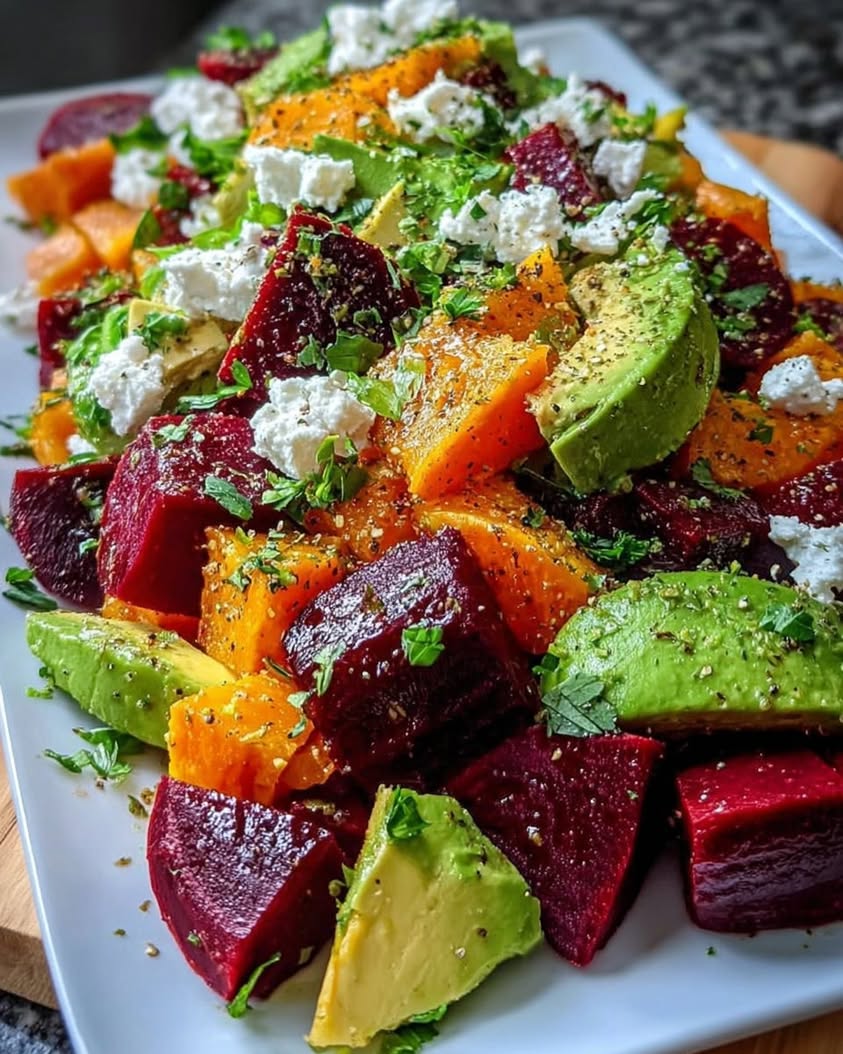
When you take your first bite of this Vibrant Roasted Beet Sweet Potato Avocado Salad recipe for healthy eating, you will understand why it deserves a permanent spot in your recipe collection. The textures alone are worth celebrating, from the crisp greens to the tender roasted vegetables and the creamy avocado. Your senses will appreciate the visual appeal of the deep red beets against the orange sweet potatoes and green avocado slices. The aroma of roasted vegetables mixed with fresh citrus and herbs creates an inviting scent that promises something delicious. This salad feels like a celebration of seasonal produce at its best, yet it uses ingredients available year-round. You can adjust the ingredients based on what looks freshest at your local market. The dressing comes together in minutes, making this a practical choice for busy weeknights. I guarantee that once you try this recipe, it will become your go-to for impressing dinner guests or treating yourself to something special.
Quick Recipe Highlights
- Flavor Profile: This salad offers a beautiful balance of sweet, earthy, and tangy notes. The roasted beets and sweet potatoes provide natural sweetness, while the lemon vinaigrette adds a bright acidity. The avocado contributes a subtle, buttery richness that rounds out the flavors perfectly.
- Texture: You will experience a wonderful contrast of textures in every bite. The roasted vegetables have tender interiors with slightly crisp edges, while the avocado offers creamy smoothness. The mixed greens add a fresh, crisp element that keeps the salad light and refreshing.
- Aroma: The scent of roasting vegetables fills your kitchen with a warm, comforting aroma. Fresh herbs like parsley or dill add an herby freshness that complements the earthy vegetables. The citrus dressing provides a bright, zesty note that awakens the senses as you serve the salad.
- Visual Appeal: This salad is a feast for the eyes with its vibrant colors and beautiful presentation. The deep purple beets contrast stunningly with the orange sweet potatoes and green avocado slices. A sprinkle of fresh herbs and a drizzle of dressing create an appetizing finish that looks as good as it tastes.
- Skill Level Needed: This Vibrant Roasted Beet Sweet Potato Avocado Salad recipe for healthy eating requires only basic knife skills and roasting knowledge. Even beginner cooks can achieve excellent results with minimal effort. The steps are straightforward, and the ingredients require no special handling or advanced techniques.
- Special Equipment: You will need a sharp knife for cutting the vegetables into uniform pieces. A large baking sheet lined with parchment paper makes roasting easy and ensures even cooking. A small jar with a tight-fitting lid works perfectly for shaking up the vinaigrette dressing.
Recipe Overview
- Difficulty Level: This recipe falls into the easy category because the steps are simple and require no advanced cooking techniques. You mainly need to chop vegetables, roast them in the oven, and assemble the salad. The dressing comes together in minutes by simply shaking ingredients in a jar. Even if you are new to cooking, you will find this recipe approachable and forgiving. The only potential challenge is timing the avocado addition to prevent browning, but this is easily managed by adding it just before serving.
- Category: This dish works wonderfully as a main course salad for lunch or a light dinner. It also serves well as a side dish for grilled proteins like chicken or fish. You can even bring it to potlucks or picnics where it travels beautifully. The versatility of this salad makes it suitable for many different meal occasions.
- Cuisine: This salad draws inspiration from modern American cuisine with influences from Mediterranean cooking. The combination of roasted vegetables with fresh greens and citrus dressing reflects contemporary healthy eating trends. The use of avocado adds a California twist, while the roasted beets and sweet potatoes feel rustic and comforting. This fusion of styles creates a unique dish that appeals to a wide range of palates.
- Cost: This recipe uses affordable, widely available ingredients that wont break your budget. Beets and sweet potatoes are among the most cost-effective root vegetables, especially when purchased in season. Avocados can be more expensive but are still reasonable, and you only need one or two for the recipe. The remaining ingredients like greens, lemon, and olive oil are pantry staples that you likely already have on hand. Overall, you can feed four people for under fifteen dollars.
- Season: This salad shines during fall and winter when root vegetables are at their peak flavor and sweetness. Beets and sweet potatoes harvested in cooler months have superior taste and texture compared to off-season produce. That said, this recipe works well year-round since these vegetables are available in most grocery stores any time of year. In summer, you can serve this salad chilled for a refreshing twist that still satisfies.
- Occasion: This Vibrant Roasted Beet Sweet Potato Avocado Salad recipe for healthy eating suits many different occasions throughout the year. It makes an excellent addition to holiday tables where its colorful presentation stands out among traditional dishes. You can serve it at casual summer cookouts or formal dinner parties with equal success. It also works perfectly for weekly meal prep when you need healthy lunches ready to grab and go.
Why You’ll Love This Recipe
The taste and texture appeal of this salad is truly remarkable because every ingredient contributes something essential. The roasted beets offer an earthy sweetness that deepens during cooking, while the sweet potatoes become tender and caramelized around the edges. The avocado brings a luxurious creaminess that contrasts beautifully with the roasted vegetables. The lemon vinaigrette cuts through the richness with bright acidity, waking up your taste buds with each bite. The combination of warm roasted vegetables with cool, fresh greens creates a temperature contrast that makes the eating experience more interesting. You will find yourself going back for seconds because the flavors are so well-balanced and satisfying.
Convenience and preparation benefits make this recipe ideal for busy home cooks who still want healthy meals. You can roast the vegetables ahead of time and store them in the refrigerator for up to three days. The dressing keeps well in a sealed jar for about a week, making assembly quick and easy. On busy weeknights, you can toss everything together in less than ten minutes once the prep is done. The recipe also scales easily, allowing you to make a larger batch for gatherings or a smaller one for single servings. Cleanup is minimal because you only use one baking sheet and a few bowls for assembly. This whole process respects your time without sacrificing quality or flavor.
Nutritional advantages set this salad apart from other options because it provides substantial health benefits in every serving. Beets are packed with antioxidants and nitrates that support cardiovascular health and improve blood flow. Sweet potatoes deliver beta-carotene and vitamin C, which boost immune function and promote healthy skin. Avocados provide heart-healthy monounsaturated fats that help you absorb fat-soluble vitamins from the other ingredients. The mixed greens add fiber and a wide range of micronutrients that support overall wellness. This salad offers a complete nutritional profile that can stand alone as a meal without needing additional protein. You get sustained energy from complex carbohydrates without the blood sugar spikes associated with processed foods.
Social and entertaining value makes this salad a smart choice when you are hosting guests or contributing to a potluck. The vibrant colors and beautiful presentation create an impressive visual impact that wows dinner guests. Everyone from vegans to meat-eaters will find something to love about this dish, making it a crowd-pleasing option. You can prepare most components ahead of time, which reduces stress when you are entertaining. The salad travels well in a large container, and you can dress it just before serving to maintain freshness. Guests will appreciate the thoughtful combination of flavors and the obvious care that went into creating such a balanced dish. This recipe often becomes the topic of conversation at dinner parties.
Cost-effectiveness and accessibility make this recipe a practical choice for anyone trying to eat well on a budget. Root vegetables like beets and sweet potatoes are among the most affordable produce options available year-round. Avocados, while sometimes pricier, are still reasonable when purchased in season or on sale. The remaining ingredients like olive oil, lemon juice, and herbs are kitchen basics that you probably already stock. You can feed a family of four for roughly the same cost as fast food, but with exponentially better nutritional value. Growing your own herbs or buying them from a farmers market can further reduce costs. This salad proves that eating healthy does not have to be expensive or complicated.
Historical Background and Cultural Significance
The origin story of roasted beet salads traces back to European culinary traditions where root vegetables were staple foods. Beets have been cultivated for thousands of years, originally grown for their leafy greens before people discovered the value of the roots. Ancient Romans prized beets for their medicinal properties, believing they could cure various ailments. Sweet potatoes originated in Central and South America, where indigenous cultures cultivated them for over five thousand years. European explorers brought sweet potatoes back to their home countries, where they became popular across the continent. The combination of these vegetables in a salad format is a relatively modern invention that reflects contemporary interest in healthy eating.
Cultural importance of this dish lies in its representation of farm-to-table cooking and seasonal eating principles. Many cultures have traditional dishes featuring roasted root vegetables, from Scandinavian roasted root vegetable platters to Mediterranean vegetable medleys. The addition of avocado, a fruit native to Mexico and Central America, represents the global fusion of ingredients that characterizes modern cuisine. This salad embodies the idea of using simple, whole foods to create something greater than the sum of its parts. It reflects a shift toward plant-forward eating that prioritizes vegetables as the centerpiece of meals rather than mere sides. The recipe celebrates agricultural traditions while adapting them for contemporary tastes and nutritional knowledge.
The evolution of this recipe shows how home cooking has changed over the past few decades. Early versions of roasted vegetable salads were simple affairs, often dressed with just olive oil and vinegar. As global cuisine became more accessible, cooks began incorporating ingredients like avocado and citrus into traditional dishes. The rise of health consciousness in the 1990s and 2000s led to greater experimentation with nutrient-dense ingredients. Food bloggers and home cooks shared their variations online, creating a rich tapestry of interpretations. Today, you can find countless versions of this salad, each reflecting the unique preferences and cultural backgrounds of its creator. This evolution continues as people discover new ways to combine familiar ingredients.
Regional variations of this salad demonstrate how local ingredients influence recipe development across different areas. In California, cooks might add citrus segments and use cilantro instead of parsley for a West Coast twist. Southern versions sometimes include pecans or bacon for added crunch and smoky flavor. Mediterranean interpretations often incorporate feta cheese and olives for briny contrast. Asian-inspired variations might use soy sauce and sesame oil in the dressing for umami depth. Each regional adaptation maintains the core concept of roasted root vegetables with creamy avocado while adding distinctive local touches. These variations prove that great recipes can adapt to different cultural contexts while remaining true to their essential character.
Ingredient Deep Dive
Beets hold a special place in culinary history, having been cultivated since ancient times for both food and medicinal purposes. Ancient civilizations used beets to treat fevers and digestive issues, and modern science has confirmed many of these benefits. Beets contain betalains, powerful antioxidants that give them their distinctive red color and provide anti-inflammatory properties. The nitrates in beets convert to nitric oxide in the body, which helps lower blood pressure and improve athletic performance. When selecting beets, look for firm specimens with smooth skin and fresh-looking greens still attached if possible. Avoid beets that feel soft or have wrinkled skin, as these indicate age and loss of moisture. Store beets in a plastic bag in the refrigerator crisper drawer, where they will keep for several weeks. You can substitute golden beets for a milder, less earthy flavor, or use canned beets in a pinch for convenience.
Sweet potatoes have a rich cultural heritage dating back thousands of years to Central and South America. They spread throughout the world through trade routes and became staple foods in many cultures due to their nutritional density and storage capabilities. Sweet potatoes are packed with beta-carotene, which the body converts to vitamin A for immune function and eye health. They also provide significant amounts of vitamin C, potassium, and fiber, making them one of the most nutrient-dense vegetables available. When choosing sweet potatoes, look for ones that are firm with smooth, unblemished skin and a uniform shape for even cooking. Store them in a cool, dark, well-ventilated place away from onions, which can cause them to spoil faster. You can substitute regular potatoes for a different texture profile, though the nutritional benefits will differ.
Avocados have become a beloved ingredient in modern cooking, but their history stretches back over ten thousand years in Mesoamerica. Ancient Aztecs and Mayans prized avocados for their rich flavor and creamy texture, using them in various dishes. Avocados are unique among fruits because they provide healthy monounsaturated fats that support heart health and help absorb fat-soluble nutrients. They also contain fiber, potassium, and antioxidants like lutein that benefit eye health. When selecting avocados, look for ones that yield slightly to gentle pressure without feeling mushy or having sunken spots. To ripen avocados quickly, place them in a paper bag with an apple or banana at room temperature. Store ripe avocados in the refrigerator to extend their life by a few days. You can substitute firm, ripe mango for a different fruity and creamy texture if avocados are unavailable.
Mixed greens form the base of this salad and provide a fresh, crisp foundation for the roasted vegetables. Different types of greens offer varying nutritional profiles, with darker leafy greens generally providing more vitamins and minerals. Baby spinach, arugula, and mixed spring greens all work well and contribute their own unique flavors. When purchasing greens, look for packages that appear fresh without any wilting, yellowing, or slimy spots. Wash greens thoroughly even if they are labeled pre-washed, then dry them completely using a salad spinner or clean kitchen towels. Store greens in a sealed container lined with paper towels to absorb excess moisture and keep them crisp. You can substitute any leafy green you prefer, though heartier greens like kale may require massaging with dressing to soften them.
Common Mistakes to Avoid
- Do not overcrowd your baking sheet when roasting the vegetables because this traps steam and prevents caramelization. Spread the vegetables in a single layer with space between each piece so they roast rather than steam. Use two baking sheets if necessary to ensure even browning and crispy edges.
- A common error is cutting the vegetables into uneven sizes, which leads to inconsistent cooking times. Take the time to cut beets and sweet potatoes into uniform half-inch cubes so everything roasts evenly. This small extra effort makes a big difference in the final texture of your salad.
- Many people add the avocado too early and end up with brown, mushy pieces mixed into the salad. Always add sliced avocado right before serving to maintain its beautiful green color and creamy texture. You can also toss the avocado slices in a little lemon juice to slow browning.
- Some cooks overseason the salad by adding salt to the dressing without considering that the roasted vegetables already contain salt. Season the vegetables lightly before roasting, then taste the finished salad before adding more salt. You can always add more, but you cannot remove excess salt.
- Another mistake is dressing the salad too far in advance, which causes the greens to wilt and become soggy. Dress the salad just before serving, or serve the dressing on the side so everyone can add their own amount. Leftovers without dressing will keep much better in the refrigerator.
- Forgetting to peel the beets before roasting leads to tough, fibrous texture that detracts from the dish. Always peel beets thoroughly with a vegetable peeler, as the skin becomes tough and unpleasant when cooked. Sweet potato skins are edible but should also be peeled for a more tender result.
- Some people skip the step of letting the roasted vegetables cool slightly before adding them to the greens. Hot vegetables can wilt delicate greens and create a soggy texture throughout the salad. Let the vegetables cool for at least ten minutes before assembling the salad.
- Using low-quality or overly acidic vinegar in the dressing can overpower the delicate flavors of the vegetables. Choose a good quality extra virgin olive oil and fresh lemon juice for the best results. Taste your dressing before adding it to the salad and adjust the balance as needed.
- Storing leftover salad with the avocado already mixed in will result in unappetizing brown avocado the next day. Keep components separate when storing leftovers, adding fresh avocado only when you are ready to eat. The roasted vegetables and greens will keep well for two to three days.
- Neglecting to toast any nuts or seeds you add can result in a flat texture and less interesting flavor. Toasting brings out the natural oils and adds a pleasant crunch that elevates the entire salad experience. Just a few minutes in a dry pan makes a significant difference.
Essential Techniques
Proper vegetable roasting begins with understanding how to prepare your beets and sweet potatoes for the oven. Start by washing and peeling both vegetables thoroughly, then cut them into uniform half-inch cubes for even cooking. Toss the cubes with olive oil, salt, and pepper, making sure every piece is lightly coated but not dripping. Spread them on a lined baking sheet in a single layer, leaving space between pieces for air circulation. Roast at 400 degrees Fahrenheit for 25 to 35 minutes, turning once halfway through for even browning. The vegetables are done when they are tender enough to pierce with a fork and have golden brown edges. Let them cool on the baking sheet for a few minutes before transferring to a plate or bowl. This technique ensures perfectly cooked vegetables every time with caramelized exteriors and tender interiors.
Making a vinaigrette dressing requires understanding the fundamental ratio of oil to acid for balanced flavor. A standard vinaigrette uses three parts oil to one part acid, though you can adjust this based on your taste preferences. Combine fresh lemon juice with a pinch of salt and let it sit for a minute to dissolve before adding the oil. Slowly whisk in the extra virgin olive oil until the dressing emulsifies into a slightly thickened, cohesive mixture. Add finely minced shallot or garlic if desired for extra depth of flavor. You can shake the ingredients in a sealed jar for a quick and easy method that works just as well. Taste the dressing and adjust the seasoning, remembering that the salt will enhance all the other flavors. The best vinaigrettes have a bright, tangy character that complements rather than overpowers the vegetables.
Assembling the salad properly ensures that every component maintains its intended texture and visual appeal. Start with a bed of mixed greens arranged on a large serving platter or in a wide bowl. Arrange the cooled roasted vegetables artfully on top of the greens, distributing them evenly for color contrast. Slice the avocado just before serving and fan the pieces over the top of the salad for an attractive presentation. Drizzle the vinaigrette over the entire salad, starting with less and adding more as needed. Garnish with fresh herbs like parsley, dill, or chives for a finishing touch of color and flavor. Serve immediately so the greens stay crisp and the avocado remains fresh and green. This assembly method creates a stunning dish that looks as professional as any restaurant offering.
Pro Tips for Perfect Vibrant Roasted Beet Sweet Potato Avocado Salad
Cut your beets and sweet potatoes into similar sized pieces so they roast evenly and finish cooking at the same time. Aim for half-inch cubes that are as uniform as possible for consistent results every time. This attention to detail makes a noticeable difference in the final texture of your salad.
Roast the beets and sweet potatoes on separate baking sheets if possible to prevent the beet color from bleeding onto the sweet potatoes. This keeps the colors separate and vibrant, creating a more visually appealing final dish. You can also toss them together if you prefer a mixed color effect.
Let the roasted vegetables cool completely before adding them to the greens if you want a room temperature salad. For a warm version, allow them to cool for just five to ten minutes before assembling. Both options work well, so choose based on your preference for warm or cool salads.
Use a sharp serrated knife to slice avocados cleanly without mashing the delicate flesh. Cut the avocado in half lengthwise around the pit, twist to separate, and remove the pit carefully. Score the flesh inside the skin with a knife and scoop out the pieces with a spoon for perfect slices.
Toast any nuts or seeds you add in a dry skillet over medium heat until fragrant and lightly golden. Watch them carefully because they can burn quickly once they start to brown. Toasted pepitas or walnuts add wonderful crunch and complement the roasted vegetables beautifully.
Make extra dressing and keep it in the refrigerator for up to a week to use on other salads throughout the week. The lemon shallot vinaigrette works well on simple green salads or as a marinade for grilled vegetables. Having homemade dressing ready makes eating salad even easier and more enjoyable.
Add a sprinkle of crumbled feta or goat cheese if you are not dairy-free for an extra layer of creamy, tangy flavor. The cheese pairs wonderfully with the roasted vegetables and adds a savory note to the dish. Just be sure to use a good quality cheese for the best taste and texture.
Variations and Adaptations
Regional variations of this salad can transform the dish based on local ingredients and culinary traditions. A Mediterranean version might include crumbled feta cheese, Kalamata olives, and a sprinkle of dried oregano for a Greek-inspired twist. Southern cooks might add crispy bacon bits and candied pecans for a sweet and savory combination that feels indulgent. An Asian-inspired adaptation could use a sesame ginger dressing with edamame and crispy wonton strips for added crunch. Each regional variation maintains the core concept while introducing new flavors and textures that reflect different culinary heritages. You can mix and match elements from different regions to create your own signature version of this salad.
Seasonal adaptations allow you to enjoy this salad throughout the year while taking advantage of fresh produce. In spring, you can add fresh peas, asparagus tips, and radishes for a lighter, more vibrant version. Summer adaptations might include grilled corn kernels, cherry tomatoes, and fresh basil for a taste of sunshine. Fall and winter versions can incorporate roasted butternut squash, pomegranate seeds, and dried cranberries for warm, festive flavors. These adaptations ensure that the recipe never feels repetitive and always reflects the best of what each season offers. You can make this salad your own by incorporating whatever vegetables look freshest at your local market.
Dietary modifications make this salad accessible to people with various nutritional needs and preferences. For a vegan version, simply omit any cheese and use a plant-based dressing without honey. A low-carb adaptation can reduce the sweet potato portion and add more leafy greens and avocado for volume. Those following a paleo diet can enjoy this salad as is, since all ingredients are whole foods compliant. For a nut-free version, substitute seeds like pumpkin seeds or sunflower seeds for any nuts in the recipe. These modifications ensure that everyone can enjoy this delicious and nutritious salad regardless of their dietary restrictions.
Flavor variations can dramatically change the character of this salad while keeping the basic structure intact. A spicy version could include chili flakes in the dressing and fresh jalapeno slices for heat. Smoked paprika or cumin added to the roasting vegetables creates a warm, smoky flavor profile. A sweet variation might include dried figs or dates along with a honey mustard dressing for extra sweetness. Herbs like mint, basil, or tarragon can replace the parsley for different aromatic notes. These flavor experiments keep the recipe exciting and allow you to explore different taste combinations without much extra effort.
Texture modifications can adjust the mouthfeel of the salad to suit different preferences and occasions. For added crunch, include toasted nuts, seeds, or crispy chickpeas that provide satisfying texture contrast. You can mash some of the roasted sweet potatoes for a creamier element that binds the salad together. Adding quinoa or farro turns this into a heartier meal that works well as a main course. The avocado can be mashed into a creamy dressing instead of sliced for a different texture experience. These modifications prove that one basic recipe can yield many different results based on your desired outcome.
Presentation alternatives allow you to serve this salad in creative ways that impress guests or add variety to your meals. For individual servings, layer the ingredients in mason jars for a beautiful grab-and-go lunch option. Serve the salad on a large wooden board family-style for a rustic, shareable presentation at gatherings. You can stuff the salad into hollowed-out tomatoes or bell peppers for an edible serving vessel that looks impressive. For a deconstructed version, arrange each component separately on a platter and let guests build their own plates. These presentation ideas make the same delicious recipe feel new and exciting every time you serve it.
Serving and Presentation Guide
Plating techniques for this salad can elevate a simple dish into something that looks restaurant-worthy and impressive. Start by creating a bed of mixed greens that extends across the entire plate for a solid foundation. Arrange the roasted vegetables in clusters rather than scattering them randomly, grouping similar colors together for visual impact. Fan the avocado slices in a decorative pattern near the edge of the plate for an elegant touch. Drizzle the dressing in a controlled stream rather than pouring it all over, creating intentional lines of flavor. Finish with a light sprinkle of fresh herbs and a crack of black pepper for the final flourish. This thoughtful plating transforms the salad into a canvas of colors and textures that delights the eyes before the first bite.
Garnishing ideas can add visual interest and complementary flavors that enhance the overall dining experience. Fresh herb sprigs like dill, parsley, or chives provide a bright green accent that contrasts with the deep colors of the vegetables. Edible flowers such as nasturtiums or pansies add an unexpected pop of color and a subtle floral note. A light dusting of smoked paprika or sumac creates a beautiful red rim on the plate that draws the eye. Toasted pumpkin seeds or sesame seeds scattered over the top add both visual texture and a pleasant crunch. Each garnish should serve a purpose beyond decoration, either adding flavor or texture to the salad.
Traditional accompaniments for this salad include crusty bread or warm dinner rolls that help soak up any leftover dressing on the plate. A simple soup like tomato basil or roasted red pepper works well as a starter before serving this salad as the main course. Grilled chicken or salmon makes an excellent protein addition that transforms the salad into a complete meal. Roasted chickpeas or lentils offer a vegetarian protein option that complements the existing flavors. These accompaniments round out the meal and provide variety for your dining companions.
Modern serving suggestions include presenting this salad in individual shallow bowls for a contemporary, personalized dining experience. You can serve the salad family-style in a large wooden bowl or on a wooden board for a rustic, approachable feel. For brunch, serve the salad with a poached egg on top for added richness and protein. At a buffet, keep the dressing separate so guests can add their preferred amount without making the greens soggy. These modern approaches adapt the recipe for different settings and occasions while maintaining its essential appeal.
Temperature considerations matter because this salad can be served warm, at room temperature, or chilled based on your preference. Warm serving works well in cooler months when you want something comforting and cozy. Room temperature is ideal for most occasions because the flavors are more pronounced when not extreme in temperature. Chilled salad makes a refreshing option for hot summer days or outdoor picnics. Regardless of serving temperature, always add the avocado and dressing just before serving for the best texture and appearance.
Portion control tips help you serve the right amount whether you are cooking for yourself or a crowd. As a main course, plan for about two cups of salad per person with generous portions of vegetables and avocado. As a side dish, one cup per person is usually sufficient, especially if there are other dishes being served. You can easily scale the recipe up or down using the ingredient ratios provided. For meal prep, divide the components into individual containers so you can grab a healthy lunch without thinking.
Wine and Beverage Pairing
Wine pairings for this salad should complement the earthy sweetness of the roasted vegetables without overpowering them. A crisp Sauvignon Blanc with its herbal notes and bright acidity works wonderfully against the rich avocado and sweet potatoes. The citrusy character of the wine echoes the lemon in the dressing, creating a harmonious pairing. A light Pinot Grigio offers similar benefits with a slightly softer profile that keeps the focus on the salad. For those who prefer red wine, a chilled Beaujolais or a light Pinot Noir with subtle fruit notes can work without dominating the dish. The key is to choose wines with good acidity that can cut through the creamy avocado and balance the sweetness of the vegetables.
Non-alcoholic alternatives can be just as satisfying and complementary when chosen thoughtfully. A sparkling water with a squeeze of fresh lemon and a sprig of mint provides a refreshing, palate-cleansing option between bites. Herbal teas like chamomile or mint served chilled make a soothing accompaniment that does not compete with the salad flavors. A homemade lemonade with a touch of honey echoes the dressing ingredients and creates a cohesive beverage pairing. For something more festive, a kombucha in a citrus or ginger flavor adds complexity and digestive benefits. These non-alcoholic options ensure that everyone can enjoy a beverage that enhances their dining experience.
Coffee and tea pairings work surprisingly well with this salad, especially when served as part of a brunch or light lunch menu. A light roast coffee with bright acidity and floral notes can stand up to the roasted vegetables without overwhelming them. Green tea with its grassy, slightly vegetal character complements the fresh greens and herbs in the salad. Chai tea with its warm spices adds an interesting contrast that brings out the sweetness of the roasted vegetables. For iced versions, try a cold brew coffee or iced green tea for a refreshing hot weather pairing. These warm and cold beverages offer different experiences that can suit various moods and occasions.
Temperature considerations for beverages depend on the serving temperature of your salad and the ambient conditions. When serving the salad warm, a slightly chilled white wine or room temperature red works best to balance the warmth. For room temperature salad, a well-chilled white or rosé provides refreshing contrast. In hot weather, all beverages should be well chilled to provide refreshment alongside the salad. Always consider the overall experience you want to create and choose beverages that support rather than compete with the food.
Serving suggestions for beverages include offering both alcoholic and non-alcoholic options at gatherings to accommodate all guests. Present wine in proper glassware that allows the aromas to develop and enhances the drinking experience. Keep non-alcoholic options in attractive pitchers or bottles with ice and garnishes for visual appeal. For casual settings, provide a selection of bottled beverages that guests can choose from easily. Consider the time of day and the occasion when selecting beverages, as lighter options work better for lunch while richer options suit dinner.
Storage and Shelf Life
Storage methods for this salad depend on whether you have already assembled the ingredients or kept them separate. Unassembled components store best, with roasted vegetables kept in an airtight container in the refrigerator for up to five days. The mixed greens should be stored separately with a paper towel to absorb moisture and maintain crispness. The dressing keeps well in a sealed jar in the refrigerator for up to one week, though you may need to shake it before using. Avocado should never be stored with the rest of the salad as it will brown and become mushy. Keeping components separate allows you to enjoy fresh-tasting salads throughout the week with minimal effort.
Temperature requirements for storage are straightforward, as all components need refrigeration at or below 40 degrees Fahrenheit. Roasted vegetables should cool completely before refrigerating to prevent condensation that can cause sogginess. Never leave assembled salad at room temperature for more than two hours, or one hour if the temperature exceeds 90 degrees. The dressing can be kept at room temperature for short periods but benefits from refrigeration during longer storage. Maintaining proper temperatures ensures food safety and preserves the quality of each component.
Container recommendations focus on using airtight containers that prevent odor transfer and maintain freshness. Glass containers work well for roasted vegetables and dressing because they do not absorb flavors or odors. Plastic containers with tight-sealing lids are also acceptable for short-term storage of roasted vegetables. For greens, use containers specifically designed for produce with ventilation holes that allow air circulation. Avoid storing components in metal containers because they can react with acidic ingredients and affect flavor. Proper containers make a noticeable difference in how long your ingredients stay fresh and delicious.
Signs of spoilage to watch for Print
Vibrant Roasted Beet Sweet Potato Avocado Salad
- Total Time: 45 minutes
- Yield: 4
Description
A hearty and colorful salad with roasted beets, sweet potatoes, creamy avocado, and a tangy citrus dressing.
Ingredients
- 2 medium beets, peeled and cubed
- 2 medium sweet potatoes, peeled and cubed
- 2 tablespoons olive oil
- Salt and black pepper to taste
- 1 ripe avocado, diced
- 4 cups mixed salad greens
- 1/4 cup crumbled feta cheese (optional)
- 1/4 cup chopped walnuts (optional)
- For the dressing: 3 tablespoons olive oil, 2 tablespoons lemon juice, 1 teaspoon Dijon mustard, 1 teaspoon honey or maple syrup, 1 clove garlic, minced
- Salt and pepper to taste
Instructions
- Preheat oven to 400°F (200°C). Line a baking sheet with parchment paper.
- Toss cubed beets and sweet potatoes with 2 tablespoons olive oil, salt, and pepper. Spread evenly on the baking sheet.
- Roast for 25-30 minutes until tender and lightly caramelized, stirring halfway. Let cool slightly.
- In a small bowl, whisk together all dressing ingredients: olive oil, lemon juice, Dijon mustard, honey, minced garlic, salt, and pepper.
- In a large bowl, combine salad greens, roasted vegetables, diced avocado, feta cheese, and walnuts.
- Drizzle dressing over salad and toss gently to combine. Serve immediately.
Notes
You can customize the seasonings to taste. Add grilled chicken or chickpeas for extra protein.
- Prep Time: 15 minutes
- Cook Time: 30 minutes
- Method: Main
- Cuisine: American