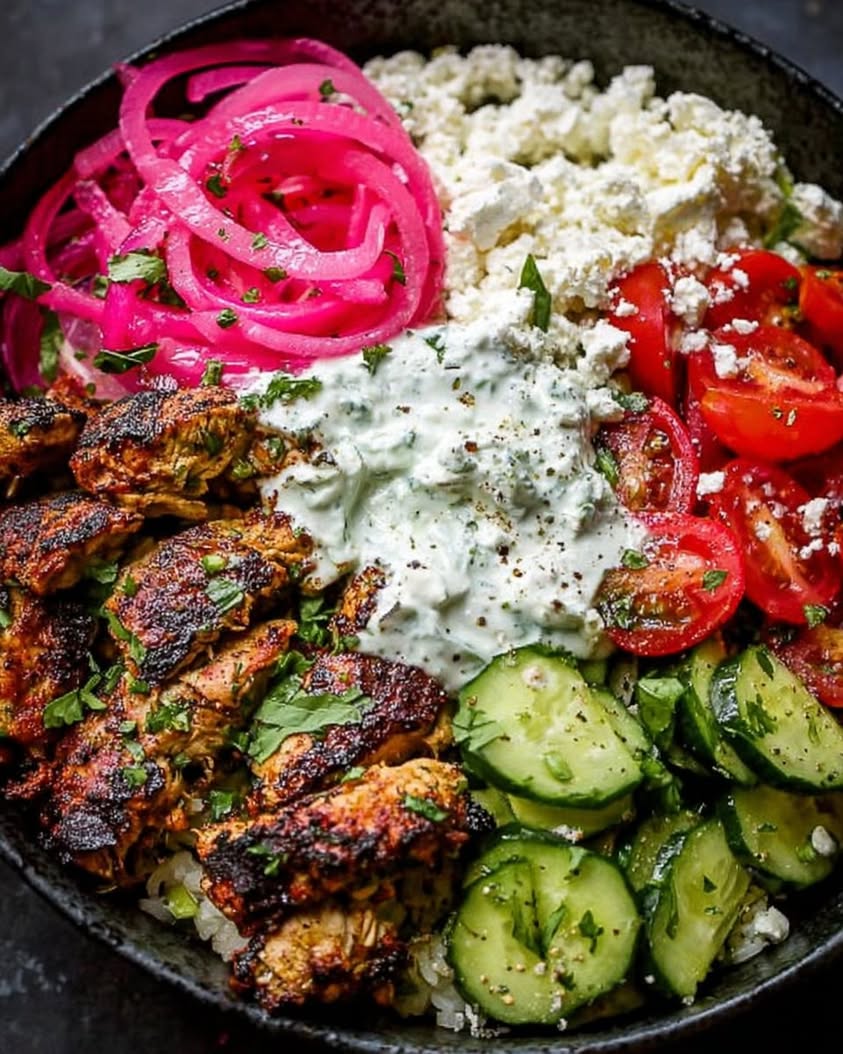
Loaded Mediterranean Chicken Power Bowl with Tzatziki & Feta: A Wholesome and Flavorful Meal
This Loaded Mediterranean Chicken Power Bowl with Tzatziki & Feta is a celebration of fresh, vibrant flavors that come together in one satisfying bowl. You get tender, seasoned chicken pieces resting on a bed of fluffy quinoa or crisp greens. Then you add juicy cherry tomatoes, cool cucumber, briny Kalamata olives, and tangy feta cheese. A generous drizzle of homemade tzatziki sauce brings everything together, creating a creamy and herbaceous finish. This bowl is not just a meal; it is an experience that transports you to a sun-drenched Greek seaside taverna with every single bite.
Crafting this Loaded Mediterranean Chicken Power Bowl with Tzatziki & Feta at home is incredibly rewarding, and it fits perfectly into a busy lifestyle. The ingredient list is straightforward, and the steps are simple enough for a weeknight dinner. You can prep many components in advance, which makes assembly a breeze when hunger strikes. Furthermore, this bowl is packed with lean protein, healthy fats, and fiber-rich vegetables. It leaves you feeling energized and full, not weighed down. Therefore, it is an ideal choice for anyone looking to eat well without spending hours in the kitchen.
Each component of this Loaded Mediterranean Chicken Power Bowl with Tzatziki & Feta plays a crucial role in the overall harmony of the dish. The chicken is marinated in lemon, garlic, and oregano, which infuses it with Mediterranean soul. The tzatziki is cool and refreshing, providing a perfect counterpoint to the warm, spiced chicken. The pops of salty feta and olives add depth, while the fresh herbs bring brightness. Because of this incredible balance, this bowl has quickly become a favorite for meal prep, family dinners, and even casual entertaining.
Quick Recipe Highlights
- Flavor Profile: The taste is a dynamic blend of savory, tangy, and fresh. The lemon-oregano chicken provides a herby base, while the tzatziki adds a cool, garlicky tang. Creamy feta and briny olives introduce a salty punch that completes the profile.
- Texture: This bowl offers a wonderful variety of textures. You have the tender, juicy chicken, the creamy tzatziki, the crisp cucumbers, the soft quinoa or greens, and the crumbly feta cheese. Every forkful provides a new and exciting mouthfeel.
- Aroma: The kitchen fills with the warm, inviting scent of oregano, garlic, and lemon as the chicken cooks. This is complemented by the fresh, clean aroma of mint and dill in the tzatziki. It is a truly appetizing and comforting smell.
- Visual Appeal: The bowl is a visual feast of colors and shapes. You see the deep green of the cucumbers and herbs, the bright red of the tomatoes, the purple-black of the olives, the white of the feta, and the golden-brown of the chicken.
- Skill Level Needed: This recipe is perfect for beginner and intermediate cooks alike. The techniques involved are very basic, like grilling or pan-searing chicken and stirring ingredients together. There are no complicated steps involved.
- Special Equipment: You only need basic kitchen tools. A large skillet or grill pan for the chicken, a mixing bowl for the tzatziki, and a sharp knife for chopping vegetables are the primary items required.
Recipe Overview
- Difficulty Level: We classify this as an easy recipe because the steps are straightforward and require minimal culinary skill. The most complex part is monitoring the chicken’s internal temperature, but a simple meat thermometer solves that. Most of the work is chopping and assembling, which is very manageable for anyone.
- Category: This dish fits perfectly into several categories. It is a fantastic main course salad, a hearty grain bowl, and a complete meal prep solution. It works wonderfully for lunch or dinner, and it can even be scaled down for a light, satisfying supper.
- Cuisine: The cuisine is unmistakably Mediterranean, drawing heavy inspiration from Greek cooking. The use of oregano, lemon, olive oil, feta, and tzatziki are all hallmarks of this culinary tradition. It celebrates fresh, whole ingredients and simple, bold flavors that define the region.
- Cost: The cost for this dish is moderate and very budget-friendly. Chicken breast is reasonably priced, and vegetables like cucumbers and tomatoes are inexpensive. Feta cheese and olives are the pricier items, but a little goes a long way. Overall, it is a cost-effective way to get a high-quality meal.
- Season: This bowl is at its absolute best during the summer months. That is when tomatoes and cucumbers are at their peak, offering superior flavor and juiciness. However, it is versatile enough to be enjoyed year-round, especially when you need a reminder of warmer, brighter days.
- Occasion: This recipe is excellent for a variety of occasions. It is a wonderful choice for a simple, healthy weeknight family dinner. It also shines at summer barbecues or potlucks, and it makes an impressive yet easy meal for casual get-togethers with friends.
Why You’ll Love This Recipe
The primary reason to adore this Loaded Mediterranean Chicken Power Bowl with Tzatziki & Feta is its incredible taste and texture dynamic. The flavors are bold yet balanced, with nothing overpowering the other. You get the warm, savory herbiness of the chicken, which is immediately cooled by the creamy, garlicky tzatziki. Then, the salty feta and olives add a sharp, briny kick that wakes up your palate. The crunchy cucumbers and juicy tomatoes provide a refreshing contrast to the tender chicken and creamy sauce. It is a symphony of textures and tastes that keeps every bite interesting and deeply satisfying.
Beyond the flavor, the convenience and preparation benefits of this bowl are undeniable. You can cook a large batch of chicken and quinoa at the start of the week. Then, you can chop your vegetables and whip up the tzatziki sauce in advance. When you are ready to eat, you simply assemble the ingredients in a bowl. This makes it an absolute lifesaver for busy workdays when you want a healthy lunch without any stress. The entire assembly takes less than five minutes, which means you can have a gourmet-quality meal on the table in record time.
The nutritional advantages of this bowl are another compelling reason to make it a staple in your kitchen. It is incredibly well-balanced, providing a substantial amount of lean protein from the chicken to build and repair muscle. The quinoa offers complex carbohydrates and fiber for sustained energy, while the healthy fats from olive oil and olives support heart health. The fresh vegetables are loaded with vitamins, minerals, and antioxidants. This bowl is designed to fuel your body properly, making you feel energized and satisfied without any of the sluggishness that often follows heavy meals.
This recipe also holds great social and entertaining value. It is a perfect dish for hosting a casual dinner party or a taco-style bowl bar. You can set out all the components in separate bowls and let your guests build their own creation. This interactive format is always a hit, encouraging conversation and customization. It is naturally gluten-free and can be easily adapted for other dietary needs, which makes it a safe and inclusive choice for a group. Additionally, its beautiful presentation makes it look like you put in far more effort than you actually did.
Finally, the cost-effectiveness and accessibility of this Loaded Mediterranean Chicken Power Bowl with Tzatziki & Feta make it a winner for any budget. Most of the ingredients are widely available at any standard grocery store. Chicken, cucumbers, tomatoes, and yogurt are very affordable. Even specialty items like feta cheese and Kalamata olives are reasonably priced when you consider how much flavor they add. Because the recipe is so filling, it yields generous portions that leave you full, which means fewer expensive snacks later. It is a fantastic way to eat a high-quality, restaurant-style meal without spending a lot of money.
Historical Background and Cultural Significance
The concept of a “power bowl” is a modern invention, but its roots are deeply planted in ancient culinary traditions. The idea of combining a protein, a grain, and fresh vegetables in a single bowl is a universal concept found across many cultures. However, the specific flavors of this bowl come directly from the Mediterranean region, particularly Greece. The Mediterranean diet is not just a way of eating; it is a lifestyle that emphasizes fresh, seasonal ingredients, healthy fats, and communal dining. This bowl is a perfect encapsulation of that philosophy.
In Greek culture, food is central to social life and family gatherings. Dishes like souvlaki, which features grilled meat, and horiatiki, the classic Greek salad, are staples. This Loaded Mediterranean Chicken Power Bowl with Tzatziki & Feta merges these two beloved concepts. The tzatziki sauce itself has a long history, traditionally made with strained yogurt, cucumber, garlic, and herbs. It serves as a cooling condiment for grilled meats and vegetables, a role it plays perfectly in this bowl. It represents the Greek emphasis on balance, using fresh dairy to temper the heat of the grill.
The evolution of this recipe is a testament to globalization and the modern focus on health and convenience. Traditionally, Greeks might have enjoyed these components separately. The chicken might have been served on a skewer, the salad on a plate, and the tzatziki in a small bowl. However, the modern power bowl trend has combined them into a single, efficient, and highly Instagrammable meal. This adaptation makes the cuisine more accessible to busy people around the world, allowing them to enjoy authentic, wholesome flavors in a format that fits a contemporary lifestyle.
Regional variations of this bowl are plentiful, reflecting the diversity of the Mediterranean coastline. In Lebanon, you might find similar flavors but with the addition of sumac and tahini. In Turkey, the chicken could be seasoned with pul biber and served with a garlicky yogurt sauce. In Israel, the bowl might feature za’atar-spiced chicken and a side of hummus. What remains constant is the core principle: using fresh, high-quality ingredients and vibrant, herbaceous flavors. This recipe is a celebration of that shared culinary heritage, adapted for the modern kitchen and the global palate.
Ingredient Deep Dive
Chicken breast is the star protein in this bowl, and its cultural significance is immense. Chicken is a versatile and widely consumed protein across the globe, but in Mediterranean cooking, it is often treated with respect and simplicity. The key is to use high-quality chicken and not to overcook it. For selection, look for boneless, skinless breasts that are plump and uniform in thickness. This ensures even cooking. You can store fresh chicken in the refrigerator for up to two days. If you need to substitute, boneless, skinless chicken thighs offer more flavor and moisture, though they have a higher fat content.
Greek yogurt is the foundation of the tzatziki sauce, and it is a nutritional powerhouse. It is rich in protein, calcium, and probiotics, which are excellent for gut health. In Greek cuisine, yogurt is a staple, used in sauces, dips, and desserts. For selection, always choose a plain, full-fat or 2% Greek yogurt for the creamiest tzatziki. Low-fat versions can be watery. Strain the yogurt through a cheesecloth or coffee filter for a few hours to remove excess whey; this is the secret to a thick, luscious sauce that does not water down your bowl. Store it in an airtight container for up to a week.
Feta cheese is the salty, tangy crown jewel of this bowl. It is a brined curd white cheese from Greece, traditionally made from sheep’s milk or a mixture of sheep and goat milk. Its crumbly texture and sharp, salty flavor are irreplaceable. When selecting feta, look for a block stored in brine rather than pre-crumbled, as it is much creamier and more flavorful. For storage, keep it submerged in its brine in the refrigerator. It can last for several weeks. A good substitute is goat cheese, which offers a similar tangy profile, or queso fresco for a milder, crumblier texture.
Cucumbers provide the essential crunchy, hydrating element in this bowl. English or Persian cucumbers are ideal because they have thin skins and fewer seeds, which means less watery preparation. When selecting, look for firm cucumbers with no soft spots. For storage, keep them in the refrigerator’s crisper drawer. You can substitute with zucchini if you want a similar crunch with a different flavor profile. The key is to not peel them entirely, as the dark green skin adds color and fiber. A quick tip is to salt the chopped cucumbers and let them sit for a few minutes, then pat them dry to remove excess moisture.
Kalamata olives bring a rich, fruity, and briny depth to the bowl. These dark purple, almond-shaped olives from Greece are cured in red wine vinegar and olive oil, giving them a distinct flavor. They are a hallmark of Greek cuisine. When buying, look for olives that are plump and shiny, sold either pitted or whole. Pitted olives are more convenient for a bowl like this. Store them in their brine in the refrigerator after opening. If you do not have Kalamata olives, you can use Castelvetrano olives for a milder, buttery flavor or black olives for a more common, though less complex, substitute.
Common Mistakes to Avoid
- Overcooking the chicken is the most common error. Chicken breast can go from perfectly juicy to dry and tough in seconds. Use a meat thermometer to ensure it reaches 165 degrees Fahrenheit, and then remove it from the heat immediately to rest.
- Using watery yogurt for the tzatziki will ruin the sauce. Regular yogurt contains too much liquid, which will make your tzatziki thin and runny. Always use a thick Greek yogurt, and strain it further if possible to ensure a creamy, stable sauce.
- Not salting the cucumbers for the tzatziki is a big mistake. Cucumbers contain a lot of water, which will leach out into your sauce and make it watery. Salting them and letting them sit for 10 minutes draws out that moisture, which you can then pat away.
- Skipping the marinade for the chicken will result in bland meat. The marinade of lemon, garlic, and oregano is what gives the chicken its signature Mediterranean flavor. Even a short 15-minute marinade makes a significant difference in the final taste.
- Crumbling feta cheese too early can make it dry out. It is best to crumble the feta right before you assemble the bowls. This keeps it moist and creamy. Pre-crumbled feta from the store is often coated in anti-caking agents and is not as good.
- Adding the tzatziki sauce too early will make the bowl soggy. If you are meal prepping, store the tzatziki separately and only add it when you are about to eat. This keeps the vegetables crisp and the grains fluffy.
- Using low-quality olive oil is a missed opportunity for flavor. A good extra virgin olive oil is a key ingredient in Mediterranean cooking. It is used in the marinade and for drizzling, so its flavor matters. Choose a robust, fruity oil for the best results.
- Forgetting to rest the chicken after cooking will cause it to lose its juices. When you cut into hot chicken, all the flavorful juices run out onto the cutting board. Let the chicken rest for 5 minutes after cooking, which allows the juices to redistribute throughout the meat.
Essential Techniques
Properly marinating the chicken is essential for infusing it with flavor. The acid in the lemon juice helps to tenderize the meat slightly, while the oil carries the fat-soluble flavors of the garlic and oregano. The key is to not marinate for too long, as the acid can begin to cook the chicken and make it mushy. Thirty minutes is the sweet spot. Use a resealable bag or a glass dish, and make sure the chicken is fully coated. This step transforms a simple piece of chicken into a flavorful component that defines the entire bowl.
Grilling or pan-searing the chicken correctly creates a beautiful, savory crust. The Maillard reaction, which occurs at high heat, is what creates those delicious brown bits and deep flavor. Get your pan or grill screaming hot before you add the chicken. Do not overcrowd the pan, as this will lower the temperature and cause the chicken to steam instead of sear. Once you place the chicken down, resist the urge to move it for 3-4 minutes. It will release easily from the pan when it is properly seared. A perfect golden-brown crust is the visual cue for flavor.
Making a thick, creamy tzatziki is a matter of moisture control. The two main sources of water are the yogurt and the cucumber. For the yogurt, using a thick Greek yogurt is the first step. For the cucumber, you must grate it and then squeeze out all the liquid. You can use a clean kitchen towel or cheesecloth to wring it dry. This step is non-negotiable. When you combine these dry ingredients, you get a sauce that is incredibly thick, creamy, and stable. It will cling beautifully to the chicken and vegetables, rather than pooling at the bottom of the bowl.
Building the bowl for optimal texture is the final, crucial technique. You want to create layers that prevent sogginess. Start with the base of greens or quinoa. Place the warm, sliced chicken in the center. Arrange the other components around it in separate piles: cucumbers, tomatoes, olives, and feta. Keep the tzatziki on the side until serving. This arrangement allows each ingredient to maintain its distinct texture and temperature. When you take a bite, you can get a little bit of everything in each forkful, which is the ultimate goal of a great bowl.
Pro Tips for Perfect Loaded Mediterranean Chicken Power Bowl with Tzatziki & Feta
For the juiciest chicken, pound the breasts to an even thickness before marinating. This ensures they cook at the same rate, preventing the thin end from drying out while the thick end finishes cooking. Use a rolling pin or a heavy skillet to gently pound them between two pieces of plastic wrap.
Toast the quinoa in a dry skillet for a few minutes before cooking it. This adds a wonderful nutty flavor that enhances the overall taste of the bowl. Just stir it constantly over medium heat until it starts to pop and smell fragrant, then proceed with your normal cooking method.
Always use fresh dill and mint in your tzatziki. Dried herbs will not provide the same bright, fresh flavor that is essential for this sauce. If you cannot find fresh mint, you can increase the amount of dill, or add a bit of fresh parsley for a similar clean taste.
To make a quick vinaigrette for the greens, whisk together lemon juice, olive oil, a pinch of dried oregano, salt, and pepper. A light dressing on the greens helps to tie the whole bowl together. It adds a bit of acidity that contrasts with the rich chicken and creamy feta.
If you are adding red onion, soak the sliced onions in ice water for 10 minutes before adding them to the bowl. This removes the harsh, pungent bite and leaves them crisp and mellow. It is a simple trick that makes a big difference in the final flavor.
For maximum flavor, season each component individually. Do not rely solely on the tzatziki for salt and flavor. Season the chicken well, salt the tomatoes and cucumbers lightly, and ensure the quinoa is cooked with some salt. This layered approach creates a much more complex and satisfying dish.
Let the chicken rest for a full five minutes after cooking. Then, slice it against the grain. Slicing against the grain shortens the muscle fibers, making the meat more tender and easier to chew. This is a fundamental technique for any meat preparation.
When assembling the bowl, do not pile everything in the center. Arrange the ingredients in a neat, organized fashion around the bowl. This not only looks beautiful but also allows you to get a perfect bite of each component without having to dig through a huge pile.
Variations and Adaptations
For a regional variation, try a Moroccan-inspired version. Replace the oregano with a blend of cumin, coriander, and cinnamon. Swap the tzatziki for a harissa-yogurt sauce, and add roasted chickpeas and preserved lemon for a burst of North African flavor. The core structure remains the same, but the flavor profile becomes warm and spicy.
Seasonal adaptations are easy to make. In the fall, you can swap the tomatoes and cucumbers for roasted butternut squash, pomegranate seeds, and a sprinkle of sumac. In the spring, use fresh asparagus, peas, and radishes. The bowl is a fantastic template that can be adapted to whatever produce is at its peak.
For dietary modifications, this bowl is highly flexible. To make it dairy-free, simply omit the feta cheese and use a dairy-free yogurt for the tzatziki, such as one made from coconut or cashews. You can also add nutritional yeast for a cheesy flavor. For a vegan version, substitute the chicken with marinated and grilled portobello mushrooms or crispy tofu.
Flavor variations are fun to explore. Add a spicy kick by marinating the chicken with a teaspoon of red pepper flakes or Aleppo pepper. You can also add a smoky element by using chipotle powder. For a more herbaceous bowl, add a handful of fresh parsley, mint, and dill to the final assembly, not just the tzatziki.
Texture modifications can change the entire feel of the dish. For a crunchier bowl, add toasted pine nuts or slivered almonds. For a softer texture, use roasted vegetables like bell peppers and zucchini instead of raw cucumbers. You can also swap the quinoa for farro or barley for a chewier grain.
Presentation alternatives make this recipe versatile. Instead of a bowl, you can serve it as a wrap in a warm pita or lavash bread. You can also deconstruct it and serve the chicken and tzatziki as a main course with a side Greek salad. For a fancier presentation, arrange the ingredients on a large wooden board for a Mediterranean-style charcuterie board.
Serving and Presentation Guide
For plating, choose a wide, shallow bowl that allows you to show off the colorful ingredients. Start with a base of greens or quinoa, creating a nice bed. Place the sliced chicken in the center or slightly to one side. Then, arrange the other ingredients in neat, distinct piles around the bowl. This organized presentation is visually appealing and functional, allowing each flavor to shine.
Garnishing ideas can elevate the dish from simple to stunning. A final drizzle of good extra-virgin olive oil over the entire bowl adds a rich, peppery finish. A squeeze of fresh lemon juice provides a burst of acidity that brightens all the flavors. A sprinkle of flaky sea salt, like Maldon, adds a delicate crunch and a pop of salinity. Finally, add a few whole mint or dill sprigs for a fresh, professional look.
Traditional accompaniments for this dish include warm pita bread or crusty sourdough. These are perfect for sopping up any extra tzatziki or dressing at the bottom of the bowl. You can also serve it with a side of dolmades (stuffed grape leaves) or a small bowl of roasted red pepper dip for a more substantial meal.
Modern serving suggestions include using this bowl as part of a larger “build your own” bar. Set out all the components in separate bowls and let guests create their own masterpieces. This is a fantastic, low-stress way to entertain. For a lighter option, serve the bowl with a side of roasted lemon potatoes.
Temperature considerations are important. The chicken should be served warm or at room temperature. The tzatziki should be cold. The vegetables should be cool and crisp. This contrast of temperatures is part of what makes the bowl so enjoyable. If you are using quinoa, it should be warm or room temperature, not hot, as that can wilt the greens.
For portion control, this recipe makes four generous servings. A good rule of thumb is to use about 6 ounces of cooked chicken per person, 1/2 cup of quinoa, and a generous handful of greens. The vegetables and sauce can be added more liberally. This provides a balanced meal with enough protein, carbs, and vegetables to keep you satisfied.
Wine and Beverage Pairing
For wine pairings, a crisp, dry white wine is your best friend here. An Assyrtiko from Greece is a stellar choice. Its high acidity and citrus notes cut through the richness of the feta and tzatziki perfectly. A Sauvignon Blanc from New Zealand or a dry Pinot Grigio from Italy would also work wonderfully, offering herbal and mineral notes that complement the oregano and lemon.
If you prefer red wine, a light-bodied, chilled red is the way to go. A Beaujolais or a Pinot Noir from a cool climate has low tannins and bright red fruit flavors that will not overpower the dish. Chilling the red slightly brings out its freshness and makes it more refreshing. Avoid heavy, oaky reds, as they will clash with the light, fresh flavors.
Non-alcoholic alternatives are just as exciting. A sparkling water with a splash of pomegranate juice and a sprig of mint is incredibly refreshing. A classic Greek frappe, which is an iced instant coffee, provides a bitter, creamy contrast. For a more savory drink, try a glass of buttermilk or lassi seasoned with a pinch of salt and cumin.
Coffee and tea pairings can work if you are serving this for brunch. A strong, dark roast coffee can stand up to the rich flavors of the chicken and feta. For tea, a mint tea is a classic choice that echoes the mint in the tzatziki. A lemon and ginger tea would also be a palate-cleansing option.
Temperature considerations for beverages are important. All drinks should be served well-chilled or over ice. The coolness of the drink enhances the refreshing nature of the bowl. Serve the wine at 45-50 degrees Fahrenheit, and keep your water or soda ice-cold to maintain the overall fresh and cool experience of the meal.
Storage and Shelf Life
For proper storage, you must store the components of this bowl separately. The cooked chicken can be stored in an airtight container in the refrigerator for up to 4 days. The tzatziki sauce should also be stored in its own airtight container and will last for up to 5 days. The chopped vegetables, like tomatoes and cucumbers, are best stored separately, as they can make the other ingredients soggy.
The temperature requirements are standard for refrigerator storage. Keep everything at or below 40 degrees Fahrenheit. Do not leave the assembled bowl at room temperature for more than two hours. If you are transporting it for lunch, use an insulated lunch bag with an ice pack to keep the tzatziki and vegetables cool and safe.
Container recommendations are straightforward. Glass containers are best for storing the chicken and grains, as they do not absorb odors. Small, airtight containers are perfect for the tzatziki. For the vegetables, you can use a container with a paper towel at the bottom to absorb excess moisture, which helps them stay crisp longer.
Signs of spoilage to watch for include a sour smell from the tzatziki or a slimy texture on the chicken. Vegetables that have become limp or have developed a strong, off odor should be discarded. Feta cheese that smells or tastes overly sour or has mold should be thrown out. Always trust your senses; when in doubt, throw it out.
Reheating instructions are simple. The chicken is best reheated gently. You can microwave it in short bursts, covered with a damp paper towel, or reheat it in a skillet over medium-low heat with a splash of water or broth. Do not reheat the tzatziki, vegetables, or feta. Add those components fresh for the best texture and flavor.
Freezing guidelines are limited for this dish. You can freeze the cooked chicken for up to 3 months in a freezer-safe bag. However, the texture of the chicken may change slightly upon thawing. The tzatziki and fresh vegetables do not freeze well at all, as they will become watery and lose their texture. It is best to prepare the components fresh.
Make Ahead Strategies
A detailed prep timeline is key to efficiency. Up to three days in advance, you can cook the quinoa, make the tzatziki, and chop all the vegetables. You can also marinate the chicken. On the day you plan to eat, all you have to do is cook the chicken and assemble the bowls. This cuts the active cooking time down to less than 20 minutes.
Storage between steps is critical for maintaining quality. Store the cooked quinoa in an airtight container. Keep the chopped cucumbers and tomatoes in separate containers with paper towels to absorb moisture. The tzatziki should be sealed tightly. The marinating chicken can stay in the refrigerator in a sealed bag. Keep all components separate until the final assembly.
The quality impact of making ahead is generally very positive. The tzatziki actually improves in flavor after a day or two, as the garlic and herbs meld together. The quinoa stays perfectly fluffy for several days. The only element that is best cooked fresh is the chicken, as it can dry out when reheated. However, if you sous vide the chicken, it can be reheated perfectly.
Assembly tips for make-ahead meals are simple. When you are ready to eat, simply reheat the chicken. Then, layer the quinoa or greens in a bowl. Add the vegetables and feta. Drizzle with the tzatziki. Do not add the tzatziki or dressing until you are about to eat, or the whole bowl will become soggy.
Reheating guidelines for pre-cooked chicken are simple. The best way is to reheat it in a skillet with a splash of chicken broth or water. Cover the pan with a lid and steam it for 2-3 minutes. This helps to restore some of the moisture lost during refrigeration. You can also microwave it, but be careful not to overcook it.
Fresh element additions can revitalize a make-ahead bowl. Before serving, add a squeeze of fresh lemon juice, a drizzle of olive oil, and a sprinkle of fresh herbs like dill or mint. This adds a pop of brightness and freshness that can get lost during storage. A final pinch of flaky salt also helps to wake up the flavors.
Scaling Instructions
For halving the recipe, it is straightforward. Simply divide all ingredients by two. You will need one chicken breast instead of two, and half the amount of yogurt, cucumber, and feta. The cook time for the chicken will remain the same, as you are still cooking individual breasts. The tzatziki recipe is easy to halve, making this perfect for a meal for two.
For doubling or tripling the recipe, you will need to adjust your equipment. Use a larger skillet or cook the chicken in batches to avoid overcrowding the pan. Overcrowding will cause the chicken to steam rather than sear. You will also need a larger bowl for the tzatziki. A stand mixer can be helpful for mixing large batches of the sauce if you have one.
Equipment adjustments are necessary when scaling up. If you are making a large batch for a party, consider grilling the chicken on an outdoor grill to free up stovetop space. You can use a large stockpot for cooking a big batch of quinoa. You may also need to use multiple containers for storing the components.
Timing modifications are important for a scaled-up recipe. Cooking a double batch of quinoa will take the same amount of time, but you need a large enough pot. For the chicken, the cooking time per breast remains the same, but you will spend more time overall because you are cooking in batches. The tzatziki is simply a matter of mixing, so the time remains the same.
Storage considerations for larger batches are key. You will need more storage containers. The cooked chicken will keep just as long in the refrigerator. The tzatziki should be stored in a large, airtight container. For a party, you can prepare all components the day before and simply assemble them right before serving to ensure everything is fresh and at the right temperature.
Nutritional Deep Dive
This bowl provides an excellent macro breakdown for a balanced meal. A single serving provides approximately 45 grams of protein, which is essential for muscle repair and satiety. It offers around 50 grams of carbohydrates, primarily from the quinoa and vegetables, which provide sustained energy. The fat content is around 25 grams, coming from healthy sources like olive oil, feta, and yogurt, which support hormone function and nutrient absorption.
The micronutrient analysis reveals a wealth of vitamins and minerals. This bowl is high in vitamin A from the cucumbers and tomatoes, which is important for vision and immune function. It is also a good source of calcium from the yogurt and feta, which is crucial for bone health. The olives and olive oil provide vitamin E, a powerful antioxidant that protects cells from damage.
The health benefits of this bowl are substantial. The Mediterranean diet is consistently ranked as one of the healthiest in the world, and this recipe is a perfect example. The combination of lean protein, healthy fats, and fiber promotes heart health and helps to manage blood sugar levels. The anti-inflammatory properties of olive oil and herbs can reduce the risk of chronic disease.
Dietary considerations are well accommodated. This recipe is naturally gluten-free if you use certified gluten-free quinoa. It is also low in added sugar, with all the sweetness coming from the vegetables. The saturated fat content is moderate, coming primarily from the feta cheese, but it is balanced by the high amount of unsaturated fats from the olive oil.
Portion analysis shows that one serving is substantial and satisfying. A serving is roughly the size of a large bowl, which is perfect for a main meal. The protein and fiber content keep you full for Print
Loaded Mediterranean Chicken Power Bowl with Tzatziki & Feta
- Total Time: 45 minutes
- Yield: 4
Description
A hearty and nutritious bowl featuring seasoned grilled chicken, fresh veggies, fluffy quinoa, and creamy tzatziki sauce, all topped with tangy feta cheese.
Ingredients
- 2 boneless skinless chicken breasts, pounded to even thickness
- 2 tablespoons olive oil, divided
- 2 teaspoons Greek seasoning (or oregano, garlic powder, salt, pepper)
- 1 cup quinoa, rinsed
- 2 cups water or chicken broth
- 1 large cucumber, seeded and diced
- 1 pint cherry tomatoes, halved
- 1/2 cup pitted Kalamata olives, halved
- 1/2 cup diced red onion
- 1/3 cup crumbled feta cheese
- For Tzatziki: 1 cup Greek yogurt, 1/2 cucumber grated and squeezed dry, 1 clove garlic minced, 1 tablespoon lemon juice, 1 tablespoon fresh dill (or 1 tsp dried), salt to taste
Instructions
- Cook quinoa: Rinse quinoa, combine with water/broth in a saucepan. Bring to a boil, reduce heat, cover, and simmer 15 minutes until liquid is absorbed. Fluff with fork.
- Season chicken: Rub chicken with 1 tablespoon olive oil and Greek seasoning. Let rest 10 minutes.
- Grill chicken: Heat grill or grill pan over medium-high heat. Cook chicken 5-7 minutes per side until internal temp reaches 165°F. Let rest 5 minutes, then slice.
- Make tzatziki: Mix yogurt, grated cucumber, garlic, lemon juice, dill, and salt. Refrigerate.
- Prepare veggies: Toss cucumber, tomatoes, olives, red onion with remaining 1 tablespoon olive oil and a pinch of salt.
- Assemble bowls: Divide quinoa among bowls. Top with sliced chicken, vegetable mixture, and a generous dollop of tzatziki. Sprinkle with crumbled feta.
- Serve immediately or refrigerate for meal prep.
Notes
You can customize the seasonings to taste. Substitute brown rice or couscous for quinoa if desired. Add hummus for extra creaminess.
- Prep Time: 20 minutes
- Cook Time: 25 minutes
- Method: Main
- Cuisine: Mediterranean