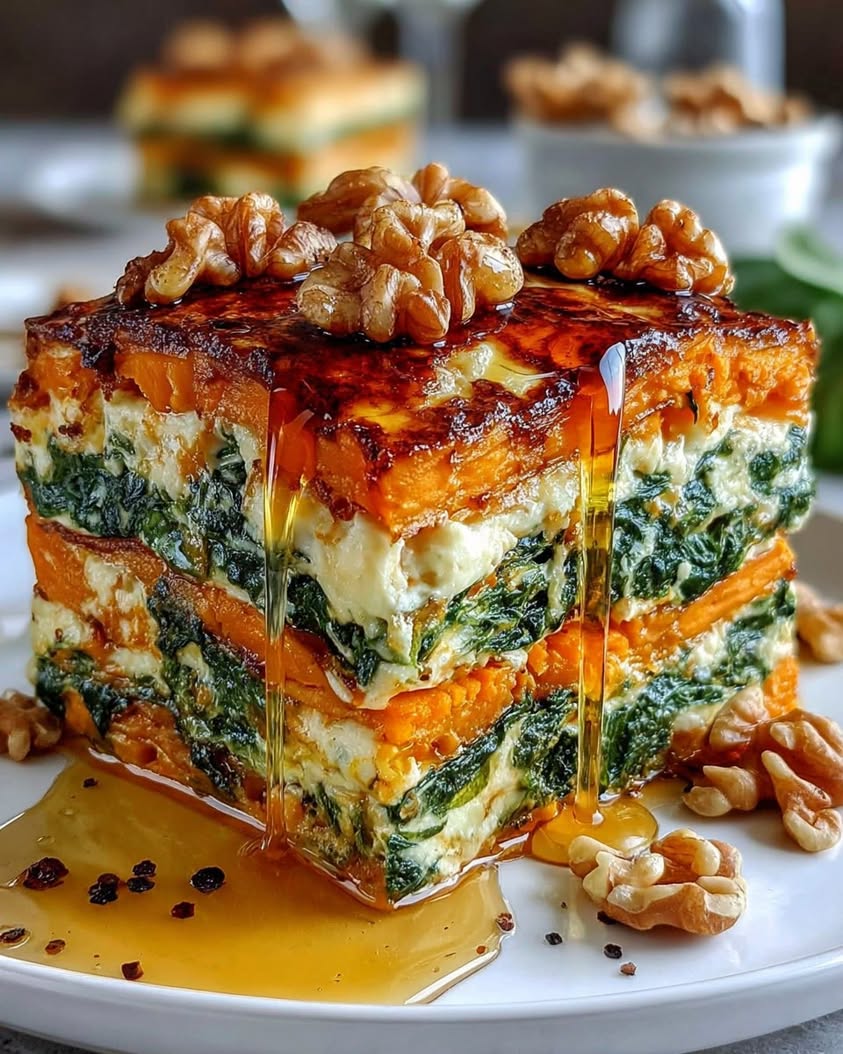
Layered Sweet Potato and Goat Cheese Lasagna with Walnuts and Maple Honey Sauce: A New Comfort Classic
This Layered Sweet Potato and Goat Cheese Lasagna with Walnuts and Maple Honey Sauce is the kind of dish that redefines comfort food. It layers roasted sweet potatoes, sauteed spinach, and tangy goat cheese between lasagna noodles, all topped with a rich, nutty maple honey sauce. Every bite offers a balance of earthy, sweet, and savory flavors. When you crave something warm and nutritious, this recipe delivers on all fronts. The combination of creamy cheese and caramelized sweet potatoes creates a texture that is both rich and light. I often hear people say that this lasagna tastes like a holiday meal in a single dish.
You do not need special culinary skills to master this recipe. The ingredients are simple, but the result is a stunning main course perfect for family dinners or festive gatherings. The Layered Sweet Potato and Goat Cheese Lasagna with Walnuts and Maple Honey Sauce stands out because of its unique flavor pairing. Sweet potatoes bring natural sweetness and a soft, buttery texture. Goat cheese adds a tangy creaminess that cuts through the richness. Spinach contributes freshness and a vibrant green layer. Walnuts offer a satisfying crunch, while the maple honey sauce ties everything together with a warm, sticky glaze. This is a lasagna that feels both decadent and wholesome.
Preparing this dish is easier than you might think. You slice the sweet potatoes thinly, sauté the spinach with garlic, and layer everything with the goat cheese and noodles. The maple honey sauce comes together in just a few minutes on the stove. With a total time of about 85 minutes, most of which is hands-off baking, this recipe fits into a busy weeknight or a lazy weekend. The prep time of 30 minutes is straightforward. The cook time of 55 minutes allows the flavors to meld beautifully. I love that this lasagna can be assembled ahead of time, making it a great option for entertaining. The aroma that fills your kitchen as it bakes is pure magic.
Quick Recipe Highlights
- Flavor Profile: The combination of sweet, tangy, and savory elements defines this dish. Roasted sweet potatoes provide a deep, caramelized sweetness. Goat cheese offers a bright, tangy contrast. Spinach brings an earthy, slightly bitter note. The maple honey sauce adds a warm, floral sweetness that coats every layer. Walnuts contribute a nutty, toasty flavor that complements the sauce perfectly.
- Texture: This lasagna is a study in contrasts. The sweet potato slices become tender and almost creamy after baking. The spinach remains slightly toothsome. The goat cheese melts into a velvety layer. Lasagna noodles provide a firm, chewy structure. Walnuts add a crucial crunch that breaks up the softness of the other components. The maple honey sauce adds a light, sticky finish.
- Aroma: As the lasagna bakes, your kitchen fills with a comforting, complex scent. The sweet potatoes release a caramel-like fragrance. Garlic and spinach create a savory, earthy base. The goat cheese develops a slightly tangy, toasty aroma. The maple honey sauce becomes intensely fragrant, with notes of warm maple syrup and floral honey. The overall effect is warm, inviting, and deeply appetizing.
- Visual Appeal: This lasagna is a feast for the eyes. The deep orange of the sweet potatoes contrasts beautifully with the vibrant green of the spinach. The creamy white of the goat cheese forms distinct layers. The golden-brown top is studded with toasted walnuts. When you cut into it, you see distinct, beautiful layers. The glossy maple honey sauce drizzled on top adds a professional, enticing finish.
- Skill Level Needed: This recipe is suitable for intermediate home cooks. The techniques involved are straightforward, including slicing vegetables, layering ingredients, and making a simple sauce. However, the assembly requires some organization and attention to detail. You need to ensure even layers and consistent thickness for the sweet potatoes. Managing the goat cheese crumbles evenly takes a little practice. Overall, it is a rewarding project that builds confidence.
- Special Equipment: You will need a standard 9×13 inch baking dish for this recipe. A sharp knife or a mandoline slicer is highly recommended for cutting the sweet potatoes into uniform, thin slices. This ensures even cooking. You will also need a large skillet for cooking the spinach and a small saucepan for the maple honey sauce. A good set of measuring spoons and cups is essential for accuracy.
Recipe Overview
- Difficulty Level: I rate this recipe as intermediate because of the layering process and the need to manage multiple components. The cooking techniques themselves are not complex. However, timing is important. You need to slice the sweet potatoes thinly enough that they cook through in the same time as the noodles. The layering must be even to create a stable structure. First-time lasagna makers may find the assembly a bit challenging, but the step-by-step instructions make it manageable. The result is well worth the extra care.
- Category: This dish fits perfectly as a main course for dinner. It is substantial enough to stand on its own, served with a simple side salad. It also works beautifully as part of a holiday feast, such as Thanksgiving or Christmas. You could serve it as a vegetarian main course, or as a side dish alongside roasted meats. It is versatile enough for both casual weeknight meals and more formal occasions. The presentation is impressive and satisfying.
- Cuisine: The Layered Sweet Potato and Goat Cheese Lasagna with Walnuts and Maple Honey Sauce draws inspiration from Italian-American lasagna traditions while incorporating modern, seasonal ingredients. The layering technique is classic Italian. The use of root vegetables and squash is common in northern Italian cooking. The addition of maple and honey nods to American and Canadian culinary traditions. Goat cheese is popular in many Mediterranean cuisines. This fusion creates a unique dish that feels both familiar and innovative.
- Cost: The cost of this recipe is moderate to high depending on the season and your location. Sweet potatoes are generally inexpensive. Spinach is affordable and available year-round. Goat cheese can be more expensive, but you only need a moderate amount. Walnuts are a premium ingredient, but they are used sparingly. Maple syrup and honey are pantry staples for many. The total cost per serving is quite reasonable for such a special dish. Using store-brand cheese and bulk walnuts can reduce costs further.
- Season: This lasagna is at its best in the fall and winter when sweet potatoes are at their peak sweetness and flavor. The warm, comforting flavors of maple and roasted vegetables are perfect for cooler weather. It is an ideal dish for Thanksgiving, Christmas, or any cozy gathering. However, you can make it year-round using fresh spinach and sweet potatoes that are available in most grocery stores. In summer, you could add fresh herbs like basil or thyme for a lighter touch.
- Occasion: This dish is perfect for a wide range of occasions. It is a fantastic choice for a holiday dinner, a Sunday family meal, or a dinner party where you want to impress. The beautiful layers and rich flavors make it a centerpiece dish. It works well for potlucks and buffets because it travels and reheats well. You could also make individual portions in ramekins for a more elegant presentation. It is a versatile recipe that can be dressed up or down depending on the event.
Why You Will Love This Recipe
The taste and texture of this lasagna are absolutely unforgettable. The sweet potatoes become incredibly tender and almost melt in your mouth, while the goat cheese provides a creamy, tangy counterpoint. The spinach adds a fresh, earthy element that prevents the dish from becoming too heavy. The walnuts contribute a wonderful, nutty crunch that contrasts with the soft layers. As a result, every single bite is a new experience. The maple honey sauce is the star that brings everything together. It soaks into the layers, adding a warm, sweet glaze that enhances the natural sweetness of the potatoes. This is a flavor combination that truly feels special.
Convenience is another major reason to love this recipe. The active prep time is only about 30 minutes, which is mostly spent slicing vegetables and cooking the spinach. The rest of the time is hands-off baking. You can easily assemble this lasagna a day ahead of time and simply bake it when you are ready to serve. This makes it a fantastic choice for entertaining or busy weeknights. The clean-up is also relatively simple, as you only need one baking dish, one skillet, and one saucepan. The recipe is forgiving and does not require constant stirring or monitoring.
Nutritionally, this lasagna is a powerhouse. Sweet potatoes are loaded with vitamin A, fiber, and antioxidants. Spinach provides iron, calcium, and vitamins K and C. Goat cheese offers protein and healthy fats, and it is often easier to digest than cow milk cheese. Walnuts are an excellent source of omega-3 fatty acids and healthy fats. The maple honey sauce, while sweet, is made from natural sweeteners. This makes the dish a more nutritious alternative to traditional lasagna, which is often heavy on processed cheese and red meat. It is a satisfying meal that leaves you feeling energized rather than sluggish.
Socially and for entertaining, this lasagna is a guaranteed crowd-pleaser. It looks stunning on a buffet table or as a plated main course. The vibrant colors and beautiful layers make a strong visual impression. It is a conversation starter, as most people have never tried a sweet potato and goat cheese lasagna before. The flavors are familiar enough to be comforting but unique enough to feel special. It pairs wonderfully with a simple green salad and a glass of white wine. Your guests will ask for the recipe, and you will feel proud to share it. It is a dish that brings people together.
Finally, this recipe is very cost-effective and accessible. The ingredients are widely available in any grocery store, and many are pantry staples. You can easily adjust the quantities to feed a smaller or larger crowd. The dish is filling and satisfying, meaning you do not need to serve multiple sides. Leftovers are delicious and can be repurposed for lunches. The cost per serving is lower than ordering takeout or dining out. This makes it a smart choice for budget-conscious home cooks who still want to serve something impressive. This Layered Sweet Potato and Goat Cheese Lasagna with Walnuts and Maple Honey Sauce is an investment in flavor and togetherness.
Historical Background and Cultural Significance
The concept of layered baked pasta dishes has a long and storied history in Italian cuisine. The word lasagna originally referred to the cooking pot, not the pasta itself. Early versions of lasagna date back to ancient Greece and Rome, where layers of pasta and sauce were baked together. The modern version of lasagna that we know today, with its layers of pasta, cheese, and meat or vegetables, developed in the Emilia-Romagna region of Italy. This dish was traditionally a special occasion meal, reserved for Sunday dinners or festive celebrations. It was a way to use leftover ingredients and create a hearty, satisfying meal for the whole family.
The cultural significance of lasagna extends far beyond Italian borders. Italian immigrants brought the recipe to the United States in the late 19th and early 20th centuries. It was quickly adapted to local ingredients and tastes. American versions of lasagna often feature ground beef, ricotta cheese, and a thick tomato sauce. The dish became a staple of Italian-American cuisine and a favorite for potlucks and family gatherings. The Layered Sweet Potato and Goat Cheese Lasagna with Walnuts and Maple Honey Sauce is a modern, innovative take on this classic. It reflects a growing interest in seasonal, vegetable-forward cooking.
The evolution of this particular recipe is a testament to culinary creativity. Chefs and home cooks began experimenting with sweet potatoes as a pasta substitute or as an additional layer in the early 2000s. The combination of sweet potato and goat cheese became popular because of its complementary flavors. The addition of walnuts and maple honey sauce adds a distinctively American or Canadian touch, borrowing from autumn harvest traditions. This evolution shows how classic dishes can be reinvented to reflect local ingredients and modern tastes. It is a living recipe that continues to change and adapt.
Regional variations of sweet potato lasagna are now common across North America. In the Southern United States, pecans might be used instead of walnuts, and brown sugar could replace the maple honey. In the Northeast, some versions add roasted butternut squash or apples. In Canada, pure maple syrup is almost always used. Some versions add a layer of caramelized onions or roasted garlic. Others use a bechamel sauce instead of the maple honey glaze. These regional differences highlight the versatility of the base idea. The core concept of layered sweet potato, spinach, and goat cheese remains constant, but the surrounding flavors can be tailored to local preferences.
Ingredient Deep Dive
Sweet potatoes are the heart of this dish, and they bring a rich cultural history. Originating in Central and South America, sweet potatoes have been cultivated for thousands of years. They were a staple food for the Inca and Maya civilizations. Christopher Columbus brought them to Europe, and they spread to Asia and Africa through trade. Nutritionally, sweet potatoes are exceptional. They are packed with beta-carotene, which the body converts to vitamin A. This supports eye health, immune function, and skin health. They also provide fiber, vitamin C, and potassium. When selecting sweet potatoes, look for ones that are firm, smooth, and free from soft spots or cracks. Store them in a cool, dark, well-ventilated place, but do not refrigerate them. For this recipe, you can substitute butternut squash or even carrots for a similar sweetness and texture.
Goat cheese is another star ingredient with a long history. Goats were among the first animals to be domesticated, and goat cheese has been made for thousands of years. It is a staple in many cuisines, particularly in the Mediterranean and Middle East. Nutritionally, goat cheese is easier to digest than cow milk cheese because it has smaller fat molecules and less lactose. It is a good source of protein, calcium, and healthy fats. When purchasing goat cheese, look for a log or a block that is firm but not dry. It should have a fresh, tangy smell. Store it in the refrigerator, wrapped in wax paper or parchment, and then in a plastic bag. For a substitution, you can use ricotta cheese for a milder flavor, or feta cheese for a saltier, more crumbly texture. Cream cheese also works, though it will be richer.
Spinach adds a vital fresh and earthy element. Spinach is native to Persia and has been cultivated for over 2,000 years. It became popular in Europe during the Renaissance. Nutritionally, spinach is a superfood. It is loaded with iron, calcium, vitamin K, vitamin A, and antioxidants. It supports bone health, blood health, and immune function. For this recipe, fresh spinach is best because it wilts quickly and has a better texture. Look for leaves that are bright green, crisp, and free from yellowing or slime. Store fresh spinach in a plastic bag in the refrigerator and use it within a few days. You can substitute kale or Swiss chard for a slightly different texture and flavor. Just make sure to de-stem the kale and cook it a little longer.
Walnuts are essential for texture and flavor. Walnuts are one of the oldest tree foods known to humanity, dating back to 7000 BCE. They are native to the Mediterranean region and Central Asia. Walnuts are prized for their brain-like shape and were once believed to promote intelligence. Nutritionally, they are an excellent source of omega-3 fatty acids, which are crucial for brain health and reducing inflammation. They also provide protein, fiber, and vitamin E. When selecting walnuts, look for ones that are plump, light in color, and not rancid. Store them in an airtight container in the refrigerator or freezer to prevent them from going stale. For a different nutty flavor, you can substitute pecans, almonds, or hazelnuts.
Pure maple syrup is a key component of the sauce. Maple syrup is a uniquely North American product, harvested from the sap of sugar maple trees. Indigenous peoples of North America were the first to collect and boil down maple sap. European settlers adopted the practice. Maple syrup is rich in antioxidants and minerals like manganese and zinc. It has a lower glycemic index than refined sugar, meaning it causes a slower rise in blood sugar. When buying maple syrup, look for 100% pure maple syrup, not imitation pancake syrup. The grade does not matter much for cooking. Store it in the refrigerator after opening to prevent mold. You can substitute honey for maple syrup, or use agave nectar for a milder flavor.
Honey is the second sweetener in the sauce and adds floral notes. Honey has been used as a sweetener and medicine for thousands of years. Ancient Egyptians, Greeks, and Romans all valued honey. It contains antioxidants and has antibacterial properties. The flavor of honey varies widely depending on the flowers the bees visited. For this recipe, a mild, floral honey works best, such as clover or orange blossom. Store honey at room temperature in a sealed container. If it crystallizes, you can warm it gently in a bowl of hot water. You can substitute agave nectar or maple syrup for honey, but the flavor will change.
Garlic is a foundational flavor in this dish. Garlic has been used in cooking and medicine for over 5,000 years. It originated in Central Asia and spread around the world. Garlic is known for its pungent flavor and powerful health benefits. It contains allicin, a compound that has antimicrobial and anti-inflammatory properties. When selecting garlic, look for firm, tight bulbs with dry skins. Store it in a cool, dark, well-ventilated place. Do not refrigerate it. For the best flavor, use fresh garlic cloves. You can substitute garlic powder in a pinch, but the flavor will be less vibrant.
Lasagna noodles are the structural backbone. While traditional lasagna uses wheat noodles, this recipe works beautifully with no-boil noodles. No-boil noodles save time and effort because they cook directly in the oven. They absorb moisture from the sauce and vegetables. Look for no-boil lasagna noodles in the pasta aisle. You can also use regular lasagna noodles, but you must boil them first according to the package directions. For a gluten-free version, use gluten-free lasagna noodles. For a low-carb version, use thinly sliced zucchini or eggplant as a replacement. The noodles help hold the layers together and provide a familiar, satisfying chewiness.
Common Mistakes to Avoid
- Slicing the sweet potatoes too thickly. If slices are thicker than 1/4 inch, they will not cook through in the same time as the noodles. This results in a crunchy, undercooked center. Use a sharp knife or a mandoline slicer to get even, thin slices.
- Not draining the cooked spinach properly. Spinach releases a lot of water when cooked. If you do not squeeze or press out the excess moisture, the lasagna will become watery and soggy. Always press the cooked spinach in a colander or with paper towels.
- Overcooking the spinach. Spinach cooks very quickly, in about 2 minutes. Overcooking it turns it into a limp, mushy paste. Cook it just until it wilts, then remove it from the heat immediately.
- Using too much goat cheese. Goat cheese is strong and tangy. A little goes a long way. If you use too much, it can overwhelm the other flavors. Stick to the recommended amounts for a balanced taste.
- Not seasoning the layers properly. Each component needs a little salt and pepper to bring out its flavor. If you only season the sauce, the sweet potatoes and spinach will taste bland. Season each layer as you go.
- Forgetting to grease the baking dish. Even with the sauce, the noodles can stick to the bottom of the dish. Greasing the dish lightly with butter or cooking spray ensures easy serving and cleaning.
- Overcrowding the baking dish. The lasagna needs room to cook evenly. If you pack it too tightly, the layers will not cook properly, and the sauce will not distribute evenly. Leave a little space around the edges.
- Not covering the lasagna during baking. The top can burn if exposed to direct heat for the entire cooking time. Cover the dish with foil for the first 35 minutes of baking, then remove it for the last 20 minutes to brown the top.
- Cutting the lasagna too soon. After baking, the lasagna needs to rest for at least 15 minutes. This allows the layers to set and makes slicing much easier. Cutting into it immediately will result in a runny, messy dish.
- Using a baking dish that is too small. A 9×13 inch dish is the standard size for this recipe. Using a smaller dish will cause the lasagna to overflow or cook unevenly. Make sure your dish is the correct size.
Essential Techniques
Layering is the most critical technique in this recipe. The goal is to create even, balanced layers so that every serving has a bit of everything. Start with a thin layer of maple honey sauce on the bottom of the dish to prevent sticking. Then add a layer of noodles, followed by sweet potatoes, then spinach, then goat cheese, and then more sauce. Repeat this pattern. Press down gently on each layer to ensure everything is flat and compact. A well-layered lasagna slices neatly and holds its shape. Master this by taking your time. Plan your layers before you start. End with a top layer of noodles, sauce, and a generous sprinkle of walnuts for texture.
Roasting or par-cooking the sweet potatoes is another essential technique. This step is crucial because raw sweet potatoes release too much water and take too long to cook. To par-cook them, toss the sliced sweet potatoes with a little olive oil, salt, and pepper. Arrange them in a single layer on a baking sheet and roast at 400 degrees Fahrenheit for about 10 minutes. They should be slightly tender but not fully cooked. This process concentrates their sweetness and reduces moisture. It also ensures they finish cooking in the same time as the noodles. If you skip this step, your lasagna will have crunchy, undercooked potato slices.
Making the maple honey sauce properly is key to the flavor of the dish. The sauce is simple but requires attention. Combine maple syrup, honey, a little butter or olive oil, and a pinch of salt in a small saucepan. Bring it to a gentle simmer over medium heat, stirring constantly. Let it bubble for 1-2 minutes until it thickens slightly. Do not let it boil vigorously, or it can burn. The sauce should be thin enough to pour but thick enough to coat the back of a spoon. It will thicken more as it cools. This sauce is used both in the layers and as a final drizzle. It adds moisture, sweetness, and a beautiful glossy finish.
Managing moisture is a hidden skill for this lasagna. Both sweet potatoes and spinach release water during cooking. To combat this, you must dry the spinach thoroughly after cooking. You can also sprinkle a little bit of breadcrumbs or panko between the layers to absorb excess moisture. Some recipes call for a bechamel sauce to add richness and stability. This maple honey sauce is thinner, so the moisture control is extra important. If you find your lasagna is too wet after baking, let it rest for 15-20 minutes before cutting. The extra resting time allows the sauce to be reabsorbed into the noodles and vegetables.
Pro Tips for Perfect Layered Sweet Potato and Goat Cheese Lasagna with Walnuts and Maple Honey Sauce
Use a mandoline slicer for perfectly uniform sweet potato slices. Even thickness ensures consistent cooking. Aim for slices that are about 1/8 inch thick. They will cook through perfectly and create a smooth, even layer.
Toast the walnuts before using them. Toasting brings out their natural oils and enhances their nutty, rich flavor. Spread them on a baking sheet and toast at 350 degrees Fahrenheit for 5-7 minutes, until they are fragrant and lightly browned.
Do not skip the step of squeezing the spinach dry. After cooking, let the spinach cool slightly, then place it in a clean kitchen towel and wring it out over the sink. This removes the excess water that could make your lasagna soggy.
Season each component individually. Lightly salt and pepper the sweet potatoes before par-cooking them. Season the spinach while it sautes. Add a little salt to the goat cheese crumbles. This builds depth of flavor in every layer.
Let the lasagna rest for a full 15-20 minutes after baking. This is the most important and often overlooked step. It allows the liquids to absorb and the layers to stabilize. The result is a lasagna that cuts cleanly and holds its shape beautifully.
Make the maple honey sauce ahead of time. You can prepare it up to one week in advance and store it in a sealed jar in the refrigerator. Gently reheat it before using. This saves time on the day of assembly.
If using no-boil noodles, ensure they are fully submerged in the sauce and moisture from the vegetables. If any noodles are exposed to the air, they will remain hard and crunchy. Press down on the layers to help the sauce coat each noodle sheet.
Variations and Adaptations
Regional variations of this dish are exciting to explore. In the Southern United States, cooks often swap the walnuts for toasted pecans and add a pinch of cayenne pepper to the sauce for a sweet and spicy kick. In New England, some versions incorporate finely chopped apples or pears between the layers for a fruity note. In the Pacific Northwest, a layer of sauteed mushrooms is added for an earthy, umami depth. Each region adds its own local flair, which keeps the core recipe fresh and adaptable. Trying these variations can feel like a culinary journey through different parts of North America.
Seasonal adaptations are simple and effective. In the fall, add a layer of roasted butternut squash puree or a sprinkle of pumpkin seeds on top. In the spring, substitute the spinach with a mix of fresh kale and Swiss chard. In the summer, add a layer of thinly sliced zucchini or yellow squash that has been grilled first. You can also add fresh herbs like basil, thyme, or rosemary to the layers depending on the season. These changes keep the recipe interesting and allow you to use the freshest produce available. The base structure remains the same, so the substitutions are easy to execute.
Dietary modifications make this recipe accessible to a wider audience. For a gluten-free version, use gluten-free lasagna noodles or thinly sliced zucchini and eggplant as the pasta replacement. For a dairy-free version, substitute the goat cheese with a dairy-free cream cheese or a cashew-based ricotta. Nutritional yeast can be added for a cheesy flavor. For a vegan version, use the dairy-free substitutes and replace the honey with agave nectar or more maple syrup. For a low-carb or keto version, skip the lasagna noodles entirely and use only sweet potato slices and vegetables. The maple sauce can be adjusted with a sugar-free maple syrup substitute.
Flavor variations can dramatically change the character of the dish. Add a layer of roasted red peppers for a smoky, sweet element. Incorporate a layer of caramelized onions for a deep, savory flavor. Add a pinch of red pepper flakes or a diced jalapeno for heat. Use a different cheese, such as feta, blue cheese, or smoked gouda, for a different profile. For a more herby flavor, add fresh sage or thyme to the layers. You can also add a layer of cooked lentils or ground meat for extra protein. The possibilities are endless, and each variation offers a new experience.
Texture modifications can cater to personal preferences. If you prefer a creamier lasagna, add a layer of bechamel sauce or a ricotta mixture. If you want more crunch, increase the amount of toasted walnuts on top or add a layer of crushed croutons. For a softer texture, ensure the sweet potatoes are well-cooked and almost melting. You can also puree half of the sweet potatoes into a mash and use it as a creamy layer. For a firmer structure, use more noodles and less liquid. Adjusting the texture is a simple way to make the dish exactly as you like it.
Presentation alternatives can make the dish even more impressive. Instead of a large 9×13 inch dish, assemble individual lasagnas in ramekins or small baking dishes. This creates a stunning plated presentation for a dinner party. You can also serve the lasagna in a cast iron skillet for a rustic, family-style look. Garnish with fresh parsley, a drizzle of additional maple honey sauce, and a final sprinkle of crushed walnuts. For a more formal look, use a ring mold to cut perfect circles of the lasagna and serve them on individual plates with a side salad.
Serving and Presentation Guide
Proper plating techniques elevate this lasagna from a simple casserole to a restaurant-level dish. For a clean slice, always use a sharp knife and wipe it clean between cuts. Place a slice in the center of a warm plate. Create a small pool of extra maple honey sauce around the base of the lasagna using a spoon. This adds a professional touch and extra flavor. You can also place a small ramekin of extra toasted walnuts on the side for guests to add themselves. The key is to create a clean, focused composition that highlights the beautiful layers.
Garnishing ideas are simple but impactful. A sprinkle of fresh, chopped flat-leaf parsley adds a bright green color that contrasts nicely with the orange sweet potatoes. A few extra toasted walnuts placed on top provide texture and visual interest. A light dusting of flaky sea salt, such as Maldon, just before serving enhances the sweetness and adds a pleasant crunch. You can also add a drizzle of extra virgin olive oil or a few fresh thyme leaves for a touch of elegance. Keep the garnishes simple so they do not overpower the dish.
Traditional accompaniments pair perfectly with this lasagna. A simple arugula salad with a lemon vinaigrette is an excellent choice. The peppery arugula and bright citrus cut through the richness of the lasagna. Crusty bread, such as a baguette or sourdough, is great for soaking up any extra sauce. Roasted vegetables, like Brussels sprouts or green beans, make a excellent side dish. For a more substantial meal, serve it with a side of grilled chicken or a simple white fish. The neutral flavors of these accompaniments allow the lasagna to remain the star of the meal.
Modern serving suggestions can make the dish more casual or more formal. For a casual weeknight dinner, serve the lasagna directly from the baking dish at the table. Let everyone serve themselves. This creates a warm, family-style atmosphere. For a formal dinner party, plate individual slices as described above. You can also serve the lasagna in a large, shallow bowl for a more rustic look. Pair it with a glass of chilled white wine for a sophisticated presentation. The versatility of this dish means it fits any setting.
Temperature considerations are important for the best eating experience. The lasagna should be served hot, directly from the oven. However, it needs to rest for 15-20 minutes after baking. The internal temperature should be around 165 degrees Fahrenheit. If you are reheating leftovers, do so in the oven at 350 degrees Fahrenheit until warmed through, about 20 minutes. The microwave will work in a pinch, but it may make the noodles a bit rubbery. Serving it hot ensures the cheese is melting and the flavors are at their peak. A slightly cooled lasagna will be more firm and easier to slice.
Portion control tips help ensure everyone gets a satisfying serving. For 8 servings, a standard 9×13 inch pan yields pieces that are about 3×4 inches each. This is a generous serving size, especially when paired with a side salad. For a lighter meal, you can cut the lasagna into 12 smaller pieces. Use a measuring tape or simply eyeball the cuts to ensure even portions. If you are serving the dish as a part of a large buffet, smaller portions are appropriate. For a main course, these larger portions are perfect.
Wine and Beverage Pairing
Wine pairings for this lasagna are delightful and varied. A crisp, unoaked Chardonnay is an excellent choice. Its bright acidity and green apple flavors cut through the richness of the goat cheese and the sweetness of the maple sauce. Another great option is a dry Riesling from the Alsace region. Its subtle fruitiness and high acidity complement the sweet potato and honey. For red wine lovers, a light-bodied Pinot Noir with earthy notes works beautifully. The subtle tannins and red berry flavors do not overpower the dish. Avoid heavy, oaky wines, as they can clash with the delicate flavors.
Non-alcoholic alternatives are equally satisfying. A sparkling apple cider offers a sweet, festive touch that pairs nicely with the maple syrup. A chilled, unsweetened iced tea with a squeeze of lemon provides a refreshing, slightly tart contrast. A ginger ale or ginger beer adds a spicy kick that complements the sweetness. For a warm beverage, a mulled apple cider or a chai tea latte is perfect for a cozy fall meal. Herbal teas, such as chamomile or peppermint, offer a calming finish that cleanses the palate after a rich meal.
For those who prefer coffee or tea pairings, a medium-roast coffee with notes of chocolate or caramel is a wonderful match. The bitterness of the coffee balances the sweetness of the dessert-like sauce. A chai tea latte, with its warm spices like cinnamon and cardamom, echoes the autumnal flavors of the dish. A spiced apple cider is another cozy pairing. These warm beverages are ideal for a holiday gathering or a cold winter evening. They add a layer of comfort that enhances the overall dining experience.
Temperature considerations for beverages are important. White wines and non-alcoholic sparkling drinks should be served well-chilled, around 45 to 50 degrees Fahrenheit. Red wines like Pinot Noir are best served slightly cool, around 55 degrees Fahrenheit. Warm beverages like coffee and chai should be served piping hot. For Print
Layered Sweet Potato, Spinach & Goat Cheese Lasagna with Walnuts & Maple Honey Sauce
- Total Time: 1 hour 30 minutes
- Yield: 8
Description
A savory and sweet twist on classic lasagna, featuring roasted sweet potatoes, wilted spinach, creamy goat cheese, crunchy walnuts, and a luscious maple honey sauce. Perfect for a cozy dinner.
Ingredients
- 2 large sweet potatoes, peeled and sliced into 1/4-inch rounds
- 2 tablespoons olive oil
- Salt and black pepper to taste
- 4 cups fresh spinach
- 2 cloves garlic, minced
- 8 ounces goat cheese, softened
- 1 cup ricotta cheese
- 1/2 cup grated Parmesan cheese
- 1 egg, lightly beaten
- 1/2 cup chopped walnuts
- 1/2 cup maple syrup
- 2 tablespoons honey
- 1 tablespoon butter
- 1 teaspoon fresh thyme leaves
- 8-10 no-boil lasagna noodles
Instructions
- Preheat oven to 400°F (200°C). Toss sweet potato rounds with olive oil, salt, and pepper. Arrange in a single layer on a baking sheet and roast for 15-20 minutes until tender and lightly browned. Set aside.
- In a skillet over medium heat, sauté spinach and garlic until wilted. Remove from heat and let cool slightly. Squeeze out excess moisture and chop finely.
- In a bowl, combine goat cheese, ricotta, Parmesan, egg, and chopped spinach. Mix until smooth. Season with salt and pepper.
- In a small saucepan, combine maple syrup, honey, butter, and thyme. Simmer over low heat for 5 minutes, stirring occasionally. Remove from heat and set aside.
- Spread a thin layer of the maple honey sauce on the bottom of a 9×13 inch baking dish. Place a layer of lasagna noodles over the sauce, then spread half of the cheese-spinach mixture. Arrange half of the roasted sweet potatoes on top. Repeat layers: noodles, remaining cheese mixture, remaining sweet potatoes. Top with remaining noodles.
- Pour remaining maple honey sauce over the top layer of noodles, spreading evenly. Sprinkle with chopped walnuts.
- Cover with foil and bake for 30 minutes. Remove foil and bake for an additional 10-15 minutes until golden and bubbly. Let rest for 10 minutes before serving.
Notes
You can customize the seasonings to taste. For a vegetarian version, ensure the Parmesan is rennet-free. Add a pinch of red pepper flakes for heat.
- Prep Time: 20 minutes
- Cook Time: 1 hour 10 minutes
- Method: Main
- Cuisine: American