Spinach Garlic Meatballs Stuffed with Mozzarella: The Ultimate Cheesy Dinner
Imagine biting into a perfectly seasoned meatball only to discover a molten pocket of mozzarella cheese hidden inside. This Spinach Garlic Meatballs Stuffed with Mozzarella recipe delivers that exact experience, combining the earthy richness of spinach with the bold punch of garlic and the irresistible pull of melted cheese. These meatballs are not just a dinner option they are a centerpiece that brings comfort and excitement to your table. The blend of ground meat, fresh spinach, and aromatic garlic creates a savory profile that pairs beautifully with the creamy mozzarella center, making every bite a delightful surprise.
The secret to this dish lies in the careful balance of ingredients and the technique of stuffing the cheese inside each meatball. You start by sautéing the spinach and garlic to release their flavors, then mix them into the meat along with breadcrumbs and eggs for binding. The mozzarella cubes are tucked into the center of each portion, ensuring that when you cook them, the cheese melts into a gooey core. This Spinach Garlic Meatballs Stuffed with Mozzarella recipe is perfect for weeknight dinners or special gatherings, as it looks impressive but requires only straightforward steps.
What makes this recipe stand out is the way the spinach and garlic infuse the meat with moisture and depth. The spinach adds a subtle earthiness and a vibrant green fleck throughout the meatballs, while the garlic provides a warm, aromatic undertone. The mozzarella center acts as a creamy counterpoint to the savory exterior. Whether you serve these meatballs over pasta, on a bed of rice, or simply with a side of crusty bread, they deliver a satisfying meal that appeals to both kids and adults. The aroma of garlic and herbs wafting from your kitchen will draw everyone to the table eager to taste these cheesy delights.
Keyword Integration: This Spinach Garlic Meatballs Stuffed with Mozzarella recipe is designed to be your go-to for a comforting yet impressive dinner. With its hidden cheese center, it elevates the classic meatball into something truly special.
Quick Recipe Highlights
- Flavor Profile: The combination of savory ground meat, sweet sauteed garlic, and earthy spinach creates a robust base. The mozzarella adds a mild, creamy richness that balances the garlic notes perfectly. A hint of parsley and black pepper rounds out the flavors for a well-rounded taste.
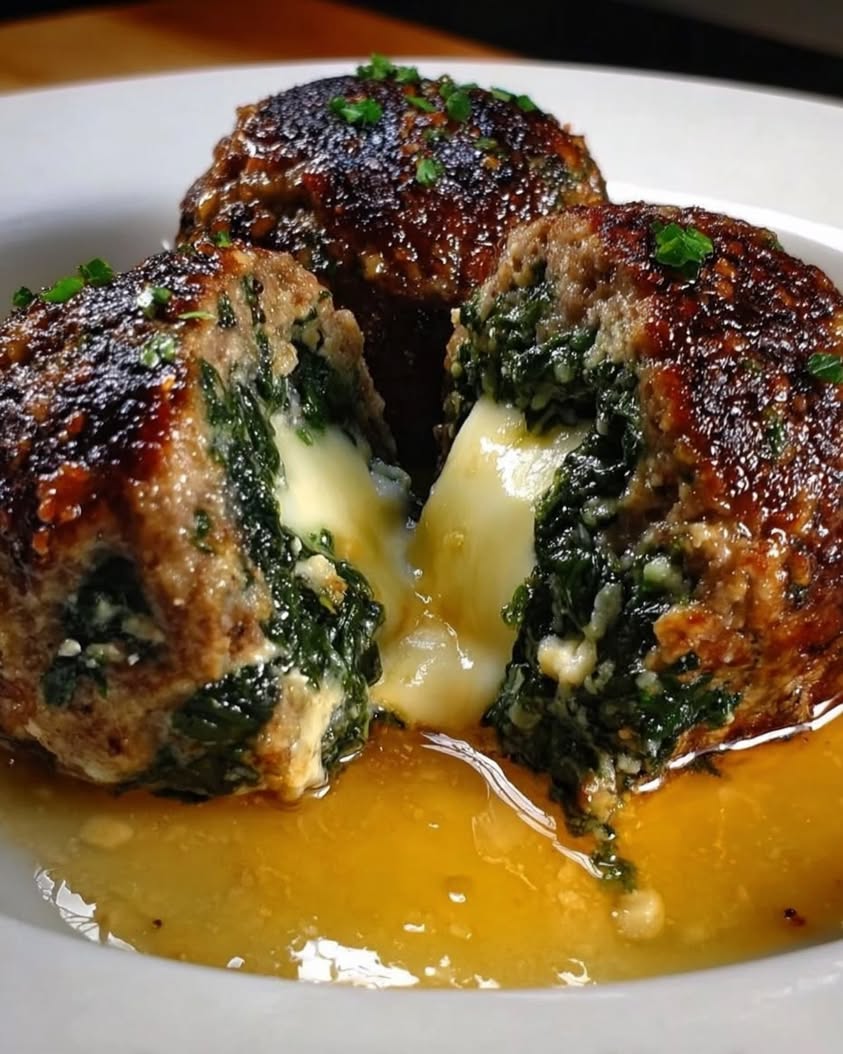
- Texture: These meatballs offer a satisfying contrast. The exterior is browned and slightly crisp from searing, while the inside remains tender and juicy. The melted mozzarella provides a stretchy, gooey center that pulls apart beautifully with each forkful.
- Aroma: As the garlic cooks, it releases a sweet, pungent fragrance that fills your kitchen. The spinach adds a fresh, green note, and the meat caramelizes to create a deeply savory scent. The overall aroma is warm and inviting, promising a hearty meal.
- Visual Appeal: When you cut into these meatballs, you see a beautiful display of green spinach flecks against the brown meat exterior. The melted cheese stretches invitingly, creating an appealing presentation. Served on a plate with fresh herbs or a drizzle of sauce, they look as good as they taste.
- Skill Level Needed: This recipe is suitable for intermediate home cooks. While the techniques are straightforward, shaping the meatballs around the cheese cubes requires a bit of practice. With careful attention to portioning and sealing, anyone can achieve excellent results.
- Special Equipment: You will need a large mixing bowl, a sharp knife for chopping garlic and cutting cheese, a skillet for searing, and a baking sheet or oven-safe dish for finishing the meatballs. A kitchen scale helps ensure even portioning for consistent results.
Recipe Overview
- Difficulty Level: We classify this recipe as medium difficulty because of the stuffing technique and the need to monitor cooking times. However, the steps are simple and follow a logical sequence. Anyone comfortable with basic cooking can master it after one or two tries. The key is to seal the meat around the cheese thoroughly to prevent leakage during cooking.
- Category: This dish fits perfectly into the main course category for dinner. It also works well as an appetizer for parties if you make smaller meatballs. You can serve them with marinara sauce, as a topping for spaghetti, or as a protein-rich snack. They bridge the gap between comfort food and something slightly more upscale.
- Cuisine: While meatballs appear in many cuisines, this version draws heavily from Italian-American traditions. The use of garlic, parsley, and mozzarella cheese is classic in Italian cooking. The spinach addition nods to modern health-conscious adaptations. This recipe respects the original flavors while introducing a fresh twist.
- Cost: This recipe is budget-friendly. Ground beef or pork is affordable, especially when bought in bulk. Spinach and garlic are inexpensive vegetables. Mozzarella cheese can be purchased as blocks or pre-cut cubes. Using pantry staples like breadcrumbs and eggs keeps the overall cost low. Expect to spend around $15 to $20 for all ingredients.
- Season: These meatballs are excellent year-round, but they shine in cooler months when comfort food is most welcome. The warmth of the garlic and the richness of the cheese make them perfect for fall and winter dinners. During spring and summer, you can serve them with fresh salads to lighten the meal.
- Occasion: This recipe is ideal for family dinners, potlucks, and casual gatherings. The stuffed cheese center makes them feel special, so they also work for holiday parties or game-day spreads. They are versatile enough to be part of a buffet or a sit-down meal.
Why You Will Love This Recipe
The taste and texture of these meatballs are what make them unforgettable. The savory meat seasoned with garlic and herbs creates a robust flavor base. When you bite into the meatball, the melted mozzarella stretches out, adding a creamy contrast that enhances every mouthful. The spinach not only adds color but also brings a subtle earthiness that complements the richness of the meat and cheese. This combination ensures that each bite is a balance of flavors and textures, keeping you coming back for more.
Convenience is another reason to love this recipe. The preparation is straightforward, and you can do most of the work ahead of time. You can mix the meat mixture, shape the meatballs, and refrigerate them until you are ready to cook. The searing and baking process takes only about 20 minutes, meaning you can have dinner on the table quickly. Additionally, these meatballs freeze well, so you can make a double batch and save some for busy nights when you need a quick meal.
From a nutritional standpoint, this recipe offers several benefits. Spinach is packed with vitamins A and C, iron, and antioxidants. Garlic is known for its immune-boosting properties. The meat provides high-quality protein and essential amino acids. By using lean ground meat, you reduce the saturated fat content while still enjoying a satisfying meal. When you pair these meatballs with a side of vegetables or a whole-grain pasta, you create a balanced dinner that supports your health goals.
The social and entertaining value of this dish is significant. When you serve Spinach Garlic Meatballs Stuffed with Mozzarella at a party, guests are always curious about the hidden cheese. The surprise element makes the meal interactive and fun. You can arrange them on a platter with toothpicks for easy grabbing, or serve them over pasta for a more formal presentation. They encourage conversation and sharing, making them perfect for gatherings where food brings people together.
Cost-effectiveness and accessibility are additional advantages. The ingredients are available at any grocery store, and you can adjust the recipe based on what is on sale. For example, you can use ground turkey or chicken if beef is expensive. Frozen spinach works just as well as fresh, and it reduces prep time. These factors make the recipe accessible to a wide range of budgets and skill levels. You do not need special equipment or hard-to-find items, so you can make these meatballs any night of the week.
Historical Background and Cultural Significance
Meatballs have a long history that spans many cultures, but the Italian version, or polpette, is perhaps the most famous in Western cuisine. Italian immigrants brought their recipes to the United States in the late 19th and early 20th centuries. These meatballs were often made with a mix of leftover meats and bread to stretch resources. Over time, they evolved into the larger, saucier versions we know today. The addition of cheese inside the meatball is a more recent innovation that reflects a love for surprise fillings.
In Italian culture, meatballs are traditionally served as a second course, often without sauce, or in soup. The American adaptation, however, pairs them generously with marinara sauce and spaghetti. This fusion created a new comfort food classic. The Spinach Garlic Meatballs Stuffed with Mozzarella recipe honors both traditions by using authentic Italian ingredients like garlic and parsley while embracing the American love for cheese-filled foods. It represents a modern twist on a beloved classic.
The evolution of this recipe shows how home cooks have adapted traditional dishes to fit contemporary tastes. As people became more health-conscious, adding spinach became a way to incorporate greens into a meat-heavy dish. Garlic, already a staple in Italian cooking, was emphasized for its bold flavor and health benefits. The stuffed mozzarella center addresses the desire for indulgence without complicating the cooking process. This recipe is a testament to how food evolves to meet changing preferences while staying rooted in history.
Regional variations of stuffed meatballs exist around the world. In the Middle East, kufta kebabs often have a cheese or vegetable center. In Sweden, meatballs are served with lingonberry jam. Each culture adds its own twist. This version specifically highlights the Italian-American love for cheese and garlic. By understanding these cultural influences, you can appreciate the recipe more fully. It is not just a meal it is a story of migration, adaptation, and creativity.
Ingredient Deep Dive
Spinach is a leafy green vegetable that originated in Persia and spread to Europe and Asia. It is rich in iron, calcium, and vitamins A and C. The nutrients in spinach support bone health and boost the immune system. When cooked, spinach reduces significantly in volume, so do not be alarmed if a large bunch seems small after wilting. For this recipe, you can use fresh or frozen spinach. If using frozen, thaw it completely and squeeze out excess water to prevent the meatballs from becoming soggy. Store fresh spinach in a plastic bag in the refrigerator and use it within a few days. If you run out, Swiss chard or kale can substitute, though they alter the flavor slightly.
Garlic is a bulbous plant from Central Asia that has been used for thousands of years both as a food and a medicine. It contains allicin, a compound known for its antibacterial and anti-inflammatory properties. Garlic adds a pungent, aromatic quality that deepens when cooked. Choose bulbs that are firm and have dry, papery skins. Avoid any with soft spots or sprouting. Store garlic in a cool, dark place with good ventilation. For this recipe, fresh garlic cloves are best, but jarred minced garlic works in a pinch. If you prefer a milder flavor, roast the garlic before adding it to the mixture.
Mozzarella cheese originated in Italy, specifically from the Campania region. It is made from buffalo milk or cow milk and has a soft, stretchy texture. The high moisture content makes it ideal for melting. For stuffing meatballs, you want low-moisture mozzarella that holds its shape during cooking. Fresh mozzarella balls can be used, but they may release too much liquid. Cut the cheese into small cubes so they fit easily inside each meatball. Store mozzarella in the refrigerator and use it by the expiration date. If you cannot find mozzarella, provolone or fontina can substitute, though the flavor will be sharper.
Ground meat is the backbone of this recipe. You can use ground beef, pork, turkey, or chicken. Beef provides a robust flavor, while pork adds juiciness. A mix of beef and pork is common. For a leaner option, ground turkey works well, but you may need to add a little oil to keep the meatballs moist. Choose meat with a fat content of around 15 to 20 percent for the best texture. Store ground meat in the refrigerator and cook it within two days of purchase. If you are not using it immediately, freeze it in portions. For a different taste, try ground lamb or bison.
Common Mistakes to Avoid
- Overworking the meat mixture can result in dense, tough meatballs. Mix the ingredients until they are just combined. Overmixing develops the proteins in the meat too much, leading to a rubbery texture. Gently fold everything together using your hands or a spatula.
- Using too much breadcrumb makes the meatballs dry and crumbly. The breadcrumbs should absorb moisture and bind the ingredients, but an excess will steal moisture from the meat. Stick to the recipe measurements and add them gradually.
- Not sealing the cheese properly causes the mozzarella to leak out during cooking. Make sure the meat completely encloses the cheese cube. Pinch the meat around the cheese and roll the meatball smooth. A good seal prevents messy oven spills.
- Skipping the searing step reduces flavor development. Searing the meatballs in a hot pan creates a brown crust that adds depth. Without this step, the meatballs remain pale and lack the caramelized taste that makes them so delicious.
- Overcrowding the pan when searing leads to steaming instead of browning. The meatballs need space to make contact with the hot pan. Cook them in batches if necessary. Crowding lowers the pan temperature and prevents the crust from forming.
- Under cooking the meatballs is a food safety risk. The internal temperature should reach 160 degrees Fahrenheit for beef or pork. Use an instant-read thermometer to check. The cheese center may be molten, so let them rest a few minutes before serving.
- Using too much spinach adds moisture that can make the meatballs fall apart. Wilt the spinach first and squeeze out excess water. Frozen spinach needs thorough draining. Too much water creates a loose mixture that does not hold its shape.
- Cutting the cheese cubes too large makes stuffing difficult. Large cubes can create gaps in the meat. Keep the cubes around half an inch in size. This size melts evenly and fits neatly inside the meatball.
- Forgetting to season the mixture properly results in bland meatballs. The spinach and garlic add flavor, but salt and pepper are essential. Taste a small piece of the mixture before forming the meatballs to check the seasoning.
- Baking the meatballs at too low a temperature dries them out. A high oven temperature around 400 degrees Fahrenheit cooks them quickly and helps the cheese melt without overcooking the exterior. Adjust the time based on your oven.
Essential Techniques
Wilted spinach preparation is crucial for this recipe. Start by heating a skillet over medium heat and adding a little olive oil. Add the fresh spinach and cook it for two to three minutes until it reduces dramatically. Stir it constantly so it wilts evenly. Once wilted, transfer the spinach to a cutting board and chop it finely. Then place the chopped spinach in a clean kitchen towel or paper towels and squeeze out as much liquid as possible. This step prevents the meatballs from becoming soggy. For frozen spinach, thaw it completely in the refrigerator and then squeeze out the liquid. The drier the spinach, the better the texture of your meatballs.
Stuffing the meatballs requires a gentle touch. Divide the meat mixture into equal portions using your hands or a scoop. Flatten each portion into a disc about three inches wide. Place one or two mozzarella cubes in the center of the disc. Carefully bring the edges of the meat up around the cheese, pinching them together to seal. Roll the meatball between your palms to create a smooth, round shape. Ensure no cheese is exposed, or it will melt out during cooking. If the meat mixture is sticky, lightly wet your hands with water to prevent sticking. Practice makes perfect, so do not worry if the first few are imperfect.
Searing develops a flavorful crust that locks in moisture. Heat a heavy skillet, such as cast iron, over medium-high heat with a tablespoon of oil. Once the oil shimmers, add the meatballs in a single layer without crowding. Let them cook undisturbed for two to three minutes per side. Use tongs to turn them gently. The goal is a deep golden brown color on all sides. This step takes about eight minutes total. After searing, transfer the meatballs to a baking sheet and finish them in the oven. The combination of stovetop and oven cooking ensures they are cooked through without burning the exterior.
Oven finishing ensures even cooking. Preheat your oven to 400 degrees Fahrenheit. Arrange the seared meatballs on a parchment-lined baking sheet, leaving space between them. Bake for 10 to 12 minutes depending on the size. The internal temperature should register 160 degrees Fahrenheit on an instant-read thermometer. The cheese inside will be molten, so let the meatballs rest for five minutes before serving. This rest period allows the cheese to set slightly and prevents burns. The oven method is reliable because it cooks the meatballs evenly without needing constant attention.
Pro Tips for Perfect Spinach Garlic Meatballs Stuffed with Mozzarella
For the best flavor, use freshly minced garlic instead of pre-minced jarred garlic. Fresh garlic has a sharper, more aromatic taste that enhances the meatballs. Let the meat mixture rest in the refrigerator for 15 minutes before shaping. Chilled meat is easier to handle and holds its shape better during stuffing and cooking. If the mixture feels too sticky, add an extra tablespoon of breadcrumbs or refrigerate it for longer. Conversely, if it feels too dry, add one tablespoon of milk or water to rehydrate it.
Choose a cheese that melts well but does not leak. Low-moisture mozzarella blocks are ideal because they have a higher melting point. Cut the cheese into small cubes and keep them cold until you are ready to use them. If the cheese is too soft, it may melt prematurely. You can also freeze the cheese cubes for 10 minutes before stuffing to slow down the melting process. This trick helps the cheese stay inside the meatball while the exterior cooks.
Use a cookie scoop to portion the meat mixture evenly. This ensures that all your meatballs are the same size, which promotes even cooking. A number 40 scoop works well for standard-sized meatballs. If you prefer larger ones, use a number 20 scoop. Consistent sizes also make it easier to estimate cooking times. When you sear them, the meatballs should be at room temperature so they cook evenly. Take them out of the refrigerator 15 minutes before searing.
Add a binding agent to keep the meatballs from falling apart. The egg and breadcrumbs work together, but you can also add one tablespoon of grated Parmesan cheese for extra structure and flavor. If you are avoiding gluten, use gluten-free breadcrumbs or crushed pork rinds for a low-carb option. The binder absorbs moisture and creates a cohesive mixture that stays together during cooking. Do not skip the egg because it acts as an emulsifier that holds all the ingredients together.
Monitor the cooking time closely to avoid overcooking. Meatballs that cook too long dry out and lose their tenderness. The cheese center will also become hard and lose its stretchy texture. Use a thermometer to ensure you reach the safe internal temperature without exceeding it. If you are cooking larger batches, consider rotating the baking sheet halfway through to ensure even browning. The goal is a juicy interior with a slightly crisp exterior.
Serve the meatballs immediately after resting for the best cheese pull. The longer they sit, the more the cheese will solidify. If you are making them ahead of time, reheat them in a warm oven at 300 degrees Fahrenheit for about 10 minutes. Add a little broth or sauce to prevent them from drying out. You can also serve them directly in marinara sauce, which helps keep them moist. The sauce also adds another layer of flavor that complements the garlic and spinach.
Variations and Adaptations
Regional variations of stuffed meatballs are diverse. In some parts of Italy, they are made with a combination of pork and veal. The inclusion of pine nuts and raisins is common in Sicilian versions. In this recipe, you can experiment with different cheeses. Try using provolone for a sharper taste, or gouda for a smoky note. For a Mediterranean twist, add chopped sun-dried tomatoes and olives to the meat mixture. This change introduces a tangy, briny element that pairs well with the spinach.
Seasonal adaptations allow you to use what is fresh. In summer, substitute fresh basil for parsley. Basil adds a sweet, peppery flavor. In fall, add a pinch of nutmeg or cinnamon to the meat mixture for warmth. You can also incorporate roasted red peppers or mushrooms in the center instead of cheese for a different texture. During winter, consider adding a teaspoon of dried oregano or thyme for a more robust taste. These small changes keep the recipe fresh and interesting throughout the year.
Dietary modifications are easy to implement. For a gluten-free version, use gluten-free breadcrumbs or almond flour. You can also skip the breadcrumbs entirely and use cooked quinoa or oats as a binder. For a dairy-free adaptation, use vegan cheese shreds or omit the stuffing and add extra spinach. Vegan ground meat substitutes work well, though you must adjust cooking times. For a low-carb or keto version, replace breadcrumbs with crushed pork rinds or almond flour. The fat content will be higher, but the flavor remains excellent.
Flavor variations open up endless possibilities. Add a teaspoon of smoked paprika for a hint of smokiness. Use ground chicken and add grated ginger and soy sauce for an Asian-inspired version. For a spicy kick, mix in red pepper flakes or chopped jalapenos with the garlic. You can also incorporate fresh herbs like cilantro or mint to change the profile entirely. Each variation brings a new dimension to the base recipe, allowing you to tailor it to your preferences.
Texture modifications can make the dish more interesting. For a crunchier exterior, coat the meatballs in a layer of panko breadcrumbs before searing. This step adds a crispy shell that contrasts with the soft interior. To make them more tender, add a tablespoon of grated onion or apple to the mixture. The natural moisture from these ingredients keeps the meat moist. If you want a fluffier texture, incorporate a bit of ricotta cheese into the meat mixture. Ricotta adds creaminess and lightness.
Presentation alternatives change the serving style. Serve these meatballs on a bed of creamy polenta for a rustic meal. Skewer them with cherry tomatoes and basil leaves for elegant appetizers. For a family-style dinner, place them in a casserole dish with marinara sauce and melted mozzarella on top. You can also slice them in half and arrange them on bruschetta for an open-faced sandwich. The versatility makes this recipe suitable for any occasion, from casual dinners to formal parties.
Serving and Presentation Guide
Plating techniques can elevate this dish visually. Start by spooning a small amount of sauce onto the plate, then place the meatballs on top. Use a flat, wide pasta bowl for a restaurant-style look. Arrange three meatballs in a triangle pattern for balance. Leave room for a side like roasted vegetables or a simple salad. The sauce should pool slightly around the meatballs, creating a colorful contrast. If you are serving pasta, place the meatballs on top of the noodles rather than mixing them in. This arrangement keeps the meatballs intact and highlights their shape.
Garnishing ideas add the final touch. Sprinkle fresh parsley or basil leaves over the meatballs for a pop of color. Grate a little Parmesan cheese over the top for extra savory notes. A drizzle of high-quality olive oil just before serving adds richness and shine. For a more elegant presentation, add a few edible flowers or microgreens. These small details show that you took care in preparing the dish. The garnishes should enhance the natural flavors without overwhelming them.
Traditional accompaniments include pasta, rice, or crusty bread. Spaghetti or linguine is classic, but you can also use pappardelle or fettuccine. The flat ribbons hold the sauce well. For a lighter option, serve with zucchini noodles or cauliflower rice. A side of garlic bread or a warm baguette allows you to soak up any leftover sauce. For a complete meal, add a green salad with a tangy vinaigrette to cut through the richness of the meatballs.
Modern serving suggestions include using the meatballs in sandwiches or wraps. Slice a meatball in half and place it in a sub roll with marinara sauce and melted provolone. This makes an excellent lunch or quick dinner. You can also serve them over a bed of greens with cherry tomatoes and a balsamic vinaigrette for a salad version. For a breakfast twist, serve them with poached eggs and toast. The versatility of these meatballs means you can enjoy them at any meal.
Temperature considerations are important. Serve the meatballs hot so the cheese is melted and stretchy. If they cool down too much, the cheese will harden and lose its appeal. Keep them warm in a low oven (200 degrees Fahrenheit) if you are not serving immediately. When reheating leftovers, use the oven rather than the microwave to preserve the texture. The microwave can make the meatballs rubbery. A quick reheat in a skillet with a splash of water or broth can also revive them.
Portion control tips help with meal planning. For a main course, serve four to five medium meatballs per person. For an appetizer, two to three meatballs per person are sufficient. If you are serving a buffet, plan for six meatballs per person because guests may take more. You can always freeze extra meatballs if you have too many. Consistent portioning with a scoop ensures that each serving has the same amount of protein and calories, making it easier to track your intake.
Wine and Beverage Pairing
Wine pairings for these meatballs should complement the savory garlic and earthy spinach. A medium-bodied red wine like Chianti or Sangiovese works well. The acidity of the wine cuts through the richness of the cheese and meat. A Barbera d-Asti from Italy also pairs nicely with its bright cherry flavors. If you prefer a white wine, opt for a full-bodied white like Chardonnay or a dry Riesling. The oak notes in Chardonnay match the roasted garlic flavor. For a sparkling option, a Prosecco or Franciacorta offers a refreshing contrast to the heavy dish.
Non-alcoholic alternatives include sparkling water with lemon or a berry spritzer. The bubbles help cleanse your palate between bites. A tart apple cider is another great option because its sweetness balances the savory flavors. For something warm, try a herbal tea like chamomile or mint. These beverages do not interfere with the food and keep the focus on the meatballs. If you are hosting, provide both alcoholic and non-alcoholic options so all guests feel included.
Coffee or tea pairings are less common for this type of meal, but they can work. A dark roast coffee with a chocolatey profile can complement the savory notes if served after the meal. For tea, an Earl Grey with its bergamot citrus notes can cut through the richness. These pairings are better suited for a brunch or dinner party where coffee is served at the end. The key is to choose beverages that enhance rather than overpower the dish.
Temperature considerations for beverages depend on the weather. In warmer months, serve chilled wines and sparkling water. In colder months, consider a heated cider or mulled wine. The contrast between hot food and a cold drink can be refreshing, while a warm drink adds to the cozy feeling. Match the beverage temperature to the overall dining experience to create a harmonious meal.
Serving suggestions for beverages include decanting red wine to allow it to breathe. Pour wine about 20 minutes before serving. For non-alcoholic drinks, garnish with herbs like mint or rosemary for an aromatic touch. Use glassware that enhances the drinking experience. A stemmed glass for wine keeps it at the right temperature. For sparkling water, use a tall glass with ice and a slice of lemon. These small touches show attention to detail.
Storage and Shelf Life
Store leftover meatballs in an airtight container in the refrigerator. They will stay fresh for up to four days. Place a layer of paper towels at the bottom of the container to absorb excess moisture. This prevents the meatballs from becoming soggy. Alternatively, you can store them in the sauce they were cooked in, which helps retain moisture. If you are storing them without sauce, cover them with plastic wrap before sealing the container.
Temperature requirements are specific. Keep the refrigerator at or below 40 degrees Fahrenheit. If the meatballs are stored in a warmer part of the fridge, they may spoil faster. Place them on a middle shelf rather than in the door, where temperatures fluctuate. For longer storage, freeze the meatballs. They can be frozen for up to three months without significant quality loss. Freeze them on a baking sheet first until solid, then transfer them to a freezer bag. This method prevents them from sticking together.
Container recommendations include using glass or BPA-free plastic containers. Glass is best because it does not absorb odors and is easy to clean. If using plastic, ensure it is designed for food storage. Avoid using aluminum containers because the acidity in tomato sauce can react with the metal. Always label the container with the date so you can track freshness. For freezing, use heavy-duty freezer bags and remove as much air as possible before sealing.
Signs of spoilage include a sour smell, slimy texture, or mold. If you notice any of these, discard the meatballs immediately. Do not taste them to check. The cheese inside may develop an off flavor first, so trust your nose. When reheating, if the meatballs seem drier than usual, they may have been stored too long. It is better to be safe and discard questionable leftovers.
Reheating instructions are important for maintaining quality. The best method is to reheat them in a skillet over medium heat with a splash of broth or sauce. Cover the skillet with a lid to trap steam and heat them through. This method takes about five minutes. You can also reheat them in a preheated oven at 350 degrees Fahrenheit for 10 minutes. Avoid the microwave, as it can create hot spots and make the meatballs tough. If you are in a hurry, microwave them on a plate with a damp paper towel for one minute, but expect some texture loss.
Freezing guidelines help you preserve the meatballs properly. Allow them to cool completely before freezing. Place them in a single layer on a parchment-lined baking sheet and freeze for two hours. Once frozen, transfer them to a freezer bag or container. When you are ready to cook frozen meatballs, you can bake them directly from frozen. Add an additional five to ten minutes to the cooking time. Do not thaw them in the refrigerator, as this can cause the cheese to become watery.
Make Ahead Strategies
Prep timeline planning is simple for this recipe. You can prepare the meat mixture up to 24 hours in advance. Combine all the ingredients except the mozzarella and store the mixture in the refrigerator. When you are ready to cook, remove the mixture from the fridge, let it sit for 10 minutes to soften, then shape and stuff the meatballs. You can also fully shape the meatballs, place them on a baking sheet, and refrigerate them covered for up to eight hours. This approach allows you to come home and simply sear and bake them for a quick dinner.
Storage between steps requires careful handling. If you are making the meatballs a day ahead, store them on a baking sheet lined with plastic wrap. Cover them with another layer of plastic wrap to prevent them from drying out. The cold temperature will help them hold their shape during cooking. When you sear them directly from the fridge, add an extra minute to the searing time to compensate for the chill. The oven time may also increase slightly, so use a thermometer to check doneness.
Quality impact assessment shows that making these meatballs ahead does not negatively affect them. The flavors actually meld together over time, resulting in a more cohesive taste. The garlic and spinach infuse the meat fully during refrigeration. The only slight change is that the meatballs may be slightly denser, but this is not noticeable after cooking. If you freeze them, the texture remains excellent for up to three months. The cheese center stays intact if frozen properly.
Assembly tips for make-ahead success include using a gentle hand. When you shape the meatballs around the cheese, do not press too hard or the cheese may shift. Use a baking sheet lined with parchment paper to prevent sticking. Place the formed meatballs close together but not touching, so they freeze or refrigerate evenly. If you are stacking them in a container, separate layers with wax paper. Keep the cheese cubes chilled until the last moment to maintain their shape.
Reheating guidelines for make-ahead meatballs are straightforward. If you cooked them completely before storing, reheat them as described earlier. If you only partially cooked them, finish cooking them when you are ready to serve. For example, you can sear them a day ahead and then bake them the next day. This method saves time without sacrificing quality. Always reheat to an internal temperature of 160 degrees Fahrenheit for food safety.
Fresh element additions can brighten the dish. When serving make-ahead meatballs, consider adding a fresh garnish like chopped herbs or a squeeze of lemon juice. These fresh elements contrast with the rich, deep flavors of the meatballs. If you are serving them with sauce, make the sauce fresh if possible. A quick marinara made with canned tomatoes, garlic, and basil takes only 15 minutes and makes the meal feel newly prepared. Small fresh touches go a long way.
Scaling Instructions
Halving the recipe is straightforward. Reduce all ingredients by half, including the mozzarella cubes. Use one half of an egg by whisking an egg and using half of it. The cooking time may decrease slightly because the meatballs are the same size, so monitor them carefully. The searing time remains the same, but the oven time might reduce by a minute or two. Store any leftover egg mixture separately for another use. Halving this recipe works well for a couple or a small family.
Doubling or tripling the recipe requires adjusting the mixing method. Use a large bowl or divide the mixture into batches. When mixing large quantities, be careful not to overwork the meat. Use your hands to mix gently. You may need to cook the meatballs in multiple batches to avoid overcrowding the Print
Spinach Garlic Meatballs Stuffed with Mozzarella
- Total Time: 35 minutes
- Yield: 4
Description
These juicy meatballs are packed with spinach and garlic, then stuffed with gooey mozzarella cheese for a delicious twist on a classic dish. Perfect served over pasta or as an appetizer.
Ingredients
- 1 lb ground beef (or ground turkey)
- 2 cups fresh spinach, finely chopped
- 3 cloves garlic, minced
- 1/2 cup breadcrumbs
- 1 large egg
- 1/4 cup grated Parmesan cheese
- 1 teaspoon salt
- 1/2 teaspoon black pepper
- 1/2 teaspoon onion powder
- 1/4 cup mozzarella cheese, cut into small cubes
- 2 tablespoons olive oil
- 1 cup marinara sauce (for serving)
Instructions
- In a large bowl, combine ground beef, chopped spinach, minced garlic, breadcrumbs, egg, Parmesan cheese, salt, pepper, and onion powder. Mix until just combined.
- Take a small portion of the meat mixture and flatten it in your palm. Place a cube of mozzarella in the center, then fold the meat around it to form a ball, ensuring the cheese is fully enclosed. Repeat with remaining mixture.
- Heat olive oil in a large skillet over medium-high heat. Add the meatballs and cook, turning occasionally, until browned on all sides, about 5-7 minutes.
- Reduce heat to medium-low, cover skillet, and cook for an additional 10 minutes, or until cooked through.
- Serve hot with marinara sauce for dipping or over pasta.
Notes
You can customize the seasonings to taste. For a lighter version, use ground turkey and bake the meatballs at 400°F for 15-20 minutes instead of frying.
- Prep Time: 15 minutes
- Cook Time: 20 minutes
- Method: Main
- Cuisine: Italian-American