Ultimate Root Vegetable Gratin with Sweet Potatoes, Parsnips, and Beets: A Comforting Layered Casserole
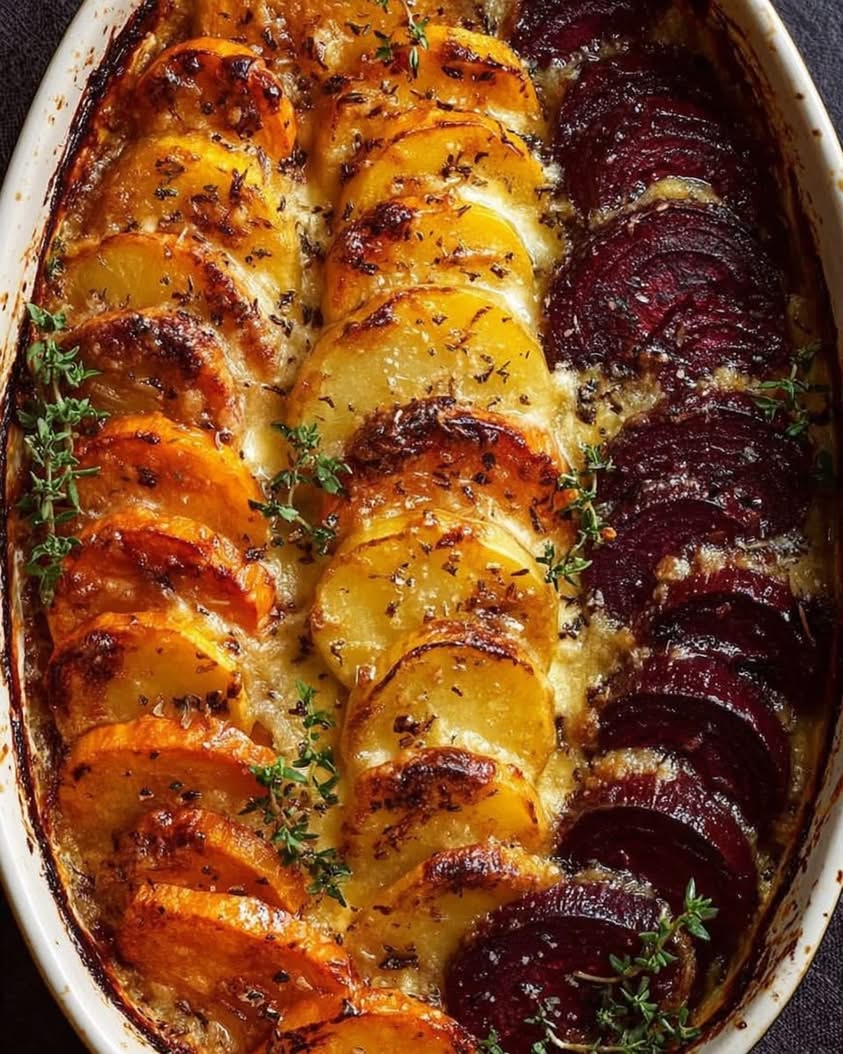
This Ultimate Root Vegetable Gratin with Sweet Potatoes, Parsnips, and Beets is the epitome of comfort food with a rustic, elegant twist. When you slice into this layered casserole, you will see beautiful rings of orange, cream, and deep purple. The sweet potatoes bring a natural, honeyed richness, while the parsnips offer an earthy, slightly peppery kick. The beets, meanwhile, provide an incredible sweetness and a stunning jewel tone that makes this dish a showstopper on any table. This is not just a side dish; it is a main event that will elevate your holiday dinners or cozy Sunday meals.
The magic of this dish lies in the contrast between the tender, melt-in-your-mouth vegetables and the golden, bubbly top. As it bakes, the cream and cheese meld into a luscious sauce that gently coats each slice. The aroma that fills your kitchen is an intoxicating mix of roasted roots, warm thyme, and nutty Gruyere. It is a dish that feels both indulgent and wholesome, perfect for when you want something deeply satisfying. You will find that the flavors deepen and marry beautifully, making it even better the next day.
We designed this recipe for the home cook who wants impressive results without spending hours in the kitchen. The preparation is straightforward, mostly involving slicing and layering. The oven does the rest of the work, transforming simple ingredients into a creamy, savory masterpiece. Whether you are serving it alongside a roast chicken for a weeknight dinner or as part of a lavish Thanksgiving spread, this gratin consistently delivers. It is a reliable, crowd-pleasing dish that celebrates the best of the fall and winter harvests.
Quick Recipe Highlights
- Flavor Profile: The combination is a harmonious blend of sweet and savory. The sweet potatoes and beets provide a natural sweetness, which is perfectly balanced by the earthy, slightly nutty flavor of parsnips. The creamy sauce adds richness, and the Gruyere cheese provides a salty, nutty finish.
- Texture: This gratin offers a wonderful variety of textures. The vegetables become incredibly tender after a long, slow bake, almost melting in your mouth. The top layer becomes golden and slightly crispy, while the bottom layers stay moist and creamy from the sauce.
- Aroma: As it bakes, your kitchen will fill with the inviting scents of roasted root vegetables and warm, melted cheese. The subtle notes of fresh thyme and garlic add a savory depth that is both comforting and appetizing.
- Visual Appeal: The presentation is stunning with its natural, layered pattern. When sliced, you see concentric circles of vibrant orange sweet potato, pale parsnip, and deep magenta beet. A golden, bubbly cheese crust adds the perfect finishing touch.
- Skill Level Needed: This dish is perfect for a confident beginner or intermediate cook. The main tasks are slicing vegetables evenly and building the layers. Paying attention to the thickness of your vegetable slices is the only crucial technique to master.
- Special Equipment: You will need a sharp knife or a mandoline slicer for consistent vegetable cuts. A 9×13-inch baking dish or a similar sized gratin dish is also essential for this recipe.
Recipe Overview
- Difficulty Level: We rate this as a medium difficulty recipe. The process is simple, but achieving perfectly even slices is key to even cooking. A mandoline makes this much easier, but a sharp knife works fine with a steady hand. The layering process is intuitive, but you must ensure an even distribution of the cream mixture to cook the vegetables uniformly.
- Category: This dish is a versatile side dish that can easily become a vegetarian main course. It fits perfectly into categories like holiday side dishes, casseroles, or hearty vegetable mains. It is substantial enough to stand alone with a simple salad for lunch or dinner.
- Cuisine: While a classic gratin is a staple of French cuisine, this version celebrates the robust flavors of American autumn cooking. The use of root vegetables like sweet potatoes and parsnips is a hallmark of farm-to-table and seasonal American cuisine. It is a modern take on a classic technique, using locally available ingredients.
- Cost: The Cost is relatively low, especially during the fall and winter harvest. A few pounds of root vegetables, a carton of cream, and a block of cheese are all quite affordable. The total cost is often under 15 dollars, making it an excellent budget-friendly option for feeding a crowd.
- Season: This recipe is best in the fall and winter months. This is when sweet potatoes, parsnips, and beets are at their peak flavor and are most readily available. The dish is also wonderfully warming and hearty, perfectly suited to colder weather.
- Occasion: This gratin is ideal for special occasions like Thanksgiving, Christmas, or Easter dinners. It is also fantastic for potlucks, family reunions, or a cozy weekend meal. It is elegant enough for company but simple enough for a weeknight.
Why You Will Love This Recipe
The combination of textures in this Ultimate Root Vegetable Gratin with Sweet Potatoes, Parsnips, and Beets is a primary reason to love it. You get the soft, yielding bite of the sweet potato, the slight firmness of the parsnip, and the tender, almost creamy texture of the beet. These different textures play against each other with every forkful, keeping each bite interesting. The creamy, cheesy sauce further enhances this experience, coating every slice in a dreamy blanket of flavor. Then, there is that top layer of bubbly, golden cheese, which adds a satisfying, crunchy texture that contrasts with the soft vegetables underneath.
Convenience is another huge advantage of this dish. After a little initial prep, the hard work is done. You simply arrange the vegetables in a dish, pour over the cream mixture, and let the oven take over. This gave you a full hour to prepare the rest of your meal or simply relax. It is a highly forgiving recipe, as the long baking time allows the flavors to meld and deepen. Because of this, it is a perfect make-ahead dish. You can assemble it the day before, store it in the refrigerator, and then bake it off just before serving.
Nutritionally, this gratin is a powerhouse of vitamins and fiber. Sweet potatoes are loaded with Vitamin A and beta-carotene. Beets are excellent for their folate and antioxidants, while parsnips provide a good dose of Vitamin C and fiber. When you serve this dish, you are providing a healthy, nutrient-dense option that rivals any main course. The cream and cheese add calcium but also a satisfying richness that makes it feel like a treat. This means you are eating something that is both delicious and genuinely good for you.
From a social perspective, this dish is a guaranteed crowd-pleaser. It is familiar enough to be comforting yet unique enough to be memorable. When you present it at the table, the beautiful colors and layers generate immediate excitement. It pairs beautifully with almost any protein, like roasted chicken, turkey, or even a simple steak. Its versatility means it can be the star of a vegetarian meal or a supporting actor at a large feast. It is the kind of dish that people ask for the recipe for, a true sign of a kitchen success.
Finally, this recipe is incredibly cost-effective and uses accessible ingredients. Root vegetables are generally among the most affordable produce items in the grocery store. A single dish can easily feed a family with leftovers for lunch the next day. The ingredients are pantry staples for many, requiring no special trips to gourmet markets. This combination of a high-impact result with low-impact effort and cost makes it a winner for any home cook. It proves that you do not need expensive ingredients to create something spectacular.
Historical Background and Cultural Significance
The origins of the gratin can be traced back to the Dauphine region of France in the 18th century, where it was called “gratin dauphinois.” The original dish was a simple preparation of thinly sliced potatoes baked in cream and butter. It was a humble, peasant meal designed to fill hungry stomachs during the cold winter months. The act of “gratiner” refers to the process of creating a browned, crispy crust on top of a dish, a technique that became highly prized in French haute cuisine. This simple concept of layering and baking in a creamy sauce has since spread across the globe.
Culturally, the gratin has become a symbol of comfort, hospitality, and rustic elegance. In France, it is a classic Sunday lunch dish and a staple of family gatherings. In North America, it has been adopted and adapted, especially with ingredients like sweet potatoes or broccoli. The dish represents an idea that cooking with patience and simple techniques can transform basic ingredients into something exceptional. It is a celebration of the harvest and the bounty of the earth, and it is a meal that is meant to be shared.
The evolution of the recipe has been driven by the availability of new ingredients and the creativity of cooks. While the original was exclusively potatoes, modern versions like this one incorporate a wide array of root vegetables and even other vegetables like butternut squash. The addition of cheese, which is not traditional in a classic dauphinois, is a common and popular American variation. This adaptation reflects a broader culinary trend of fusing classic techniques with modern, bold flavors. The result is a dish that respects its roots but is not afraid to innovate.
Regional variations of gratin are abundant around the world. In many parts of the United States, you find sweet potato gratins with marshmallows, a distinctly Southern and festive take. In the UK, a similar dish is often called a “bubble and squeak,” though that is typically made with leftovers. In Scandinavia, they make a version with root vegetables, cream, and a breadcrumb topping. These regional differences highlight how a simple technique can be adapted to suit local tastes and produce. This Ultimate Root Vegetable Gratin with Sweet Potatoes, Parsnips, and Beets is a contemporary American interpretation of this timeless dish.
Ingredient Deep Dive
Sweet potatoes are a root vegetable with a rich history in Central and South America, dating back thousands of years. They are not actually potatoes but are members of the morning glory family. Nutritionally, they are a standout, being one of the best sources of beta-carotene, which the body converts into Vitamin A. When selecting them for this gratin, look for firm, smooth tubers with no soft spots or blemishes. Store them in a cool, dark, and well-ventilated place, but not in the refrigerator, as the cold can affect their flavor. While they have a distinct sweetness, a good substitute is butternut squash or carrots for a similar texture and color.
Parsnips are a root vegetable that resembles a pale, white carrot, though its flavor is far more complex. They have been cultivated in Europe since Roman times, valued for their sweet, nutty, and slightly earthy taste. They are an excellent source of fiber, Vitamin C, and folate. When shopping, choose parsnips that are small to medium in size, as larger ones can be woody and tough. The best way to store them is to remove the leafy tops and place the roots in a plastic bag in the refrigerator, where they can last for several weeks. If you cannot find parsnips, a good substitute is celery root or turnips, though the flavor profile will change.
Beets, with their deep magenta color, have been enjoyed since ancient times, with evidence of their use in the Mediterranean region. They are a powerhouse of nutrients, especially folate, manganese, and betalains, which are powerful antioxidants. The variety you choose matters; golden beets are milder and less earthy, while red beets offer that classic, intense flavor and color. For this gratin, you want raw beets that are firm and heavy for their size. Store them in a cool, dark place or in the refrigerator crisper drawer. A suitable substitute is a combination of carrots and radishes for color and bite, though you will lose the beet’s specific sweetness.
The cream and cheese are what make this a gratin as opposed to just roasted vegetables. Heavy cream provides the rich, luscious sauce that tenderizes the vegetables as they bake. Gruyere cheese is ideal here because it melts beautifully and adds a complex, nutty, and slightly salty flavor that does not overpower the vegetables. Other good cheese options include Comte, Fontina, or a sharp white cheddar. You should always grate your own cheese from a block, as pre-shredded cheese contains anti-caking agents that prevent smooth melting. Fresh thyme adds an aromatic, slightly floral note that cuts through the richness of the cream and cheese.
Common Mistakes to Avoid
- Slicing your vegetables unevenly is a common mistake. If some slices are thick and others are thin, they will not cook at the same rate. You will end up with some pieces that are perfectly tender and others that are still crunchy. Use a mandoline slicer for the most even results.
- Another error is not seasoning your cream mixture enough. The vegetables absorb a lot of salt and flavor during the long bake. If you do not season the cream generously, the final dish will taste bland. Taste your cream mixture before pouring it over the vegetables and adjust with salt and pepper.
- Failing to use enough liquid is a frequent problem. The vegetables need to be mostly submerged in the cream to cook properly. If you skimp on the liquid, the top layers of the gratin will dry out and become tough. Make sure your cream mixture covers at least three-quarters of the vegetable layers.
- Using too much cheese on top can lead to a greasy, heavy final dish. While cheese is essential for flavor, a thick layer can create an oil slick on top of the gratin. Use a moderate amount to create a golden crust, not a thick, greasy blanket.
- Baking at too high a temperature is a mistake because it will burn the top before the vegetables are tender. The gratin needs a long, slow bake to allow the dense root vegetables to soften completely. A moderate oven between 375 and 400 degrees Fahrenheit is ideal.
- Not giving the gratin a rest after baking is a critical oversight. The dish needs at least 10 to 15 minutes to set after coming out of the oven. This allows the creamy sauce to thicken and cool slightly, making it easier to slice and serve cleanly.
- Using a baking dish that is too small will cause the vegetables to be packed too tightly. This prevents the cream from circulating properly, leading to uneven cooking. Use a dish that allows the vegetables to be in a single, compact, but not overcrowded, layer.
Essential Techniques
Mastering the technique of even slicing is the most critical step for this Ultimate Root Vegetable Gratin with Sweet Potatoes, Parsnips, and Beets. The goal is to have every piece roughly the same thickness, about 1/8 of an inch. This consistency ensures that all the vegetables cook in the same amount of time. A mandoline slicer is the best tool for this job, as it provides adjustable and uniform slices. If you are using a knife, it is crucial to have a sharp blade and a steady hand. A common pitfall is slicing too thickly, which lengthens the cooking time and can lead to uneven texture. The visual cue for success is seeing a stack of slices that all look the same width.
The layering technique is where the visual magic happens in this dish. You want to build the gratin in tight, overlapping rows, alternating the colors for the best presentation. The method is to start with a single layer of your first vegetable, such as the sweet potato, arranging the slices in a shingled pattern. Then, you add a layer of parsnips, followed by beets, repeating the process until all the vegetables are used. The important thing is to build the layers evenly so they bake uniformly. A common mistake is to dump all the vegetables in at once, which creates a messy, uneven final dish. The visual cue for success is a neatly organized, colorful striped pattern in your dish before it even goes into the oven.
Creating a rich and flavorful cream sauce is another essential technique. The sauce is simple but needs to be properly seasoned and infused with flavor. Start by gently heating your heavy cream with minced garlic, fresh thyme, salt, pepper, and a pinch of nutmeg. The goal is not to boil the cream but to warm it and allow the flavors to infuse. A common pitfall is to skip this step and just pour cold cream over the vegetables, which will not allow the flavors to meld. The visual cue for success is a creamy, slightly steaming liquid that smells aromatic. Pouring this warm mixture over the layered vegetables ensures even distribution of flavor.
Pro Tips for Perfect Ultimate Root Vegetable Gratin with Sweet Potatoes, Parsnips, and Beets
First, always use a mandoline slicer for uniformly thin slices. This is the single most important tool for this recipe. It guarantees that all your vegetables will cook at the same rate. It also makes the prep work much faster and safer than using a knife.
Second, parboil your sliced beets for 3 to 4 minutes before layering them. Beets are denser than sweet potatoes and parsnips. A quick boil gives them a head start, ensuring they will be as tender as the other vegetables when the gratin is done.
Third, do not skip the step of warming the cream mixture. Cold cream will shock the dish and slow down the cooking process. Warming it helps the vegetables start cooking immediately, leading to a more even and faster bake.
Fourth, use a mixture of cheeses for more complex flavor. While Gruyere is a classic choice, broiling the top layer with a blend of Gruyere and a little Parmesan or Pecorino Romano will add an even more flavorful and crispy crust.
Fifth, let the gratin rest for a solid 15 minutes after baking. This is not just a suggestion but a crucial step. The resting time allows the liquids to be reabsorbed into the vegetables, making the slices clean and firm. If you cut into it too soon, it will be a soupy mess.
Sixth, season every layer of vegetables as you build the gratin. Do not just rely on the cream to add all the salt. A light sprinkle of salt and pepper between each vegetable layer builds flavor from the bottom up. This ensures every bite is perfectly seasoned.
Variations and Adaptations
Regional variations of this dish are plentiful and exciting. In the Southern United States, you might find a version with a touch of cayenne pepper and a pecan crumble on top for added crunch. A New England style could incorporate a little maple syrup into the cream to enhance the natural sweetness of the vegetables. The French original, gratin dauphinois, would never include cheese, while a Swiss version might use Raclette for a more pungent, melty experience. These adaptations show how a simple technique can be reimagined to suit different regional palates and available ingredients.
Seasonal adaptations are a great way to make this dish your own. In the spring, you could swap some of the root vegetables for tender fennel, leeks, and asparagus. For a summer version, consider using thinly sliced zucchini, summer squash, and tomatoes, though the baking time would be much shorter. In the fall, you can add other hard squashes like butternut or delicata. This Ultimate Root Vegetable Gratin with Sweet Potatoes, Parsnips, and Beets is already a perfect fall dish, but you can easily adjust it to showcase whatever vegetables are at their peak in your garden or market.
Dietary modifications are simple to implement. For a gluten-free version, simply ensure your cream and cheese are certified gluten-free, which they usually are. To make it dairy-free, use full-fat coconut cream and a blend of nutritional yeast, soaked cashews, and a dairy-free melting cheese. For a vegan option, use the dairy-free ingredients and add some vegetable broth for extra depth. The key is to maintain the same rich, creamy consistency, even if the base is plant-based. These modifications mean almost anyone can enjoy this comforting dish.
Flavor variations can transform the dish from savory to slightly sweet or completely herby. For a sweet twist, add a tablespoon of brown sugar or maple syrup to the cream and top with a sprinkle of cinnamon and nutmeg. For more savory flavor, add a dash of smoked paprika, a pinch of cayenne for heat, or some chopped fresh sage or rosemary. You could also use a Parmesan-heavy cheese blend or a smoked gouda for a completely different flavor profile. The base of the gratin is a blank canvas that welcomes all kinds of creative additions.
Serving and Presentation Guide
Plating this gratin is about showcasing the beautiful layers you created. The best technique is to let the gratin rest, then use a large, sharp spatula to lift out a clean square or rectangle. Serve it on a warmed plate with the layered edge facing the diner for the most stunning presentation. Avoid using a slotted spoon, which will break the layers apart. A single, clean cut per serving is always the goal. The visual of the bright orange, cream, and purple stripes is the highlight of the dish.
Garnishing ideas can elevate the gratin from a simple side to a restaurant-quality dish. A light sprinkle of fresh, chopped flat-leaf parsley or chives adds a pop of green and a fresh, herbaceous note. For added texture and color, you can also try a sprinkle of toasted pecans or a few crispy fried sage leaves on top. A final, very light grating of fresh Parmesan over the top just before serving can also be a lovely touch. The garnish should complement, not overwhelm, the natural beauty of the gratin.
Traditional accompaniments for this gratin are often roasted meats. It is a perfect partner for a classic roast chicken, turkey, beef burgundy, or a honey-glazed ham. The richness of the gratin stands up well to other hearty sides like roasted Brussels sprouts or a simple green salad. For a vegetarian meal, serve it with a hearty lentil loaf or a chickpea and mushroom wellington. The gratin is versatile and can be the star of the show or a supporting character in a large feast.
Modern serving suggestions involve using individual ramekins for a more personalized touch. If you have the time, you can layer the vegetables directly into small, oven-safe dishes. This is a fantastic option for dinner parties. The individual portions look elegant and make serving incredibly easy. Remember to reduce the baking time for smaller dishes by about 10 to 15 minutes. It is a simple change that makes a big difference in presentation.
Wine and Beverage Pairing
For a classic pairing, a medium-bodied white wine is the ideal choice. The earthy notes of a Chardonnay from the Macon region of France, with its balanced acidity and subtle oak, will complement the creamy richness of the gratin. Another excellent choice is a Viognier, which offers notes of stone fruit that play nicely with the sweetness of the beets and sweet potatoes. The key is to avoid wines that are too heavy or full-bodied, such as an oaky California Chardonnay, as they can overpower the delicate flavors of the vegetables.
For those who prefer red wine, a light to medium-bodied red is the better option. A Pinot Noir, especially one from Oregon or Burgundy, is a fantastic match. Its earthy, cherry, and floral notes will beautifully mirror the earthy flavors of the parsnips and beets. Another good choice is a Gamay, which is light, bright, and fruity. The high acidity in these wines cuts through the cream sauce, cleansing the palate after each rich, decadent bite. A heavy Cabernet Sauvignon would be too tannic and astringent for this dish.
Non-alcoholic alternatives are also wonderful with this gratin. A sparkling water with a squeeze of lemon or lime is a refreshing and palate-cleansing option. A high-quality apple cider, especially a slightly cloudy and unfiltered one, has the perfect balance of sweetness and acidity. For something more sophisticated, try a cranberry or pomegranate spritzer. These options provide acidity and fruitiness without overwhelming the dish. The acidity helps cut through the richness, making each bite feel light and enjoyable.
Storage and Shelf Life
Storing your leftover Ultimate Root Vegetable Gratin with Sweet Potatoes, Parsnips, and Beets is simple and effective. The best method is to let the gratin cool completely to room temperature before covering it tightly. You can store it directly in the baking dish if you cover it with plastic wrap or aluminum foil. Alternatively, you can transfer it to an airtight container. It will stay fresh in the refrigerator for up to four days. The flavors often deepen and meld further overnight, making leftovers a real treat.
Temperature requirements are crucial for food safety. The gratin must be cooled and placed in the refrigerator within two hours of cooking. The refrigerator temperature should be consistently below 40 degrees Fahrenheit to prevent bacterial growth. When you are ready to reheat it, you should do so to an internal temperature of 165 degrees Fahrenheit to ensure it is safe to eat. Do not leave the gratin out at room temperature for extended periods, especially during holidays or buffets. Use a chafing dish or a warming tray to keep it hot while serving.
Container recommendations will help preserve the texture of the gratin. Glass or ceramic dishes are the best options for storage. They are non-reactive and will not affect the flavor of the dish. If you use a metal container, the acidic components in the cream and vegetables can sometimes react and leave a metallic taste. Always use a lid or tight-fitting wrap to prevent the gratin from drying out or absorbing odors from other foods in the refrigerator. A good seal is your best defense against spoiled leftovers.
Signs of spoilage are important to recognize. The first indicator of a spoiled gratin is often a sour or off smell. The texture will also change, becoming slimy or watery instead of creamy and firm. If you see any mold growth on the top or edges of the dish, you should discard it immediately. If the gratin has a strange, fermented taste, it is no longer safe to eat. When in doubt, it is always safer to throw it out. Proper storage can extend its life, but it will not keep indefinitely.
Reheating instructions are key to restoring the gratin’s original texture. The best way to reheat it is in the oven at 350 degrees Fahrenheit. Cover the dish with foil to prevent the top from burning and bake for 15 to 20 minutes. For individual portions, you can reheat them in the microwave, but the top will not be crispy. For a crispier top, you can finish it under the broiler for a minute or two after it is heated through. This will help revive that golden, bubbly crust that makes the dish so appealing.
Freezing guidelines are a great way to preserve the gratin for later. The good news is that this gratin freezes very well, especially if you plan to serve it within a month. Allow it to cool completely, then wrap the entire dish in a layer of plastic wrap followed by a layer of aluminum foil. This double layer of protection prevents freezer burn. When you are ready to serve it, you can thaw it in the refrigerator overnight and then reheat it in the oven as described above. The texture will be very close to the original, making it a perfect make-ahead meal.
Make Ahead Strategies
A perfect prep timeline helps you stay organized. The best strategy is to prepare all your vegetables and the cream mixture a day in advance. You can peel and slice your sweet potatoes, parsnips, and beets, storing each vegetable in a separate container of cold water to prevent discoloration. You can also combine your cream, garlic, thyme, salt, and pepper in a jar and store it in the refrigerator. This two-step prep will reduce your assembly time on the day of cooking to just 15 minutes. It is a game-changer for busy holidays.
Storage between steps is critical for best results. Between slicing and assembly, keep your sliced vegetables in a tightly sealed container or a zip-top bag with the air pressed out. A layer of plastic wrap directly on the surface of the cream mixture will prevent a skin from forming. You can then store both in the refrigerator for up to 24 hours. This method prevents the vegetables from oxidizing and turning brown, and it keeps the cream fresh. Always give the cream a good stir before using it.
Quality impact assessment is important when making ahead. The good news is that this dish holds up remarkably well to being made a day ahead. The flavors have time to meld and deepen, often resulting in an even more delicious final product. The only slight loss is the absolute crispness of the top cheese crust. You can remedy this by broiling the finished dish for a minute or two just before serving. The texture of the vegetables will remain perfectly creamy and tender.
Assembly tips will guarantee success when doing it ahead. When you are ready to assemble, simply layer your vegetables in the baking dish as you normally would. Pour the prepared cream mixture over the top and cover the dish with foil. You do not need to bake it immediately. You can store the assembled but unbaked gratin in the refrigerator for up to a day. When it is time to bake, you may need to add an extra 10 to 15 minutes to the baking time because all the ingredients will be cold from the fridge.
Reheating guidelines for a fully baked and stored gratin are straightforward. As mentioned, the oven is your best friend here. Reheat it covered with foil at 350 degrees Fahrenheit. Once it is hot all the way through, after about 20 minutes, remove the foil and let the top crisp up for another 5 minutes. This returns the texture and flavor to near-perfect condition. Avoid the microwave for reheating large portions, as it will make the texture mushy and the sauce grainy.
Fresh element additions can brighten the dish when serving a make-ahead version. To counter the richness of a reheated gratin, consider adding a fresh, acidic element to the plate. A simple side salad of arugula with a lemon vinaigrette is perfect. You can also sprinkle fresh herbs like chopped parsley, chives, or dill over the top just before serving. This addition of fresh, green flavors cuts through the creaminess and makes the dish feel lighter and more vibrant. It is a simple touch that makes a big difference.
Scaling Instructions
Halving the recipe is a simple task for smaller households. To do this, simply cut all your ingredients in half. Use half the amount of sweet potatoes, parsnips, beets, cream, and cheese. You will want to use a smaller baking dish, such as an 8×8-inch square dish or a medium-sized gratin dish. The great news is that the baking time does not change significantly. You should still bake it for about 50 to 60 minutes, just keep an eye on it. The visual cues of a golden top and tender vegetables remain the same.
Doubling or tripling the recipe for a large crowd is also easy to do. You simply multiply all ingredient amounts by two or three. The challenge here is finding the right baking equipment. A standard 9×13-inch dish works for a single recipe. For a double batch, you will need two 9×13-inch dishes or one very large roasting pan. The most important adjustment is the baking time. A larger, deeper dish will require a longer cook time, perhaps 15 to 20 minutes more. You must check the vegetables with a knife to ensure they are completely tender before you pull it out.
Equipment adjustments are necessary when scaling. For a single recipe, your mandoline and mixing bowls are fine. For a double or triple batch, you will need larger bowls for mixing your cream and spices. You will also need a larger surface area for laying out the sliced vegetables. A good strategy is to use sheet pans to hold your sliced vegetables before layering. The most important thing is to work efficiently and have a system in place. A messy, chaotic assembly line can lead to mistakes and uneven layering.
Timing modifications are the most common challenge when scaling. The general rule is that the larger the dish, the longer the bake time. A very full, deep dish will act like an insulator, slowing down heat penetration. You should start checking for doneness at the original time of 60 minutes. Then, add 10-minute increments until a knife inserted into the center slides through with no resistance. Patience is key here. You also need to watch the top. If the top is browning too quickly, you can tent it with foil for the last 20 minutes of baking.
Nutritional Deep Dive
The macro breakdown for a generous serving of this gratin is quite balanced. A single serving contains approximately 350 to 400 calories. The carbohydrate count is moderate, driven largely by the natural sugars in the vegetables. There is a good amount of protein from the cheese and a healthy dose of fat from the heavy cream and cheese. The cream provides satiety, making this a very filling side dish. The fiber from the root vegetables helps slow down sugar absorption and keeps you feeling full.
Micronutrient analysis reveals this dish is packed with vitamins and minerals. Sweet potatoes are an exceptional source of Vitamin A, which is crucial for vision and immune function. Beets are rich in folate, a B vitamin important for cell growth, and manganese, a mineral for bone health. Parsnips provide a significant dose of Vitamin C, a powerful antioxidant, and fiber for digestive health. The calcium from the dairy is also a major benefit. This is not empty calories; it is a genuinely nutrient-dense meal.
Health benefits from consuming this gratin are numerous. The fiber from the root vegetables supports healthy digestion and helps regulate blood sugar levels. The antioxidants in beets, known as betalains, can help reduce inflammation in the body. The Vitamin A from sweet potatoes is excellent for skin and eye health. The calcium from the cheese and cream supports strong bones. When you eat this dish, you are providing your body with a wide range of protective and supportive nutrients.
Dietary considerations are important to note Print
Root Vegetable Gratin with Sweet Potatoes, Parsnips, and Beets
- Total Time: 1 hour 20 minutes
- Yield: 6
Description
A hearty and colorful gratin featuring layers of sweet potatoes, parsnips, and beets baked in a creamy, cheesy sauce. Perfect for a comforting side dish or a vegetarian main course.
Ingredients
- 2 medium sweet potatoes, peeled and thinly sliced
- 2 medium parsnips, peeled and thinly sliced
- 2 medium beets, peeled and thinly sliced
- 2 cups heavy cream
- 3 cloves garlic, minced
- 1 cup grated Gruyère cheese
- 1/2 cup grated Parmesan cheese
- 2 tablespoons unsalted butter, melted
- 1 teaspoon salt
- 1/2 teaspoon black pepper
- 1/2 teaspoon dried thyme
- 1/4 teaspoon nutmeg
Instructions
- Preheat oven to 375°F (190°C). Grease a 9×13-inch baking dish with butter.
- In a medium bowl, combine heavy cream, minced garlic, salt, pepper, thyme, and nutmeg. Set aside.
- Layer the sliced vegetables in the baking dish in an alternating pattern: a layer of sweet potatoes, then parsnips, then beets, repeating until all vegetables are used.
- Pour the cream mixture evenly over the layered vegetables. Gently press down with a spatula to ensure the cream reaches all layers.
- Sprinkle the Gruyère and Parmesan cheeses over the top. Drizzle with melted butter.
- Cover with foil and bake for 40 minutes. Then remove foil and bake another 20-25 minutes until the top is golden brown and the vegetables are tender when pierced with a knife.
- Let the gratin rest for 10 minutes before serving.
Notes
You can customize the seasonings to taste.
- Prep Time: 15 minutes
- Cook Time: 1 hour 5 minutes
- Method: Side Dish
- Cuisine: American