The Ultimate Burrata and Roasted Beet Salad with Pomegranate Glaze: A Creamy, Sweet, and Tangy Delight
This Burrata and Roasted Beet Salad with Pomegranate Glaze is the kind of dish that transforms a simple weeknight dinner into a special occasion. You will love how the creamy, rich burrata cheese pairs perfectly with the earthy sweetness of roasted beets. The tangy pomegranate glaze brings everything together, offering a burst of bright flavor that cuts through the richness. Seasonal produce shines here, making this salad a true celebration of fresh ingredients.
When you first taste this Burrata and Roasted Beet Salad with Pomegranate Glaze, you notice the contrast immediately. The burrata is luxuriously soft, almost liquid, inside its delicate shell. The roasted beets are tender yet firm, with a caramelized sweetness that develops in the oven. Then the pomegranate glaze adds a sticky, tangy finish that makes each bite memorable. Most home cooks can create this recipe with confidence, as it requires minimal cooking skills and delivers impressive results every time.
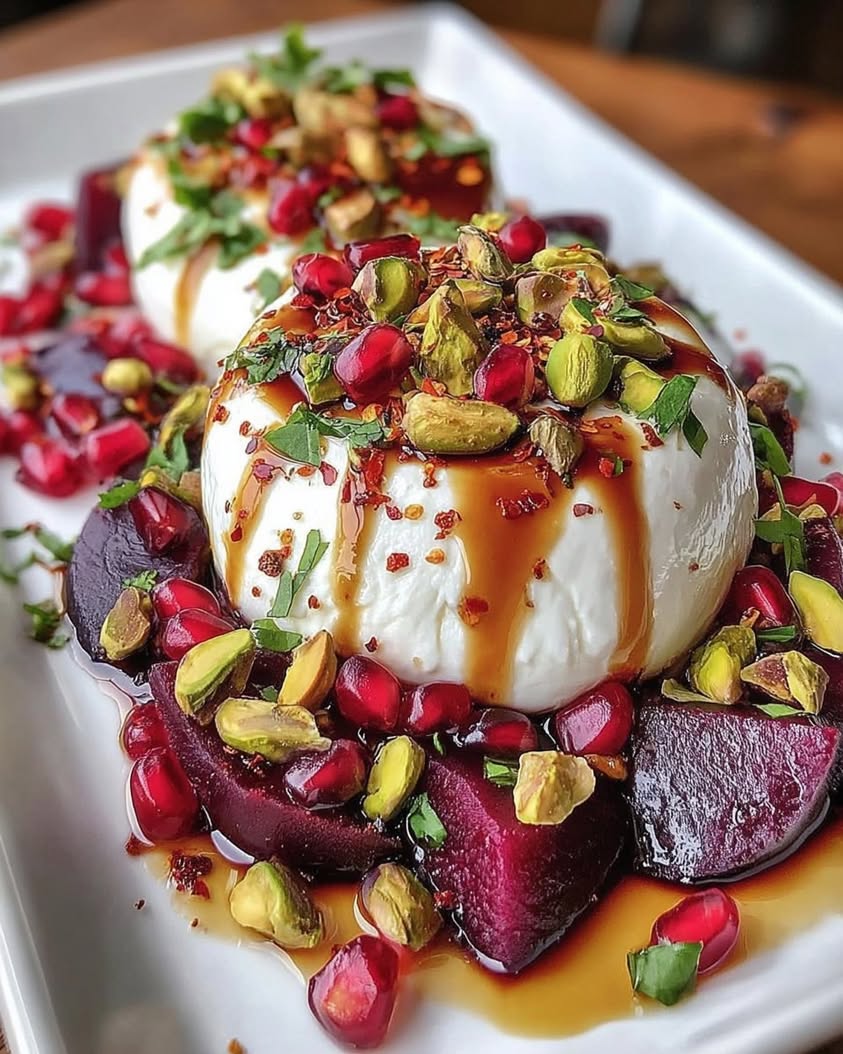
This dish works beautifully as a starter for a dinner party or as a main course for a light lunch. The vibrant colors of the deep red beets and the bright green herbs create a stunning visual presentation. Imagine serving this to friends and family while they admire the beautiful layers on the plate. The Burrata and Roasted Beet Salad with Pomegranate Glaze quickly becomes a conversation starter, and it always leaves people asking for the recipe.
Quick Recipe Highlights
- Flavor Profile: This salad balances sweet, savory, tangy, and creamy notes. The roasted beets offer natural sweetness, while the burrata contributes a mild, milky richness. The pomegranate glaze provides a tart and slightly sweet finish that elevates every component.
- Texture: You experience a wonderful contrast between the smooth, silky burrata and the tender, slightly firm roasted beets. The pomegranate glaze offers a sticky, almost syrupy coating, and the optional toasted nuts add a satisfying crunch. Fresh herbs like mint or basil introduce a tender leaf texture that complements the rest.
- Aroma: The aroma of roasting beets fills your kitchen with a warm, earthy scent. When you add the pomegranate glaze, you notice a fruity, tangy note that brightens the overall fragrance. Fresh herbs contribute a green, aromatic lift that signals freshness.
- Visual Appeal: This salad is a feast for the eyes with its deep magenta beets, creamy white burrata, and glistening red glaze. Sprinkling fresh herbs and perhaps some pomegranate arils on top adds pops of green and ruby red. The contrast of colors on a white plate looks incredibly elegant and appetizing.
- Skill Level Needed: You need only basic knife skills and the ability to roast vegetables. There is no complex technique involved, making this accessible to beginner and experienced cooks alike. The key is timing, but the recipe forgives small mistakes easily.
- Special Equipment: A baking sheet and parchment paper make roasting the beets simple and cleanup easy. You will need a sharp knife and a cutting board for slicing. A small saucepan is useful for reducing the pomegranate glaze if you make it from scratch.
Recipe Overview
- Difficulty Level: We rate this Burrata and Roasted Beet Salad with Pomegranate Glaze as easy because the steps are straightforward and forgiving. Roasting beets requires patience but no advanced skills. Assembly is simply a matter of layering ingredients on a plate. Even novice cooks can achieve beautiful results with minimal effort.
- Category: This recipe fits perfectly into the salad category, but it also works as an appetizer or a light main course. It pairs well with grilled proteins or crusty bread for a heartier meal. You can serve it as part of a larger spread for brunch, lunch, or dinner.
- Cuisine: This dish draws inspiration from Italian cuisine, where burrata cheese originates from the Puglia region. The use of roasted beets and pomegranate glaze also reflects modern Mediterranean cooking trends. It combines traditional ingredients with contemporary presentation styles for a globally appealing result.
- Cost: The ingredients are moderately priced, with burrata being the most expensive component. Beets are very affordable and available year-round. Pomegranate juice or molasses is also budget-friendly, making this a cost-effective way to create an impressive dish.
- Season: This salad is best in fall and winter when beets and pomegranates are at their peak. You can easily adapt it for spring with fresh herbs and lighter greens. Summer versions work well with grilled beets and a lighter citrus dressing.
- Occasion: It is perfect for holiday gatherings, dinner parties, and romantic date nights. The elegant presentation makes it suitable for special celebrations like Thanksgiving or Christmas. It also works for casual meals when you want something satisfying yet healthy.
Why You Will Love This Recipe
First, the taste of this Burrata and Roasted Beet Salad with Pomegranate Glaze is simply unforgettable. The creamy burrata melts in your mouth, offering a rich, dairy-forward flavor that pairs perfectly with the sweet, earthy beets. The pomegranate glaze adds a tangy, fruity kick that balances the richness beautifully. Each bite gives you a complex combination of sweet, savory, and tangy notes. You will find yourself craving this unique flavor profile long after the meal ends.
Second, the convenience of this recipe makes it a go-to for busy people. You can roast the beets ahead of time, storing them in the refrigerator for up to three days. The pomegranate glaze can also be prepared in advance, saving you time on serving day. Assembly takes only a few minutes, so you can put together a stunning dish without much effort. This flexibility means you can enjoy a gourmet meal even on a hectic weekday.
Third, the nutritional benefits of this salad are substantial. Beets are loaded with fiber, folate, and antioxidants that support heart health and reduce inflammation. Burrata provides protein and calcium, contributing to strong bones and muscles. The pomegranate glaze offers vitamin C and polyphenols that boost your immune system. This combination creates a balanced meal that nourishes your body while satisfying your taste buds.
Fourth, the social value of this dish cannot be overstated. When you serve this Burrata and Roasted Beet Salad with Pomegranate Glaze at a gathering, it immediately becomes the centerpiece. Guests are drawn to its vibrant colors and elegant presentation. Sharing this dish sparks conversations about ingredients, techniques, and flavor combinations. It makes you feel like a confident host who knows how to impress without stress.
Fifth, this recipe is cost-effective and uses accessible ingredients. Beets are one of the cheapest vegetables you can buy, especially when in season. A good quality burrata adds luxury without breaking the bank. The pomegranate glaze uses simple pantry staples like pomegranate juice and sugar. You can create a restaurant-quality dish at home for a fraction of the cost, making this an excellent choice for budget-conscious cooks.
Historical Background and Cultural Significance
Burrata cheese has a relatively recent history, originating in the Puglia region of southern Italy in the early 20th century. It was created as a way to use leftover mozzarella curds by stretching them into a pouch and filling them with cream. This innovative cheese quickly became a regional specialty, known for its luxurious texture and fresh flavor. Today, burrata is celebrated worldwide as a symbol of Italian culinary craftsmanship and simplicity.
Beets have a much longer history, with evidence of cultivation dating back to ancient Mesopotamia. They were initially grown for their leaves, with the root being used mainly for medicinal purposes. Over time, people discovered the sweet, earthy flavor of the root and began using it in cooking. Beets became a staple in Eastern European and Mediterranean cuisines, often pickled, roasted, or boiled. They hold cultural significance in many traditions as a symbol of health and prosperity.
The combination of burrata and beets is a more recent culinary innovation, reflecting modern trends in ingredient pairing. Chefs began experimenting with creamy cheeses and roasted vegetables, finding that the contrasts in texture and flavor created compelling dishes. The addition of pomegranate glaze adds a Middle Eastern influence, connecting Mediterranean flavors with new inspiration. This evolution shows how traditional ingredients can be reinvented to create contemporary classics.
Regional variations of this dish appear across Italy and beyond. Some versions use balsamic glaze instead of pomegranate, while others add arugula for peppery bite. In the United States, cooks often substitute goat cheese for burrata or add toasted walnuts for crunch. Each adaptation reflects local tastes and available ingredients. This flexibility ensures that the Burrata and Roasted Beet Salad with Pomegranate Glaze remains relevant and loved across different cultures.
Ingredient Deep Dive
Burrata Cheese: Burrata is a fresh Italian cheese made from mozzarella and cream. Its name means buttery in Italian, which perfectly describes its rich, soft texture. The outer shell is solid mozzarella, while the inside contains a creamy filling of stracciatella and fresh cream. This cheese is rich in calcium and protein, offering a good source of bone-building nutrients. When selecting burrata, look for a fresh, milky aroma and a soft, slightly elastic shell. Avoid any packages that show signs of liquid separation or sour smell. Store burrata in its original liquid in the refrigerator and use it within two days of purchasing. You can substitute fresh mozzarella for a firmer texture, but the creaminess will be reduced.
Beets: Beets are root vegetables known for their deep red color and earthy sweetness. They have been cultivated for thousands of years, originally for their leaves and later for their roots. Beets are packed with fiber, folate, manganese, and potassium, supporting heart health and reducing blood pressure. They also contain betalains, powerful antioxidants that fight inflammation. Choose beets that are firm, smooth, and heavy for their size, with fresh, unwilted greens attached if possible. Store beets in the refrigerator in a plastic bag for up to two weeks, removing the greens first. You can substitute golden beets for a milder flavor or candy cane beets for visual variety. Roasting brings out their natural sweetness, making them perfect for this salad.
Pomegranate Glaze: Pomegranate glaze is a sweet-tart syrup made by reducing pomegranate juice with sugar or honey. It originates from Middle Eastern cuisine, where it is used to add depth to both savory and sweet dishes. This glaze is rich in vitamin C, vitamin K, and polyphenols that support immune health. The tartness cuts through the richness of the burrata, creating a perfect balance. You can purchase prepared pomegranate molasses or make your own at home. Store homemade glaze in an airtight container in the refrigerator for up to two months.
Common Mistakes to Avoid
- Overcooking the beets: Roasting beets too long makes them mushy and waterlogged. You want them tender but still firm enough to slice cleanly. Check them after 40 minutes and test with a fork for the perfect texture.
- Under-seasoning the salad: This dish needs salt and pepper to bring out the flavors. The beets benefit from a generous sprinkle of salt before roasting. The burrata also needs a finishing salt and fresh black pepper to shine.
- Serving the burrata cold: Cold burrata loses its creamy texture and becomes firm. Always let the cheese sit at room temperature for 20 minutes before serving. This allows the interior to become soft and spreadable.
- Using too much glaze: Pomegranate glaze is potent, and a little goes a long way. Drizzle it lightly over the salad rather than drowning it. You can always add more later if you want extra tang.
- Forgetting to peel the beets: Roasted beet skins are tough and papery, making them unpleasant to eat. Always peel the beets after roasting when they are still warm. The skins slip off easily with a paper towel.
- Not drying the greens: Wet greens make the salad watery and dilute the flavors. Wash and thoroughly dry any greens you use, such as arugula or spinach. Use a salad spinner or pat them dry with paper towels.
- Cutting beets unevenly: Uneven pieces cook at different rates, leading to some overdone and others underdone. Slice the roasted beets into uniform wedges or rounds. This ensures consistent texture and a neat presentation.
- Adding burrata too early: If you add the burrata to the salad too soon, it can break down and become messy. Place the cheese on top of the salad just before serving. This keeps it intact and visually appealing.
Essential Techniques
Roasting Beets: Roasting is the best method to concentrate the natural sweetness of beets. Wrap each beet individually in aluminum foil with a drizzle of olive oil and a pinch of salt. Roast at 400 degrees Fahrenheit for 45 to 60 minutes, depending on size. The beets are done when a knife slides through the center with no resistance. Let them cool slightly before peeling, as the skins come off more easily when warm. This technique caramelizes the natural sugars, creating a deep, rich flavor that pairs beautifully with the other ingredients.
Making Pomegranate Glaze: If you make your own glaze, the process is simple but requires attention. Combine two cups of pomegranate juice with half a cup of sugar in a saucepan. Bring the mixture to a boil, then reduce the heat to a simmer. Let it cook for 20 to 25 minutes, stirring occasionally, until it thickens to a syrupy consistency. The glaze should coat the back of a spoon but still flow freely. Remove it from the heat and let it cool, as it will thicken further as it cools. Store any leftover glaze in the refrigerator for future use.
Plating the Salad: Plating is where this dish really shines, so take your time with it. Start by spreading a thin layer of the pomegranate glaze on the bottom of the plate. Arrange the sliced beets in an overlapping pattern on top of the glaze. Place the burrata in the center of the plate, gently breaking it open with a knife if desired. Drizzle additional glaze over the cheese and beets, then finish with fresh herbs, salt, and pepper. This technique creates a beautiful, restaurant-worthy presentation that delights your guests.
Pro Tips for Perfect Burrata and Roasted Beet Salad with Pomegranate Glaze
Choose the right beets: Use medium-sized beets, about two to three inches in diameter, for even roasting. Larger beets take longer to cook and may be woody in texture. Smaller beets cook faster and have a sweeter, more tender flavor.
Warm the beets slightly: The best version of this salad uses slightly warm beets that contrast with the cool, creamy burrata. Let the roasted beets sit for 10 minutes after peeling, but serve them while still warm. This temperature contrast makes each bite more interesting.
Toast nuts for crunch: Adding toasted walnuts or pistachios gives the salad a wonderful crunch. Toast them in a dry skillet over medium heat for 3 to 4 minutes until fragrant. Let them cool before sprinkling over the salad to maintain their texture.
Use fresh herbs generously: Fresh mint, basil, or parsley add brightness and color to the finished dish. Chop them just before serving to preserve their flavor and aroma. Sprinkle them over the top as a final garnish for a professional touch.
Balance the acidity: If the pomegranate glaze tastes too sweet, add a squeeze of lemon juice to balance it. The acidity brightens the other flavors and prevents the dish from feeling heavy. Taste as you go and adjust the seasoning accordingly.
Let the burrata shine: Do not overcrowd the plate with too many other ingredients. The burrata is the star, so give it space to stand out. Use just enough beets and glaze to complement the cheese without overwhelming it.
Season each layer: Season the beets with salt and pepper during roasting, and season the burrata just before serving. This ensures every component is flavorful on its own. A final sprinkle of flaky sea salt elevates the entire dish.
Variations and Adaptations
Regional Variations: In Italy, this salad often includes arugula for a peppery bite that contrasts with the sweet beets. You might also find versions with balsamic vinegar instead of pomegranate glaze, which adds a more traditional Italian acidity. Some regions use fresh figs in place of beets during summer, creating a sweeter, fresher profile. These regional twists show how versatile this basic combination can be.
Seasonal Adaptations: In spring, you can substitute roasted asparagus for the beets for a brighter, greener version. Summer calls for grilled peaches or nectarines, which caramelize beautifully and pair well with burrata. Autumn and winter are perfect for roasted butternut squash or sweet potatoes, adding warmth and earthiness. Each season offers new produce that complements the creamy cheese and tangy glaze.
Dietary Modifications: For a dairy-free version, replace the burrata with a high-quality vegan cheese made from cashews or coconut cream. You can also use marinated tofu for a protein boost without dairy. The recipe naturally fits a gluten-free lifestyle, as none of the core ingredients contain gluten. Always check the pomegranate glaze for any added thickeners if you have strict dietary needs.
Flavor Variations: Experiment with different herbs like thyme or rosemary when roasting the beets for added depth. Add a pinch of red pepper flakes to the glaze for a subtle spicy kick. You can also drizzle a honey balsamic reduction instead of pomegranate glaze for a different sweetness profile. These small changes keep the recipe fresh and exciting.
Texture Modifications: For extra crunch, add toasted pumpkin seeds or crumbled pistachios on top. Thinly sliced fennel adds a crisp, licorice-like texture that pairs well with the beets. You can also include crispy fried shallots for a savory, crunchy element that contrasts with the creamy cheese.
Presentation Alternatives: Serve this salad in individual bowls for a more casual feel, or on a large platter for sharing. Layer the beets in a circular pattern for a more formal presentation. You can also slice the burrata into rounds and place them atop each beet slice for a structured, elegant look.
Serving and Presentation Guide
Plating Techniques: The key to an impressive presentation is simplicity. Start by spooning a small amount of pomegranate glaze onto the center of each plate, spreading it into a circle. Arrange the roasted beet slices in a overlapping spiral on top of the glaze. Place the burrata in the center, and use a sharp knife to make a small cut so the cream begins to ooze out. This creates a dramatic visual effect that looks professional and inviting.
Garnishing Ideas: Fresh herb leaves like mint or basil add color and freshness to the finished dish. Sprinkle pomegranate arils over the top for bursts of bright red and juicy texture. A few flakes of sea salt and a crack of black pepper finish the dish perfectly. You can also add edible flowers for a truly special occasion garnish.
Traditional Accompaniments: Serve this salad with crusty bread or grissini to soak up the creamy cheese and glaze. A side of mixed greens with a simple lemon vinaigrette complements the flavors without competing. You can also pair it with a glass of crisp white wine like Pinot Grigio or Sauvignon Blanc for a complete meal.
Modern Serving Suggestions: For a contemporary twist, serve the salad on a wooden board instead of individual plates. This family-style presentation encourages sharing and conversation. You can also add edible flowers or microgreens for a trendy, upscale look that impresses guests.
Temperature Considerations: The burrata should be at room temperature for the best texture and flavor. The beets can be warm or at room temperature, but avoid serving them cold, as this dulls their sweetness. The pomegranate glaze should be at room temperature or slightly warm for easy drizzling. This combination of temperatures creates a more dynamic eating experience.
Portion Control Tips: For a starter, use one small burrata ball and about half a medium beet per person. For a main course, double the portion and add a handful of arugula or mixed greens to make it more substantial. This keeps the dish balanced so no single ingredient overpowers the others.
Wine and Beverage Pairing
Wine Pairings: A crisp white wine like Sauvignon Blanc or Pinot Grigio works beautifully with this salad. The acidity cuts through the creamy burrata while complementing the earthy beets. For a red option, try a light-bodied Pinot Noir with its bright fruit notes and low tannins. The wine should never overpower the delicate flavors of the dish.
Non-Alcoholic Alternatives: Sparkling water with a splash of pomegranate juice makes a refreshing and festive drink. You can also try a chilled hibiscus tea, which has a tart, fruity profile similar to the glaze. A lemon and mint spritzer provides a bright, clean finish that pairs well with the creamy cheese.
Coffee and Tea Pairings: This dish works well with a cup of Earl Grey tea, as the bergamot notes complement the citrus elements. A light, fruity green tea like jasmine also pairs nicely without overpowering the salad. For coffee lovers, a mild roast with low acidity can be a surprising but pleasant match for after-dinner enjoyment.
Temperature Considerations: All beverages should be served chilled to contrast with the warm beets and room-temperature cheese. White wines should be served at 45 to 50 degrees Fahrenheit for the best flavor. Sparkling water and tea should also be ice-cold for a refreshing contrast.
Serving Suggestions: Pour the wine or sparkling water after the salad is assembled to ensure it stays fresh and cold. For a dinner party, offer both a wine and a non-alcoholic option so everyone can choose. Consider the overall menu when pairing, as a heavier main course may require a different wine.
Storage and Shelf Life
Storage Methods: Roasted beets should be stored in an airtight container in the refrigerator for up to five days. Keep them separate from the other ingredients to prevent moisture transfer. The pomegranate glaze can be stored in a jar with a tight-fitting lid in the refrigerator for up to two months. Burrata should be stored in its original liquid and consumed within two days of purchase for the best flavor and texture.
Temperature Requirements: Keep all components refrigerated at 40 degrees Fahrenheit or below to prevent spoilage. The burrata is especially sensitive to temperature changes, so maintain a consistent cold environment. Never leave the assembled salad at room temperature for more than two hours.
Container Recommendations: Use glass or BPA-free plastic containers with tight seals for the beets and glaze. The burrata should remain in its original packaging until ready to use. Avoid metal containers, as they can impart a metallic taste to the delicate cheese.
Signs of Spoilage: If the burrata develops a sour smell or visible mold, discard it immediately. The beets become slimy or mushy when they spoil, and the glaze may develop mold if not sealed properly. Any off odors or changes in texture indicate that the ingredients should be thrown away.
Reheating Instructions: You can reheat the beets in the oven at 350 degrees Fahrenheit for 10 minutes or in the microwave for 30 seconds. The burrata should never be reheated, as it will become tough and rubbery. The glaze can be gently warmed in a small saucepan over low heat if it becomes too thick.
Freezing Guidelines: Roasted beets can be frozen in an airtight container for up to three months. Thaw them in the refrigerator overnight and reheat before serving. The pomegranate glaze freezes well for up to six months in a freezer-safe container. Burrata does not freeze well, as the texture becomes grainy and watery upon thawing.
Make Ahead Strategies
Prep Timeline: Roast the beets up to three days in advance and store them in the refrigerator. Make the pomegranate glaze up to two months ahead and keep it in the fridge. On serving day, take the burrata out of the refrigerator 20 minutes before plating. This timeline allows you to enjoy a stress-free cooking experience while still serving a fresh, vibrant salad.
Storage Between Steps: Store the roasted beets and glaze separately in airtight containers to maintain their quality. Keep the beets whole or cut into slices, as they store better in larger pieces. The glaze should be stored in a jar with a tight lid to prevent it from absorbing other odors in the fridge.
Quality Impact Assessment: Making the beets ahead actually improves their flavor, as they continue to absorb the roasting notes. The glaze also deepens in flavor over time. The only component that must be fresh is the burrata, so plan to purchase it close to serving time.
Assembly Tips: Assemble the salad just before serving to maintain the best texture and appearance. If you need to prep even more, you can slice the beets and arrange them on the plate, then cover and refrigerate. Add the burrata and glaze only when ready to serve.
Reheating Guidelines: Warm the beets slightly in the oven or microwave before assembling the salad. This brings out their sweetness and improves the contrast with the cool burrata. The glaze should be at room temperature for easy drizzling, so take it out of the fridge 15 minutes before serving.
Fresh Element Additions: Always add fresh herbs and any crunchy toppings just before serving. This ensures they remain vibrant and crisp. The pomegranate arils should also be added last to prevent them from becoming soggy.
Scaling Instructions
Halving the Recipe: To make this salad for two people, simply halve all the ingredients. Use one medium beet and one small burrata ball for each serving. The roasting time for the beets remains the same, but you can check for doneness after 35 minutes. The glaze recipe can also be halved, using one cup of pomegranate juice instead of two.
Doubling or Tripling: For a larger crowd, double or triple the beets and burrata. Use larger baking sheets or multiple pans to ensure even roasting. The cooking time may increase slightly if you overcrowd the oven, so rotate the pans halfway through. Make a larger batch of glaze following the same proportions, but watch it closely as more liquid takes longer to reduce.
Equipment Adjustments: When making larger quantities, you may need to use two baking sheets to avoid overcrowding. Use a larger saucepan for the glaze if you triple the recipe. You will also need multiple serving plates or a large platter for family-style service.
Timing Modifications: The total time increases slightly when doubling, but the hands-on time stays about the same. Roasting larger beets or more of them may require an additional 10 to 15 minutes. The glaze reduction takes a bit longer with greater volume, so plan for an extra 5 to 10 minutes.
Storage Considerations: Leftovers from a scaled-up batch can be stored separately using the same guidelines. The roasted beets keep well for several days, so you can prepare them even further ahead for a big event. The glaze also stores beautifully, making it easy to prepare in large quantities for future use.
Nutritional Deep Dive
Macro Breakdown: This salad provides a balanced mix of carbohydrates, protein, and healthy fats. The beets contribute complex carbohydrates and fiber, which support steady energy levels. The burrata offers protein and fat, making this a satisfying meal for most people. A single serving contains approximately 350 to 400 calories, depending on the exact amounts used. This makes it a reasonable option for lunch or a light dinner.
Micronutrient Analysis: Beets are rich in folate, which is essential for cell growth and DNA synthesis. They also provide manganese, which supports bone health and metabolism. Burrata offers calcium and phosphorus, both important for strong teeth and bones. The pomegranate glaze adds vitamin C and potassium, boosting your immune system and supporting heart health.
Health Benefits: The antioxidants in beets help reduce inflammation and protect against chronic disease. The healthy fats in burrata support brain function and hormone production. The fiber content in beets aids digestion and promotes feelings of fullness. This combination creates a nutrient-dense meal that supports overall wellness.
Dietary Considerations: This salad is naturally gluten-free and contains no processed ingredients. It is suitable for vegetarian diets, as it includes dairy but no meat. The fat content is moderate, making it appropriate for most healthy eating plans. Individuals with lactose intolerance should use caution with the burrata or seek a dairy-free alternative.
Portion Analysis: A single serving of this salad contains about 15 grams of protein, 25 grams of carbohydrates, and 20 grams of fat. This balance makes it a good option for a lunch that keeps you satisfied without feeling heavy. For a lighter version, reduce the amount of burrata or use a smaller portion of the glaze.
Weight Management Tips: This salad can support weight management goals when eaten in moderate portions. The fiber from beets and protein from burrata help control appetite. The healthy fats provide satiety, preventing overeating later in the day. Avoid adding too many extra toppings like nuts or extra glaze, as these increase the calorie count quickly.
Dietary Adaptations
Gluten-Free: This recipe is naturally gluten-free, as all core ingredients contain no gluten. The beets, burrata, and pomegranate glaze are all safe for a gluten-free diet. Always double-check the label of any store-bought pomegranate molasses to ensure it has no added wheat thickeners. This version is perfect for anyone with celiac disease or gluten sensitivity.
Dairy-Free: To make this salad dairy-free, replace the burrata with a vegan cheese alternative made from cashews or coconut cream. You can also use marinated tofu or silken tofu for a similar creamy texture. The rest of the ingredients remain the same, so the flavor profile stays intact. This adaptation works well for those who avoid dairy for health or ethical reasons.
Vegan: For a vegan version, use a plant-based substitute for the burrata and ensure the glaze contains no honey. Many vegan mozzarella-style cheeses are available that melt and stretch similar to dairy cheese. You can also add roasted chickpeas for extra protein and texture. This version is satisfying and aligns with a strict vegan lifestyle.
Low-Carb: Beets are relatively high in carbs for a vegetable, so this salad is not ideal for a strict low-carb diet. You can substitute roasted cauliflower or radishes for the beets to reduce the carbohydrate content. The rest of the ingredients are low in carbs, making this adaptation workable. Use a sugar-free pomegranate syrup if you want to lower the carb count further.
Keto: The keto diet requires very low carbohydrate intake, so this salad needs significant modification. Replace the beets with roasted zucchini or avocado for a creamy, low-carb base. Use a sugar-free pomegranate syrup or skip the glaze entirely. The burrata fits well into a keto diet due to its high fat and low carb content.
Paleo: The paleo diet allows beets and pomegranate, but it excludes dairy. Replace the burrata with a paleo-friendly alternative like avocado or a cashew-based cheese. The pomegranate glaze should be made with honey instead of sugar to align with paleo guidelines. This version still offers the same delicious flavors while following paleo principles.
Troubleshooting Guide
Texture Issues: If your beets come out mushy, you likely overcooked them. Next time, check them at 40 minutes and remove them as soon as they are fork-tender. If your burrata seems too firm, it is too cold. Take it out of the refrigerator 30 minutes before serving to allow it to soften. The glaze that is too thick can be thinned with a teaspoon of water or lemon juice, while a thin glaze needs more simmering time.
Flavor Balance: If the salad tastes too sweet, add a squeeze of fresh lemon Print
Burrata and Roasted Beet Salad with Pomegranate Glaze
- Total Time: 1 hour
- Yield: 4
Description
A vibrant and elegant salad featuring creamy burrata cheese, sweet roasted beets, and a tangy pomegranate glaze. Perfect as a starter or light main course.
Ingredients
- 4 medium beets, trimmed
- 2 tablespoons olive oil
- Salt and pepper to taste
- 8 ounces burrata cheese
- 1/2 cup pomegranate seeds
- 1/4 cup pomegranate molasses
- 2 tablespoons balsamic vinegar
- 1 tablespoon honey
- 1/4 cup chopped fresh mint
- 1/4 cup chopped fresh basil
- 2 cups arugula
Instructions
- Preheat oven to 400°F (200°C). Wrap beets individually in foil, drizzle with olive oil, and season with salt and pepper. Roast for 45-60 minutes until tender. Let cool, then peel and slice into wedges.
- In a small bowl, whisk together pomegranate molasses, balsamic vinegar, and honey to make the glaze.
- Arrange arugula on a serving platter. Top with roasted beet wedges, burrata cheese (torn into pieces), and pomegranate seeds.
- Drizzle the pomegranate glaze over the salad. Garnish with fresh mint and basil. Serve immediately.
Notes
You can customize the seasonings to taste. For extra crunch, add toasted walnuts or pistachios.
- Prep Time: 15 minutes
- Cook Time: 45 minutes
- Method: Salad
- Cuisine: American