French Onion Short Rib Soup with Cheesy Gruyère Toast (No Wine): A Bowl of Comfort
Imagine a cold winter evening when you crave something deeply satisfying. You want a meal that warms you from the inside out. This French Onion Short Rib Soup with Cheesy Gruyère Toast (No Wine) delivers exactly that experience. It combines the rich, savory depth of classic French onion soup with the incredible tenderness of slow-cooked short ribs. The result is a hearty, soulful stew that feels like a hug in a bowl.
The magic of this dish starts with a long, slow caramelization of onions. You take your time here, letting those sliced onions turn a deep, golden brown. This process builds the fundamental flavor for the entire broth. Then, you add seared short ribs that cook until they become fall-apart tender. The beef infuses the soup with a profound richness that is simply unforgettable. You will not miss the wine at all because the beef and onions provide a complexity that rivals any traditional recipe.
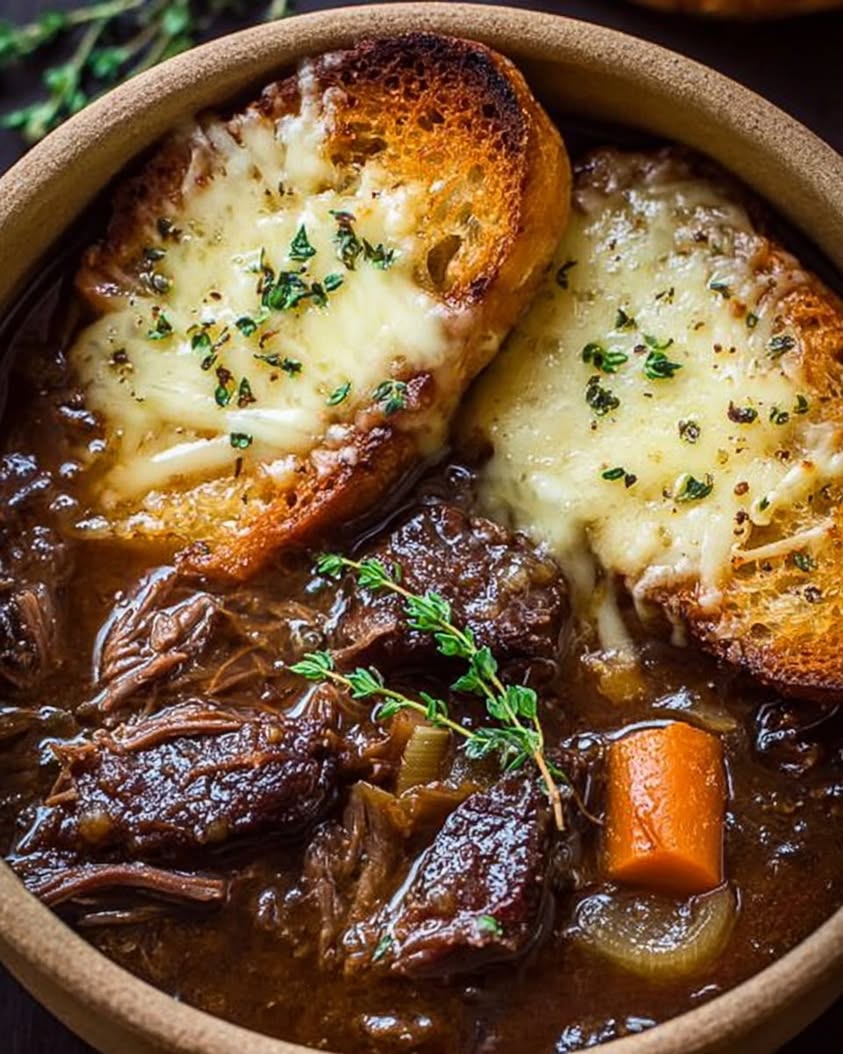
Serving this soup is a moment of pure theater and comfort. You ladle the rich broth and beef into oven-safe bowls. You top it with a thick slice of crusty bread and a generous pile of shredded Gruyère cheese. A quick trip under the broiler creates a bubbly, golden, and slightly crisp cheese crust. Every spoonful breaks through the cheese to capture tender beef, sweet onions, and a savory broth. This French Onion Short Rib Soup with Cheesy Gruyère Toast (No Wine) creates a memorable meal that feels both rustic and elegant.
Quick Recipe Highlights
- Flavor Profile: This soup offers a deep savory flavor with layers of sweet caramelized onions. The beef short ribs contribute a rich, meaty umami that dances on your palate. The Gruyère toast adds a nutty and slightly salty finish.
- Texture: You experience a wonderful contrast of textures. The broth is silky and smooth, while the short ribs are incredibly tender and shred easily. The cheesy toast provides a satisfying crunch and a gooey, stretchy bite.
- Aroma: Your kitchen will fill with an irresistible aroma of browning butter and caramelizing onions. As the soup simmers, a deeper beefy fragrance emerges. The final broiled cheese adds a toasty, nutty scent that signals dinner is ready.
- Visual Appeal: The soup presents a beautiful deep amber color from the caramelized onions and beef broth. The golden brown, bubbly cheese crust creates a striking top layer. When you break the crust, you reveal tender chunks of beef and translucent onions.
- Skill Level Needed: This recipe requires patience more than advanced culinary technique. You need basic knife skills to chop onions and trim short ribs. The main task is to watch a pot simmer, making it accessible for motivated home cooks.
- Special Equipment: You need a large heavy-bottomed pot or Dutch oven for searing and simmering. Oven-safe soup bowls or crocks are essential for broiling the cheese toast. A sharp chef’s knife and a sturdy cutting board make preparation efficient.
Recipe Overview
- Difficulty Level: We rate this recipe as intermediate because of the total cooking time and the caramelization step. The process is not complicated, but it does require you to tend to the onions for about 30 minutes. Success hinges on your patience during the caramelization, which is a foundational skill. Once you master that, the rest of the recipe is very straightforward.
- Category: This dish fits perfectly as a main course soup or a hearty stew. It is substantial enough to be the centerpiece of a dinner party. You can also serve it as a luxurious lunch on a cold weekend. It blurs the line between a starter and a main dish.
- Cuisine: The recipe is a creative fusion of French culinary traditions. It takes the classic French onion soup and elevates it with braised beef short ribs. This technique of slow-cooking beef in broth is a staple of French comfort food. The final touch of Gruyère toast is a direct nod to the iconic French bistro classic.
- Cost: The cost of this recipe is moderate to high, primarily driven by the beef short ribs. A good quality cut of short ribs currently runs between 8 and 14 dollars per pound. The Gruyère cheese is another ingredient that adds to the expense. You can create a more budget-friendly version by using a tougher cut like chuck roast.
- Season: This soup is undeniably a fall and winter masterpiece. The deep, rich flavors are perfect for cold weather comfort. The long simmering time also feels natural when you want to hibernate in your warm kitchen. You can enjoy it on a rainy spring day, but it truly shines in cooler months.
- Occasion: This soup is ideal for a cozy Sunday dinner with family or friends. It is also a show-stopping dish for holiday gatherings like Christmas or New Year’s Eve. You can serve it at a casual winter party where guests can gather around a pot of something warm. It is a fantastic meal for any occasion that calls for comfort.
Why You Will Love This Recipe
The taste and texture of this soup are absolutely phenomenal. You get the deep, sweet, and savory flavor of perfectly caramelized onions. When you combine that with tender, fall-apart beef short ribs, you create a truly decadent broth. The Gruyère cheese on top becomes a crunchy, bubbly crust that you need to break with your spoon. Each bite offers a mix of silky broth, tender meat, and gooey cheese.
This recipe is remarkably convenient despite its rich flavor. You prepare most of the work on the stovetop, and then you simply let it simmer. The long cooking time is mostly hands-off, allowing you to do other things around the house. You can also make this soup entirely a day or two in advance. The flavors actually meld and deepen overnight, making it taste even better the next day.
From a nutritional standpoint, this soup provides a good balance of protein and vegetables. The beef short ribs offer a significant amount of high-quality protein and essential minerals like iron. Onions are a great source of prebiotic fiber and antioxidants. You also control the amount of added fat and salt when you cook from scratch, which is a huge advantage over restaurant versions.
This dish is perfect for social gatherings and entertaining. It feels incredibly luxurious and special, but it is not fussy to assemble. You can set out the bowls of soup and the cheesy toast and let guests serve themselves. The interactive act of breaking the cheese crust is always a crowd-pleaser. You will receive endless compliments for creating such an impressive and delicious meal.
This recipe is also very cost-effective when you consider the quality of the meal. You take an affordable cut of beef and transform it into something truly luxurious. The short ribs become meltingly tender, stretching the expensive meat into a satisfying meal. You use a large quantity of onions, which are very inexpensive. This approach gives you a restaurant-quality dinner for a fraction of the cost.
Historical Background and Cultural Significance
The classic French onion soup we know today has a long and humble history. Its origins likely date back to Roman times when onions were a staple food. The modern version is believed to have emerged in the 18th century in Paris. King Louis XV reportedly created the first version when he returned to his hunting lodge late at night. He only found onions, butter, and champagne, which he combined to create the first soup.
French onion soup holds a significant place in French culinary culture. It represents the concept of “cuisine pauvre,” or cooking from poverty. This idea celebrates the transformation of simple, cheap ingredients into something delicious. The soup became a staple in Parisian markets and 24-hour bistros. It was a way to stay warm and full, especially after long nights of work or celebration.
Our recipe evolves the tradition by adding beef short ribs for extra richness. Traditional French onion soup uses a simple beef broth and sometimes a bone marrow broth. Adding short ribs takes it from a starter soup to a substantial main course. This evolution mirrors the modern American trend of taking classic European dishes and making them more hearty. We honor the original technique of caramelizing onions while adding a new layer of indulgence.
Regional variations of onion soup exist all over Europe. In Swiss cuisine, they often a similar soup with a melted cheese topping, called “Graubünden cheese soup”. In Germany, they have “Zwiebelsuppe” which can be thickened with bread and cream. Some versions in the UK add a dash of Worcestershire sauce for a different flavor profile. Our variation is distinctly American, focusing on the richness of beef and the classic technique.
Ingredient Deep Dive
Yellow onions are the cornerstone of this soup, providing the entire base of flavor. They belong to the allium family, a group of plants known for their pungent, sulfurous compounds. Culturally, onions have been a symbol of strength and life in many ancient civilizations. They are incredibly nutritious, very low in calories but high in vitamin C, vitamin B6, and fiber. When you choose onions, pick ones that are firm and heavy for their size with dry, papery skins. You should store them in a cool, dark, and dry place, away from potatoes, as they can absorb moisture. For this recipe, you must use yellow onions for the best balance of sweetness and sharpness; white or red onions will not caramelize as effectively.
Beef short ribs are what transform this soup into a truly decadent meal. This cut comes from the lower rib section of the cow. It contains a lot of marbling and connective tissue that breaks down into gelatin during long simmering. This gelatin gives the broth a luscious, velvety mouthfeel that you cannot get from just broth. Nutritionally, short ribs are rich in protein, iron, and zinc. For selection, look for ribs with a good amount of marbling throughout the meat. You want a thick, even layer of fat on top that will render and keep the meat moist. Store fresh short ribs in the refrigerator and cook them within two days. If you need a substitution, you can use boneless chuck roast, cut into large chunks.
Gruyère cheese is the classic topping for any version of this soup. This hard cheese from Switzerland is famous for its nutty and slightly sweet flavor. It achieves this flavor profile through a careful aging process that can last from 5 to 12 months. Gruyère melts incredibly well, forming a smooth, stretchy, and slightly elastic crust under the broiler. It contains a high amount of calcium and protein. When you select Gruyère, look for a wheel that is firm, with a rich, brown rind and a pale yellow interior. Do not use pre-shredded cheese, as it contains starches that prevent smooth melting. You can store a whole piece of Gruyère wrapped in cheese paper or wax paper in the refrigerator. A good alternative is Comté, Emmental, or even a good quality sharp Swiss cheese.
Beef broth forms the liquid base of this entire dish. The quality of your broth directly impacts the flavor of the final soup. A rich, low-sodium beef broth or bone broth provides a deep, savory backbone. You want to avoid using plain water or a very thin, flavorless broth. When you select a store-bought broth, look for one that lists beef as the first ingredient. A homemade broth is always the gold standard if you have the time. You can store broth in the fridge for a week or freeze it for several months. For a vegetarian base, a very robust mushroom broth could work, but it will change the profile significantly.
Fresh thyme and bay leaves are the aromatic backbone of the broth. Thyme brings an earthy, slightly floral, and minty note that pairs perfectly with beef and onions. Bay leaves add a subtle, woodsy, and slightly tea-like flavor that deepens over long cooking. Together, they create a classic bouquet garni that defines many French stews. Dried thyme is acceptable if you do not have fresh, but the fresh version is much more potent. You should always remove the whole sprigs of thyme and the bay leaves before serving.
Common Mistakes to Avoid
- Not caramelizing the onions long enough. This is the most common error. Under-caramelized onions result in a pale, sweet, but shallow broth. You need to cook them for a full 30 to 40 minutes until they are a deep mahogany color.
- Using high heat to caramelize the onions. This will burn the onions and make them bitter. The key is to use medium-low heat and stir them occasionally. Patience is the only way to get that rich, sweet flavor.
- Adding the beef broth too early. You must let the onions caramelize fully before adding liquid. If you add broth too early, you are essentially boiling the onions, not caramelizing them. This step is non-negotiable for the best flavor.
- Not searing the short ribs properly. A good sear creates the Maillard reaction, which adds incredible savory depth. You need to brown the ribs on all sides in a hot pot. Do not crowd the pot; sear them in batches to get a good crust.
- Using a lean cut of meat. Short ribs need fat and connective tissue to become tender. Using a lean cut like sirloin will result in dry, tough meat. The fat is what makes the meat so delicious and the broth so rich.
- Skipping the de-glazing step. After searing the ribs, you must add a bit of broth to deglaze the pan. This process lifts the browned bits from the bottom of the pot. These bits are concentrated flavor that you want to incorporate into the soup.
- Overcrowding the pot when browning. If you add all the short ribs at once, the pot temperature drops. The meat will steam instead of sear, resulting in a gray, unappetizing color. Sear the ribs in a single layer for the best result.
- Forgetting to season the broth properly. The soup needs a good amount of salt and pepper at the end. The onions and beef absorb salt during cooking, so you may need to adjust. Taste the broth before serving and add seasoning as needed.
- Using stale or wrong bread for the toast. The bread needs to be sturdy enough to hold up to the broth. A stale baguette or a rustic sourdough slice works best. Flimsy sandwich bread will become a mushy mess under the cheese.
- Broiling the cheese too long. You want the cheese to bubble and turn golden brown, not burn. Watch it very closely under the broiler. It can burn in seconds, so keep the oven door open and watch constantly.
Essential Techniques
Caramelizing onions is a fundamental technique that builds deep flavor. You start by slicing the onions thinly and cooking them in butter and a little oil over medium-low heat. The goal is to cook them slowly, allowing the natural sugars to brown and develop complexity. You stir every few minutes to ensure even cooking and prevent burning. The visual cue is when the onions turn a deep, golden-brown color and shrink significantly in volume. Mastering this technique will elevate many other dishes in your cooking repertoire.
Searing meat is a skill that creates a flavorful crust through the Maillard reaction. You must get your pot very hot and add a high-smoke-point oil like canola or avocado oil. Pat the short ribs dry with paper towels to remove excess moisture, which prevents browning. You place the ribs in the hot pot, being careful not to overcrowd the surface. You let them sear, undisturbed, for 3 to 4 minutes per side until a deep brown crust forms. The sound of a steady sizzle is a sign that you are doing it correctly.
Deglazing a pan is a simple but crucial technique for capturing flavor. After you remove the seared short ribs, you pour a small amount of liquid into the hot pan. You use a wooden spoon to scrape up all the browned bits stuck to the bottom. These bits are called “fond,” and they contain concentrated, savory flavor. This step ensures that nothing is left behind and that all that delicious caramelization goes into your soup. It is the difference between a good soup and a great one.
Skimming fat from the soup is a technique for achieving a clean, clear, and balanced broth. As the soup simmers, fat renders from the short ribs and floats to the top. You can use a ladle to skim off this excess fat periodically. Alternatively, you can refrigerate the soup overnight and then lift off the solid layer of fat. Removing the fat prevents the soup from tasting greasy and allows the other flavors to shine through.
Pro Tips for Perfect French Onion Short Rib Soup with Cheesy Gruyère Toast (No Wine)
Start with cold butter and a little oil for caramelizing your onions. The oil raises the smoke point of the butter, preventing it from burning. This combination allows you to cook the onions low and slow without a burnt taste.
Slice your onions into even, thin half-moons for consistent cooking. Use a sharp chef’s knife to make uniform slices. This ensures that all the onions caramelize at the same rate, avoiding a mix of burnt and undercooked pieces.
Do not rush the caramelization process. Set a timer for 30 minutes and resist the urge to turn up the heat. If your onions are sticking to the bottom, add a splash of water or broth to deglaze the pan. This is a natural part of the process.
Sear the short ribs in batches without moving them around. Let them form a crust before you flip them. The crust provides texture and immense flavor to the final soup. Patience during this step pays off.
Use low-sodium beef broth so you can control the final salt level. Different brands have wildly different sodium levels. You can always add more salt at the end, but you cannot take it out.
Cool the soup completely before refrigerating it if you make it ahead. This helps the flavors meld and makes skimming the fat much easier. The soup actually tastes better the next day after the flavors have had time to marry.
For the cheese toast, use a high-quality, dense bread like a sourdough boule or a crusty French bread. It needs to be sturdy enough to hold the broth without disintegrating. Broil the cheese until it is bubbly and just starting to brown.
Season the soup with a splash of apple cider vinegar or a squeeze of lemon juice at the end. The acid brightens the dish and balances the richness of the beef and cheese. It makes the soup taste brighter and more complex.
Variations and Adaptations
Regional variations of this soup can be fun to explore. In the American South, you might add a pinch of smoked paprika and serve it with cornbread. In the Midwest, some cooks add a can of cream of mushroom soup for extra creaminess. In the Pacific Northwest, you could top it with a local hazelnut pesto for a twist.
Seasonal adaptations are easy to make. In the spring, you could add a handful of fresh peas or asparagus tips during the last few minutes of cooking. In the fall, try roasting some butternut squash and pureeing it into the broth for a sweet, earthy addition. A few sprigs of fresh rosemary in the winter can add a wonderful pine-like aroma.
Dietary modifications are very possible. For a gluten-free version, use a gluten-free bread or skip the bread entirely and top the soup with a big handful of shredded cheese. For a dairy-free version, use a high-quality dairy-free butter substitute and omit the cheese. The soup base itself is naturally gluten and dairy free without the toast.
Flavor variations can keep this recipe exciting. You can add a teaspoon of smoked paprika and a pinch of cayenne for a smoky, spicy kick. You could also stir in a tablespoon of balsamic vinegar at the end for a tangy sweetness. A dash of fish sauce or Worcestershire sauce can boost the umami flavor even further.
Texture modifications can also change the experience. For a smoother soup, you can puree half of the onion mixture before adding the short ribs back in. For a thicker, stew-like consistency, you can add a tablespoon of cornstarch mixed with water to the broth. You can also add a handful of pearl onions for a more rustic texture.
Presentation alternatives are just a matter of creativity. You can serve this soup in a large, hollowed-out sourdough bread bowl. You can serve the short ribs on a platter with the broth and toast on the side. For a very fancy look, you can carefully arrange the shredded beef in a neat pile in the center of the bowl.
Serving and Presentation Guide
Plating this soup is simple but impactful. Ladle the hot soup into oven-safe bowls or crocks. Make sure the beef is evenly distributed among the bowls. Place a thick slice of toast on top of the soup, pressing it down slightly so it absorbs some of the broth. Pile a generous amount of shredded Gruyère cheese on top of the bread.
Garnishing ideas can add a final touch of flavor and color. A sprinkle of fresh, finely chopped parsley or chives adds a nice green pop. A few fresh thyme leaves can reinforce the herbal flavor profile. A pinch of flaky sea salt on top of the cheese before broiling adds a salty crunch.
Traditional accompaniments for this soup are simple. A classic French green salad with a sharp vinaigrette is a perfect counterpoint to the rich soup. Some pickles or cornichons can help cut through the richness. A side of crusty bread for dipping into the leftover broth is always welcome.
Modern serving suggestions can make the meal more interactive. Set up a “soup bar” with different toppings like crumbled bacon, crispy fried onions, and chopped herbs. You can also serve the soup in individual cast-iron skillets for a rustic, shareable presentation. This approach is great for a party.
Temperature considerations are crucial. The soup must be piping hot when you serve it. The broth should be simmering when you ladle it into bowls. The cheese must be bubbly and hot from the broiler. A cold soup will not melt the cheese properly and will be less satisfying.
Portion control tips are useful for a main course. A reasonable serving is about 1.5 to 2 cups of soup per person. This amount provides a hearty meal without being too heavy. You can always offer a second serving or a smaller appetizer portion to start.
Wine and Beverage Pairing
Even though we do not use wine in the recipe, it still pairs beautifully with wine. A full-bodied red wine is the classic choice. A rich Cabernet Sauvignon or a Malbec can stand up to the intense flavor of the beef. The tannins in the wine will cut through the richness of the cheese and the fat in the soup.
Non-alcoholic alternatives are also excellent. A robust, unsweetened pomegranate or cherry juice has the tannins and acidity to complement the soup. A strong, hot black tea like an Earl Grey or an English Breakfast can also work well. The tea’s astringency can help cleanse your palate between rich bites.
Coffee and tea pairings can be surprisingly good. A dark, rich roast coffee with low acidity can mimic the deep, roasty flavor of the soup. A smoky Lapsang Souchong tea has an incredible flavor that matches the savory notes of the dish. These options offer a unique and satisfying pairing experience.
Temperature considerations for your drink are important. Serve red wine slightly below room temperature, around 60 to 65 degrees Fahrenheit. Serve cold beverages like juice or iced tea as you normally would. A hot beverage like coffee or tea should be served fresh and steaming to contrast with the warm soup.
Serving suggestions for drinks are simple. Pour the wine into a large-bowled glass to allow it to breathe. Serve non-alcoholic drinks in a stemless wine glass for elegance. A simple carafe of ice water on the table is always a good idea to stay hydrated. The goal is to make the pairing as enjoyable as the food.
Storage and Shelf Life
Storing this soup correctly will keep it delicious for days. Cool the soup completely to room temperature before you store it. Do not leave it on the counter for more than two hours. Then, transfer the soup to an airtight container. You can keep it in the refrigerator for up to 4 or 5 days.
Temperature requirements are very important for food safety. The soup must be kept at or below 40 degrees Fahrenheit in the refrigerator. If you freeze the soup, maintain a temperature of 0 degrees Fahrenheit or lower. A good refrigerator thermometer is a valuable tool to ensure safety.
Container recommendations will help preserve the quality of the soup. Use glass or BPA-free plastic containers with tight-fitting lids. Do not use containers that are not food-safe. For freezing, use heavy-duty freezer bags or rigid freezer-safe containers to prevent freezer burn.
Signs of spoilage are easy to spot. If the soup develops a sour smell, it has gone bad. If you see any mold growing on the surface, you must discard the entire batch. Also, if the texture changes and becomes slimy or separated, it is best to throw it away.
Reheating instructions are simple for the best results. Reheat the soup on the stovetop over medium heat until it is bubbling. You can also reheat it in the microwave in a microwave-safe bowl. Stir the soup halfway through heating to ensure even temperature. You should not reheat the cheese toast separately; make a fresh batch for best texture.
Freezing guidelines will help you keep the soup for a longer time. The soup freezes very well for up to 3 months. Portion the soup into individual containers for easy thawing. Thaw the soup overnight in the refrigerator before reheating. Do not freeze the cheese toast, as it becomes soggy when thawed.
Make Ahead Strategies
Your prep timeline can be very flexible with this recipe. You can caramelize the onions up to three days in advance. You can also sear the short ribs and cool them separately. You can combine the ingredients and skip the final assembly until the day you serve it.
Storage between steps is very easy. Store the caramelized onions in an airtight container in the refrigerator. Store the seared short ribs in a separate container. When you are ready to cook, you can combine them and proceed with the recipe. This approach saves you a lot of time on the day you plan to serve the soup.
Quality impact assessment is very positive. The flavors of this soup actually improve after a day in the refrigerator. The deep flavors of the beef and onions have time to meld and harmonize. The soup tastes even more complex and well-rounded on the second day.
Assembly tips for the final step are crucial. If you make the soup ahead of time, you may need to add a little extra broth when reheating. The soup will thicken as it sits. Also, do not assemble the cheese toasts until you are ready to serve. Freshly broiled cheese is always best.
Reheating guidelines are the same as for leftovers. Reheat the soup on the stovetop until it is bubbling hot. You can also reheat it in a pot over low heat. Once the soup is hot, you can assemble the cheese toasts and broil them. This method ensures the best final product.
Fresh element additions can brighten the final dish. When you reheat the soup, add a handful of fresh chopped parsley. You could also add a small squeeze of lemon juice to brighten the flavor. These fresh elements add a burst of life to an already delicious meal.
Scaling Instructions
Halving the recipe is straightforward. Simply divide all ingredient quantities by two. You will need a smaller pot, like a 4-quart Dutch oven. The cooking time for the onions and the short ribs will remain roughly the same. The simmering time for the soup might be slightly shorter because of the reduced volume.
Doubling or tripling the recipe requires some adjustments. You will need a very large pot, like a 10 or 12-quart stockpot. You must sear the short ribs in multiple batches to avoid overcrowding. The caramelization time for the onions will remain the same. The overall simmering time may need to be extended by 15 to 20 minutes to allow all the flavors to merge.
Equipment adjustments are necessary for larger batches. You may need two large pots to handle the volume. You will also need more oven-safe bowls for serving. Make sure your broiler can handle the larger quantity of cheese toasts. You may need to work in batches for the broiling step.
Timing modifications are important for consistency. When you double the recipe, the cooking time for the meat does not double. The meat will still need about 3 hours to become tender. You just need to make sure the pot is large enough that the liquid can circulate around the meat.
Storage considerations for larger batches are very important. You will need more refrigerator space to store the soup. Portion the soup into smaller containers for easier cooling and reheating. The soup will still freeze well, so you can store extra portions for later.
Nutritional Deep Dive
A macro breakdown of one serving of this soup is substantial. You get a good amount of protein from the beef short ribs, which helps you feel full and satisfied. You get a moderate amount of fat from the beef and the cheese. The carbohydrates come primarily from the onions and the bread. This soup is a well-balanced meal that can fit into a variety of diets.
Micronutrient analysis reveals some impressive benefits. Onions are an excellent source of vitamin C, an important antioxidant. They also provide a good amount of B6, which is vital for brain health. The beef short ribs are rich in iron, which is crucial for carrying oxygen in your blood. Gruyère cheese provides calcium for strong bones.
Health benefits from this soup are numerous. The slow-cooked broth is rich in collagen from the beef bones and connective tissue. Collagen is excellent for your skin, hair, and joint health. The onions provide prebiotic fiber, which feeds the good bacteria in your gut. This soup can be a genuinely healthy comfort food.
Dietary considerations are important for many people. This soup is naturally gluten-free if you skip the bread. It is also relatively low in sugar, mostly from the natural sugars in the onions. However, it is not suitable for vegans or vegetarians. It is also high in sodium, so you should be mindful if you are on a low-sodium diet.
Portion analysis shows that this soup is a complete meal. A standard serving of 1.5 cups contains a good balance of protein, fat, and carbohydrates. You can adjust the portion size based on your hunger and dietary needs. Using a large bowl for the soup helps you control your portions visually.
Weight management tips for this soup are helpful. Because it is so rich and satisfying, a small portion can be very fulfilling. You can also reduce the amount of cheese on top to lower the calorie count. Serve the soup with a large side salad to add volume and fiber without many extra calories.
Dietary Adaptations
A gluten-free adaptation is very simple. The only ingredient that contains gluten is the bread for the cheese toast. You can easily use a high-quality gluten-free bread, like a sourdough or a baguette. You need to make sure the bread is sturdy enough to hold up to the broth. The rest of the soup base is naturally gluten-free.
A dairy-free adaptation requires a few more changes. You must use a dairy-free butter alternative like olive oil or a plant-based butter. You must omit the Gruyère cheese entirely. You can top the soup with a dairy-free cheese like a vegan mozzarella that melts well. Alternatively, you can serve the soup without any topping and enjoy the broth as is.
A vegan adaptation is impossible with this specific recipe. The base of the soup relies on beef short ribs for its flavor and structure. You could create a completely different soup using a rich mushroom broth and a vegan “beef” substitute. However, it would be a different recipe entirely.
A low-carb adaptation is very feasible. You simply omit the bread and the cheese toast. The soup itself is naturally low in carbohydrates, coming mostly from the onions. You can top the soup with some extra shredded beef or a sprinkle of cheese after broiling. This makes it a very satisfying low-carb meal.
A keto adaptation is similar to the low-carb version. The soup is high in healthy fats from the beef and the butter. You can increase the fat content by adding a tablespoon of heavy cream or butter to the broth at the end. This will make the soup even richer and more keto-friendly.
A paleo adaptation requires a few tweaks. You need to use a grass-fed butter or ghee for the onions. You must omit the bread and the cheese. You can serve the soup in a bowl with some roasted vegetables for added texture. This version is completely compliant with a paleo diet.
A low-FODMAP adaptation needs some specific adjustments. The main issue is the large amount of onions, which are high in FODMAPs. You can replace some of the onions with the green parts of leeks and scallions. You can also use a low-FODMAP broth. You need to be careful with the garlic, but this recipe does not use garlic.
Other specific diets can be accommodated. For a Whole30 diet, you must use a compliant beef broth and omit the bread and cheese. For a Weight Watchers plan, this soup is a high-protein, satisfying meal. You just need to account for the points in the beef and the cheese.
Troubleshooting Guide
Texture issues can occur if the meat is not tender enough. The most common cause is not simmering the soup long enough. You need to let the short ribs cook for a solid 2.5 to 3 hours. If the meat is still tough after this time, you may need to chunk the meat and continue cooking for Print
French Onion Short Rib Soup with Cheesy Gruyère Toast (No Wine)
- Total Time: 2 hours 30 minutes
- Yield: 4
Description
A hearty and comforting soup featuring tender short ribs, caramelized onions, and a rich beef broth, topped with a gooey Gruyère toast.
Ingredients
- 2 lbs bone-in beef short ribs
- 4 large yellow onions, thinly sliced
- 4 cloves garlic, minced
- 2 tablespoons unsalted butter
- 2 tablespoons olive oil
- 1 teaspoon dried thyme
- 2 bay leaves
- 6 cups beef broth
- 1 tablespoon balsamic vinegar
- Salt and black pepper to taste
- 4 slices French bread
- 1 1/2 cups shredded Gruyère cheese
Instructions
- Season short ribs with salt and pepper. In a large pot, heat olive oil over medium-high heat and brown short ribs on all sides, about 6 minutes. Remove ribs and set aside.
- Reduce heat to medium, add butter and sliced onions. Cook, stirring occasionally, until onions are deeply caramelized, about 25 minutes. Add garlic and thyme; cook 1 minute.
- Return short ribs to pot, add beef broth, balsamic vinegar, and bay leaves. Bring to a boil, then reduce heat to low and simmer, covered, for 1 1/2 to 2 hours until meat is tender.
- Remove short ribs from soup; shred meat from bones, discarding bones and excess fat. Return shredded beef to soup. Adjust seasoning with salt and pepper.
- Preheat broiler. Place French bread slices on a baking sheet and toast lightly on both sides. Top each with Gruyère cheese and broil until melted and bubbly, about 2 minutes.
- Ladle soup into bowls and top each with a cheesy toast. Serve hot.
Notes
You can customize the seasonings to taste. For a deeper flavor, add a splash of Worcestershire sauce. The soup can be made ahead and refrigerated overnight.
- Prep Time: 15 minutes
- Cook Time: 2 hours 15 minutes
- Method: Main
- Cuisine: French