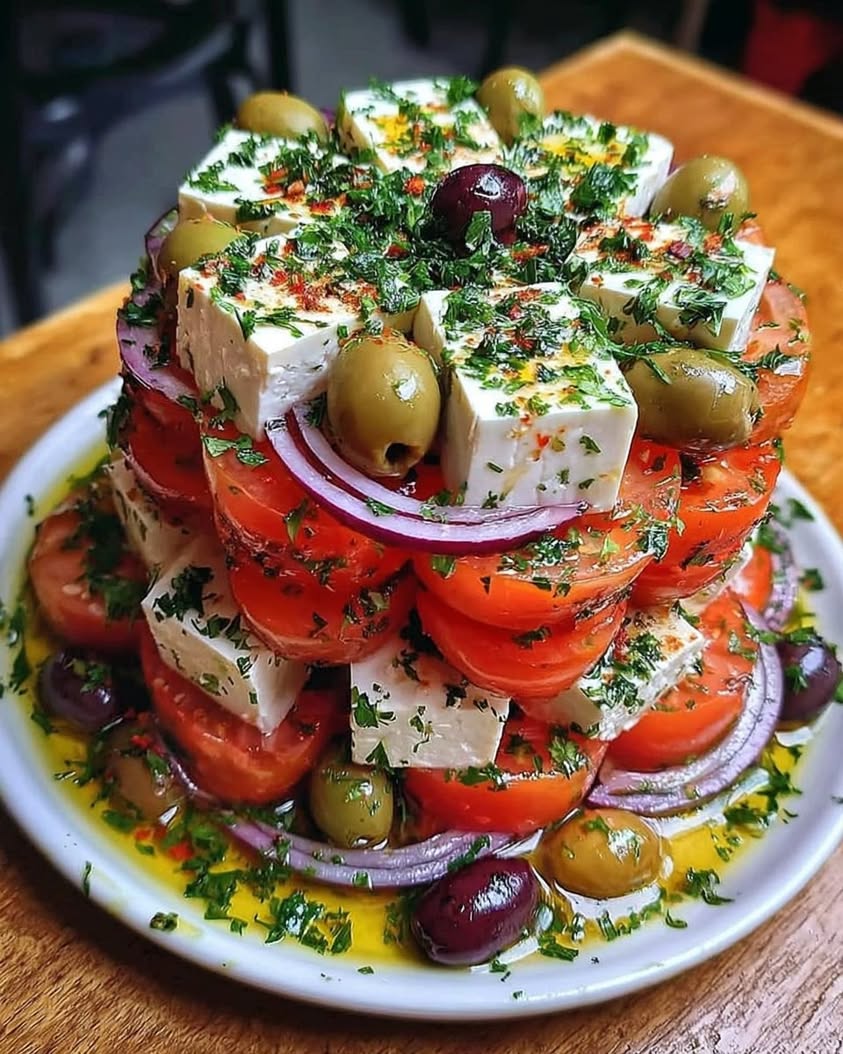
The Ultimate Greek Feta Salad Tower Recipe for Summer Entertaining
Imagine a towering centerpiece of fresh Mediterranean flavors that instantly transforms any dinner table into a vibrant celebration. This Greek Feta Salad Tower recipe is not just a dish it is an experience that combines creamy feta cheese, crisp cucumbers, juicy tomatoes, and briny olives into a stunning vertical presentation. Every layer offers a burst of sunshine and a taste of the Aegean coast, making it the perfect choice for summer entertaining. The visual drama of a stacked salad always impresses guests, yet the preparation remains surprisingly simple and straightforward.
When you build this Greek Feta Salad Tower, you create a harmonious blend of textures and tastes. The saltiness of the feta contrasts beautifully with the sweet cherry tomatoes, while the crunch of cucumber adds refreshing crispness. Red onion provides a sharp bite, and Kalamata olives deliver an earthy richness. A drizzle of extra virgin olive oil and a splash of red wine vinegar tie everything together, enhancing each ingredient without overwhelming it. This salad is a testament to the beauty of Mediterranean cuisine, where fresh ingredients shine through minimal preparation.
This recipe is ideal for anyone who loves hosting gatherings but wants to avoid spending hours in the kitchen. You can assemble the tower in under thirty minutes, and it requires no cooking at all. The ingredients are affordable and readily available at most grocery stores. Furthermore, the presentation is so dramatic that your guests will think you worked magic. Whether you serve it as a starter, a side dish, or a light main course, the Greek Feta Salad Tower always steals the show. It is a reliable, crowd-pleasing option for any warm-weather occasion.
Quick Recipe Highlights
- Flavor Profile: This salad delivers a bold Mediterranean taste with salty feta, tangy vinegar, sweet tomatoes, and peppery olive oil. The combination is savory with a bright acidity that balances perfectly.
- Texture: You get a satisfying crunch from cucumber and bell pepper, a creamy softness from the feta, and a chewy bite from olives. The layers create an interesting mouthfeel with every forkful.
- Aroma: The scent of fresh oregano and extra virgin olive oil fills the air as you prepare the tower. Cucumber and tomato release their fresh, green aromas that evoke summer gardens.
- Visual Appeal: A tall, neatly stacked cylinder of colorful vegetables topped with a block of white feta makes for an Instagram-worthy centerpiece. The red, green, purple, and white layers are stunning.
- Skill Level Needed: This recipe requires only basic knife skills for chopping vegetables and the patience to stack ingredients neatly. Even novice cooks can achieve excellent results with careful layering.
- Special Equipment: You will need a round cookie cutter or a small springform pan to shape the tower. A sharp chef knife and a cutting board are also essential for consistent cuts.
Recipe Overview
- Difficulty Level: I rate this recipe as medium difficulty because the stacking process demands patience and precision. If the layers are not even, the tower may collapse. However, the actual cooking techniques are very basic, so most home cooks can manage it confidently.
- Category: This dish works beautifully as an appetizer, a side salad, or a light lunch. It is also a fantastic vegetarian main course when paired with crusty bread or pita.
- Cuisine: This recipe draws directly from traditional Greek and Mediterranean culinary traditions. The ingredients like feta, olives, cucumber, and oregano are staples of Greek cuisine, and the emphasis on fresh, unprocessed foods reflects the Mediterranean diet philosophy.
- Cost: The ingredients for this salad are generally inexpensive. Feta cheese and olives may be the priciest items, but they are still budget-friendly. A single tower costs roughly eight to ten dollars to make, serving four people generously.
- Season: This salad is perfect for summer when tomatoes and cucumbers are at their peak freshness. The light, refreshing nature of the dish also suits spring and early fall months beautifully.
- Occasion: The Greek Feta Salad Tower is excellent for dinner parties, backyard barbecues, holiday gatherings, and romantic dinners. It also works well for potlucks because it travels easily and stays fresh for hours.
Why Youll Love This Recipe
The taste and texture of this Greek Feta Salad Tower are absolutely addictive. The first bite delivers a crunchy cucumber slice followed by the creamy tanginess of feta. As you continue, you experience juicy tomato bursts and the briny pop of olives. The red wine vinegar dressing adds a bright acidity that cuts through the richness of the cheese. This interplay of flavors keeps your palate engaged from start to finish. Each layer offers something different, making every mouthful a new discovery. The satisfaction of eating such a well-balanced salad is truly unmatched.
Convenience is another major reason to love this recipe. You can prep all the vegetables in advance and store them separately in the refrigerator. When you are ready to serve, simply stack the ingredients and drizzle with dressing. There is no cooking involved, which means no heat in the kitchen during hot summer days. The assembly takes only a few minutes once the components are ready. This ease of preparation allows you to spend more time with your guests and less time stressing over the meal. It is a stress-free solution for entertaining.
Nutritionally, this salad is a powerhouse of vitamins and healthy fats. Cucumbers and tomatoes provide hydration and antioxidants like lycopene and vitamin C. Feta cheese offers calcium and protein, while olives contribute heart-healthy monounsaturated fats. Extra virgin olive oil is rich in anti-inflammatory compounds. This meal supports a balanced diet without sacrificing flavor. You can feel good about serving something so wholesome to your family and friends. It aligns perfectly with Mediterranean eating patterns that promote long-term health.
From a social perspective, the Greek Feta Salad Tower is a showstopper. Guests are always impressed by the towering presentation, and it naturally becomes a conversation starter. People love to take pictures of the dish before it is eaten. Sharing this salad creates a sense of occasion and elevates any gathering. It makes your guests feel special and appreciated. The act of assembling the tower at the table can even be a fun interactive experience if you let everyone help with the stacking.
Cost-effectiveness and accessibility round out the reasons to try this recipe. All the ingredients are widely available in standard supermarkets, and most are very affordable. You do not need any exotic or hard-to-find items. This makes the recipe practical for regular weeknight dinners as well as special events. Additionally, the leftovers taste great the next day if you store the components separately. You get maximum flavor and visual impact for a minimal investment of both time and money.
Historical Background and Cultural Significance
The origins of the Greek salad, known locally as horiatiki, date back centuries to rural farming communities in Greece. Farmers would combine fresh vegetables from their gardens with a block of feta cheese and drizzle it with olive oil. This simple yet nourishing meal sustained workers during long days in the fields. The salad was never meant to be fancy it was a practical way to use ripe produce. Over time, it evolved into a beloved national dish that represents Greek hospitality and simplicity.
Cultural importance of the Greek salad extends beyond mere sustenance. In Greece, sharing a meal is a deeply social activity that strengthens family and community bonds. The horiatiki is a staple at tavernas, family gatherings, and festivals. It symbolizes the abundance of the Mediterranean land and the value of fresh, unprocessed ingredients. The salad reflects the Greek philosophy of philoxenia, or love of strangers, where offering food is an expression of warmth and welcome. Every serving of this salad carries that cultural weight.
The evolution of the Greek salad into a tower form is a modern twist on tradition. Chefs and home cooks began experimenting with vertical presentations to add drama and elegance. The deconstructed version with stacked layers became popular in fine dining restaurants. This adaptation maintains the integrity of the original ingredients while offering a new visual experience. The tower format makes the salad more suitable for party platters and buffet tables, where it stands out among other dishes.
Regional variations of Greek salad exist throughout Greece and the Mediterranean. In some regions, cooks add capers or anchovies for extra saltiness. Others include bell peppers or omit onions depending on local preferences. The island of Crete often uses a creamy, soft mizithra cheese instead of feta. In Cyprus, they sometimes add shredded lettuce and boiled eggs. These variations highlight the adaptability of the basic concept while keeping the core ingredients of tomato, cucumber, and olive oil intact.
Ingredient Deep Dive
Feta cheese is the star of this Greek Feta Salad Tower, and it has a rich history in Greek culture. For centuries, shepherds in mountainous regions made feta from sheep milk or a mixture of sheep and goat milk. The cheese is brined, giving it a salty, tangy flavor and a crumbly yet creamy texture. Nutritionally, feta provides calcium, protein, and beneficial probiotics. When selecting feta, look for blocks stored in brine rather than pre-crumbled varieties, as they have superior flavor and moisture. Store feta in its brine in the refrigerator, and it will last for several weeks. For substitutions, you can use halloumi, which grills well, or a mild goat cheese for a different tang.
Cucumbers bring essential crunch and hydration to the tower. English cucumbers are ideal because they have fewer seeds and a thinner skin that requires no peeling. They are composed mostly of water, making them incredibly refreshing. Cucumbers also contain vitamin K and some antioxidants. When choosing cucumbers, pick ones that are firm, dark green, and free from soft spots. Store them in the refrigerator crisper drawer, wrapped in a paper towel to absorb excess moisture. If you need a substitute, use zucchini for a similar texture, though the flavor will be milder.
Cherry tomatoes add sweetness and acidity to balance the salty feta. These small tomatoes are packed with lycopene, an antioxidant linked to heart health. They also provide vitamins A and C. For the best flavor, buy tomatoes that are fully ripe and still firm to the touch. Avoid any that feel mushy or have cracks. Store cherry tomatoes at room temperature to preserve their taste, and only refrigerate if they are very ripe. As a substitute, you can use grape tomatoes, which are slightly sweeter, or chopped Roma tomatoes, though they will release more juice.
Kalamata olives contribute a briny, slightly fruity note that complements the other ingredients. These purple-hued olives originate from the Kalamata region of Greece and are cured in red wine vinegar or brine. They are rich in healthy monounsaturated fats and vitamin E. When buying olives, opt for ones packed in brine rather than oil, as the brine preserves texture. Store opened olives in the refrigerator and consume within a few weeks. For a different flavor profile, you can use green olives, Gaeta olives, or even Castelvetrano olives, which are milder and buttery.
Red onion provides a sharp, pungent kick that cuts through the richness. Red onions are milder than white or yellow varieties, making them suitable for raw preparations. They contain quercetin, an anti-inflammatory compound. Choose onions that are firm with tight, dry skins and no soft spots. Store them in a cool, dark place away from potatoes, which cause them to spoil faster. If you find raw onion too strong, soak the slices in cold water for ten minutes to mellow the flavor. You can substitute shallots or sweet Vidalia onions for a milder taste.
Extra virgin olive oil is the foundation of the dressing and a cornerstone of Mediterranean cuisine. Look for cold-pressed, unfiltered olive oil from Greece, Italy, or Spain for the best flavor. It is high in monounsaturated fats and polyphenols, which support cardiovascular health. Store olive oil in a dark glass bottle away from heat and light to prevent rancidity. The oil should have a peppery finish and a fruity aroma. For a different taste, you can use avocado oil, which is neutral, or walnut oil for a nutty flavor.
Common Mistakes to Avoid
- Using wet vegetables will cause the tower to collapse. Always pat cucumbers, tomatoes, and bell peppers dry with paper towels before stacking. Excess moisture makes the layers slippery and unstable.
- Slicing vegetables unevenly leads to an unstable tower. Aim for uniform thickness on all cucumber and tomato slices so they stack evenly. Inconsistent sizes create gaps and weak points.
- Skipping the chilling step results in a sloppy presentation. Refrigerate the assembled tower for at least ten minutes before serving. This firms up the layers and helps the structure hold.
- Overdressing the salad makes it soggy and messy. Drizzle the dressing over the tower just before serving, and only use two tablespoons total. Too much liquid dissolves the layers.
- Using pre-crumbled feta cheese ruins the visual impact. The whole block of feta sitting on top is the star of the show. Crumbled cheese looks messy and falls apart on the plate.
- Forgetting to season the vegetables leads to a bland salad. Lightly salt each layer as you build the tower to enhance the flavors. A pinch of flaky sea salt makes a huge difference.
- Stacking ingredients too high increases the risk of toppling. Keep the tower around four to five inches tall for stability. Anything taller becomes difficult to serve gracefully.
- Not removing cucumber seeds creates excess water. If using regular cucumbers, scoop out the seeds with a spoon before slicing. English cucumbers have fewer seeds but still benefit from patting dry.
Essential Techniques
Mastering the slicing technique is crucial for a successful Greek Feta Salad Tower. You need to cut all vegetables into rounds of equal thickness, about one-quarter inch per slice. Use a sharp chef knife and a steady hand to ensure clean cuts. If your slices are uneven, the tower will lean or collapse. Practice makes perfect, so take your time with this step. A mandoline slicer can guarantee uniform thickness if you are comfortable using one. Visual cues include slices that are all the same size and shape.
The layering process demands patience and attention to detail. Start with a sturdy base like cucumber rounds on the bottom of your ring mold. Arrange them in a single layer without gaps. Follow with a layer of tomato halves, then a layer of bell pepper strips, then red onion slices. Repeat the sequence until you fill the mold. Gently press down each layer to compress the ingredients slightly. This compression helps the tower hold together when you remove the ring. The tower should feel firm but not squished.
Removing the ring mold without destroying the tower is a delicate operation. After you fill the mold, place a small plate on top of the tower and invert the entire assembly. Lift the ring up slowly, using a gentle twisting motion if it sticks. If the tower starts to shift, use a spatula to guide it back into shape. You can also refrigerate the tower inside the ring for fifteen minutes to set the structure. The final visual cue is a perfectly cylindrical stack that stands tall on the plate.
Dressing the salad requires a light touch and good timing. Whisk together olive oil, red wine vinegar, dried oregano, salt, and pepper in a small bowl. Drizzle the dressing around the base of the tower rather than over the feta block. This prevents the cheese from sliding off and keeps the top layer pristine. If you pour dressing over the top, it may run down and make the plate messy. Serve extra dressing on the side so guests can add more to taste.
Pro Tips for Perfect Greek Feta Salad Tower
Always refrigerate the feta cheese block for at least thirty minutes before slicing. Cold feta holds its shape much better when you cut it, resulting in clean edges that look professional. Room-temperature feta tends to crumble and smudge.
Use a small offset spatula to transfer the assembled tower from the counter to the serving plate. This tool gives you better control than trying to slide the tower off a cutting board. The spatula also helps you center the tower on the plate perfectly.
Choose the ripest, most flavorful tomatoes you can find for the best taste. Early Girl or vine-ripened tomatoes work wonderfully if cherry tomatoes are not available. The sweetness of ripe tomatoes really balances the saltiness of the feta.
Add a layer of fresh basil leaves between the vegetable layers for an extra aromatic kick. The basil pairs beautifully with the oregano in the dressing and adds a pop of green. Just make sure the leaves are dry so they do not add moisture.
If you are short on time, cut all vegetables the night before and store them in separate airtight containers. In the morning, simply assemble the tower and refrigerate until serving. This advance prep makes entertaining effortless.
For a spicier version, add thin slices of jalapeno or serrano pepper to the layers. The heat contrasts nicely with the creamy feta and cool cucumber. Just warn your guests if they are sensitive to spice.
Garnish the plate with extra Kalamata olives and a sprinkle of dried oregano before serving. This adds visual interest and reinforces the Greek flavors. A few lemon wedges on the side also brighten the presentation.
Use a measuring tape or ruler to check the height of your tower before serving. A tower that is too tall may topple when you cut into it. Keep the height under five inches for optimal stability.
Variations and Adaptations
Regional variations of this Greek Feta Salad Tower include adding roasted red peppers or artichoke hearts for extra depth. Some cooks incorporate capers or anchovies for a brinier profile. In the style of a traditional horiatiki, you can include bell pepper rings and thin slices of red onion. Each region of Greece adds its own touch, reflecting local produce availability. You can adapt the recipe to include these regional elements for variety.
Seasonal adaptations allow you to enjoy this dish year-round. In summer, use peak-season heirloom tomatoes and fresh oregano from the garden. In winter, substitute roasted cherry tomatoes or sun-dried tomatoes for sweetness. You can also add grilled zucchini or eggplant slices during colder months. The base structure remains the same, but the flavors shift with the seasons. This flexibility makes the recipe a year-round staple.
Dietary modifications are easy to implement with this recipe. For a dairy-free version, replace feta with a plant-based alternative made from cashews or tofu. Marinate the substitute in lemon juice and salt to mimic the tanginess. For a low-calorie option, reduce the amount of olive oil in the dressing. The salad itself is naturally gluten-free, so it suits those with celiac disease. You can also make it vegan by using a dairy-free cheese and omitting anchovies.
Flavor variations offer endless possibilities for customization. Add a tablespoon of fresh dill or mint to the dressing for a herbaceous twist. Include a pinch of Aleppo pepper for mild heat and a fruity note. Try swapping red wine vinegar for balsamic or lemon juice for a different acidity. You can also add pomegranate seeds for sweetness and crunch. Each variation creates a unique taste experience while keeping the tower structure intact.
Texture modifications can change the entire eating experience. For added crunch, include toasted pine nuts or chopped walnuts between the layers. For a softer texture, use roasted vegetables like bell peppers or zucchini. You can also add creamy elements like hummus or tzatziki sauce on the side. Changing the textures allows you to tailor the dish to different preferences. Experiment with combinations to find your favorite.
Presentation alternatives keep the recipe fresh and exciting. Instead of a tall cylinder, use a rectangular mold to create a layered block that you can slice like a cake. You can also assemble individual towers in small ramekins for single servings. Another option is to create a deconstructed version where ingredients are arranged in a decorative circle on a large platter. Each presentation style offers a different visual impact while using the same delicious ingredients.
Serving and Presentation Guide
Plating techniques for the Greek Feta Salad Tower focus on creating height and drama. Place the tower in the center of a wide, shallow bowl or a large white plate. Drizzle the dressing around the base, allowing it to pool slightly. Garnish with whole Kalamata olives and a sprinkle of dried oregano. A few fresh mint leaves around the edge add a pop of green. The goal is to make the tower the undisputed focal point of the plate.
Garnishing ideas include adding a line of balsamic reduction artfully drizzled across the plate. You can also place small clusters of fresh arugula or microgreens around the tower. Edible flowers like nasturtiums or marigolds add a whimsical touch for special occasions. A light dusting of flaky sea salt over the feta just before serving enhances the flavors. These finishing touches elevate the dish from home cooking to restaurant quality.
Traditional accompaniments include warm pita bread or crusty sourdough for dipping into the dressing. You can also serve the tower with a side of tzatziki sauce for extra creaminess. Grilled lamb skewers or roasted chicken thighs pair beautifully with the salad for a complete meal. For a vegetarian spread, add dolmades or falafel on the side. These accompaniments honor the Mediterranean roots of the dish.
Modern serving suggestions include turning the tower into a main course by adding grilled shrimp or salmon. You can also serve it as part of a mezze platter with hummus, baba ganoush, and stuffed grape leaves. For a lighter option, slice the tower in half and serve it atop a bed of mixed greens. This modern approach works well for health-conscious diners. The tower version is versatile enough to fit any menu.
Temperature considerations are important for the best eating experience. The vegetables should be cold from the refrigerator, while the feta should be slightly softened at room temperature. Remove the feta from the fridge about twenty minutes before assembling the tower. The contrast between crisp cold vegetables and creamy cheese is delightful. Avoid leaving the assembled tower at room temperature for more than two hours to maintain food safety.
Portion control tips help you serve the right amount for your guests. One tower made with a three-inch ring serves two people as a main course or four people as an appetizer. Adjust the ring size accordingly if you need smaller or larger portions. For a party, make several smaller towers using two-inch rings for individual servings. This approach ensures everyone gets their own beautiful presentation.
Wine and Beverage Pairing
Wine pairings for the Greek Feta Salad Tower should complement the bright acidity and salty cheese. A crisp Assyrtiko from Santorini is a classic choice with its citrus notes and mineral finish. Alternatively, a Sauvignon Blanc from New Zealand offers grassy flavors that match the herbs. For red wine lovers, a light-bodied Beaujolais or a chilled Tempranillo works without overpowering the salad. Avoid oaky Chardonnays, as they clash with the brine of the feta.
Non-alcoholic alternatives include a sparkling water infused with lemon and mint for a refreshing palate cleanser. You can also serve a homemade lemonade with a splash of rose water for an aromatic twist. Iced green tea with a touch of honey complements the salad without competing with the flavors. These drinks keep the meal light and hydrating on a warm day. They also pair well with the Mediterranean theme.
Coffee and tea pairings are less common for this dish but still work for a brunch setting. A strong Greek coffee served with a glass of water is a traditional finish after the meal. For a lighter option, brewed chamomile tea soothes the palate after the tangy dressing. These options are suitable if you serve the tower as part of a larger brunch spread. They provide a warm, comforting conclusion to the meal.
Temperature considerations for beverages are crucial for optimal enjoyment. Serve white wines and sparkling water well-chilled, around 45 to 50 degrees Fahrenheit. Red wines should be slightly cool, around 55 degrees, especially in summer. Non-alcoholic drinks can be served over ice for maximum refreshment. Always have a pitcher of cold water on the table to keep guests hydrated. Proper beverage temperature enhances the overall dining experience.
Serving suggestions include offering a beverage pairing note on a small card at each place setting. This adds a thoughtful touch and helps guests choose their drinks. You can also set up a self-serve bar with wine, sparkling water, and lemonade so guests help themselves. For a more formal approach, pair each course with a specific drink. The salad works beautifully as the first course with a crisp white wine.
Storage and Shelf Life
Storage methods for the Greek Feta Salad Tower require careful separation of components. Never store the assembled tower because it will become soggy and collapse. Instead, store each prepared vegetable in its own airtight container in the refrigerator. Keep the feta block wrapped in its brine or in a container with a small amount of milk. The dressing should be stored separately in a sealed jar at room temperature.
Temperature requirements for the ingredients vary slightly. Vegetables should be stored at 35 to 40 degrees Fahrenheit in the crisper drawer of your refrigerator. Feta cheese needs consistent refrigeration at 38 to 40 degrees. The olive oil dressing can stay at room temperature for up to a week, though refrigeration extends its life. Never leave any component at room temperature for more than two hours total.
Container recommendations include glass or BPA-free plastic containers with tight-sealing lids. Square containers maximize space in your refrigerator. For tomatoes, use a container with a paper towel at the bottom to absorb excess moisture. This prevents them from becoming mushy. Do not store onions and potatoes together, as onions release gases that spoil potatoes faster.
Signs of spoilage include a slimy texture on cucumbers, soft spots on tomatoes, and mold on feta cheese. If the feta smells sour or develops a pinkish hue, discard it immediately. Olives that become wrinkled or smell fermented should also be thrown away. Always check ingredients before assembling the tower to ensure freshness. Trust your nose and eyes they are reliable indicators.
Reheating instructions are not applicable to this salad since it is a cold dish. However, if you want to serve the ingredients warm, you can briefly grill the vegetables before assembling. Grilled peppers and zucchini add a smoky flavor. The feta should remain cold or at room temperature. Warm and cold contrasts can be interesting but require careful timing.
Freezing guidelines are not recommended for this salad because the vegetables have high water content. Freezing will turn them mushy upon thawing. Feta cheese can be frozen but will become crumbly and lose its creamy texture. It is best to prepare this dish fresh. If you must freeze components, only freeze the dressing in an ice cube tray for later use.
Make Ahead Strategies
Prep timeline for this Greek Feta Salad Tower is straightforward and flexible. Up to two days before serving, wash and dry all vegetables thoroughly. Slice cucumbers, halve cherry tomatoes, and cut bell peppers into strips. Store each vegetable in separate containers lined with paper towels. The paper towels absorb excess moisture and keep the vegetables crisp. You can also chop the red onion and store it in a sealed container.
Storage between steps requires attention to detail to maintain freshness. Keep the prepared vegetables in the refrigerator crisper drawer. Do not mix different vegetables together, as tomatoes will make cucumbers soggy. The feta block should stay in its brine until you are ready to assemble. This separate storage preserves the quality of each component. The dressing can be made up to a week ahead and stored in a sealed jar at room temperature.
Quality impact assessment reveals that prepped vegetables lose a small amount of crunch over time. The texture after two days is still excellent, but the vegetables may be slightly less crisp. For the best texture, aim to prep vegetables no more than one day ahead. The feta and dressing remain unaffected by advance preparation. Overall, the make-ahead strategy is highly effective for reducing last-minute work.
Assembly tips for make-ahead success include chilling the ring mold before use. A cold mold helps the tower hold its shape better during stacking. Use a small offset spatula to compact the layers gently as you build. If the tower seems unstable, refrigerate it inside the mold for an additional fifteen minutes before unmolding. This extra step ensures a clean presentation.
Reheating guidelines are not needed because the tower is served cold. However, you can slightly warm the feta cheese by setting it out at room temperature for twenty minutes before assembly. This softens the cheese and makes it creamier. The vegetables should stay cold for the best crunch. This temperature contrast adds to the overall appeal.
Fresh element additions should be made just before serving to maintain their quality. Add fresh herbs like basil or mint as a final garnish. Drizzle the dressing over the tower only when you are ready to eat. If you add the dressing too early, it will wilt the herbs and make the salad soggy. These last-minute touches keep the salad looking and tasting its best.
Scaling Instructions
Halving the recipe is simple and requires adjusting the ring size accordingly. Use a two-inch ring mold instead of a three-inch one for individual servings. Halve all ingredient quantities exactly. The layer count remains the same, but the diameter shrinks. This works beautifully for serving two people as a main course. The cooking technique stays identical regardless of size.
Doubling or tripling the recipe works best by making multiple towers rather than one giant tower. Use multiple ring molds of the same size to create identical servings. This approach ensures each tower is stable and easy to serve. Increase the ingredient quantities proportionally. For a party of twelve, make four towers using the original recipe. This method is more reliable than attempting a single massive structure.
Equipment adjustments for scaling include having enough ring molds for multiple towers. If you only have one mold, make the towers sequentially, keeping the finished ones refrigerated. Use a baking sheet to transfer the molds between stations. You may need extra mixing bowls if you are preparing larger quantities of dressing. Plan ahead to avoid a bottleneck in your kitchen workflow.
Timing modifications are minimal when scaling this recipe. Prepping vegetables for four towers takes about twice as long as for one. Assembly time increases linearly with the number of towers. Plan for about five minutes per tower once all vegetables are prepped. The dressing quantity scales up easily, so you can make a large batch in one go. Overall timeline remains very manageable.
Storage considerations for scaled batches require adequate refrigerator space. Clear out a shelf before you start making multiple towers. Store prepared vegetables in large containers with paper towels. Keep the feta blocks in a single large container with brine. The dressing can be stored in a quart-sized jar. Proper storage ensures everything stays fresh until assembly.
Nutritional Deep Dive
Macro breakdown for one serving of Greek Feta Salad Tower includes approximately 220 calories, 18 grams of fat, 12 grams of carbohydrates, and 8 grams of protein. The majority of calories come from the olive oil and feta cheese. Carbohydrates are primarily from vegetables, making them healthy and fiber-rich. The protein content supports muscle repair and keeps you feeling full. This balance makes the salad a satisfying light meal or a hearty side dish.
Micronutrient analysis reveals a wealth of vitamins and minerals. Tomatoes provide lycopene, an antioxidant that supports heart health. Cucumbers offer vitamin K for bone health. Bell peppers are rich in vitamin C, which boosts immunity. Feta supplies calcium for strong bones and teeth. Olives contribute vitamin E for skin health and antioxidants that fight inflammation. This salad is a nutrient-dense option that supports overall wellness.
Health benefits of this dish include improved digestion from the fiber in vegetables. The healthy fats from olive oil and feta promote brain function and reduce inflammation. The high water content of cucumbers and tomatoes helps with hydration. Antioxidants in the ingredients protect cells from damage. Regular consumption of Mediterranean-style meals like this one is linked to lower risk of chronic disease. It is a delicious way to nourish your body.
Dietary considerations include the moderate sodium content from feta and olives. People watching their sodium intake should use less feta or rinse the olives before adding them. The salad is naturally gluten-free and low in sugar. It can fit into many eating plans with minor adjustments. Always consider individual dietary needs when serving this dish to guests.
Portion analysis indicates that one tower serving is appropriate as a main course for lunch or a light dinner. As a side dish, half a serving is sufficient. The volume of vegetables is high, which promotes satiety without excessive calories. Portion control is naturally built into the visual presentation, making it easy to gauge serving sizes. This dish helps with mindful eating because you see exactly what you consume.
Weight management tips include using less olive oil in the dressing to reduce calories. You can also substitute part of the feta with a lower-fat cheese. Increasing the proportion of cucumbers and tomatoes adds volume without extra calories. The high fiber content keeps you full longer, reducing the urge to snack. This salad is a valuable tool for maintaining a healthy weight while enjoying delicious food.
Dietary Adaptations
Gluten-free adaptation is naturally achieved with this Greek Feta Salad Tower since none of the ingredients contain gluten. The vegetables, feta, olives, and olive oil are all gluten-free. However, always check the labels on store-bought dressings if you are not making your own. Some commercial dressings may contain gluten as a thickener. Making the dressing from scratch guarantees it is safe for gluten-sensitive individuals.
Dairy-free adaptation requires replacing the feta cheese with a plant-based alternative. Look for dairy-free feta made from cashews or tofu at specialty grocery stores. Marinate the alternative in lemon juice, salt, and oregano for a tangy flavor. The texture will be softer than traditional feta, so handle it carefully. This substitution allows those with lactose intolerance or dairy allergies to enjoy the salad.
Vegan adaptation builds on the dairy-free version by also ensuring no animal products are used. Use a vegan feta substitute and confirm that the olives are not processed with dairy. The dressing is already vegan with olive oil and vinegar. Add some nutritional yeast to the dressing for a cheesy flavor. This version is entirely plant-based while retaining the essence of the original dish.
Low-carb adaptation reduces the carbohydrate content by modifying the vegetable selection Print
Greek Feta Salad Tower
- Total Time: 20 minutes
- Yield: 2
Description
A stunning, layered salad that combines fresh Greek ingredients with creamy feta cheese, presented as an elegant tower perfect for a dinner party or light lunch.
Ingredients
- 2 large Roma tomatoes, diced
- 1 cucumber, diced
- 1/2 red onion, thinly sliced
- 1/2 cup Kalamata olives, pitted and halved
- 1/4 cup fresh parsley, chopped
- 1 block (8 oz) feta cheese, crumbled
- 2 tbsp extra virgin olive oil
- 1 tbsp red wine vinegar
- 1 tsp dried oregano
- Salt and black pepper to taste
- 1 cup mixed salad greens
- 1/4 cup pine nuts, toasted
Instructions
- In a medium bowl, combine diced tomatoes, cucumber, red onion, olives, and parsley. Drizzle with olive oil and red wine vinegar, season with oregano, salt, and pepper. Toss gently to coat.
- In a separate small bowl, crumble the feta cheese and set aside.
- To assemble the tower, place a ring mold or a tall round cookie cutter (about 3 inches in diameter) on a serving plate. Begin by layering a handful of mixed greens at the bottom.
- Add a layer of the vegetable mixture on top of the greens, pressing gently to compact.
- Sprinkle a generous layer of crumbled feta over the vegetables.
- Repeat layers: greens, vegetables, and feta until the mold is filled, pressing each layer gently. Top with a final layer of feta and a sprinkle of toasted pine nuts.
- Carefully lift the ring mold straight up to reveal the tower. Serve immediately.
Notes
You can customize the seasonings to taste. For a milder flavor, use less red onion or substitute with shallots. To make ahead, prepare the ingredients separately and assemble just before serving.
- Prep Time: 20 minutes
- Cook Time: 0 minutes
- Method: Main
- Cuisine: Greek