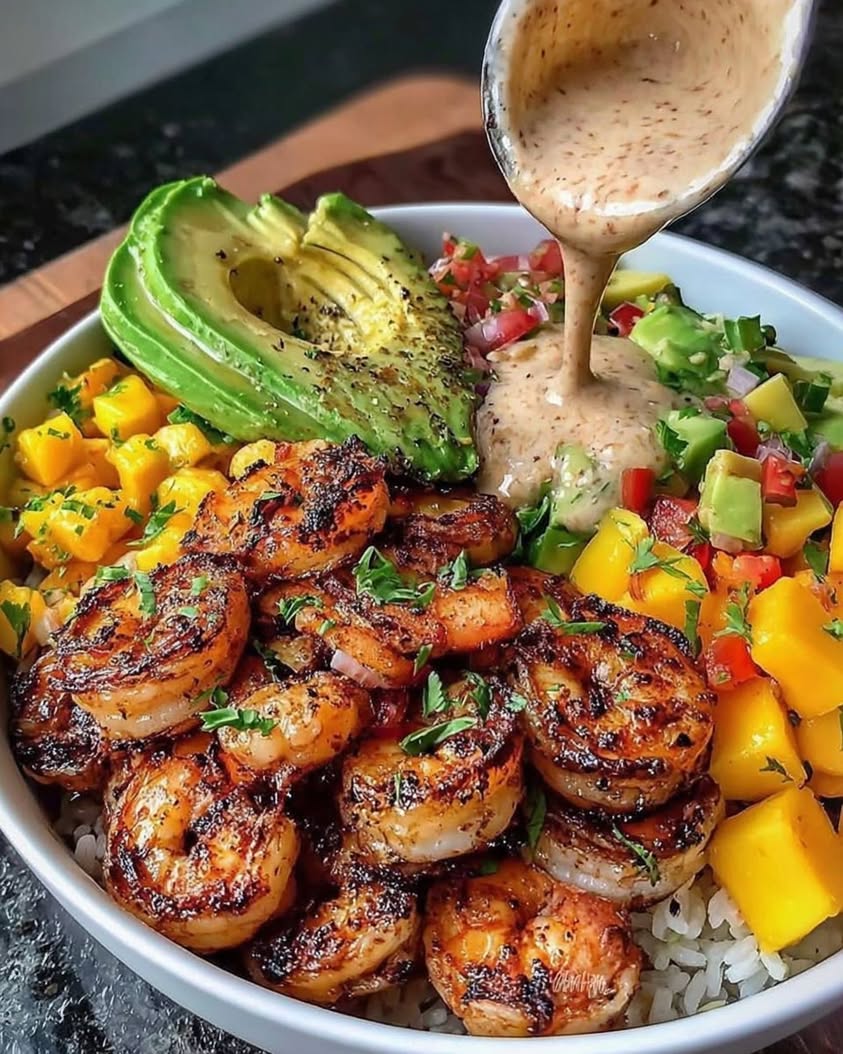
Shrimp and Avocado Bowls with Mango Salsa and Lime-Chili Sauce: A Vibrant, Fresh Meal
Imagine a bowl that captures the essence of summer, where the sweetness of ripe mango meets the savory richness of perfectly cooked shrimp. This Shrimp and Avocado Bowls with Mango Salsa and Lime-Chili Sauce recipe delivers exactly that kind of experience. It is a dish that feels both indulgent and healthy, combining bright, fresh ingredients with a spicy, tangy kick. Moreover, it is incredibly easy to put together, making it a perfect choice for busy weeknights or casual weekend gatherings.
The beauty of this Shrimp and Avocado Bowls with Mango Salsa and Lime-Chili Sauce recipe lies in its balance. You have the creamy, buttery texture of avocado, which contrasts with the firm, satisfying bite of the shrimp. Then, the mango salsa adds a burst of juicy sweetness and a hint of heat from jalapeno. Finally, the lime-chili sauce ties everything together with a zesty, slightly smoky flavor that will keep you coming back for more. It is a complete meal in a bowl, requiring only a fork and a few minutes of your time.
This Shrimp and Avocado Bowls with Mango Salsa and Lime-Chili Sauce recipe is designed for maximum flavor with minimal fuss. The shrimp cook quickly, the salsa is a simple chop-and-mix affair, and the sauce comes together in a blender. So, you can have a restaurant-quality meal on the table in under 30 minutes. Therefore, whether you are looking for a healthy lunch, a light dinner, or an impressive dish to serve guests, this recipe is your answer. It is a celebration of fresh, simple ingredients that taste spectacular together.
Quick Recipe Highlights
- Flavor Profile: This dish delivers a vibrant combination of sweet, savory, tangy, and spicy notes. The sweetness of the mango and the creaminess of avocado are balanced by the zesty lime-chili sauce and the natural umami of the shrimp. Every bite offers a complex yet harmonious taste experience.
- Texture: You will experience a wonderful mix of textures in every forkful. The shrimp are firm and succulent, the avocado is smooth and creamy, and the mango salsa provides a chunky, juicy contrast. The crisp romaine lettuce and crunchy red onion add an extra layer of freshness.
- Aroma: The key aromatic notes are bright and inviting. You will smell the fresh cilantro and the sharp zest of lime, with a subtle warmth from the chili. The cooked shrimp contribute a gentle savory scent that grounds the dish.
- Visual Appeal: The visual presentation is spectacularly colorful and vibrant. The deep green of the avocado and lettuce, the brilliant orange of the mango, the pink of the shrimp, and the bright green of the cilantro create an eye-catching mosaic that is as beautiful as it is delicious.
- Skill Level Needed: This recipe is rated as easy, making it accessible to home cooks of all levels. The techniques involved are simple, such as chopping vegetables, searing shrimp, and blending a sauce. It requires no advanced culinary skills or experience.
- Special Equipment: You will need a blender or food processor to make the lime-chili sauce. Additionally, a large skillet or frying pan is required for cooking the shrimp. A sharp knife and a cutting board are essential for prepping the ingredients.
Recipe Overview
- Difficulty Level: The difficulty is easy because the ingredients are simple to prepare and the cooking process is straightforward. You do not need to manage multiple complicated steps at once. The focus is on fresh, raw components and a quick sear for the shrimp, which minimizes the chances of error. It is a very forgiving recipe that encourages confidence.
- Category: This dish fits into several meal categories. It works perfectly as a light main course for lunch or dinner. You can also serve it as a substantial appetizer or party food if you scale it down. It is a great option for meal prep, as the components can be stored separately and assembled later.
- Cuisine: The recipe draws inspiration from modern Californian and Mexican coastal cuisines. It uses classic ingredients like avocado, lime, and chili that are staples in Mexican cooking. The fresh, bright flavors also reflect the healthy, outdoor lifestyle associated with California cuisine. It is a wonderful fusion that feels both familiar and exciting.
- Cost: The cost is moderate and depends on your location and the season. Shrimp are often the most expensive component, but you can buy frozen shrimp to save money. Avocados and mangoes are generally affordable, especially when in season. The other ingredients like lime and cilantro are very inexpensive, making this a budget-friendly meal for its quality.
- Season: This dish is best during the late spring and summer months. This is when mangoes and avocados are at their peak ripeness and flavor. The refreshing nature of the bowl is ideal for warm weather. However, you can enjoy it year-round with good quality imported produce.
- Occasion: This Shrimp and Avocado Bowls with Mango Salsa and Lime-Chili Sauce recipe is suitable for many occasions. It is elegant enough for a casual dinner party. It is also perfect for a simple, healthy weeknight dinner. Additionally, it is a fantastic recipe for potlucks, as it can be transported easily and assembled on site.
Why You Will Love This Recipe
The taste and texture appeal of this Shrimp and Avocado Bowls with Mango Salsa and Lime-Chili Sauce recipe is undeniable. The combination of cool, creamy avocado with warm, spiced shrimp is a classic pairing for a reason. The mango salsa adds a fresh, sweet-tart pop that cuts through the richness perfectly. Then, the lime-chili sauce provides a tangy, spicy finish that wakes up your entire palate. It is a symphony of flavors and textures that is both satisfying and refreshing.
Convenience is a major reason to love this recipe. You can have everything ready in about 28 minutes, which is faster than most takeout deliveries. The preparation is simple and does not require you to be a master chef. You just need to chop, sear, and blend. This makes it an ideal choice for those nights when you want something delicious but do not have a lot of energy or time to spend in the kitchen.
Nutritionally, this recipe is a powerhouse. It is packed with lean protein from the shrimp, healthy fats from the avocado, and essential vitamins from the mango and vegetables. Therefore, you get a complete and balanced meal that will keep you full and energized. It naturally fits into many health-conscious diets, including gluten-free, dairy-free, and low-carb lifestyles, without sacrificing any flavor.
From a social and entertaining perspective, this dish is a winner. Its beautiful presentation makes it look like a restaurant creation. Furthermore, you can set up a bowl bar where guests can customize their own bowls. You can offer additional toppings like black beans, corn, or pickled onions. This interactive approach is always a big hit and makes the meal feel special and fun for everyone involved.
Finally, this recipe is wonderfully cost-effective and accessible. It uses a handful of fresh, common ingredients that are easy to find in any grocery store. The shrimp can be bought frozen in bulk, which is often more affordable. Plus, the recipe is easy to scale up or down depending on how many people you are feeding. This means you can enjoy a luxurious-tasting meal without breaking your weekly grocery budget.
Historical Background and Cultural Significance
The origin story of this Shrimp and Avocado Bowls with Mango Salsa and Lime-Chili Sauce recipe is rooted in the modern farm-to-table movement and the fusion cuisine of the American Southwest. It is not a single traditional dish from one culture. Instead, it is a beautiful synthesis of ingredients and techniques. Avocados and chilies have been central to Mesoamerican cuisine for thousands of years. Shrimp has always been a staple in coastal regions around the world.
The cultural importance of this dish reflects a globalized appreciation for fresh, healthy, and vibrant food. The use of avocado highlights its rise as a superfood in American culture. Mango salsa, with its sweet and spicy profile, shows the influence of Mexican pico de gallo. The lime-chili sauce is a technique borrowed from various Southeast Asian and Latin American cuisines. Therefore, the bowl is a testament to how cultures can share and blend culinary ideas beautifully.
The evolution of this recipe is tied to the popularity of bowl-style meals and the search for fast-casual healthy options. Over the last two decades, the “power bowl” or “burrito bowl” concept has exploded. This Shrimp and Avocado Bowls with Mango Salsa and Lime-Chili Sauce recipe represents a refined version of that trend. It takes the best elements of a burrito bowl, like rice and beans, and replaces them with a lighter, fresher base of lettuce and avocado.
Regional variations are plentiful and exciting. In the Gulf Coast of the United States, you might find this recipe made with local blackened shrimp and a spicy creole sauce. In Hawaii, a version might use fresh ahi tuna in place of shrimp, with a soy-ginger marinade. In Mexico, you might see the addition of crispy chicharrones or a dollop of crema. These variations show how adaptable and beloved the core concept of a shrimp and avocado bowl really is.
Ingredient Deep Dive
Shrimp is the star protein in this Shrimp and Avocado Bowls with Mango Salsa and Lime-Chili Sauce recipe. Culturally, shrimp have been a fundamental food source for coastal civilizations for millennia. They are incredibly versatile and cook very quickly, making them a staple in cuisines from the American South to Southeast Asia. Nutritionally, shrimp are an excellent source of lean protein, selenium, and vitamin B12. They are also low in calories and fat, which makes them a heart-healthy choice.
When selecting shrimp, look for raw, peeled, and deveined shrimp to save time. The size you choose is up to you, but jumbo or large shrimp hold up well in a bowl. You can use fresh or frozen shrimp, but frozen shrimp are often more affordable and equally good if thawed correctly. Avoid shrimp that have a strong ammonia smell. For storage, keep them in the coldest part of your refrigerator and cook them within a day or two.
Avocado is the creamy foundation of this dish. It has deep cultural roots in Mexico and Central America, where it has been cultivated for thousands of years. It is often called a superfood due to its high content of healthy monounsaturated fats, fiber, and potassium. These fats help you absorb fat-soluble vitamins from the other ingredients. Select avocados that yield slightly to gentle pressure but are not mushy. If they are too firm, you can ripen them in a paper bag at room temperature.
For storage, keep unripe avocados on the counter. Once ripe, you can place them in the refrigerator to slow down further ripening for a few days. To prevent browning, squeeze lime juice over the cut surface and press plastic wrap directly against the flesh. If you are out of avocado, you can substitute it with cooked sweet potato or plantain for a different texture. However, the flavor will change significantly.
Mango brings essential sweetness and acidity to the salsa. Mangoes originated in South Asia and are now a beloved fruit in tropical regions worldwide. They are packed with vitamin C and vitamin A, which support immune function and eye health. For the best flavor, choose a mango that is slightly soft to the touch and has a fruity aroma near the stem. Ataulfo or Champagne mangoes are excellent because they are less fibrous and very sweet.
To cut a mango, slice off the rounded sides, leaving the flat pit. Then, score the flesh in a grid pattern without cutting through the skin, and scoop out the cubes. Store a whole mango at room temperature until ripe, and then refrigerate it. You can substitute ripe peaches, nectarines, or even papaya for the mango. Each will provide a different but equally delicious, sweet and juicy element to your salsa.
Lime and chili are the base of the signature sauce. Limes are a cornerstone of many world cuisines, providing a sharp, clean acidity that brightens heavy dishes. Chili peppers contain capsaicin, which adds heat and has anti-inflammatory properties. For the sauce, use fresh lime juice and a chili like serrano or jalapeno for a manageable spice level. If you want less heat, remove the seeds and membranes from the chili. You can use bottled lime juice in a pinch, but fresh juice gives a much brighter flavor.
Common Mistakes to Avoid
- Overcooking the shrimp is the most common error. Shrimp cook in just 2-3 minutes per side. When they turn pink and curl into a C-shape, they are done. Overcooking makes them tough and rubbery.
- Using unripe avocados will ruin the texture of the bowl. Unripe avocados are hard, bitter, and lack creaminess. Always check for ripeness by feeling for a gentle give when you squeeze them.
- Making the salsa too watery can make the entire bowl soggy. Be sure to use a very ripe but firm mango. Also, drain any excess juice from the salsa before adding it to the bowl.
- Forgetting to season the shrimp properly will result in bland flavor. Shrimp need salt and pepper at a minimum. Add a pinch of chili powder or cumin for extra depth before cooking.
- Using a dull knife for chopping is a safety hazard and leads to messy cuts. Sharp knives make clean cuts that are essential for even cooking and a professional appearance.
- Not tasting the lime-chili sauce before using it can throw off the balance. Adjust the salt, acidity, or spice level to your preference before drizzling it over the bowls.
- Assembling the bowls too far in advance will cause the avocado to brown and lettuce to wilt. Assemble the bowls right before serving for the best visual and textural quality.
- Using frozen shrimp that has not been properly thawed will lead to uneven cooking. Thaw frozen shrimp overnight in the refrigerator or in a bowl of cold water for 15 minutes.
- Adding too much sauce can overpower the delicate flavors of the shrimp and mango. Start with a light drizzle and let people add more sauce to their taste.
- Skipping the rest time for the cooked shrimp is a mistake. Let the shrimp rest for a minute after cooking so the juices redistribute, keeping them moist and flavorful.
Essential Techniques
The first key technique is properly searing the shrimp. This is important because high heat creates a flavorful brown crust while keeping the inside tender. To master it, pat the shrimp completely dry with paper towels before seasoning. Then, heat a skillet over medium-high heat with a tablespoon of oil. Place the shrimp in a single layer, ensuring not to crowd the pan. Cook without moving them for 2-3 minutes until they are pink on the bottom and have a slight char.
Common pitfalls include using too low heat, which will cause the shrimp to steam rather than sear. Also, avoid moving the shrimp around too much, as this prevents browning. For visual cues, look for a deep pink color on the cooked side and a slightly opaque appearance overall. When the shrimp curl into a C shape, they are perfectly cooked. If they curl into a tight O, they are likely overdone. So, watch them closely.
The second key technique is making the mango salsa. The goal is to get uniform, bite-sized pieces that release flavor evenly. Start by cutting the mango into a medium dice. Then, dice the red onion, jalapeno, and cilantro finely. Mix them together gently with lime juice and salt. It is crucial to taste the salsa as you go. The balance between sweet, sour, and spicy should be harmonious. If it is too tart, add a pinch of sugar. If it is too spicy, add more mango.
Common pitfalls are dicing the ingredients too large or too small. Large pieces can be difficult to eat, while very small pieces can turn into mush. Also, be careful not to over-mix the salsa, or the mango will break down. For visual cues, the salsa should look bright, colorful, and chunky. Each piece should be distinct. This technique is simple but greatly affects the final texture and presentation of the bowl.
The third key technique is making the lime-chili sauce. This sauce is an emulsion that brings all the flavors together. The technique involves blending fresh lime juice, a chili pepper, garlic, honey, and oil until smooth. The oil is crucial because it adds body and emulsifies the sauce, making it creamy rather than watery. Start by blending the lime juice, chili, garlic, and honey first, then slowly stream in the oil while the blender runs.
Common pitfalls are using too much oil, which can make the sauce greasy, or not emulsifying it properly, which causes it to separate. If the sauce is too thin, add a little more oil. If it is too thick, add a splash of water. For visual cues, a well-made sauce should be thick enough to coat the back of a spoon but still drizzle easily. It should have a uniform, creamy appearance. This sauce is very forgiving and can be adjusted to your taste.
Pro Tips for Perfect Shrimp and Avocado Bowls
First, always pat your shrimp dry with paper towels before seasoning. Any excess moisture will cause the shrimp to steam instead of sear, preventing that beautiful golden-brown crust from forming. A dry surface is the secret to a perfect sear.
Second, season your shrimp generously and just before you cook them. If you season them too early, the salt can draw out moisture, making them dry. A light dusting of salt, pepper, and chili powder right before they hit the pan is the ideal approach.
Third, use a hot pan. Do not add the shrimp until the oil is shimmering. You can test the heat by flicking a drop of water into the pan. If it sizzles and evaporates instantly, the pan is ready. This high heat is essential for a quick, even cook.
Fourth, do not overcrowd the pan. If you add too many shrimp at once, the pan temperature will drop, and the shrimp will start to boil. Cook them in a single layer, working in batches if necessary. This guarantees that each shrimp gets a nice, crispy edge.
Fifth, toast your spices for the sauce. Before blending, you can briefly toast a dried chili in a dry pan for about 30 seconds. This brings out its smoky, nutty flavor and adds a wonderful depth to the lime-chili sauce.
Sixth, chill your bowl components. For a truly refreshing dish, make sure your lettuce, mango, and avocado are cold. This contrast between the cool ingredients and the warm shrimp is one of the most delightful aspects of the bowl.
Seventh, add a pinch of salt to your mango salsa. Salt naturally enhances sweetness and balances acidity. Do not skip this step, as it is what makes the salsa sing and brings out the best flavor in the mango.
Eighth, let the cooked shrimp rest for a minute before adding them to the bowls. This allows the juices to redistribute throughout the shrimp, ensuring they are perfectly moist and tender when you take your first bite.
Variations and Adaptations
Regional variations are a fun way to explore this recipe. For a Gulf Coast version, use blackened seasoning on the shrimp and add a scoop of creamy coleslaw to the bowl. For a Hawaiian twist, replace the shrimp with grilled mahi-mahi and use a pineapple salsa instead of mango. You can also try a Thai-inspired version by using a peanut-lime dressing and adding fresh mint and bean sprouts.
Seasonal adaptations can keep this recipe fresh all year. In the spring, use fresh peas and mint in the salsa. In the fall, you can roast butternut squash to add a warm sweetness that mimics mango. In the winter, consider using grapefruit or orange segments in the salsa for a bright, citrusy flavor that cuts through the richness of the avocado.
Dietary modifications are very easy to apply. To make it vegetarian, simply swap the shrimp for grilled halloumi cheese or crispy tofu. For a vegan version, use the same tofu and ensure your honey in the sauce is replaced with maple syrup or agave. This recipe is naturally gluten-free and dairy-free, so it fits perfectly into those diets without any changes.
Flavor variations are great for personalizing the dish. You can add a teaspoon of smoked paprika to the shrimp for a smoky flavor. Stir some cumin into the mango salsa for an earthy warmth. For a spicy kick, add a chopped habanero to the sauce. You can also experiment with different herbs, such as using basil or mint instead of cilantro.
Texture modifications can change the eating experience entirely. Add a crunchy element like toasted pepitas, slivered almonds, or crushed tortilla chips on top. You can also serve the bowl over a bed of cilantro-lime rice or quinoa to make it more substantial. Black beans or corn would add a pleasant pop and extra fiber.
Presentation alternatives are perfect for entertaining. Instead of a bowl, you can serve the components deconstructed on a large platter for a beautiful family-style meal. You can also serve the salsa and sauce in individual small cups so guests can customize their own. Alternatively, you can roll the mixture into large lettuce wraps for a fun, handheld appetizer.
Serving and Presentation Guide
Plating techniques are crucial for a visually stunning bowl. Start by placing a bed of chopped romaine lettuce at the bottom of each bowl. Then, arrange the avocado slices on one side. Next, place the warm shrimp on the opposite side. Finally, add a generous spoonful of mango salsa in the center. This creates a beautiful, organized layout that is very appealing.
Garnishing ideas can elevate the presentation even further. Sprinkle some fresh cilantro leaves on top for a pop of green. Add a few thin slices of red onion for color and bite. You can also drizzle the lime-chili sauce in a decorative zigzag pattern over the entire bowl. A final sprinkle of flaky sea salt and freshly ground black pepper adds a professional touch.
Traditional accompaniments are not strictly defined, but they can enhance the meal. A side of warm tortilla chips is perfect for scooping up any extra salsa or sauce. Grilled corn on the cob, brushed with lime and chili, makes a fantastic side dish. A simple side of black beans or refried beans would also complement the flavors beautifully.
Modern serving suggestions are all about convenience and customization. You can serve these bowls with a side of warm tortillas for wrapping. This allows people to make their own tacos with the components. For a lighter option, serve the bowl on a bed of mixed greens or arugula. You can also offer extra toppings like sour cream, cheese, or pickled jalapenos on the side.
Temperature considerations are important for the best eating experience. The shrimp should be served warm, ideally right after cooking. The avocado, mango salsa, and lettuce should be cold or at room temperature. This contrast in temperatures makes each bite more interesting and refreshing. Avoid serving the entire bowl cold, as the shrimp will lose some of its texture and appeal.
Portion control tips are helpful for meal prepping. This recipe yields four generous servings. For a lighter lunch, you can serve half of a portion. For a heartier dinner, you can double the amount of shrimp for each bowl. Be mindful that avocado is calorie-dense, so if you are watching your intake, use half an avocado per serving instead of a whole one.
Wine and Beverage Pairing
Wine pairings for this Shrimp and Avocado Bowls with Mango Salsa and Lime-Chili Sauce recipe should be crisp and refreshing. A dry, unoaked Sauvignon Blanc is an excellent choice. Its high acidity and citrus notes will match the lime in the sauce. A dry Riesling or a Vinho Verde from Portugal are also fantastic options, as they have a slight effervescence that cleanses the palate.
Non-alcoholic alternatives are plentiful and delicious. A homemade lime and mint sparkling water is a perfect match. You can also try a cold brew hibiscus tea, which is tart and floral. A ginger beer or ginger ale provides a spicy, sweet counterpoint to the chili sauce. For a creamy option, a simple horchata made from rice and cinnamon is a wonderful, non-traditional pairing.
If you are considering a beer pairing, a light Mexican lager like Corona or Modelo is a classic choice. The clean, crisp flavor of the beer does not overpower the delicate shrimp. A wheat beer with a hint of citrus, such as a Hefeweizen with a lemon slice, is also wonderful. For a bolder option, a pale ale with a moderate hop bitterness can stand up to the chili sauce.
Temperature considerations are key for beverages. All drinks should be served very cold. For wine, this means chilling it for at least an hour before serving. Beer and non-alcoholic drinks should be ice-cold. Serving the beverage in a chilled glass enhances the experience and helps balance the warm components of the bowl. Avoid sweet cocktails that might clash with the salsa.
Serving suggestions can make the meal feel complete. For a cocktail, a classic Margarita on the rocks with a salted rim is a phenomenal pairing. The salt and lime mirror the flavors in the bowl. A Paloma, made with tequila and grapefruit soda, is another excellent, refreshing choice. These drinks complement the dish without competing with its fresh, bright flavors.
Storage and Shelf Life
Storage methods for this Shrimp and Avocado Bowls with Mango Salsa and Lime-Chili Sauce recipe require careful handling. The key is to store all components separately. Store the cooked shrimp in an airtight container in the refrigerator. The mango salsa should also be stored in its own airtight container. The lime-chili sauce can be stored in a jar or a squeeze bottle.
Temperature requirements are strict for food safety. Shrimp must be refrigerated at or below 40 degrees Fahrenheit. You should refrigerate any leftovers within two hours of cooking. If you are taking the bowl to a picnic or outdoor event, keep it in a cooler with ice packs. The avocado and lettuce are best stored whole or unwashed until you are ready to assemble the bowls.
Container recommendations are simple. Use glass or BPA-free plastic containers with tight-fitting lids. For the avocado, it is best to store the cut half with the pit still in it, wrapped tightly in plastic wrap. This minimizes exposure to air and slows down browning. For the salsa, a bowl covered with plastic wrap works, but a container with a lid is more effective.
Signs of spoilage are easy to spot. Shrimp should have a mild, ocean-like scent. If they smell sour or like ammonia, you must discard them. The salsa should look bright and fresh. If it becomes watery or develops an off-odor, it is no longer good. Avocado will turn brown and mushy. If the avocado has a stringy texture or a strong bitter taste, it has spoiled.
Reheating instructions apply only to the shrimp. To reheat the shrimp, place them in a skillet over medium-low heat for 1-2 minutes, just until warmed through. You can also use a microwave, but be careful not to overheat them, as they will become rubbery. It is better to reheat them gently. The other components should be served cold or at room temperature.
Freezing guidelines are limited. Cooked shrimp can be frozen for up to three months in an airtight container. However, the texture will be slightly less firm after thawing. The mango salsa does not freeze well because it becomes watery upon thawing. The avocado and lettuce cannot be frozen at all. Therefore, this dish is best enjoyed fresh.
Make Ahead Strategies
Prep timeline is the best way to stay organized. You can complete most of the preparation up to a day in advance. Chop the romaine lettuce and store it in a sealed bag with a paper towel to absorb moisture. Dice the red onion and jalapeno for the salsa. You can also prepare the lime-chili sauce and store it in the refrigerator. This makes final assembly a breeze.
Storage between steps is critical for quality. Store the chopped lettuce in the crisper drawer of your refrigerator. Keep the diced onion and jalapeno in a small, sealed container. The sauce should be stored in a jar to prevent it from absorbing other fridge odors. Wait to cut the mango and avocado until you are ready to serve, as they brown quickly once cut.
Quality impact assessment is important to consider. The lime-chili sauce actually tastes better after it sits for a day. The flavors meld together, becoming richer and more cohesive. The shrimp are best cooked fresh, but you can cook them up to 8 hours ahead and reheat them gently. The salsa is best within 4 hours of making it, as the mango will start to release its juices.
Assembly tips will ensure your bowls look as good as they taste. When you are ready to serve, first cut the mango and avocado. Then, gently reheat your cooked shrimp in a skillet. Layer the lettuce, avocado, shrimp, and salsa in the bowl. Drizzle with the lime-chili sauce and garnish with cilantro. This assembly process takes less than 5 minutes.
Reheating guidelines for the shrimp are simple. Use a low heat setting to avoid overcooking. You can add a tiny splash of water to the pan to create steam, which helps keep the shrimp moist. Avoid using a microwave if possible, as it can make the shrimp tough. If you must use a microwave, do so in 15-second intervals.
Fresh element additions can revive the dish. If your salsa looks a bit tired, add a squeeze of fresh lime juice and a pinch of salt to brighten it up. If the avocado has started to brown slightly, scrape off the very top layer to reveal the green beneath. Adding a fresh handful of cilantro right before serving makes everything taste vibrant again.
Scaling Instructions
Halving the recipe is very straightforward. For two servings, simply use half the amounts listed for all ingredients. Use one medium mango, half an avocado per person, and about half a pound of shrimp. The cooking time will remain the same, but you should use a smaller pan to cook the shrimp so they still sear properly. The lime-chili sauce will be a smaller quantity, so blend it in a small cup using an immersion blender.
Doubling or tripling the recipe is just as easy. Multiply all ingredient amounts by your desired factor. For eight servings, use two pounds of shrimp and four avocados. The key adjustment is in the cooking process. Cook the shrimp in batches to avoid overcrowding the pan. Keep the cooked shrimp warm in a low oven (200 degrees Fahrenheit) on a baking sheet while you finish the rest.
Equipment adjustments are necessary for larger batches. For a double batch, you will need a very large skillet or you will need to cook in batches. For the salsa, you will need a large bowl to handle the volume. For the sauce, you may need to blend it in two batches if your blender is not large enough. Use a large cutting board to manage all the chopping.
Timing modifications are minor but important. For a double batch, the prep time will be longer because of the extra chopping. You can save time by using a food processor to chop the onion and cilantro for the salsa. The cooking time will increase because you are cooking the shrimp in batches, but the active cook time per batch stays at 6 minutes. Plan an extra 10 minutes for batch cooking.
Storage considerations change with larger quantities. You will need more containers to store the components separately. A double batch of sauce might be stored in a large mason jar. Leftover shrimp and salsa should be stored in separate, large airtight containers. Be sure to label the containers with the date so you know how long they have been in the refrigerator.
Nutritional Deep Dive
Macro breakdown for one serving of this Shrimp and Avocado Bowls with Mango Salsa and Lime-Chili Sauce recipe is very favorable. A typical serving contains approximately 350-400 calories. It provides about 30 grams of high-quality protein from the shrimp, which is excellent for muscle repair and satiety. The fat content is roughly 20 grams, primarily from heart-healthy monounsaturated fats in the avocado and a small amount of oil in the sauce. The carbohydrates are around 20 grams, sourced mainly from the mango and lettuce.
Micronutrient analysis shows this meal is a powerhouse of essential vitamins and minerals. The avocado is rich in potassium, which helps regulate blood pressure. The mango provides a significant amount of vitamin C, which supports the immune system. The shrimp are an excellent source of selenium, an antioxidant that protects cells from damage. The lime juice and cilantro also contribute small amounts of vitamins A and K.
Health benefits are numerous and well-documented. The combination of healthy fats and protein makes this meal very satiating, helping to control appetite for hours. The high fiber content from the avocado and lettuce supports digestive health. The omega-3 fatty acids found in shrimp are beneficial for brain and heart health. The vitamin C from the mango and lime also aids in collagen production for healthy skin.
Dietary considerations are very positive for this recipe Print
Shrimp and Avocado Bowls with Mango Salsa & Lime-Chili Sauce
- Total Time: 25 minutes
- Yield: 4
Description
A refreshing and vibrant bowl featuring succulent shrimp, creamy avocado, and a sweet-spicy mango salsa, all drizzled with zesty lime-chili sauce.
Ingredients
- 1 lb large shrimp, peeled and deveined
- 2 ripe avocados, diced
- 2 cups cooked white rice or quinoa
- 1 large mango, diced
- 1/4 cup diced red onion
- 1/4 cup chopped fresh cilantro
- 1 jalapeño, seeded and minced
- 2 limes
- 1/4 cup olive oil
- 1 teaspoon chili powder
- 1/2 teaspoon cumin
- Salt and pepper to taste
- Optional: sliced radishes or black beans for topping
Instructions
- In a small bowl, combine diced mango, red onion, cilantro, jalapeño, and juice of 1 lime to make mango salsa. Set aside.
- Season shrimp with chili powder, cumin, salt, and pepper. Heat 2 tablespoons olive oil in a skillet over medium-high heat. Cook shrimp 2-3 minutes per side until pink and opaque.
- For the lime-chili sauce, whisk together juice of 1 lime, remaining 2 tablespoons olive oil, a pinch of chili powder, and salt.
- Assemble bowls: divide cooked rice among 4 bowls. Top with diced avocado, cooked shrimp, and mango salsa.
- Drizzle lime-chili sauce over each bowl and garnish with optional toppings. Serve immediately.
Notes
You can customize the seasonings to taste.
- Prep Time: 15 minutes
- Cook Time: 10 minutes
- Method: Main
- Cuisine: Mexican