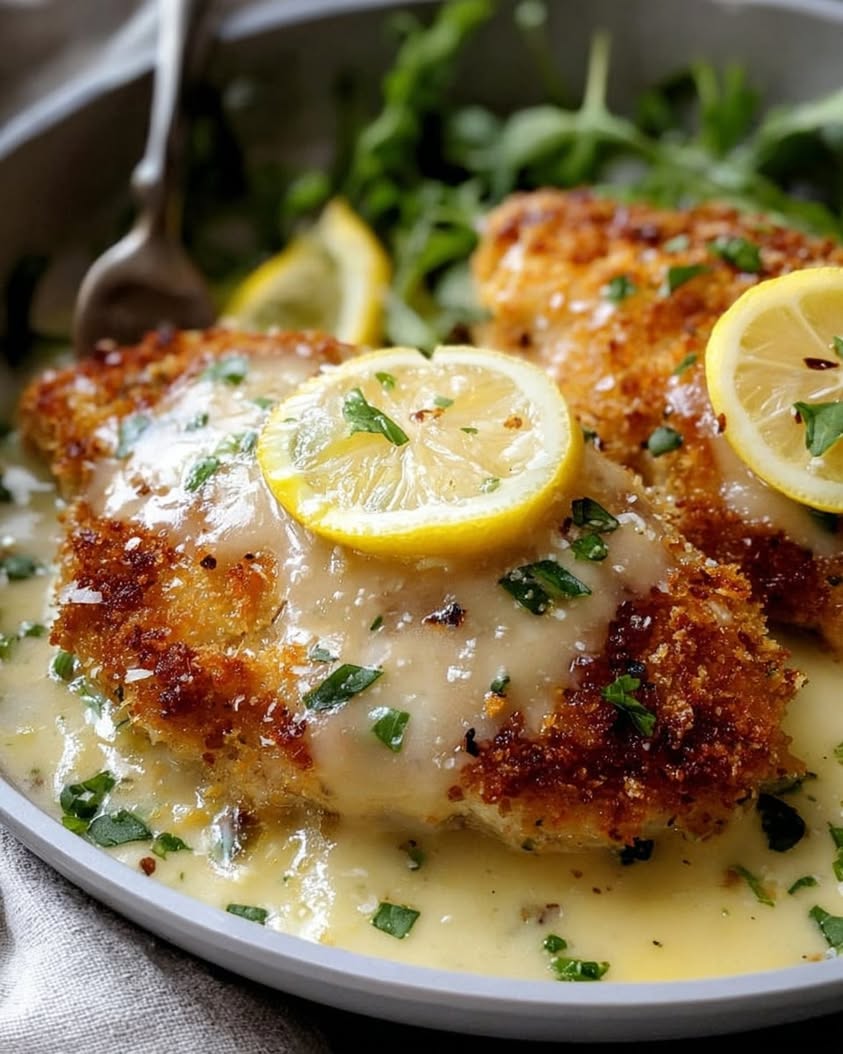
Lemon Pecorino Crusted Chicken with Creamy Lemon Sauce: A Crispy, Zesty Weeknight Wonder
Imagine a dinner that delivers restaurant-quality elegance with straightforward, weeknight-friendly preparation. This Lemon Pecorino Crusted Chicken with Creamy Lemon Sauce does exactly that. It transforms simple chicken breasts into a spectacular main course featuring a golden, savory crust and a luxuriously tangy sauce. The combination of crispy, cheesy breading and a velvety, bright pan sauce creates a symphony of textures and flavors on your plate. Ultimately, this dish proves that impressive cooking doesn’t require complicated techniques or hours in the kitchen.
The magic of this Lemon Pecorino Crusted Chicken with Creamy Lemon Sauce recipe lies in its brilliant use of a few high-impact ingredients. Fresh lemon zest and juice provide a vibrant, sunny acidity that cuts through the richness of the Pecorino Romano cheese and cream. Meanwhile, the chicken itself stays incredibly juicy and tender beneath its flavorful armor. As a result, every bite is a perfect balance: crunchy, salty, creamy, and bright. This is the kind of meal that will have everyone asking for seconds and requesting the recipe.
Furthermore, this dish is incredibly versatile. You can serve it for a casual family dinner or plate it elegantly for guests. The ingredients are pantry-friendly and the method is reliable. Whether you’re looking to break out of a chicken dinner rut or need a guaranteed crowd-pleaser, this recipe is your answer. Let’s dive into how to create this stunning Lemon Pecorino Crusted Chicken with Creamy Lemon Sauce in your own kitchen.
Quick Recipe Highlights
- Flavor Profile: This dish masterfully balances bold, salty notes from the Pecorino Romano cheese with the fresh, zesty punch of lemon. The creamy sauce adds a luxurious, rich element that ties all the flavors together harmoniously.
- Texture: You get a fantastic contrast between the super-crispy, golden-brown crust on the chicken and the tender, moist meat inside. The sauce is velvety and smooth, coating each piece beautifully for a perfect mouthfeel.
- Aroma: As it cooks, your kitchen will fill with the irresistible scents of toasting cheese, savory garlic, and bright, citrusy lemon. It’s an aromatic promise of the delicious meal to come.
- Visual Appeal: The finished plate is a feast for the eyes with golden-brown chicken cutlets resting in a pale yellow, creamy sauce, often garnished with fresh parsley or extra lemon zest for a pop of color.
- Skill Level Needed: This is an accessible recipe for most home cooks. The techniques involved—pounding chicken, creating a breading station, and making a simple pan sauce—are fundamental and easy to master with clear guidance.
- Special Equipment: You’ll need basic tools: a meat mallet or rolling pin to pound the chicken, a heavy skillet (oven-safe is a bonus), and a whisk for the sauce. No fancy gadgets are required.
Recipe Overview
- Difficulty Level: We rate this Lemon Pecorino Crusted Chicken as “Easy.” The steps are sequential and logical, involving foundational skills like breading and pan-frying. The sauce is made in the same pan, simplifying cleanup. With attention to temperature and timing, even novice cooks can achieve excellent results on their first try.
- Category: This recipe fits perfectly as a Main Course for dinner. It’s substantial enough to be the star of the plate but pairs wonderfully with a variety of sides. Additionally, it’s excellent for Special Occasions or Date Nights at home due to its impressive presentation.
- Cuisine: The dish draws inspiration from Italian-American cuisine, utilizing classic flavors like Pecorino Romano, garlic, and lemon. It’s a modern, simplified take on crusted or piccata-style chicken dishes, making it accessible while honoring its culinary roots.
- Cost: This is a cost-effective meal. Chicken breasts, breadcrumbs, and basic pantry staples form the foundation. Pecorino Romano is a flavorful cheese, so a little goes a long way, keeping the per-serving cost reasonable for a restaurant-quality experience at home.
- Season: This Lemon Pecorino Crusted Chicken shines brightest in the spring and summer when fresh, bright flavors are most desired. However, its comforting, creamy element makes it a wonderful year-round recipe to bring a splash of sunshine to any table, even in colder months.
- Occasion: It’s incredibly versatile. Serve it for a quick Weeknight Family Dinner, dress it up for a Dinner Party with friends, or even make it for a romantic Date Night In. It’s a reliable recipe that suits many settings.
Why You’ll Love This Recipe
First and foremost, the taste and texture are utterly irresistible. The Lemon Pecorino Crusted Chicken with Creamy Lemon Sauce delivers a powerful one-two punch of flavor. You experience the initial crunch of the savory, cheesy crust, followed by the juicy chicken, all enveloped in that silky, tangy sauce. Each component complements the others perfectly, creating a dish that is far greater than the sum of its parts. It satisfies cravings for something crispy, creamy, and bright all at once, making it a universally appealing meal.
From a convenience standpoint, this recipe is a weeknight hero. It comes together in about 35 minutes from start to finish, using a single skillet for both the chicken and the sauce. The prep work is simple and the cooking process is fast. Moreover, the ingredients are easy to find at any standard grocery store. You likely have many of them in your pantry already. Consequently, you can decide to make this impressive dish without needing a special shopping trip, which is a huge win for busy schedules.
Nutritionally, this Lemon Pecorino Crusted Chicken offers a good balance. Chicken breast is a fantastic source of lean protein. Using a combination of breadcrumbs and cheese for the crust adds flavor without needing an excessive amount of oil for frying. You can easily control the amount of sauce you add to each plate. For a lighter version, consider using half-and-half instead of heavy cream. Ultimately, it’s a satisfying meal that feels indulgent but can be part of a balanced diet.
This dish also holds tremendous value for entertaining. It looks and tastes like something from a fine dining menu, yet it’s completely manageable to prepare while guests are present. You can bread the chicken ahead of time and have your ingredients measured and ready. Cooking it is a quick process, so you won’t be stuck in the kitchen all night. Presenting this beautiful platter of golden chicken napped in creamy sauce is guaranteed to draw compliments and make any gathering feel special.
Finally, it is remarkably cost-effective. Compared to ordering a similar dish at a restaurant, making this Lemon Pecorino Crusted Chicken with Creamy Lemon Sauce at home saves a significant amount of money. A single chicken breast, when sliced and pounded, can easily serve two people. The cheese, breadcrumbs, and sauce ingredients are inexpensive. Therefore, you can create a luxurious-feeling dinner for a family of four for a fraction of the cost of eating out, which is always a rewarding feeling.
Historical Background and Cultural Significance
The culinary roots of this dish are deeply embedded in Italian cooking traditions, specifically from the regions of Lazio and Sardinia where Pecorino Romano cheese originates. Historically, shepherds in these areas created Pecorino Romano as a hard, salty cheese that could be preserved and transported easily. Dishes featuring a crust of breadcrumbs and cheese, often called “impanata,” are a classic method to add flavor and texture to simpler proteins like chicken or fish, making inexpensive ingredients feel special and celebratory.
Culturally, the combination of lemon and cheese speaks to the Italian philosophy of “cucina povera” or “poor kitchen,” which emphasizes creating extraordinary meals from humble, accessible ingredients. The bright acidity of lemon, a staple in Southern Italian and Sicilian cuisine, is frequently used to cut through the richness of dairy and fats. This Lemon Pecorino Crusted Chicken is a modern American interpretation of that timeless balance, honoring the spirit of resourcefulness and bold flavor pairing that defines much of Italy’s food history.
The evolution of the recipe into its current form with a creamy lemon sauce likely occurred within Italian-American communities and contemporary restaurant kitchens. The classic Chicken Piccata, featuring a lemon-butter-caper sauce, is a clear relative. The addition of a creamy element creates a richer, more luxurious texture that appeals to modern palates. This version represents a fusion: it maintains the rustic, flavorful crust of traditional Italian cooking while incorporating a smoother, more decadent sauce style popular in contemporary bistro cuisine.
Regional variations of this concept abound. In some parts of Italy, you might find a similar dish using Parmigiano-Reggiano instead of Pecorino. In others, the crust might include herbs like oregano or thyme. The sauce could be a simple white wine reduction without cream, or include capers or olives. The beauty of this recipe framework is its adaptability. Cooks across different regions and households have put their own stamp on it, which is exactly what you are encouraged to do once you master the basic technique.
Ingredient Deep Dive
Let’s start with the star of the crust: Pecorino Romano Cheese. This hard, salty sheep’s milk cheese hails from Italy and has been produced for over 2,000 years. Its sharp, tangy flavor is more assertive than Parmesan, meaning a little goes a long way in adding umami depth. Nutritionally, it’s rich in protein and calcium. When selecting Pecorino Romano, look for the DOP (Protected Designation of Origin) stamp to ensure authenticity. Store it tightly wrapped in the refrigerator, where it can last for weeks. If you need a substitute, a good quality Parmigiano-Reggiano will work, though the flavor profile will be slightly nuttier and less sharp.
Fresh Lemons are the other critical component, providing the essential bright acidity. Always use fresh lemons for both zest and juice; bottled juice lacks the vibrant, complex flavor and aromatic oils found in the peel. The zest contains potent citrus oils that deliver intense lemon flavor without additional liquid. From a health perspective, lemons are an excellent source of Vitamin C and antioxidants. Choose lemons that are heavy for their size with smooth, brightly colored skin, indicating juiciness. Store them at room temperature for short-term use or in the refrigerator to extend their life.
Boneless, Skinless Chicken Breasts are the perfect canvas. For even cooking and a elegant presentation, you will pound them to an even thickness. This technique, known as “scaloppine,” is classic in Italian cooking. It ensures the chicken cooks quickly and stays tender, while also providing a larger surface area for the delicious crust. From a nutritional standpoint, chicken breast is a lean source of high-quality protein. Select plump, uniform breasts for best results. To store, keep them in the coldest part of your refrigerator and use within 1-2 days of purchase, or freeze for longer storage.
The Creamy Lemon Sauce relies on a few key players. Heavy Cream (or half-and-half for a lighter version) provides the luxurious, velvety base that carries the lemon flavor. Chicken Broth forms the foundation of the sauce, adding savory depth. Use a low-sodium variety so you can control the salt level, especially since the Pecorino is already salty. Fresh Garlic adds an essential aromatic backbone. Finally, a little All-Purpose Flour is used to thicken the sauce to a perfect, nap-worthy consistency. For a gluten-free version, you can substitute the flour with a cornstarch slurry added at the end of cooking.
Common Mistakes to Avoid
- Not Pounding the Chicken Evenly: If your chicken breasts are of uneven thickness, the thin parts will overcook and dry out before the thick parts are done. Always pound them to a uniform 1/2-inch thickness for perfect, juicy results every time.
- Using Pre-Shredded Cheese: Pre-shredded cheese contains anti-caking agents like cellulose, which can prevent it from melting and integrating properly into the crust. For the best flavor and texture, always buy a block of Pecorino Romano and grate it fresh yourself.
- Skipping the Zest: The lemon zest is packed with aromatic oils and is crucial for delivering a potent lemon flavor throughout the crust and sauce. Using only juice will result in a less vibrant, one-dimensional citrus taste.
- Overcrowding the Pan: Adding too many chicken cutlets to the skillet at once will cause the pan temperature to drop dramatically. This leads to steaming instead of searing, producing a soggy, greasy crust rather than a crisp, golden one. Cook in batches if necessary.
- Moving the Chicken Too Soon: After placing the breaded chicken in the hot oil, let it cook undisturbed for a few minutes. If you try to move it immediately, the crust will stick and tear. Wait until it easily releases from the pan before flipping.
- Burning the Garlic: When making the sauce, adding minced garlic to very hot, dry pan will cause it to burn in seconds, creating a bitter flavor. Ensure there is liquid (like broth) in the pan or that the heat is medium-low when you sauté the garlic.
- Adding Cold Cream to a Hot Pan: Pouring cold heavy cream directly into a very hot pan can cause it to separate or curdle. To prevent this, let the cream sit out for 10-15 minutes to take the chill off, or temper it by whisking in a little hot broth first.
- Overcooking the Sauce: A cream-based sauce can break if boiled vigorously. Once you add the cream and lemon juice, you should only simmer the sauce gently until it thickens slightly. Avoid a rolling boil to maintain its smooth, velvety texture.
Essential Techniques
Pounding Chicken to an Even Thickness: This is the first and most critical technique for ensuring perfectly cooked meat. Place a chicken breast between two sheets of plastic wrap or in a large zip-top bag. Using the flat side of a meat mallet or a rolling pin, gently pound from the center outward until the breast is an even 1/2-inch thick. This not only promotes uniform cooking but also tenderizes the meat and creates the classic “cutlet” shape ideal for breading. The visual cue for success is a uniformly flat piece of meat with no ragged edges or overly thin spots.
The Standard Breading Procedure: This three-step method (flour, egg, breadcrumb mixture) is essential for creating a cohesive, crispy crust that adheres to the chicken. First, dredge in flour to create a dry surface for the egg to stick to. Second, dip in beaten egg, which acts as the “glue.” Third, press firmly into the breadcrumb-Pecorino mixture, ensuring full coverage. The key is to use one hand for the dry steps and the other for the wet step to avoid ending up with “club fingers” coated in breading. A successful crust will look evenly coated and feel slightly dry to the touch before hitting the pan.
Pan-Frying for a Golden Crust: The goal is to sauté the chicken in just enough oil to achieve a deep golden-brown color and a crisp texture, not to deep-fry it. Use a combination of olive oil and butter for flavor and a good sear. The oil should be shimmering but not smoking before you add the chicken. Listen for a steady sizzle—this is the sound of moisture escaping and crust forming. Do not move the chicken until it easily releases from the pan, indicating a proper sear has formed. This technique creates flavor through the Maillard reaction and ensures a crust that stays crispy even after saucing.
Building a Pan Sauce: This technique maximizes flavor and minimizes dishes. After removing the chicken, you deglaze the skillet with chicken broth, scraping up all the flavorful browned bits (the “fond”) left from cooking. Those bits are packed with savory flavor. Then you build the sauce by simmering the broth to reduce it slightly, adding aromatics like garlic, and finally incorporating the cream and lemon. The sauce thickens naturally from reduction and the slight amount of flour left in the pan from the chicken. A successful pan sauce will coat the back of a spoon and have a balanced, concentrated flavor.
Pro Tips for Perfect Lemon Pecorino Crusted Chicken
For an extra-crispy crust that holds up to the sauce, let the breaded chicken cutlets rest on a wire rack for 5-10 minutes before frying. This allows the breading to set and adhere better, preventing it from sliding off during cooking or when sauced.
Use a meat thermometer to guarantee perfectly cooked chicken every time. Insert it into the thickest part of a cutlet; it should read 165°F (74°C). This prevents guesswork and ensures juicy, safe-to-eat meat without overdoing it.
Grate your Pecorino Romano cheese using the fine side of a box grater. Finer cheese integrates more seamlessly with the breadcrumbs, creating a more uniform crust that browns evenly and delivers consistent cheesy flavor in every bite.
When adding the lemon juice to the sauce, do it off the heat or on very low heat initially. High heat can cause the acid in the lemon to curdle the cream. Gently warm it through to preserve the sauce’s smooth texture.
If your sauce seems too thin after adding the cream, create a quick slurry by mixing a teaspoon of cornstarch with a tablespoon of cold water. Whisk this into the simmering sauce and cook for one minute until thickened.
For a beautiful presentation, slice the cooked chicken on a bias before plating and then spoon the creamy lemon sauce over the top. This showcases the juicy interior and the crispy crust all at once.
Always taste your sauce for seasoning right before serving. The saltiness of Pecorino can vary, so you may need to add a final pinch of salt, a crack of black pepper, or a tiny extra squeeze of lemon to achieve perfect balance.
Variations and Adaptations
For regional variations, consider incorporating ingredients from different parts of Italy. A Sicilian twist could include adding a tablespoon of rinsed capers and a handful of chopped green olives to the sauce. A Tuscan-inspired version might mix fresh rosemary into the breadcrumb coating. For a Roman touch, you could finish the dish with a few shavings of fresh black pepper (pepe nero) right before serving.
Seasonal adaptations are easy and fun. In the spring, garnish the finished dish with fresh pea shoots or edible flowers. During summer, serve it alongside a bright, fresh tomato salad. For fall, incorporate sautéed mushrooms into the creamy lemon sauce. In winter, pair it with roasted root vegetables to add earthy sweetness that complements the tangy sauce.
Dietary modifications are straightforward. For a gluten-free Lemon Pecorino Crusted Chicken, use gluten-free all-purpose flour and gluten-free panko breadcrumbs. To make it dairy-free, substitute the Pecorino with a vegan parmesan alternative and use full-fat coconut milk or a cashew cream in place of heavy cream. For a lower-carb or keto version, replace the breadcrumbs with crushed pork rinds or almond flour in the crust.
Experiment with flavor variations by changing the cheese in the crust. Try using Asiago for a slightly milder flavor, or a sharp white cheddar for a different profile. You can also add dried herbs like oregano, thyme, or an Italian herb blend to the breadcrumb mixture. For a hint of heat, mix a pinch of red pepper flakes or cayenne into the flour dredge.
Texture modifications can cater to different preferences. For an ultra-crispy crust, use panko breadcrumbs instead of regular ones. For a finer, more delicate crust, pulse your breadcrumbs in a food processor before mixing with the cheese. If you prefer a thicker sauce, increase the initial flour dredge on the chicken slightly, as more will be left in the pan to thicken the sauce.
Presentation alternatives can elevate the dish for special occasions. Instead of serving whole cutlets, slice the cooked chicken and fan it out on a platter, drizzling the sauce around it. For individual servings, plate one cutlet per person and garnish with a twist of lemon, a sprig of fresh thyme, and a light dusting of extra grated Pecorino.
Serving and Presentation Guide
Plating techniques matter for visual appeal. Place a warm chicken cutlet slightly off-center on a shallow bowl or plate. Spoon the creamy lemon sauce over the top, allowing some to pool around the sides. Avoid completely submerging the chicken, as you want to showcase the beautiful golden crust. Using a pre-warmed plate is a professional trick that keeps the entire dish hot longer once it leaves the kitchen.
Garnishing adds the final touch of freshness and color. A sprinkle of finely chopped fresh flat-leaf parsley or chives is classic. For more lemon aroma, add a few thin strips of lemon zest on top. A light grating of additional Pecorino Romano just before serving reinforces the cheesy theme. A single twist of freshly cracked black pepper adds both flavor and a visual accent.
Traditional accompaniments keep the meal balanced. Since this is a rich, flavorful main, pair it with simple, clean sides. Buttered pasta like angel hair or orzo is perfect for soaking up the extra sauce. Alternatively, creamy polenta or mashed potatoes make a comforting base. A simple arugula salad with a lemon vinaigrette complements the flavors without competing with them.
Modern serving suggestions can lighten the meal. For a contemporary take, serve the Lemon Pecorino Crusted Chicken alongside roasted asparagus, sautéed spinach, or grilled zucchini noodles. A quinoa or farro salad with herbs and lemon would also pair beautifully, adding whole grains to the plate. These sides keep the meal feeling fresh and vibrant.
Temperature considerations are crucial. Serve this dish immediately after preparing it. The contrast between the hot, crispy chicken and the warm, creamy sauce is part of the experience. If you need to hold it for a few minutes, keep the chicken and sauce separate until the last moment to prevent the crust from becoming soggy.
Portion control is easy with this recipe. One standard chicken breast, pounded and cooked, typically serves two people when accompanied by substantial sides. For heartier appetites or if serving with lighter sides like a simple salad, plan for one full cutlet per person. The recipe scales up or down effortlessly based on your guest count.
Wine and Beverage Pairing
Choosing the right wine enhances the dining experience. For this Lemon Pecorino Crusted Chicken, you want a wine with good acidity to mirror the lemon and cut through the richness of the cheese and cream. A crisp, unoaked Italian white like Vermentino or Pinot Grigio is a classic and perfect match. Alternatively, a French Chablis or a Sauvignon Blanc from New Zealand would also work beautifully. If you prefer red wine, opt for a light-bodied, low-tannin red like a Pinot Noir served slightly chilled.
Non-alcoholic alternatives can be just as sophisticated. A sparkling lemonade or a homemade citrus spritzer made with club soda, fresh lemon juice, and a touch of honey syrup complements the flavors directly. For something herbal, an iced tea infused with lemon verbena or mint provides a refreshing counterpoint. Even a simple glass of chilled, high-quality mineral water with a slice of lemon is a clean and palate-cleansing choice.
While not traditional pairings for this dish, coffee or tea after the meal should be considered. A light roast coffee or an espresso would be fine after dinner. For tea, a cup of chamomile or peppermint tea would aid digestion after the rich meal. These are best enjoyed as a concluding beverage rather than served alongside the food itself.
Temperature considerations for beverages are key. White wines and non-alcoholic spritzers should be served well-chilled, around 45-50°F. If you choose a light red like Pinot Noir, serving it slightly cooler than room temperature (around 55°F) can help balance its fruitiness against the dish’s acidity. Always ensure your water is icy cold to refresh the palate between bites.
Serving suggestions for beverages include offering options. Place a chilled bottle of water on the table alongside the wine. If serving a non-alcoholic spritzer, consider making a large pitcher for guests to help themselves. Always provide a wine glass for water as well, as it encourages hydration and allows guests to properly swirl and sniff their wine if they choose.
Storage and Shelf Life
Proper storage methods are essential for food safety and quality. Store leftover Lemon Pecorino Crusted Chicken and sauce separately if possible. Place the chicken in an airtight container and the sauce in a separate sealed container. This prevents the crispy crust from becoming completely soggy during storage. If they are already combined, it’s still fine to store them together, but expect the crust to soften.
Temperature requirements are non-negotiable. Both the chicken and the sauce must be refrigerated within two hours of cooking. Prompt cooling prevents bacterial growth. The ideal refrigerator temperature is 40°F (4°C) or below. Do not leave the dish at room temperature for extended periods, as the creamy sauce is particularly perishable.
Container recommendations include glass or BPA-free plastic containers with tight-fitting lids. For the sauce, a mason jar works perfectly. Avoid storing in the skillet you cooked in. If you need to cool the components quickly before refrigerating, you can spread the chicken on a plate and place the sauce container in an ice bath for 15-20 minutes before putting them in the fridge.
Recognizing signs of spoilage is important for safety. If the sauce develops an off smell, a sour taste, or visible mold, discard it immediately. If the chicken smells unpleasant or has a slimy texture, do not consume it. Generally, properly stored leftovers will remain safe to eat for 3-4 days in the refrigerator.
Reheating instructions require care to preserve texture. For the chicken, reheat it in an oven or toaster oven at 375°F until warmed through. This will help re-crisp the crust slightly. The microwave will make it soggy. For the sauce, reheat it gently in a saucepan over low heat, stirring frequently. If it has thickened too much, whisk in a splash of chicken broth or cream to loosen it.
Freezing guidelines are possible but with caveats. You can freeze the cooked chicken cutlets (without sauce) on a baking sheet until solid, then transfer to a freezer bag. The crust will lose some crispness upon thawing and reheating. The creamy lemon sauce does not freeze well, as it may separate and become grainy when thawed. It’s best to consume the sauce fresh or refrigerated only.
Make Ahead Strategies
Creating a prep timeline can turn this into a stress-free dinner party dish. The day before, you can grate the Pecorino cheese, prepare the breadcrumb mixture, and measure out all your sauce ingredients. Store the cheese mixture in the fridge. You can also pound the chicken breasts, place them between layers of parchment paper, and refrigerate them on a tray.
Storage between steps is simple with proper planning. If you bread the chicken cutlets ahead of time, place them in a single layer on a parchment-lined baking sheet, cover tightly with plastic wrap, and refrigerate for up to 4 hours before cooking. Do not bread them the night before, as the crust will become gummy.
Assessing the quality impact of make-ahead steps is important. Pre-measuring ingredients has no negative impact. Pounding chicken ahead actually allows the meat to relax, which can improve tenderness. Breading a few hours in advance can help the coating adhere better. However, cooking the chicken and making the sauce are best done just before serving for optimal texture and flavor.
Assembly tips for efficiency include setting up a “mise en place” station. Before you start cooking, have all your breading components (flour, egg, breadcrumb mix) in separate shallow dishes. Have your sauce ingredients measured and lined up next to the stove. This organized approach makes the cooking process smooth and fast, which is especially helpful when entertaining.
Reheating guidelines for partially prepped components are minimal. The chicken should be cooked from its raw, breaded state. If you need to hold cooked chicken warm for a short period before serving, place it on a wire rack set over a baking sheet in a 200°F oven. This keeps it warm without making the bottom soggy.
Adding fresh elements just before serving is key. Even if you prep everything else ahead, always zest and juice your lemons right before making the sauce for the brightest flavor. Chop your fresh parsley garnish at the last minute. These final touches make a significant difference in the vibrancy of the finished dish.
Scaling Instructions
Halving the recipe is straightforward for smaller households. Simply divide all ingredient quantities by two. Use a smaller skillet to maintain the proper oil depth for frying. The cooking times will remain roughly the same, as you are still cooking individual cutlets. This is a great way to make a romantic dinner for two without excessive leftovers.
Doubling or tripling the recipe for a crowd requires some adjustments. Use two large skillets on the stove to cook the chicken in batches without overcrowding, or cook in batches and keep finished cutlets warm in a 250°F oven on a wire rack. For the sauce, you may need to make it in two batches or use a wider, high-sided pan to accommodate the increased volume of liquid. Ensure your broth is fully reduced before adding the cream.
Equipment adjustments are necessary when scaling. For larger batches, a large electric skillet or a wide Dutch oven can provide more surface area for frying. You’ll also need larger bowls for the breading stations. When making a larger quantity of sauce, use a whisk that reaches the bottom of your pot to prevent scorching.
Timing modifications are minimal when scaling up. The actual cook time per batch of chicken remains the same. The total active time will increase linearly with the number of batches. Factor this in when planning your meal timeline. It’s often efficient to have one person managing the chicken frying while another prepares the sauce.
Storage considerations for scaled recipes are important. If you’re cooking for a future event, you can cook the chicken cutlets ahead, let them cool completely, and refrigerate them for up to a day. Re-crisp them in a 375°F oven for 10 minutes before serving. The sauce is best made fresh, but you can prepare the base (broth reduction) ahead and finish with cream and lemon just before serving.
Nutritional Deep Dive
A macro breakdown for one serving (one chicken cutlet with sauce) provides a balanced profile. You can expect approximately 35-40 grams of high-quality protein from the chicken, which supports muscle maintenance and satiety. The carbohydrates come primarily from the breadcrumbs and a small amount from the flour, totaling around 15-20 grams per serving. Fats, about 20-25 grams, come from the olive oil, butter, cheese, and cream, contributing to the rich mouthfeel and carrying fat-soluble flavors.
The micronutrient analysis reveals several benefits. Pecorino Romano cheese is an excellent source of calcium and phosphorus, crucial for bone health. Lemon juice provides a dose of Vitamin C, an antioxidant that supports immune function. Chicken breast offers B vitamins, particularly niacin and B6, which aid in energy metabolism. Using olive oil adds heart-healthy monounsaturated fats and antioxidants like vitamin E.
Health benefits of this meal include high protein content for muscle repair and prolonged fullness. The dish is relatively low in sugar. The use of lemon not only adds flavor without calories but also can aid in iron absorption from the chicken if you were to pair it with an iron-rich side like spinach. The moderate fat content, when part of a balanced diet, provides sustained energy.
Dietary considerations are important for specific needs. This recipe is naturally gluten-free if you use GF breadcrumbs and flour, and it’s high in protein. However, it is not suitable for dairy-free, vegan, or low-fat diets in its standard form. The sodium content can be moderate due to the cheese and broth, so those on sodium-restricted diets should use low-sodium broth and reduce the amount of added salt.
Portion analysis shows that one chicken cutlet with a moderate amount of sauce is a satisfying main course portion. To manage calorie intake, you can control the amount of sauce served or use half-and-half instead of heavy cream. Serving it with a large portion of non-starchy vegetables like roasted broccoli or a big salad can create a very balanced plate without feeling deprived.
Weight management tips include being mindful of the sauce portion, as that is where a significant amount of the calories and fat reside. You can lightly nap the chicken rather than drench it. Using cooking spray instead of additional oil to pan-fry can reduce fat slightly. Pairing this dish with a large, fiber-rich vegetable side will increase volume and nutrients without adding many calories, promoting satiety.
Dietary Adaptations
For a gluten-free version, substitute the all-purpose flour with a gluten-free 1:1 baking flour blend. Use certified gluten-free breadcrumbs or make your own from gluten-free bread. Ensure your chicken broth is labeled gluten-free. All other ingredients are naturally gluten-free, making this an easy adaptation that doesn’t sacrifice texture or flavor.
To make this dairy-free, replace the Pecorino Romano with a high-quality vegan parmesan alternative. Use a plant-based butter and olive oil for frying. For the sauce, substitute heavy cream with full-fat canned coconut milk or a homemade cashew cream. The flavor profile will be different but still delicious, with the coconut adding a subtle sweetness that pairs surprisingly well with lemon.
A vegan adaptation requires more significant changes. Use large, thick slices of firm tofu or breaded cauliflower steaks as the base. For the crust, use nutritional yeast mixed with breadcrumbs to mimic the cheesy flavor. The sauce can be made with raw cashews blended with vegetable broth and lemon juice until completely smooth, then heated gently. This creates a rich, creamy, plant-based sauce.
For a low-carb or keto adaptation, omit the flour dredge entirely. For the crust, use a mixture of finely grated Pecorino, almond flour, and crushed pork rinds. Pan-fry as usual. The sauce can be made by reducing the broth, then thickening it with a teaspoon of xanthan gum instead of flour, before adding cream and lemon. This keeps the carb count very low Print
Lemon Pecorino Crusted Chicken with Creamy Lemon Sauce
- Total Time: 45 minutes
- Yield: 4
Description
A zesty, crispy chicken dish with a tangy lemon and pecorino crust, served with a rich, creamy lemon sauce for a burst of flavor in every bite.
Ingredients
- 4 boneless, skinless chicken breasts
- 1 cup panko breadcrumbs
- 1/2 cup grated pecorino cheese
- Zest of 2 lemons
- 2 eggs, beaten
- 1/2 cup all-purpose flour
- Salt and black pepper to taste
- 2 tablespoons olive oil
- 1 cup heavy cream
- Juice of 1 lemon
- 2 cloves garlic, minced
- 1 tablespoon butter
- Fresh parsley, chopped for garnish
Instructions
- Preheat oven to 375°F (190°C). In a shallow dish, mix panko, pecorino, and lemon zest. In separate dishes, place flour and beaten eggs.
- Season chicken with salt and pepper. Dredge each breast in flour, dip in egg, then coat with the panko mixture, pressing gently to adhere.
- Heat olive oil in a large oven-safe skillet over medium-high heat. Sear chicken for 3-4 minutes per side until golden, then transfer skillet to oven and bake for 15-20 minutes until cooked through.
- While chicken bakes, melt butter in a saucepan over medium heat. Add garlic and cook for 1 minute until fragrant. Stir in heavy cream and lemon juice, simmer for 5-7 minutes until slightly thickened.
- Serve chicken hot, drizzled with the creamy lemon sauce and garnished with fresh parsley.
Notes
You can customize the seasonings to taste.
- Prep Time: 15 minutes
- Cook Time: 30 minutes
- Method: Main
- Cuisine: Italian-American