Layered Mediterranean Vegetable Lasagna with a Creamy Three-Cheese Drizzle: A Vibrant, Meatless Masterpiece
Imagine a dish that captures the essence of a sun-drenched Mediterranean garden in every single bite. This Layered Mediterranean Vegetable Lasagna with a Creamy Three-Cheese Drizzle does exactly that. Furthermore, it transforms humble, colorful vegetables into a stunning, show-stopping centerpiece that is both nourishing and deeply satisfying. This recipe proves that a vegetarian lasagna can be just as hearty and complex as any meat-based version, if not more so.
The magic of this Mediterranean Vegetable Lasagna lies in its beautiful layers of roasted eggplant, zucchini, and sweet bell peppers. Consequently, each vegetable contributes its unique texture and flavor, creating a symphony of taste. Meanwhile, a rich tomato sauce infused with herbs provides a tangy base. Ultimately, the crowning glory is a luxurious creamy garlic herb three-cheese drizzle that cascades over the top, adding a final touch of decadence.
This dish is perfect for anyone seeking a flavorful, plant-forward meal. Whether you are hosting a dinner party or preparing a special family supper, this lasagna promises to impress. It is a celebration of fresh produce, vibrant colors, and comforting, layered goodness. Let’s explore how to create this masterpiece in your own kitchen.
Quick Recipe Highlights
- Flavor Profile: This Mediterranean Vegetable Lasagna delivers a robust, savory taste with sweet notes from roasted peppers and a tangy kick from the tomato sauce. The creamy three-cheese drizzle adds a rich, garlicky, and herbaceous finish that perfectly balances the vegetables.
- Texture: You will experience a wonderful contrast of tender, melt-in-your-mouth roasted vegetables, firm pasta layers, and a velvety, smooth cheese sauce. The top layer crisps up beautifully in the oven for a delightful textural surprise.
- Aroma: As it bakes, your kitchen will fill with the irresistible scents of roasting garlic, sweet basil, earthy oregano, and bubbling cheese. It is an aromatic promise of the delicious meal to come.
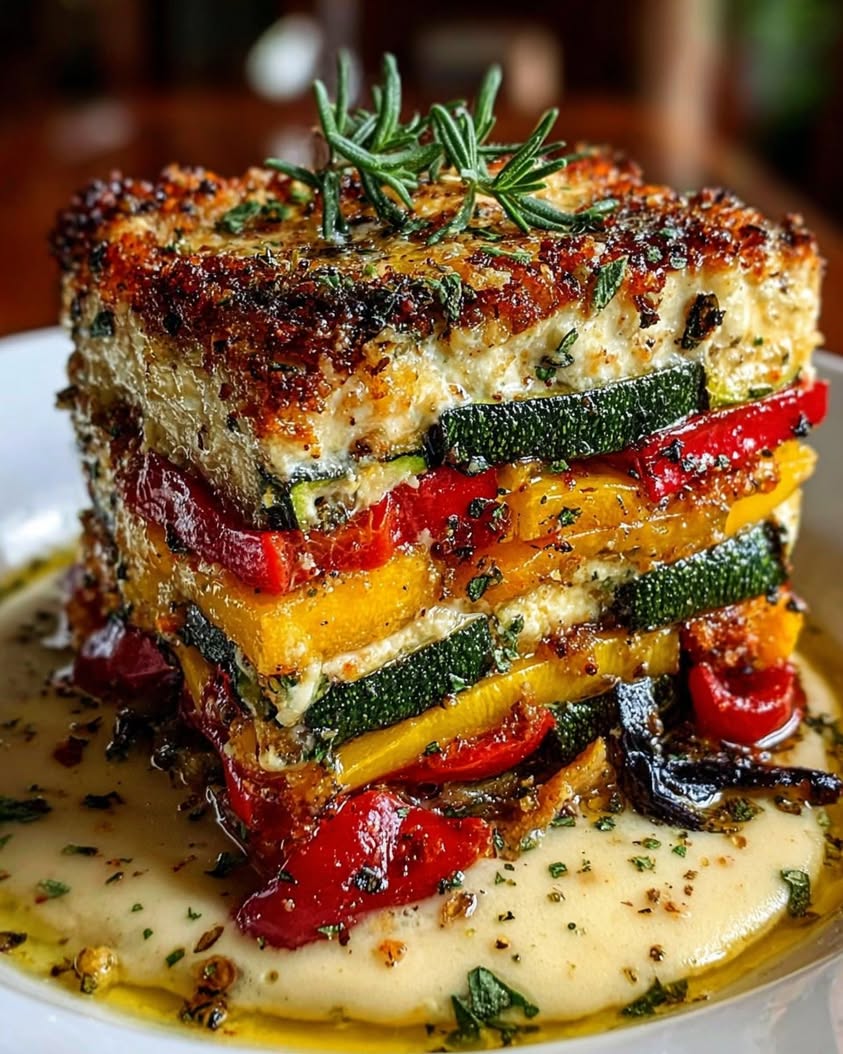
- Visual Appeal: The cross-section of this lasagna is a true work of art. Striking layers of deep purple eggplant, green zucchini, and bright red and yellow peppers create a stunning visual mosaic that is almost too beautiful to eat.
- Skill Level Needed: This recipe requires intermediate skills due to the multi-step process of prepping and roasting vegetables, building layers, and making a cheese sauce. However, clear instructions make it achievable for confident home cooks.
- Special Equipment: You will need a good chef’s knife, a large baking sheet for roasting, a 9×13 inch baking dish, and a medium saucepan for the cheese drizzle. A mandoline slicer is helpful for uniform vegetable slices but not essential.
Recipe Overview
- Difficulty Level: We rate this Mediterranean Vegetable Lasagna as intermediate. The process involves several key techniques: properly salting and draining eggplant to remove bitterness, roasting vegetables to concentrate flavor, and preparing a smooth cheese sauce. Each step is straightforward, but managing them together requires some organization and kitchen confidence.
- Category: This dish fits beautifully into multiple categories. It is a stellar main course for vegetarian dinners, a impressive casserole for potlucks, and a fantastic make-ahead meal for busy weeks. It also works as a special occasion centerpiece.
- Cuisine: The recipe draws direct inspiration from the sun-soaked coasts of Italy and Greece, hallmarks of Mediterranean cuisine. It emphasizes fresh vegetables, olive oil, garlic, and herbs, creating a dish that is both healthy and intensely flavorful.
- Cost: This is a moderately priced dish. Seasonal vegetables are affordable, and the cheeses are the primary cost driver. You can easily control the budget by choosing store-brand cheeses or buying blocks and grating them yourself, which often saves money.
- Season: This lasagna shines brightest in late summer and early fall when eggplant, zucchini, and bell peppers are at their peak flavor and most affordable. However, it is a welcome taste of sunshine during colder months using sturdy, year-round produce.
- Occasion: It is ideal for Sunday family dinners, festive holiday gatherings like Christmas Eve (for a meatless option), or elegant dinner parties. Its stunning presentation makes it perfect for any event where you want to serve something special.
Why You’ll Love This Mediterranean Vegetable Lasagna
First and foremost, the taste and texture of this Mediterranean Vegetable Lasagna are utterly captivating. Each forkful is a journey through layers of savory, sweet, and tangy flavors. The roasted vegetables become incredibly tender and almost caramelized, offering a natural sweetness that plays against the acidity of the tomato sauce. Subsequently, the creamy three-cheese drizzle adds a luxurious, rich counterpoint that ties every element together. The experience is deeply satisfying and complex, proving that plant-based eating is never boring.
From a convenience standpoint, this lasagna offers significant preparation benefits. For instance, you can roast all the vegetables in advance. You can also assemble the entire dish a day ahead and simply bake it when needed. This make-ahead flexibility is a lifesaver for entertaining or busy weeknights. Moreover, the recipe is forgiving; precise layering is less critical than in traditional meat lasagna, allowing for a more relaxed cooking experience.
Nutritionally, this dish is a powerhouse. It is packed with vitamins, minerals, and fiber from its rainbow of vegetables. Eggplant provides antioxidants, zucchini offers hydration and vitamin C, and bell peppers are loaded with vitamin A. Using whole milk ricotta and mozzarella adds protein and calcium. Choosing a whole wheat or protein-enriched lasagna noodle can boost the fiber and protein content even further, making it a balanced and wholesome meal.
For social and entertaining value, this Mediterranean Vegetable Lasagna is a guaranteed crowd-pleaser. Its vibrant appearance immediately draws compliments, and its rich, comforting flavor appeals to almost everyone. It serves a large group easily and elegantly. Importantly, it caters to vegetarians without making meat-eaters feel like they are missing out. It is a unifying dish that brings people together over fantastic food.
Finally, this recipe is cost-effective and accessible. The ingredients are common and can be found at any grocery store. You can adapt it based on what is on sale or in season. For example, swap yellow squash for zucchini or add layers of spinach. This flexibility allows you to create a gourmet-tasting meal without a gourmet price tag, making special, home-cooked dining accessible any day of the week.
Historical Background and Cultural Significance
The origin story of lasagna is deeply rooted in Italian history, with references to layered pasta dishes dating back to ancient Rome. However, the modern version, featuring tomatoes and cheese, evolved in Naples during the Middle Ages after tomatoes were introduced from the Americas. Traditionally, lasagna was a celebratory dish, often reserved for Sundays and holidays because of its rich ingredients and labor-intensive preparation. The concept of a vegetable-focused lasagna, meanwhile, grew from regional Italian cooking, where cooks used abundant local produce like eggplant and zucchini to create hearty, meatless meals.
This Mediterranean Vegetable Lasagna with a Creamy Three-Cheese Drizzle draws cultural importance from the entire Mediterranean basin. Countries like Greece, Turkey, and Lebanon have their own traditions of layering vegetables, grains, and dairy. Dishes like Greek moussaka, with its layers of eggplant and meat sauce, or Turkish imam bayildi, a stuffed eggplant dish, share a culinary philosophy. That philosophy emphasizes vegetables as the star, enhanced with olive oil, herbs, and often a creamy topping. This recipe is a fusion that honors those traditions while offering a unique, lasagna-style presentation.
The evolution of this specific recipe mirrors contemporary food trends towards plant-based eating and global fusion cuisine. Modern home cooks and chefs began experimenting, replacing traditional meat ragù with roasted vegetables. The creamy cheese drizzle is a nod to bechamel, a classic white sauce in many Italian lasagnas, but its garlic and herb infusion gives it a distinctly broader Mediterranean flair. This evolution shows how classic dishes adapt to new dietary preferences and available ingredients while staying true to their comforting, layered essence.
Regional variations of vegetable lasagna are endless. In Southern Italy, you might find a version with roasted red peppers and capers. A Provencal take could include ratatouille vegetables like eggplant, zucchini, and tomatoes layered with pasta. Some modern adaptations use sliced vegetables instead of pasta altogether for a low-carb option. This particular recipe, with its specific combination of eggplant, zucchini, and bell peppers, offers a balanced, colorful, and highly accessible version that celebrates the best of the Mediterranean garden.
Ingredient Deep Dive
Eggplant (Aubergine): Cultivated for thousands of years in Southeast Asia, eggplant made its way to the Mediterranean via Arab traders. It is a staple in the region’s cuisine. Nutritionally, it is low in calories and a good source of fiber, antioxidants, and vitamins like B6 and K. When selecting, choose firm, glossy eggplants with smooth, taut skin and a bright green cap. Avoid those with wrinkles or soft spots. To store, keep it in a cool, dry place; do not refrigerate unless cut. Salting slices before roasting draws out excess moisture and bitterness, ensuring your Mediterranean Vegetable Lasagna has perfect texture. For substitutions, try portobello mushroom caps for a meaty texture.
Zucchini (Courgette): A summer squash native to the Americas, zucchini was brought to Italy in the late 19th century and became immensely popular. It is incredibly versatile. It offers vitamin C, manganese, and a high water content, making it hydrating. Look for small to medium-sized zucchini that feel heavy for their size with bright, unblemished skin. Store in a plastic bag in the refrigerator’s crisper drawer. For this lasagna, uniform slicing is key for even cooking. If zucchini is out of season, yellow squash is an excellent direct substitute, adding a similar texture and mild flavor to your layered creation.
Bell Peppers (Capsicum): Christopher Columbus brought peppers from the New World to Europe, where they were quickly adopted into Mediterranean cooking. They are rich in vitamins A and C, far exceeding the content of citrus fruits. Select peppers that are firm with thick, glossy flesh and a sturdy stem. Red peppers are simply ripened green peppers, making them sweeter. Store them in the refrigerator’s crisper. Roasting intensifies their natural sweetness, which is crucial for the flavor balance in this dish. You can use any color combination; using both red and yellow adds visual drama and a slight flavor variation to each bite of your Mediterranean Vegetable Lasagna.
The Three-Cheese Drizzle (Ricotta, Mozzarella, Parmesan): This trio forms the creamy, flavorful topping. Ricotta, a fresh whey cheese, has origins in Italy and provides a light, slightly grainy base. Whole milk ricotta is richest. Mozzarella, traditionally made from buffalo milk, offers fantastic melt and stretch. Freshly grated from a block melts better than pre-shredded, which contains anti-caking agents. Parmesan, or Parmigiano-Reggiano, is the aged, salty, umami powerhouse that deepens the entire sauce’s flavor. Together, they create a luxurious drizzle that is the signature of this recipe. For best results, use full-fat cheeses and grate your own mozzarella and Parmesan.
Common Mistakes to Avoid
- Skipping the Eggplant Salting Step: Not salting eggplant can lead to a watery, slightly bitter lasagna. Salting draws out excess moisture and compounds that cause bitterness. Always slice, salt, and let the eggplant drain in a colander for 30 minutes before patting it thoroughly dry.
- Underseasoning the Vegetables: Vegetables need ample seasoning before roasting. Do not be shy with salt, pepper, and dried herbs at this stage. Since they are the main component, well-seasoned veggies are essential for a flavorful final dish.
- Overcrowding the Baking Sheet: Roasting vegetables in a single, uncrowded layer is non-negotiable. Overcrowding causes them to steam instead of caramelize. Use two sheets if necessary to ensure each piece has space to brown and develop sweet, concentrated flavor.
- Using No-Boil Noodles Without Extra Sauce: If using no-boil lasagna noodles, ensure your tomato sauce is slightly thinner or that you add a bit of water to the dish. The noodles need that extra liquid to hydrate and cook through properly in the oven.
- Making the Cheese Drizzle Too Thick: The drizzle should be pourable, not spreadable. If it is too thick, it will sit in a glob on top rather than seeping into the layers. Thin it with a tablespoon or two of milk until it reaches a heavy cream consistency.
- Not Letting the Lasagna Rest: Cutting into the lasagna immediately after baking causes it to slump and become soupy. Let it rest for at least 20 minutes. This allows the layers to set, making for clean, beautiful slices.
- Using Pre-Shredded Cheese in the Drizzle: Pre-shredded cheese contains starches that prevent clumping but also prevent smooth melting. For a velvety sauce, always buy blocks of mozzarella and Parmesan and grate them yourself just before using.
- Forgetting to Taste as You Go: Taste your tomato sauce and your cheese drizzle before assembling. Adjust seasoning with salt, pepper, or a pinch of red pepper flakes. This final adjustment ensures every component is perfectly seasoned.
Essential Techniques
Salting and Draining Eggplant: This technique is crucial for texture and flavor. Salt draws out moisture via osmosis, which concentrates the eggplant’s flesh and removes potential bitterness. To master it, slice the eggplant, sprinkle both sides generously with kosher salt, and layer in a colander. Place a weight on top (like a bowl) to press. After 30-60 minutes, rinse quickly to remove excess salt and pat thoroughly dry with towels. The pitfall is not drying well enough, which will introduce water back into the dish. Success is visible: the slices will be limp and have released liquid droplets.
Roasting Vegetables for Concentration: Roasting, as opposed to sautéing, uses dry heat to caramelize natural sugars and evaporate water. This intensifies flavor and improves texture. The key is high heat (400-425°F), plenty of space on the baking sheet, and a light coating of oil. Toss the vegetables halfway through cooking for even browning. The common mistake is roasting at too low a temperature, which steams the vegetables. Visual cues for success are golden-brown edges and a shrunken, tender interior.
Building Balanced Layers: Proper layering ensures every bite has a bit of everything. Start with a thin layer of tomato sauce to prevent sticking. Then, follow a pattern: noodles, sauce, a single type of roasted vegetable (e.g., all eggplant), then a sprinkle of cheese. Repeat with different vegetables. This method is clearer than mixing all veggies together and guarantees distinct flavors and colors in each layer. The pitfall is overloading layers, which can make the lasagna unstable. Aim for even, moderate distribution.
Creating a Smooth Cheese Drizzle: This is a simple roux-based sauce. Melt butter, whisk in flour to cook out the raw taste, then slowly whisk in warm milk to avoid lumps. Cook until thickened. Finally, remove from heat and stir in the cheeses until melted. The importance is in the texture: it should coat the back of a spoon. The common pitfall is adding cheese to boiling liquid, which can cause it to seize or become grainy. Always take the base off the heat before incorporating cheese for a silky-smooth finish.
Pro Tips for Perfect Mediterranean Vegetable Lasagna
Use a mandoline slicer for perfectly uniform vegetable slices. This ensures even roasting and consistent layering, which leads to a professional-looking final product. Just remember to use the guard for safety.
Roast your vegetables a day in advance. This breaks up the prep work and allows you to assemble the lasagna quickly on the day you plan to bake it. Store the cooled veggies in an airtight container in the fridge.
Add a splash of dry white wine or vegetable broth to your tomato sauce as it simmers. This adds another layer of flavor that complements the roasted vegetables beautifully in the finished lasagna.
For a golden, bubbly top, switch your oven to broil for the final 2-3 minutes of baking. Watch it closely to prevent burning. This gives the cheese drizzle a beautiful, restaurant-quality finish.
Let the lasagna rest for a full 25-30 minutes if you have the time. This longer rest allows the layers to firm up completely, making it much easier to cut clean, picture-perfect portions.
If your cheese drizzle seems too thick after adding the cheese, whisk in a tablespoon of warm milk at a time until it reaches a drizzle-able consistency. It should be like a very thick cream.
For extra flavor, mix a handful of chopped fresh basil or parsley directly into the ricotta cheese before adding it to your layers. This infuses herb flavor throughout the entire dish.
Variations and Adaptations
Regional Variations: For a Greek twist, add a layer of sautéed spinach with dill and feta cheese crumbles. A Provencal version could include a layer of sautéed mushrooms and a sprinkle of herbes de Provence. For an Italian-American touch, add a layer of vegetarian sausage crumbles or sliced olives mixed into the tomato sauce.
Seasonal Adaptations: In winter, use roasted butternut squash and kale. For spring, try layers of asparagus, peas, and leeks. The key is to adjust roasting times based on the vegetable’s density and water content to ensure everything is tender.
Dietary Modifications: For a gluten-free Mediterranean Vegetable Lasagna, use gluten-free no-boil noodles or thin slices of roasted sweet potato as the noodle layers. For a vegan version, replace the cheese drizzle with a cashew cream sauce blended with nutritional yeast, garlic, and lemon juice.
Flavor Variations: Add heat with a teaspoon of red pepper flakes in the tomato sauce or a drizzle of chili oil on top before serving. For a smoky note, use fire-roasted canned tomatoes or add a pinch of smoked paprika to the vegetable seasoning.
Texture Modifications: For a firmer, more structured lasagna, use traditional boiled lasagna noodles and ensure they are well-drained. For a softer, more rustic texture, use no-boil noodles and a slightly saucier tomato base.
Presentation Alternatives: Instead of a large pan, assemble individual portions in small oven-safe baking dishes or mason jars for a personal touch. You can also deconstruct the lasagna: serve a scoop of roasted vegetables over a lasagna noodle with the cheese drizzle on top.
Serving and Presentation Guide
Plating Techniques: Use a sharp, thin-bladed knife to cut clean portions. Slide a flat, wide spatula underneath to lift the slice and transfer it to the plate. For a neat presentation, wipe the knife clean between cuts. Angle the slice slightly on the plate to show off the beautiful colorful layers.
Garnishing Ideas: A final flourish makes the dish pop. Sprinkle with fresh, torn basil leaves, chopped parsley, or microgreens. A light drizzle of high-quality extra virgin olive oil adds shine and flavor. A few cracks of black pepper or a sprinkle of flaky sea salt on top enhances both taste and appearance.
Traditional Accompaniments: In the Mediterranean spirit, serve with a simple, crisp green salad dressed with lemon vinaigrette. A side of crusty, warmed bread is perfect for soaking up any extra sauce. For a more substantial meal, add a side of marinated white beans or a lentil salad.
Modern Serving Suggestions: For a dinner party, serve a smaller square of lasagna as part of a multi-course meal, preceded by an antipasto platter and followed by a light dessert. For a family-style meal, place the baking dish directly on the table with a large serving spoon.
Temperature Considerations: This lasagna is best served warm, not piping hot. The resting time brings it to the perfect serving temperature. If it cools too much, individual portions reheat beautifully in the microwave. Avoid reheating the entire pan repeatedly, as it can dry out.
Portion Control Tips: This rich dish is very satisfying. A 3×4 inch portion is typically ample for a main course. For a lighter meal or appetizer portion, cut smaller squares. Remember, you can always go back for seconds, but starting with a moderate portion allows everyone to enjoy the full meal experience.
Wine and Beverage Pairing
Wine Pairings: The robust vegetables and creamy cheese call for a medium-bodied wine with good acidity. A Chianti Classico or Sangiovese from Italy cuts through the richness beautifully. Alternatively, a Grenache or GSM blend from the Southern Rhône or Spain offers ripe fruit that complements the sweet peppers. For a white wine option, a full-bodied Italian Vermentino or a Greek Assyrtiko has the acidity and structure to stand up to the dish.
Non-Alcoholic Alternatives: Sparkling water with a twist of lemon or lime cleanses the palate. A tart cherry or pomegranate spritzer (juice mixed with club soda) mirrors the fruity notes in the tomatoes and peppers. Iced herbal tea, like mint or lemon verbena, is also refreshing and light.
Coffee/Tea Pairings: After the meal, a medium-roast coffee with low acidity, like a Brazilian or Sumatran blend, pairs well without overwhelming the palate. For tea, choose a gentle herbal infusion like chamomile or a light, floral oolong tea. These provide a soothing, digestif-like finish to the meal.
Temperature Considerations: Serve red wines slightly below room temperature, around 60-65°F, to keep them refreshing. White wines and sparkling waters should be well-chilled. Iced teas and spritzers are best served cold to provide a crisp contrast to the warm, rich lasagna.
Serving Suggestions: Always offer water on the table alongside any other beverages. When serving wine, pour modestly to allow guests to enjoy the food and beverage together without filling up too quickly. For non-alcoholic options, consider serving in a elegant pitcher with glasses for a festive touch.
Storage and Shelf Life
Storage Methods: Cool the baked lasagna completely before storing. Cover the baking dish tightly with plastic wrap or aluminum foil, or transfer individual portions to airtight containers. Proper covering prevents the lasagna from drying out and absorbing odors from the refrigerator.
Temperature Requirements: Always store in the refrigerator at 40°F or below. Do not leave the lasagna at room temperature for more than two hours after baking, as this allows bacteria to grow rapidly in the dairy and vegetable-rich environment.
Container Recommendations: For whole pans, the original baking dish with a tight foil cover works well. For portions, glass containers with locking lids are ideal as they do not absorb odors and can go from fridge to microwave easily. Avoid shallow containers that expose too much surface area to air.
Signs of Spoilage: Discard the lasagna if you notice an off or sour smell, significant mold growth (often green or white fuzzy spots), or a slimy texture on the surface. If it has been stored for longer than 4-5 days, it is safest to err on the side of caution and dispose of it.
Reheating Instructions: For best results, reheat individual portions in the microwave covered with a damp paper towel to retain moisture, heating in 60-second intervals until warmed through. For larger pieces, reheat in a 350°F oven, covered with foil, for 20-30 minutes. Add a splash of water or tomato sauce to the dish before reheating to prevent drying.
Freezing Guidelines: This lasagna freezes exceptionally well. Cool completely, then wrap the entire dish or individual portions tightly in plastic wrap, followed by a layer of heavy-duty foil. Label with the date. Freeze for up to 3 months. Thaw overnight in the refrigerator before reheating as directed above.
Make Ahead Strategies
Prep Timeline: You can break this recipe into stages over two days. Day 1: Salt, drain, and roast all vegetables. Prepare the tomato sauce and cheese drizzle. Store each component separately in the fridge. Day 2: Assemble the cold layers in your baking dish and bake. This spreads the work and makes dinner preparation a breeze.
Storage Between Steps: Store roasted vegetables in a sealed container in the fridge for up to 2 days. Tomato sauce can be refrigerated for 3-4 days or frozen. The cheese drizzle will thicken when chilled; you may need to whisk in a little milk when reheating it gently before assembly.
Quality Impact Assessment: Making components ahead often improves flavor, as it allows the tomato sauce to meld and deepen. The vegetables hold up perfectly. The only component best made fresh is the cheese drizzle, but it can be made a day ahead if needed.
Assembly Tips: When assembling with cold ingredients, you do not need to adjust baking time significantly. Ensure the center reaches 165°F. If assembling a full day ahead, cover and refrigerate the unbaked lasagna. You may need to add 5-10 minutes to the baking time since you are starting from a cold state.
Reheating Guidelines: For a fully assembled and baked lasagna that was refrigerated, reheat covered at 350°F until hot throughout, about 30 minutes. For a frozen baked lasagna, thaw first in the fridge, then reheat covered, adding extra time as needed.
Fresh Element Additions: If making ahead, add any fresh herb garnishes like basil or parsley just before serving. This preserves their bright color and fresh flavor, providing a vibrant contrast to the deep, cooked flavors of the lasagna.
Scaling Instructions
Halving the Recipe: To make a smaller Mediterranean Vegetable Lasagna, simply halve all ingredients. Use an 8×8 inch baking dish. Roasting times for the vegetables may be slightly shorter, so check for doneness a few minutes early. The baking time will also be reduced; start checking for doneness around the 35-minute mark.
Doubling or Tripling: Doubling is excellent for a crowd. Double all ingredients. You will need to roast vegetables in multiple batches to avoid steaming. Use two 9×13 inch dishes or one very large disposable foil pan. Baking time may increase by 10-15 minutes; rely on the visual cues of bubbling and a golden top.
Equipment Adjustments: When scaling up, ensure you have enough baking sheets and a large enough mixing bowl for the vegetables. For a doubled recipe, you may need to make the cheese drizzle in two batches or use a very large saucepan to accommodate the volume.
Timing Modifications: Prep time scales almost linearly. Allow extra time for roasting multiple batches of vegetables. Assembly time will also increase. Factor this in when planning your meal schedule for a large event.
Storage Considerations: A larger batch means more leftovers. Plan your storage containers in advance. Consider freezing half of a doubled batch before baking for a future easy meal. Label clearly with baking instructions.
Nutritional Deep Dive
Macro Breakdown: A serving of this Mediterranean Vegetable Lasagna provides a balanced mix of macronutrients. The vegetables and pasta offer complex carbohydrates for sustained energy. The ricotta, mozzarella, and Parmesan contribute protein and fat, which promote satiety. The olive oil provides heart-healthy monounsaturated fats. This balance helps keep you full and satisfied for hours after eating.
Micronutrient Analysis: This dish is a micronutrient powerhouse. Eggplant offers nasunin, a potent antioxidant. Bell peppers are exceptionally high in vitamins A and C, crucial for immune function and vision. Zucchini provides manganese and vitamin C. Tomatoes add lycopene, especially bioavailable when cooked. The cheeses contribute calcium and phosphorus for bone health.
Health Benefits: The focus on plants aligns with the well-researched Mediterranean diet, associated with reduced risk of heart disease, cognitive decline, and certain cancers. The high fiber content aids digestion and supports a healthy gut microbiome. The variety of colors indicates a wide spectrum of protective phytonutrients.
Dietary Considerations: This recipe is vegetarian. For those monitoring sodium, you can control salt by using low-sodium canned tomatoes and reducing added salt. For lower fat, use part-skim ricotta and mozzarella, though the drizzle may be less creamy.
Portion Analysis: A standard serving (one-eighth of a 9×13 pan) is substantial and satisfying. Paying attention to portion size is helpful for calorie management, though the nutrient density means you are getting excellent nutritional value for the calories consumed.
Weight Management Tips: The high fiber and protein content supports weight management by promoting fullness. To reduce calories further, increase the ratio of vegetables to cheese in the layers, use a lighter hand with the cheese drizzle, or choose a lower-fat cheese blend. Remember, a moderate portion as part of a balanced meal is key.
Dietary Adaptations
Gluten-Free: Use gluten-free lasagna noodles, which are widely available. Check that your tomato sauce is certified gluten-free, as some brands use wheat as a thickener. All other ingredients are naturally gluten-free, making this an easy adaptation.
Dairy-Free/Vegan: Replace the three-cheese drizzle with a creamy sauce made from blended silken tofu or cashews, nutritional yeast, garlic, and lemon juice. For the ricotta layer, use a store-bought vegan ricotta or make your own from crumbled firm tofu mixed with herbs. Use vegan mozzarella shreds sparingly, as they vary in quality.
Low-Carb/Keto: Omit the pasta layers entirely. Use wide, thin slices of eggplant or zucchini as the noodle replacement. Ensure the tomato sauce is low in sugar (make your own or choose a no-sugar-added brand). The cheese drizzle is perfectly keto-friendly.
Paleo: Follow the low-carb adaptation using vegetable noodles. Omit all dairy. For the creamy element, make a drizzle from blended cauliflower or coconut milk with garlic and herbs. Ensure all other ingredients are whole, unprocessed foods.
Low-FODMAP: This requires careful modification. Use only the green parts of zucchini and scallions (if using). Replace garlic with garlic-infused oil (strain out the solids). Use a lactose-free ricotta or hard cheese like Parmesan, which is naturally low in lactose. Bell peppers and eggplant are low-FODMAP in moderate servings.
Troubleshooting Guide
Texture Issues (Watery Lasagna): This is the most common problem. The cause is usually insufficient draining of the salted eggplant or overcrowding during roasting, which leaves too much water in the veggies. Solution: Always salt and drain eggplant thoroughly. Ensure vegetables are well-roasted and slightly caramelized, not steamed. Let the baked lasagna rest fully before cutting to allow liquids to be reabsorbed.
Flavor Balance (Bland Taste): If your Mediterranean Vegetable Lasagna tastes bland, the vegetables were likely underseasoned before roasting. Solution: Generously season each batch of vegetables with salt, pepper, and dried herbs before they go in the oven. Also, taste and adjust the seasoning of your tomato sauce and cheese drizzle before assembly.
Temperature Problems (Undercooked Noodles): If using no-boil noodles and they are still hard, the dish needed more liquid or more time. Solution: Next time, ensure your tomato sauce is slightly saucier or add ¼ cup of water around the edges of the pan before baking. Cover with foil for the first 30 minutes of baking to steam the noodles, then uncover to brown.
Equipment Challenges (Soggy Bottom): A soggy bottom layer occurs if the first layer is just noodles on a dry dish. Solution: Always spread a thin layer of tomato sauce on the bottom of the baking dish before adding the first layer of noodles. This creates a barrier and starts the cooking process for the noodles.
Ingredient Substitutions (Sauce Won’t Thicken): If your cheese drizzle is runny, the roux (butter and flour mixture) may not have cooked long enough, or you added too much milk. Solution: Cook the flour in the butter for a full minute to eliminate the raw taste. Add milk gradually, letting the sauce thicken before adding more. If it is too thin, simmer a bit longer.
Timing Concerns (Overcooked Vegetables): If the vegetable layers turn to mush, they were either sliced too thinly or the lasagna baked too long. Solution: Aim for ¼-inch thick vegetable slices. If assembling ahead, note that vegetables will continue to soften as they sit in the sauce; you can slightly under-roast them to account for this.
Recipe Success Stories
Community feedback on this Mediterranean Vegetable Lasagna has been overwhelmingly positive. Many readers report it becoming their go-to dish for impressing vegetarian guests. One home cook shared that her meat-loving husband requested it twice in one month, calling it his new favorite comfort food. Another mentioned that the make-ahead aspect saved her during a Print
Layered Mediterranean Eggplant, Zucchini, Yellow & Red Bell Pepper Lasagna with Creamy Garlic Herb Three-Cheese Drizzle
- Total Time: 45 minutes
- Yield: 4
Description
A vibrant, vegetable-forward lasagna featuring grilled eggplant and zucchini, roasted bell peppers, and a rich three-cheese garlic herb sauce, layered for a hearty Mediterranean-inspired meal.
Ingredients
- 2 medium eggplants, sliced lengthwise into 1/4-inch strips
- 2 medium zucchinis, sliced lengthwise into 1/4-inch strips
- 1 yellow bell pepper, sliced into strips
- 1 red bell pepper, sliced into strips
- 2 tablespoons olive oil
- 1 teaspoon dried oregano
- Salt and black pepper to taste
- 1 cup ricotta cheese
- 1 cup shredded mozzarella cheese
- 1/2 cup grated Parmesan cheese
- 2 cloves garlic, minced
- 2 tablespoons fresh basil, chopped
- 1 tablespoon fresh parsley, chopped
- 1/2 cup heavy cream
- 9 no-boil lasagna noodles
- 1 cup marinara sauce
Instructions
- Preheat oven to 400°F (200°C). Toss eggplant, zucchini, and bell peppers with olive oil, oregano, salt, and pepper. Roast on baking sheets for 20-25 minutes until tender and slightly charred.
- In a bowl, mix ricotta, mozzarella, Parmesan, garlic, basil, parsley, and heavy cream to form the creamy cheese drizzle. Set aside.
- Spread a thin layer of marinara sauce in a 9×13 inch baking dish. Layer 3 lasagna noodles, half the roasted vegetables, and a third of the cheese drizzle. Repeat layers, ending with noodles on top.
- Spread remaining marinara sauce over the top noodles, then dollop with the last of the cheese drizzle. Cover with foil and bake for 25 minutes.
- Remove foil and bake uncovered for 10 more minutes until bubbly and golden. Let rest for 10 minutes before serving.
Notes
You can customize the seasonings to taste.
- Prep Time: 15 minutes
- Cook Time: 30 minutes
- Method: Main
- Cuisine: Mediterranean