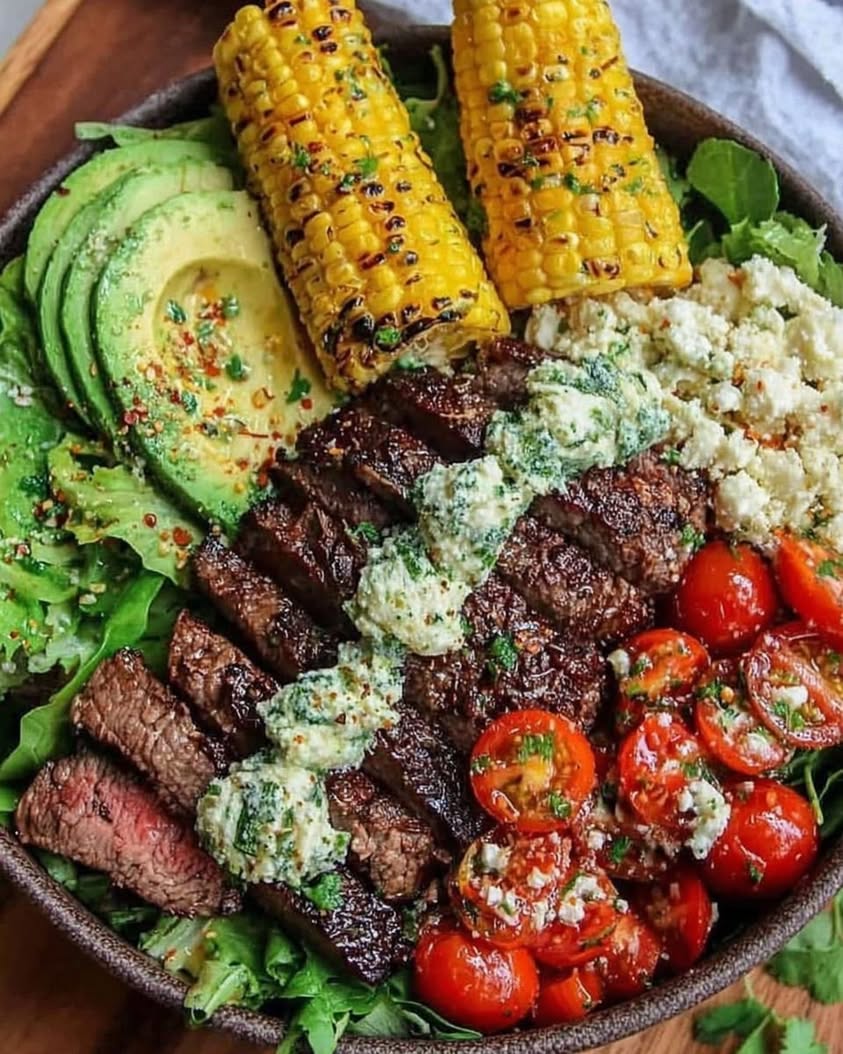
Steak and Avocado Bowl with Roasted Corn and Cilantro Cream: A Flavor-Packed Power Meal
Imagine a meal that perfectly balances smoky, savory, fresh, and creamy flavors in one beautiful, satisfying bowl. This Steak and Avocado Bowl with Roasted Corn and Cilantro Cream is exactly that. It is a vibrant, restaurant-quality dish you can easily create at home, featuring juicy slices of steak, sweet roasted corn, creamy avocado, and a zesty, herbaceous sauce. Ultimately, this recipe delivers a complete and nutritious meal that feels both indulgent and wholesome.
Furthermore, the beauty of this steak and avocado bowl lies in its versatility and simplicity. You can customize it with your favorite grains, adjust the spice level, or use different cuts of meat. The roasted corn adds a delightful char and sweetness that contrasts beautifully with the rich steak and cool avocado. Meanwhile, the cilantro cream sauce ties everything together with its bright, tangy flavor, making each bite a harmonious blend of textures and tastes.
This dish is perfect for busy weeknights, meal prep, or even a casual dinner party. It comes together in about forty minutes, and the components can be prepared ahead of time for easy assembly. Consequently, you get a high-protein, nutrient-dense meal that will keep you full and energized. Let’s dive into how to create this stunning and delicious steak and avocado bowl with roasted corn and cilantro cream.
Quick Recipe Highlights
- Flavor Profile: This steak and avocado bowl masterfully combines savory, umami-rich steak with the sweet, smoky notes of roasted corn. The creamy avocado adds a buttery richness, while the cilantro cream sauce provides a bright, tangy, and herbaceous kick that balances the entire dish.
- Texture: You will experience a wonderful contrast of textures: tender, juicy steak, crisp-tender roasted corn, creamy avocado, and a velvety smooth sauce. The optional base of rice or quinoa adds a pleasing, fluffy foundation that soaks up all the delicious flavors.
- Aroma: As you cook, the kitchen fills with the irresistible scent of searing steak and caramelizing corn. The fresh aroma of cilantro and lime from the sauce cuts through the richness, creating an inviting and mouthwatering fragrance.
- Visual Appeal: This bowl is a feast for the eyes with its vibrant colors: deep brown steak, golden yellow corn, bright green sauce, and the rich green of avocado. It’s an Instagram-worthy meal that looks as incredible as it tastes.
- Skill Level Needed: This is an accessible recipe for cooks of all levels. Basic techniques like pan-searing steak and roasting vegetables are required. However, the steps are straightforward and well-explained, making it easy to achieve perfect results.
- Special Equipment: You only need standard kitchen tools: a good skillet or grill pan for the steak, a baking sheet for the corn, and a blender or food processor for the sauce. No fancy or specialized equipment is necessary.
Recipe Overview
- Difficulty Level: This steak and avocado bowl recipe is rated easy because it uses fundamental cooking methods. The steak requires simple pan-searing, the corn roasts quickly in the oven, and the sauce blends in seconds. With clear instructions and manageable steps, even beginner cooks can confidently create this impressive meal.
- Category: This dish falls into several categories: it’s a high-protein main course, a perfect meal prep option, and a fantastic healthy dinner. It can also be served as a hearty lunch or a deconstructed salad. Essentially, it’s a versatile, all-in-one bowl meal.
- Cuisine: While not tied to one specific tradition, this recipe draws inspiration from Southwestern and modern American cuisine. The use of avocado, corn, cilantro, and lime echoes flavors popular in Tex-Mex and California-style cooking, resulting in a fresh, fusion-style dish.
- Cost: This is a moderately priced meal that delivers excellent value. Using a flank or skirt steak keeps costs reasonable compared to premium cuts. Meanwhile, corn, avocado, and cilantro are typically affordable, especially in season. You get a restaurant-quality dish for a fraction of the price.
- Season: This steak and avocado bowl shines in late summer and early fall when corn is at its peak sweetness. However, it works year-round thanks to the availability of ingredients. It’s particularly refreshing in warmer months but hearty enough for any season.
- Occasion: It’s ideal for a quick weeknight dinner, weekend meal prep, or a casual gathering with friends. The components can be prepared in advance and assembled just before serving, making it stress-free for entertaining. It’s a crowd-pleaser that feels special without being fussy.
Why You’ll Love This Recipe
First and foremost, the taste and texture combination is utterly irresistible. Each component of this steak and avocado bowl serves a purpose. The seared steak delivers a deep, savory, meaty flavor that forms the hearty base of the meal. Next, the roasted corn contributes a caramelized sweetness and a slight smoky char. Then, the cool, creamy avocado slices provide a rich, buttery contrast that mellows the other flavors. Finally, the vibrant cilantro cream sauce adds a necessary zing, tying every element together with its herby, tangy notes. Every single forkful offers a perfect balance, ensuring you never get bored.
From a convenience standpoint, this recipe is a true winner for modern life. You can have a stunning, nutritious dinner on the table in about forty minutes. Moreover, the steps are simple and often can happen simultaneously. For instance, while the corn roasts, you can sear the steak, and while the steak rests, you can blend the sauce. This efficient workflow makes weeknight cooking feel manageable. Additionally, the entire meal is contained in one bowl, which means minimal cleanup. Consequently, you spend less time washing dishes and more time enjoying your delicious creation.
Nutritionally, this steak and avocado bowl is a powerhouse. It provides a complete balance of macronutrients to fuel your body. The steak is an excellent source of high-quality protein and essential iron. Avocado contributes heart-healthy monounsaturated fats and fiber. Corn offers energizing carbohydrates and additional fiber. When served over a whole grain like quinoa or brown rice, you add even more fiber and complex carbs. This combination promotes sustained energy, supports muscle repair, and keeps you feeling full and satisfied for hours. It’s a meal that truly nourishes you from the inside out.
This dish also holds significant social and entertaining value. It looks incredibly impressive when plated, making guests feel special. You can easily double or triple the recipe to feed a crowd. To streamline hosting, prepare the sauce, cook the corn, and even slice the steak ahead of time. Then, simply assemble the bowls just before serving. The vibrant, colorful presentation is sure to draw compliments. It’s a fantastic option for a casual dinner party or a family gathering where you want to serve something memorable without being stuck in the kitchen all evening.
Finally, this recipe is remarkably cost-effective and accessible. You do not need expensive, hard-to-find ingredients. Flank or skirt steak offers great flavor at a reasonable price point. Corn, cilantro, limes, and avocado are staples that are widely available. The recipe is also highly adaptable based on what you have on hand or what’s on sale. For example, you can swap the steak for chicken or use frozen corn instead of fresh. This flexibility makes it a reliable go-to meal that fits various budgets, proving that eating well does not have to break the bank.
Historical Background and Cultural Significance
The concept of the “bowl meal” has deep roots in many food cultures, from Hawaiian poke bowls to Korean bibimbap. This particular Steak and Avocado Bowl with Roasted Corn and Cilantro Cream is a modern fusion dish that reflects contemporary eating trends. It draws primary inspiration from the flavors of the American Southwest and Northern Mexico, where beef, corn, avocado, and cilantro are culinary staples. Historically, these ingredients have been central to the diets of indigenous peoples in the regions for centuries, long before national borders were drawn.
Culturally, the combination of these ingredients speaks to a history of agricultural abundance and exchange. Corn, or maize, is a sacred crop with immense cultural significance throughout the Americas, domesticated thousands of years ago. Avocados originated in south-central Mexico. Meanwhile, cattle ranching introduced beef as a major protein source in Southwestern and Tex-Mex cuisine. The merging of these elements on one plate represents a natural and delicious convergence of native and introduced foodways, celebrated in modern “bowl” culture for its convenience and completeness.
The evolution of this recipe follows the broader trend of deconstructing traditional plates into layered, component-based bowls. This style of eating gained massive popularity in the 2010s with the rise of fast-casual restaurants focusing on customizable, healthy meals. The steak and avocado bowl is a direct descendant of this movement, offering a balanced, Instagram-friendly presentation. It takes the familiar flavors of a fajita or taco salad and reimagines them in a more composed, visually appealing format. This evolution highlights how home cooking adapts to changing lifestyles and aesthetic preferences.
Regional variations of this concept are endless. In California, you might find a version with added black beans and a lime vinaigrette. In Texas, it could include a spicy chipotle crema and pickled jalapeños. Some versions use farro or couscous as a base, while others stick with classic cilantro-lime rice. The core formula—protein, vegetable, healthy fat, sauce, and grain—remains versatile. This adaptability is key to the dish’s enduring appeal, allowing it to reflect local tastes and ingredient availability while maintaining its essential character as a satisfying, flavor-packed meal in a bowl.
Ingredient Deep Dive
Steak (Flank or Skirt): Flank and skirt steak are lean, flavorful cuts from the cow’s abdominal muscles. Historically, these were considered “butcher’s cuts,” valued by cooks for their robust beefy taste. They are perfect for quick, high-heat cooking methods like grilling or pan-searing. Nutritionally, they are excellent sources of complete protein, iron, zinc, and B vitamins, particularly B12. When selecting, look for meat with a bright red color and fine, even grain. Avoid cuts with excessive liquid in the package. For the most tender result, always slice these steaks thinly against the grain after resting. If unavailable, hanger steak or even sirloin make suitable substitutes.
Fresh Corn: Corn is one of the most historically significant crops in the world, first domesticated in Mexico over 9,000 years ago. Roasting corn intensifies its natural sweetness through caramelization and adds a desirable smoky dimension. It is a good source of fiber, vitamins C and B, and antioxidants like lutein. Choose ears with bright green, snug husks and moist, golden silk. Kernels should be plump and tightly packed. For this recipe, roasting in the husk or directly on the cob both work well. In a pinch, high-quality frozen roasted corn can be used, though fresh provides superior texture and flavor.
Avocado: Avocados are native to Central and South America and have been cultivated for thousands of years. They provide the creamy, rich element in this bowl, offering a wealth of monounsaturated fats, which are beneficial for heart health. They are also packed with fiber, potassium, and vitamins K, C, and E. Select avocados that are firm yet yield slightly to gentle pressure. To speed ripening, place them in a paper bag with a banana. Once cut, store with the pit and a squeeze of lime juice to prevent browning. For a different texture, you could substitute with a dollop of guacamole.
Cilantro: Cilantro, the leaves of the coriander plant, has a long history in Asian, Latin American, and Middle Eastern cuisines. Its bright, citrusy, and slightly pungent flavor is essential for the sauce. It contains antioxidants and may aid in digestion. Some people have a genetic predisposition that makes cilantro taste soapy; for them, flat-leaf parsley or a mix of parsley and mint can be a good alternative. Choose bunches with vibrant green leaves and firm stems, avoiding any that are wilted or yellowed. To store, treat it like fresh flowers: trim the stems and place in a jar of water in the fridge.
Sour Cream & Lime: Sour cream adds the necessary tangy creaminess to the sauce, mellowing the sharpness of the cilantro and garlic. It originated in Eastern Europe and is made by fermenting cream. For a lighter version, Greek yogurt is an excellent substitute. Lime juice provides the crucial acidic component, balancing the fat from the steak and avocado. Limes were brought to the Americas by Spanish and Portuguese explorers. They are rich in vitamin C. Always use fresh lime juice for the brightest flavor; bottled juice often has a flat, metallic taste. The zest can also be added to the sauce for an extra aromatic punch.
Common Mistakes to Avoid
- Not Letting the Steak Rest: Slicing the steak immediately after cooking is a major error. All the precious juices will run out onto the cutting board, leaving the meat dry. Always let it rest for at least 5-10 minutes tented with foil. This allows the fibers to relax and reabsorb the juices, ensuring every slice is succulent.
- Slicing With the Grain: Flank and skirt steak have a very pronounced grain. Cutting with the grain results in long, tough, chewy strands. You must identify the direction of the muscle fibers and slice perpendicularly across them. This shortens the fibers, making the meat remarkably more tender and easier to eat.
- Overcooking the Steak: These lean cuts are best served medium-rare to medium. Overcooking makes them tough and chewy. Use a meat thermometer for accuracy: aim for 130-135°F (54-57°C) for medium-rare. Remember, the steak will continue to cook slightly while resting, a process called carryover cooking.
- Using Watery Sour Cream: If your sour cream has separated or is particularly watery, it can make the sauce thin and runny. Stir it well before using, or consider using full-fat sour cream or Greek yogurt, which tends to be thicker and more stable for blending into a creamy sauce.
- Adding Raw Garlic to the Sauce Without Care: A large clove of raw garlic can be overpowering. If you are sensitive to its pungency, consider lightly sautéing the minced garlic in a tiny bit of oil for 30 seconds to mellow its flavor before adding it to the blender with the other sauce ingredients.
- Roasting Corn Without Enough Heat: The goal is caramelization, not just steaming. Make sure your oven is fully preheated, and place the corn on a preheated baking sheet if possible. For more char, you can use the broiler for the last few minutes, watching carefully to prevent burning.
- Preparing Avocado Too Early: Avocado browns quickly when exposed to air. Slice or dice your avocado just before assembling the bowls. A squeeze of lime juice over the top can help slow oxidation, but for the best visual appeal, cut it at the last possible moment.
- Underseasoning the Components: Each layer of the bowl needs proper seasoning. Generously season the steak with salt and pepper. Taste and season the roasted corn. Ensure your sauce has enough salt and lime juice to make it vibrant. Seasoning in layers builds a more complex and satisfying final flavor.
- Blending a Warm Sauce: If you blend the sauce while the steak and corn are cooking, that’s fine. However, if you blend it ahead and the motor heats the ingredients, or if you use warm ingredients, the sauce may separate or become too thin. For best consistency, use cold ingredients and chill the sauce briefly before serving.
- Overcrowding the Pan When Searing Steak: To get a proper sear, the steak needs contact with the hot surface. If your pan is too small or you are cooking multiple steaks, cook in batches. Overcrowding creates steam, which prevents browning and results in grey, boiled meat instead of a flavorful, crusty sear.
Essential Techniques
Pan-Searing Steak: This technique creates a flavorful, caramelized crust through the Maillard reaction. First, pat the steak completely dry with paper towels; moisture is the enemy of browning. Next, preheat your skillet over medium-high heat until very hot before adding oil. Then, place the steak in the pan and do not move it for several minutes to allow a crust to form. Finally, flip only once. The goal is a deep brown sear on the outside while keeping the interior juicy. A common pitfall is flipping too often, which prevents proper browning. Visual cues for success include a release of aroma and the steak easily releasing from the pan when the crust is set.
Roasting Corn: Roasting concentrates the corn’s natural sugars, enhancing its sweetness and adding a subtle smoky flavor. For this recipe, shucking the corn and roasting the kernels directly allows for more surface area to caramelize. Toss the kernels with a little oil and spread them in a single layer on a hot baking sheet. This ensures they roast instead of steam. The key is high heat and occasional stirring for even browning. A common mistake is overcrowding the pan, which leads to steaming. Success is visible when the kernels are lightly charred in spots and have shrunk slightly, indicating moisture loss and flavor concentration.
Emulsifying a Cream Sauce: Blending the cilantro cream sauce creates a smooth, emulsified mixture where the oil, acids, and dairy are fully integrated. Using a blender or food processor is crucial for breaking down the fibrous cilantro and garlic into a silky texture. The technique involves adding all liquid and soft ingredients first to facilitate blending. A pitfall is adding too much liquid at once, which can make the sauce too thin. Start with less, and blend until smooth, adding more lime juice or water only as needed to reach a drizzle-able consistency. A successful sauce will be vibrant green, uniformly smooth, and coat the back of a spoon.
Slicing Against the Grain: This is the single most important technique for ensuring tender flank or skirt steak. First, identify the direction of the long muscle fibers (the “grain”). Then, position your knife perpendicular (at a 90-degree angle) to those fibers. Slicing this way shortens the muscle fibers, making them much easier to chew. If you slice with the grain, you’ll be chewing on long, tough strands. After resting, place the steak on your cutting board and take a moment to observe the lines running across the meat. Your knife cuts should go directly across those lines for the most tender result.
Pro Tips for Perfect Steak and Avocado Bowl
Bring Steak to Room Temperature: Take the steak out of the refrigerator 20-30 minutes before cooking. This simple step allows for more even cooking from edge to center, preventing a cold, raw middle and an overcooked exterior.
Use a Meat Thermometer: For perfectly cooked steak every time, invest in an instant-read thermometer. This removes all guesswork and ensures your steak reaches the ideal internal temperature for your preferred doneness.
Char the Corn Under the Broiler: For extra smoky flavor, after roasting the corn on the sheet pan, turn on the broiler for the last 2-3 minutes. Watch it closely to get beautiful, blistered spots without burning.
Toast Your Base Grain: If using rice or quinoa, toast the dry grains in a saucepan with a little oil before adding water. This adds a wonderful nutty flavor that complements the other bowl components.
Make the Sauce in Advance: The cilantro cream sauce often tastes better after the flavors have melded. Make it up to a day ahead and store it in an airtight container in the refrigerator.
Warm Your Bowls: For a truly restaurant-quality experience, warm your serving bowls. You can do this by placing them in a low oven for a few minutes or by rinsing them with hot water and drying them just before assembly.
Add a Crunchy Element: Consider topping your finished bowl with toasted pepitas (pumpkin seeds), crushed tortilla chips, or crispy fried onions. This adds a delightful textural contrast to the creamy and tender ingredients.
Balance with Acidity: If your bowl feels too rich, a final squeeze of fresh lime juice over the top just before eating can brighten all the flavors and cut through the richness perfectly.
Variations and Adaptations
Regional Variations: Give this bowl different regional twists with simple swaps. For a California vibe, add black beans and a lime vinaigrette. For a Tex-Mex version, mix a chipotle pepper into the sauce and top with pickled red onions. For an Asian-inspired take, replace the cilantro sauce with a ginger-scallion oil and use soy sauce in the steak marinade.
Seasonal Adaptations: In the fall, substitute roasted sweet potatoes or butternut squash for the corn. During winter, use roasted Brussels sprout halves. In spring, asparagus tips or fresh peas make a lovely green addition. This flexibility lets you enjoy the bowl’s format with the best produce each season offers.
Dietary Modifications: For a vegetarian bowl, replace the steak with seasoned, crispy tofu or a hearty portobello mushroom. For a vegan version, use the tofu and substitute the sour cream with vegan mayo or silken tofu blended with lime. To make it gluten-free, simply ensure any soy sauce or other condiments used are certified gluten-free.
Flavor Variations: Experiment with the sauce by adding different herbs. A combination of cilantro and mint is refreshing. Alternatively, add a teaspoon of ground cumin or smoked paprika to the steak’s seasoning rub. For a spicy kick, leave the seeds in the jalapeño or add a dash of hot sauce to the sauce.
Texture Modifications: If you prefer more texture, use quinoa or farro as your base instead of rice. For added creaminess, include a spoonful of cotija or feta cheese crumbles. To keep it lighter, use a bed of shredded romaine lettuce or baby spinach as the base instead of a grain.
Presentation Alternatives: Instead of a deconstructed bowl, you can turn this into a wrap. Warm large flour tortillas, spread with the cilantro cream, and layer with the sliced steak, corn, and avocado. Roll tightly and slice in half for a portable meal. You can also serve the components on a large platter for a DIY bowl bar at parties.
Serving and Presentation Guide
Plating Techniques: Start with a warm, shallow bowl. First, create a base layer with your chosen grain, spreading it evenly. Then, artfully arrange the sliced steak in a fan or overlapping slices on one side. Next, spoon the roasted corn in a separate section. Place the avocado slices or chunks in another area. Finally, drizzle the cilantro cream sauce generously over everything. The goal is to show off each beautiful component while making it easy for the diner to mix them together.
Garnishing Ideas: Garnishes add the final touch of color and flavor. A sprinkle of fresh cilantro leaves, thinly sliced radishes, or a lime wedge on the side are classic choices. For color, add a few pomegranate arils in the fall or microgreens any time of year. A light dusting of chili powder or paprika over the avocado adds visual pop and a hint of spice.
Traditional Accompaniments: While the bowl is a complete meal, it pairs wonderfully with simple sides. Warm corn tortillas or tortilla chips for scooping are a natural fit. A light, citrusy salad with jicama and orange segments can balance the meal’s richness. For a drink, an ice-cold Mexican beer or a classic margarita complements the flavors perfectly.
Modern Serving Suggestions: For a casual gathering, set up a “bowl bar” with all the components in separate containers. Let guests build their own creations, offering extra toppings like shredded cheese, different salsas, and various hot sauces. This interactive style is fun and caters to individual preferences effortlessly.
Temperature Considerations: Serve this bowl immediately after assembly. The steak and corn should be warm, the avocado room temperature or cool, and the sauce chilled or at room temperature. This contrast in temperatures makes the eating experience more dynamic and enjoyable. Avoid letting the hot components sit on the cold avocado for too long before serving.
Portion Control Tips: This recipe is designed to be well-balanced. For a lighter meal, you can increase the proportion of roasted vegetables and greens while slightly reducing the amount of steak and grain. Conversely, for a more substantial meal for active individuals, increase the steak portion by an ounce or two and add an extra half-cup of the base grain.
Wine and Beverage Pairing
Wine Pairings: The bold flavors in this steak and avocado bowl call for a wine with good acidity and body. A Malbec from Argentina is an excellent choice, as its dark fruit flavors and smooth tannins complement the savory steak. Alternatively, a Zinfandel with its jammy berry notes can stand up to the smoky corn and rich sauce. For a white wine option, a citrusy and slightly oaked Chardonnay can handle the creamy sauce and cut through the fat of the avocado beautifully.
Non-Alcoholic Alternatives: A classic agua fresca is a perfect match. A cucumber-lime or watermelon agua fresca provides a refreshing, not-too-sweet counterpoint. Sparkling water with a squeeze of lime and a few muddled mint leaves is another light and palate-cleansing option. For something creamier, a horchata (rice milk drink) with cinnamon offers a sweet contrast to the savory and spicy elements.
Coffee/Tea Pairings: While not a typical pairing for this meal, if serving for brunch or lunch, a bold, dark roast coffee can complement the charred notes of the steak and corn. For tea, an iced black tea with a hint of citrus or a smoky Lapsang Souchong could create an interesting flavor dialogue with the dish’s smoky elements.
Temperature Considerations: Serve white wines and non-alcoholic beverages well-chilled. Red wines should be served at a cool room temperature, around 60-65°F (15-18°C). Iced beverages should be cold but not diluted; use large ice cubes or frozen fruit to keep them cool without watering them down too quickly as you eat.
Serving Suggestions: Always offer a glass of cool water alongside any other beverage. The complexity of the bowl benefits from cleansing the palate between bites. If serving wine, pour a modest amount to start, allowing guests to appreciate the pairing without overwhelming the food. For a crowd, a large pitcher of a signature non-alcoholic drink is always a welcoming touch.
Storage and Shelf Life
Storage Methods: Store all components separately in airtight containers in the refrigerator for best results. The cooked steak will keep for 3-4 days. The roasted corn will last 4-5 days. The cilantro cream sauce is best used within 3 days. The avocado should be stored whole and uncut until ready to assemble; once cut, it will brown within a day even with lime juice.
Temperature Requirements: All cooked components must be refrigerated at or below 40°F (4°C) within two hours of cooking. Do not leave the assembled bowl at room temperature for more than one hour, as the avocado and dairy-based sauce are perishable.
Container Recommendations: Use glass containers with tight-fitting lids for the steak and corn to prevent odor transfer. Store the sauce in a small jar or squeeze bottle for easy drizzling later. For meal prep, use divided containers to keep ingredients separate until you’re ready to eat.
Signs of Spoilage: Discard any component that develops an off smell, slimy texture (especially the steak or sauce), or visible mold. The sauce may separate when cold; this is normal. Simply stir or shake it vigorously. If it smells sour beyond the normal tang of lime and sour cream, it should be discarded.
Reheating Instructions: Reheat only the steak and corn. Gently warm the steak slices in a skillet over low heat or in the microwave at reduced power to avoid overcooking. Reheat the corn in a skillet or the microwave until just warm. Do not reheat the sauce or avocado. Assemble your bowl with cold sauce and fresh avocado after reheating the other parts.
Freezing Guidelines: Freezing is not recommended for the complete dish. The cooked steak can be frozen for up to 2 months when wrapped tightly, but may lose some tenderness upon thawing. The sauce and avocado do not freeze well, as they will separate and become watery when thawed. Corn can be frozen, but may become mushy. For best quality, enjoy this meal fresh or refrigerated for a few days.
Make Ahead Strategies
Prep Timeline: You can prep almost this entire steak and avocado bowl a day in advance. The night before, cook the steak, let it cool, slice it, and store it in its juices. Roast the corn and let it cool before refrigerating. Prepare the cilantro cream sauce. Cook your base grain (rice, quinoa). Store everything in separate containers. The next day, all you need to do is slice the avocado and assemble the bowls.
Storage Between Steps: When storing prepped components, let them cool completely to room temperature before sealing and refrigerating. This prevents condensation, which can make the steak soggy and dilute the sauce. Pour any accumulated meat juices from the resting steak over the sliced meat before storing to keep it moist.
Quality Impact Assessment: Making ahead has minimal negative impact. The steak may lose a bit of its seared crust texture but remains flavorful. The corn holds up very well. The sauce’s flavors often improve as they meld. The only significant quality loss is the avocado, which is why it’s the one item you should always prepare fresh.
Assembly Tips: For assembly, start with the room-temperature or reheated grain. Add the cold corn. Gently reheat the steak slices in a pan or microwave just until warm, not hot, to avoid cooking them further. Add fresh avocado. Shake or stir the sauce well, as it may have thickened in the fridge; you can thin it with a teaspoon of water if needed before drizzling.
Reheating Guidelines: If you stored a fully assembled bowl (minus avocado and sauce), reheating is tricky. It’s best to deconstruct: remove the avocado and sauce, then reheat the grain, steak, and corn together gently. Reheating an assembled bowl with sauce will cause the sauce to break and the avocado to become unpleasantly warm.
Fresh Element Additions: The key to a successful make-ahead bowl is adding fresh elements at the end. Always add the sliced avocado and any delicate garnishes like fresh cilantro leaves just before serving. If the sauce seems too thick after refrigeration, whisk in a splash of lime juice or water to return it to a drizzle-able consistency.
Scaling Instructions
Halving the Recipe: Halving this steak and avocado bowl recipe is straightforward for a single serving. Use a smaller skillet for the steak to maintain good contact for searing. A toaster oven or air fryer is perfect for roasting a smaller amount of corn. Blend a half-batch of sauce in a small personal blender or simply whisk the ingredients vigorously in a bowl. The cooking times will remain roughly the same, but keep a closer eye on the smaller quantities to prevent burning.
Doubling or Tripling: When scaling up for a crowd, do not overcrowd your cooking surfaces. Cook the steak in batches to ensure a proper sear on each piece. Use two sheet pans for the corn, rotating them in the oven for even roasting. You may need to blend the sauce in batches unless you have a very large blender. Consider setting up an assembly line for bowl building to streamline the process.
Equipment Adjustments: Scaling up may require larger equipment. A large roasting pan can hold more corn, but spread it in a thin layer. For the sauce, a full-size food processor may be necessary for a triple batch. If you double the steak, ensure you have a platter large enough to let it all rest without stacking, which can cause steaming and uneven resting.
Timing Modifications: While prep time increases linearly with scale, active cooking time may not. For example, roasting two trays of corn takes the same oven time as one. However, searing multiple batches of steak adds significant active time at the stove. Plan your workflow so the corn roasts while you sear the first batch of steak, optimizing your time in the kitchen.
Storage Considerations: Leftovers from a large batch should be stored with extra care. Divide components into several smaller containers rather than one giant one. This cools food faster and safer, reducing the risk of bacterial growth. Clearly label containers with the date, as meal prepped ingredients can look similar after a few days.
Nutritional Deep Dive
Macro Breakdown: One serving of this steak and avocado bowl provides an excellent balance of macronutrients. The steak contributes high-quality protein for muscle repair and satiety. The avocado and sauce offer healthy fats that support hormone function and nutrient absorption. The corn and grain base supply complex carbohydrates for sustained energy. This combination ensures stable blood sugar levels and prevents the energy crashes associated with high-carb or high-fat meals eaten in isolation.
Micronutrient Analysis: This meal is a micronutrient powerhouse. The steak is rich in Print
Steak, Avocado, and Roasted Corn Bowl with Cilantro Cream Sauce
- Total Time: 45 minutes
- Yield: 4
Description
A vibrant and satisfying bowl featuring juicy steak, creamy avocado, sweet roasted corn, and a zesty cilantro cream sauce, perfect for a quick and flavorful meal.
Ingredients
- 1 lb flank steak, sliced into strips
- 2 ears of corn, kernels removed
- 1 avocado, sliced
- 1 cup cooked quinoa or rice
- 1/2 cup sour cream
- 1/4 cup fresh cilantro, chopped
- 1 lime, juiced
- 2 cloves garlic, minced
- 1 tbsp olive oil
- Salt and pepper to taste
- 1/2 tsp chili powder
Instructions
- Preheat oven to 400°F (200°C). Toss corn kernels with olive oil, salt, and pepper, then spread on a baking sheet. Roast for 15-20 minutes until slightly charred.
- Season steak strips with salt, pepper, and chili powder. Heat a skillet over medium-high heat, add a drizzle of olive oil, and cook steak for 3-4 minutes per side until desired doneness. Set aside to rest.
- In a small bowl, mix sour cream, chopped cilantro, lime juice, and minced garlic to make the cilantro cream sauce. Adjust seasoning with salt and pepper.
- Assemble bowls by dividing cooked quinoa or rice among four bowls. Top with roasted corn, sliced avocado, and steak strips. Drizzle with cilantro cream sauce and serve immediately.
Notes
You can customize the seasonings to taste.
- Prep Time: 15 minutes
- Cook Time: 30 minutes
- Method: Main
- Cuisine: American