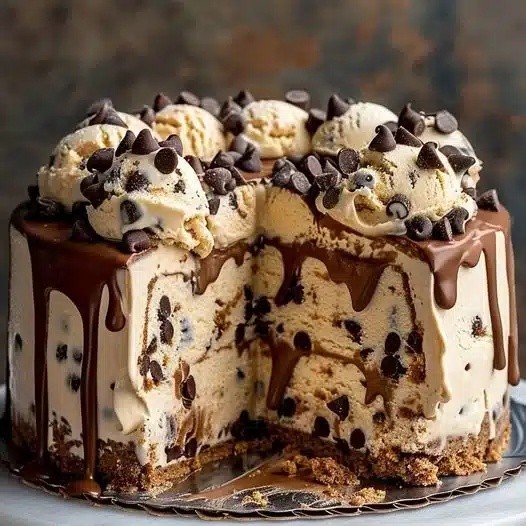
Decadent Chocolate Chip Cookie Dough Ice Cream Cake Recipe: A No-Bake Frozen Dream
Imagine the ultimate celebration dessert, a showstopper that combines three beloved treats into one glorious creation. This Decadent Chocolate Chip Cookie Dough Ice Cream Cake Recipe delivers exactly that. It layers creamy vanilla ice cream with generous chunks of edible cookie dough and a rich chocolate ganache, all atop a chewy chocolate chip cookie crust. Consequently, every single bite is a perfect symphony of textures and flavors, from the cold creaminess to the soft, sweet dough and the satisfying crunch of chocolate chips.
This no-bake masterpiece is surprisingly straightforward to assemble, making it ideal for birthdays, summer parties, or any occasion demanding a spectacular finish. Moreover, you can prepare it well in advance, allowing the flavors to meld beautifully in the freezer. Ultimately, this dessert isn’t just a cake; it’s an experience, a nostalgic trip back to sneaking spoonfuls of cookie dough from the bowl, now elegantly presented in sliceable form.
Quick Recipe Highlights
- Flavor Profile: This cake boasts a classic, crowd-pleasing combination. The sweet, buttery notes of vanilla ice cream and edible cookie dough harmonize perfectly with the deep, bittersweet accent of the chocolate ganache and the semi-sweet chocolate chips scattered throughout.
- Texture: Experience a delightful contrast in every mouthful. You get the smooth, cold creaminess of the ice cream, the soft and slightly chewy bite of the cookie dough chunks, and the intermittent crunch from the chocolate chips and the cookie crust base.
- Aroma: As the cake softens, it releases the warm, comforting scent of brown sugar, vanilla, and butter, reminiscent of freshly baked cookies. The chocolate ganache adds a subtle, rich cocoa note to the aromatic profile.
- Visual Appeal: When sliced, the cake reveals stunning horizontal layers: a dark cookie base, a pale cream ice cream layer studded with dough and chips, and a glossy dark chocolate top. It’s a visually impressive dessert that promises indulgence.
- Skill Level Needed: This recipe requires no baking expertise. However, it does demand patience for freezing stages and some basic kitchen skills like melting chocolate and mixing a dough. It’s very accessible for intermediate home cooks.
- Special Equipment: You will need a 9-inch springform pan for easy release. Additionally, an electric mixer is helpful for creaming the cookie dough ingredients, and a microwave or double boiler is necessary for melting the chocolate ganache.
Recipe Overview
- Difficulty Level: We rate this recipe as medium difficulty. While there is no actual baking involved, success hinges on proper layering and patient freezing. You must work relatively quickly with the ice cream to prevent melting and ensure clean layers. Furthermore, making the edible cookie dough requires attention to ingredient safety, such as using heat-treated flour.
- Category: This creation falls squarely into the dessert category, specifically a frozen dessert or ice cream cake. It’s perfect for concluding a meal, serving at a party, or enjoying as a special weekend treat. It’s not an everyday dessert but a celebratory one.
- Cuisine: This is a modern American dessert, born from the fusion of classic American treats: chocolate chip cookies, ice cream, and the beloved practice of eating cookie dough straight from the bowl. It represents a playful, indulgent evolution of comfort food staples.
- Cost: The cost is moderate, primarily driven by quality ice cream and chocolate. Using store-brand vanilla ice cream and chocolate chips can reduce expense, while premium ingredients will elevate it. Overall, it’s far more cost-effective than ordering a similar custom cake from a bakery.
- Season: This Decadent Chocolate Chip Cookie Dough Ice Cream Cake Recipe is truly a year-round delight. It’s particularly perfect for spring and summer celebrations when a cold dessert is most refreshing. Conversely, it also brings a fun, festive energy to winter holiday gatherings.
- Occasion: This cake is designed for celebrations. It’s ideal for birthdays, graduations, potlucks, Fourth of July parties, or as a “just because” treat to impress family and friends. Its make-ahead nature makes it a stress-free choice for the host.
Why You’ll Love This Recipe
First and foremost, the taste and texture are utterly irresistible. This Decadent Chocolate Chip Cookie Dough Ice Cream Cake Recipe combines nostalgic flavors in a sophisticated format. Each layer complements the next, creating a complex eating experience that is both familiar and exciting. The cold ice cream melts on your tongue, revealing the soft, sweet cookie dough and the occasional chocolate chip crunch. It’s a dessert that engages all your senses and satisfies a deep craving for something sweet, creamy, and chewy all at once.
From a practical standpoint, the convenience is a major win. Since this is a no-bake recipe, you avoid heating up your kitchen, which is a blessing in warmer months. Additionally, the assembly, while requiring attention, is straightforward and doesn’t involve any complex pastry techniques. You can break the steps down over a day or even two, making the process very manageable. The final product waits patiently in your freezer until you’re ready to serve, eliminating last-minute dessert stress.
While not a health food, this dessert does offer some nutritional perspective. For instance, you control the ingredients. You can choose a vanilla ice cream with simpler ingredients or lower sugar. You can use dark chocolate for the ganache, which contains antioxidants. The cookie dough, made without eggs, is safe to eat and you can adjust the sugar level slightly. Compared to many store-bought frozen desserts filled with stabilizers, this homemade version can be a cleaner indulgence.
The social and entertaining value of this cake cannot be overstated. It is a guaranteed conversation starter and centerpiece. When you bring this Decadent Chocolate Chip Cookie Dough Ice Cream Cake to the table, you’ll see eyes light up. It serves a crowd generously and makes everyone feel special. It’s a dessert that says “celebration” louder than almost any other, fostering a joyful, communal dining experience.
Finally, this recipe is cost-effective and accessible. The ingredients are common and can be found in any standard grocery store. You don’t need a professional kitchen or expensive tools—a springform pan is the only specialty item. By making it yourself, you save a significant amount compared to buying a comparable gourmet ice cream cake. This accessibility means you can enjoy a luxurious, impressive dessert without a luxurious price tag.
Historical Background and Cultural Significance
The story of this cake is a modern tale of culinary fusion. Its origin isn’t tied to a specific chef or region but rather to the evolution of American dessert culture. The chocolate chip cookie itself was invented in the 1930s by Ruth Wakefield. The practice of eating the raw dough, however, is a timeless, if officially discouraged, pleasure enjoyed by generations of home bakers. Meanwhile, the ice cream cake gained popularity in the mid-20th century, often as a simple combination of ice cream and a crumb crust.
This Decadent Chocolate Chip Cookie Dough Ice Cream Cake Recipe represents the pinnacle of this evolution, merging these three iconic elements. Culturally, it taps into a powerful sense of nostalgia and indulgence. It legitimizes the “forbidden” joy of eating cookie dough by making it the star of a proper dessert. This reflects a broader food trend where childhood favorites are reimagined with gourmet or shareable presentations, like cronuts or elaborate milkshakes.
The recipe’s evolution is also tied to food safety awareness. Traditional cookie dough contains raw eggs and flour, which carry a risk of foodborne illness. The modern edible cookie dough, made with heat-treated flour and no eggs, is a direct response to this. This innovation safely unlocked the flavor for consumption without baking, which was essential for recipes like this ice cream cake. Consequently, the dessert is a product of both culinary creativity and contemporary food science.
Regional variations are less about geography and more about personal preference. Some versions might use chocolate ice cream or a brownie base instead of cookie. Others might incorporate different mix-ins like peanut butter cups or toffee bits. The core concept, however—layers of ice cream and edible cookie dough—remains a distinctly American celebration of abundance and sweet delight, a testament to the endless innovation within home baking and dessert making.
Ingredient Deep Dive
Vanilla Ice Cream: Vanilla ice cream serves as the creamy, neutral canvas that allows the cookie dough and chocolate flavors to shine. Its history dates back to ancient China, but the modern version was perfected in America. For this recipe, choose a high-quality, dense vanilla ice cream (not “light” or “slow-churned”) as it will hold its shape better when sliced. Let it soften just enough to be spreadable but not soupy. For a richer flavor, consider using a French vanilla or vanilla bean variety.
All-Purpose Flour (Heat-Treated): Wheat flour is a staple dating back to the dawn of agriculture. In edible cookie dough, it must be heat-treated to kill any potential pathogens like E. coli. To do this, spread flour on a baking sheet and bake at 350°F for 5-7 minutes. Let it cool completely before using. This step is non-negotiable for safety. For a gluten-free adaptation, you can use a 1:1 gluten-free flour blend that has also been heat-treated.
Butter: Butter provides the rich, foundational flavor and tender texture in the cookie dough. Use unsalted butter so you can control the salt level in the recipe. Ensure it is softened to room temperature for proper creaming with the sugars, which incorporates air and creates a lighter dough texture. European-style butter with a higher fat content will yield an even richer, more flavorful dough.
Brown Sugar & Granulated Sugar: This duo is critical. Brown sugar, with its molasses content, delivers moisture, a deeper flavor, and that classic chewy texture. Granulated sugar adds sweetness and aids in creaming the butter. For the best results, pack your brown sugar firmly into the measuring cup. You can experiment with light or dark brown sugar; dark brown will impart a more robust molasses note.
Semi-Sweet Chocolate Chips: Chocolate chips were invented specifically for chocolate chip cookies. Their formulation includes less cocoa butter so they retain their shape when baked. In this no-bake application, they provide delightful bursts of chocolate flavor and textural contrast. You can use standard chips, chunks, or even chopped chocolate bars. For a more sophisticated taste, consider using a high-quality chocolate with 60-70% cocoa content.
Heavy Cream & Chocolate (for Ganache): Ganache is a simple emulsion of chocolate and cream. The heavy cream should be warmed just to a simmer to properly melt the chocolate. Use good-quality chocolate bars or chips for the ganache, as it forms a prominent top layer. The ratio here creates a pourable ganache that sets into a firm, glossy shell. You can use dark, milk, or semi-sweet chocolate based on your preference.
Common Mistakes to Avoid
- Not Heat-Treating the Flour: This is a critical food safety step. Raw flour can contain harmful bacteria. Always heat-treat your flour by baking it before adding it to the edible cookie dough mixture. Allow it to cool completely to avoid melting the butter.
- Using Overly Softened Ice Cream: Letting the ice cream melt too much will make the layers messy and difficult to spread. It can also cause the cookie dough chunks to sink. Soften the ice cream just until it is pliable and spreadable, similar to thick frosting.
- Skipping the Parchment Liner: Even with a springform pan, lining the bottom with parchment paper guarantees a clean release. Without it, the cookie crust might stick, ruining your beautiful base when you try to remove the pan sides.
- Adding Warm Ganache: Pouring hot ganache over the ice cream layer will cause it to melt instantly. You must let the ganache cool until it is just barely warm to the touch, thick, but still pourable. This ensures it sets into a distinct layer.
- Rushing the Freezing Steps: Each layer needs adequate time to firm up before adding the next. If you add ice cream on a soft crust, it will mix. If you add ganache on soft ice cream, it will melt in. Patience is key for defined layers.
- Overmixing the Cookie Dough: Once you add the heat-treated flour, mix just until combined. Overmixing can develop the gluten slightly (even in heat-treated flour), leading to a tougher, less pleasant dough texture.
- Using “Light” Ice Cream: Light or low-fat ice creams often contain more air and water. They can become icy and lack the creamy, rich mouthfeel needed for this cake. Full-fat, premium ice cream yields a far superior texture.
- Not Letting the Cake Rest Before Slicing: Attempting to slice the cake straight from the freezer will be very difficult. Let it sit at room temperature for 5-10 minutes to slightly soften, which allows for clean cuts without shattering the layers.
Essential Techniques
Creaming Butter and Sugars: This technique is fundamental to creating the proper cookie dough texture. Using room-temperature butter and both brown and white sugars, beat them together on medium speed for 2-3 minutes until the mixture becomes light, fluffy, and pale in color. This process incorporates tiny air bubbles, which lightens the dough. The goal is a homogeneous, creamy mixture without any gritty sugar bits remaining.
Heat-Treating Flour: This safety technique involves applying dry heat to flour to eliminate potential bacteria. Spread the all-purpose flour in an even layer on a dry baking sheet. Bake in a preheated 350°F oven for 5-7 minutes. Use a food thermometer to ensure the flour reaches 160°F internally. Then, cool the flour completely before using it in your edible cookie dough to prevent it from cooking the other ingredients.
Layering and Spreading Frozen Components: Success here relies on temperature control. Spread the cookie crust firmly and evenly. After freezing it, work with the ice cream quickly. Drop scoops evenly over the crust, then use an offset spatula or the back of a spoon dipped in hot water to smooth it into an even layer. Press the cookie dough chunks in gently but firmly so they adhere.
Making and Tempering Ganache: Chop your chocolate finely for even melting. Heat the cream until it just begins to simmer around the edges, then pour it over the chocolate. Let it sit for a few minutes before stirring gently into a smooth, glossy emulsion. Crucially, let the ganache cool until it is lukewarm and has thickened to a heavy cream consistency before pouring it over the frozen ice cream layer.
Pro Tips for Perfect Decadent Chocolate Chip Cookie Dough Ice Cream Cake
First, use a hot knife for pristine slices. Dip a sharp chef’s knife in hot water and wipe it dry before each cut. This will glide through the frozen layers smoothly, giving you clean, professional-looking slices without tearing.
For easier assembly, prepare your edible cookie dough a day ahead. Store it in the refrigerator, then simply break it into chunks when you’re ready to layer. This spreads out the work and ensures the dough is firm and easy to handle.
Press the cookie crust mixture firmly and evenly into the pan. Use the bottom of a flat glass or measuring cup to compact it. A firm, well-packed crust will hold together beautifully when sliced and provide a solid textural base.
Customize your mix-ins. While semi-sweet chips are classic, feel free to fold mini M&Ms, chopped pecans, or toffee bits into the ice cream layer along with the cookie dough for added texture and flavor surprises.
If your ice cream softens too much while spreading, don’t panic. Simply place the entire pan back in the freezer for 15-20 minutes to let it firm up before adding the next layer of cookie dough chunks.
For a stunning presentation, garnish the top of the ganache layer with a sprinkle of flaky sea salt, extra chocolate chips, or even small whole cookies before the ganache fully sets.
Label your cake in the freezer. If storing for more than a day, place a piece of plastic wrap directly on the surface of the ganache to prevent freezer burn and odor absorption, then cover the whole pan with foil.
Variations and Adaptations
For regional variations, consider a “Rocky Road” version by adding mini marshmallows and chopped almonds to the ice cream layer. A “Cookies and Cream” adaptation would use cookies and cream ice cream and mix in crushed Oreo pieces instead of or alongside the cookie dough chunks.
Seasonal adaptations are fun. In fall, incorporate a swirl of salted caramel sauce into the ice cream layer and use pumpkin spice-flavored chocolate chips in the dough. For winter, use peppermint ice cream and crush candy canes over the ganache for a festive twist.
Dietary modifications are straightforward. Use your favorite gluten-free flour blend (heat-treated) for the cookie dough and crust, and ensure your chocolate chips are certified gluten-free. For a dairy-free cake, use plant-based butter, dairy-free ice cream, and coconut cream with dairy-free chocolate for the ganache.
Flavor variations can completely transform the cake. Use chocolate ice cream for a double-chocolate experience. Substitute peanut butter chips for chocolate chips in the dough, or swirl peanut butter into the ice cream layer. For coffee lovers, use coffee ice cream and add espresso powder to the cookie dough.
Texture modifications can cater to different preferences. For extra crunch, add chopped toasted walnuts or pecans to the cookie crust. For a smoother experience, blend the edible cookie dough into a swirl and ripple it through the ice cream layer instead of leaving it in chunks.
Presentation alternatives include making individual mini cakes in a muffin tin lined with parchment liners. Alternatively, for a more rustic look, you could forgo the ganache topping and simply drizzle the finished cake with chocolate sauce and caramel just before serving.
Serving and Presentation Guide
Plating techniques start with the slice itself. Use the hot knife method for clean edges. Place each slice on a chilled plate to prevent immediate melting. For a restaurant-style touch, you can swipe a thin layer of chocolate or caramel sauce on the plate before placing the cake slice on top.
Garnishing ideas elevate the visual appeal. Right before serving, add a dollop of fresh whipped cream, a sprinkle of mini chocolate chips, a few whole cookie dough balls, or a fresh mint leaf. A light dusting of cocoa powder or confectioners’ sugar over the plate also adds a professional touch.
Traditional accompaniments are simple and classic. A glass of cold milk is the ultimate nostalgic pairing. For adults, the dessert stands beautifully on its own but can be followed by a cup of espresso to balance the sweetness.
Modern serving suggestions might include deconstructing the cake for a plated dessert. Crumble the cookie crust as a base, add a scoop of the ice cream and dough mixture, drizzle with warm ganache, and finish with a tuile cookie. This is ideal for a more formal dinner party.
Temperature considerations are crucial. The cake should be frozen solid but allowed a brief 5-10 minute rest at room temperature before slicing and serving. This brief window softens it just enough for perfect texture without becoming a melted puddle.
Portion control tips are helpful given the richness. This cake yields 12 generous slices. For a larger party, you can cut it into 16 smaller, but still satisfying, squares. Remember, a little goes a long way with such a decadent dessert.
Wine and Beverage Pairing
Wine pairings should complement the dessert’s sweetness without overpowering it. A rich, creamy Pedro Ximénez Sherry is a magnificent match, with its notes of raisins, figs, and toffee. Alternatively, a Brachetto d’Acqui, a lightly sparkling red Italian wine, offers sweet berry flavors and effervescence that cuts through the richness beautifully. A late-harvest Riesling with its honeyed apricot notes also pairs wonderfully.
Non-alcoholic alternatives are just as important. A cold glass of whole milk is the classic, nostalgic choice. For a more sophisticated option, try a sparkling apple cider or a cream soda float. A dark roast cold brew coffee provides a bitter contrast that highlights the sweetness of the cake.
Coffee and tea pairings work exceptionally well. A strong espresso or French press coffee served alongside offers a bitter counterpoint that cleanses the palate. For tea lovers, a robust black tea like Assam or a smoky Lapsang Souchong can stand up to the dessert’s intensity. Chai tea, with its warm spices, also creates a lovely flavor harmony.
Temperature considerations for beverages are straightforward. Serve all beverages well-chilled or piping hot, depending on the type. The contrast between the frozen cake and a hot drink, or the synergy between it and a cold one, is part of the pleasure.
Serving suggestions include offering a choice. Set up a small beverage station with options like milk, sparkling water, and coffee. This allows guests to choose their perfect pairing based on their personal preference and makes the dessert course feel even more special.
Storage and Shelf Life
Storage methods are simple but important for maintaining quality. Keep the cake tightly wrapped in the freezer at all times. After adding the final ganache layer and letting it set, press a layer of plastic wrap directly onto the ganache surface. This prevents ice crystals and freezer burn. Then, cover the entire springform pan with aluminum foil or place it in a large freezer bag.
Temperature requirements are non-negotiable. Your freezer should be at 0°F or below for optimal storage. Avoid storing the cake in the freezer door, where temperature fluctuations are common, as this can cause the texture to become icy and the layers to soften and refreeze unevenly.
Container recommendations start with the springform pan itself for short-term storage. For longer storage or if you need the pan, you can carefully transfer the entire cake (once fully frozen solid) to a cardboard cake round wrapped in foil, or place it in a large, airtight freezer-safe container.
Signs of spoilage are primarily textural and visual. While the cake is safe to eat for a long time if stored properly, quality degrades. Look for excessive ice crystals on the surface, a dried-out or chalky appearance on the ganache, or a stale, “freezer taste” odor. These indicate freezer burn.
Reheating instructions do not apply, as this is a frozen dessert. The only preparation needed before serving is the brief 5-10 minute rest at room temperature to allow for easier slicing and improved texture.
Freezing guidelines for shelf life: For the best flavor and texture, consume the cake within 2 weeks. While it will remain safe to eat for 1-2 months, the quality of the ice cream and cookie dough will gradually diminish after the first couple of weeks.
Make Ahead Strategies
Prep timeline is the key to a stress-free experience. You can break this Decadent Chocolate Chip Cookie Dough Ice Cream Cake Recipe into stages over 2-3 days. Day 1: Heat-treat your flour and prepare the edible cookie dough. Refrigerate it. Day 2: Make the crust, layer the ice cream and dough, and freeze solid. Day 3: Add the ganache topping and final freeze.
Storage between steps is easy. The prepared cookie dough can be stored in an airtight container in the refrigerator for up to 3 days. The crust, once pressed into the pan, can be covered and frozen for several days before you add the ice cream. The fully assembled cake (before ganache) can also wait in the freezer for a day or two.
Quality impact assessment is positive. Making components ahead actually improves the cake. The cookie dough flavors meld and deepen in the fridge. A fully frozen ice cream layer before adding ganache is essential for a clean pour. There is no downside to a staged approach.
Assembly tips for make-ahead: When ready to assemble the ice cream layer, take the dough from the fridge and break it into chunks while it’s cold. This is easier than trying to chunk soft dough. Have all your components ready before taking the ice cream out of the freezer to minimize its time softening.
Reheating guidelines are not needed, but remember the final thaw step. Regardless of when you made it, always plan for that crucial 5-10 minute rest at room temperature before serving to ensure perfect sliceability and texture.
Fresh element additions should be considered. If making the ganache more than a few hours before serving, you may wish to add fresh garnishes like whipped cream or a sprinkle of sea salt just before presenting the cake to give it a bright, finished look.
Scaling Instructions
Halving the recipe is perfect for a smaller household. Use a 6-inch springform pan. Precisely halve all ingredient quantities. The freezing times may be slightly shorter due to the smaller volume. This is a great way to test the recipe or make a more intimate dessert.
Doubling or tripling the recipe is ideal for a large event. You will need multiple 9-inch springform pans, as trying to make one giant cake is impractical for freezing and serving. Mix the dough and crust in separate batches to avoid overworking the mixtures. Stagger your assembly so you can manage the ice cream softening.
Equipment adjustments are necessary when scaling. For a double batch, ensure you have enough freezer space for two pans side-by-side without stacking. You may also need a larger mixer bowl or to mix dough in batches. Having multiple offset spatulas can speed up the ice cream spreading process.
Timing modifications are minimal when scaling up or down. The active prep time increases linearly with batch size. However, the freezing time for layers remains largely the same, as the thickness of each layer in the pan is what dictates freeze time, not the diameter.
Storage considerations for larger batches are important. If making multiple cakes ahead of a big party, ensure your freezer is organized to accommodate them all without needing to move them around frequently, which can damage the layers. Label each cake with the date it was made.
Nutritional Deep Dive
Macro breakdown for a typical slice is rich in carbohydrates and fats, as expected from a celebratory dessert. A serving provides energy-dense calories primarily from the sugars in the ice cream, dough, and crust, and the fats from the butter, cream, and chocolate. Protein content is minimal, coming mainly from the flour and dairy components.
Micronutrient analysis reveals some benefits amidst the indulgence. Dark chocolate contributes flavonoids, which are antioxidants. Dairy provides calcium and vitamin D. Using whole-grain flour in the crust (if adapted) would add fiber and B vitamins. However, this dessert should be appreciated for its pleasure value rather than its micronutrient density.
Health benefits are more about mental and social well-being. Enjoying a special dessert like this Decadent Chocolate Chip Cookie Dough Ice Cream Cake can boost mood, satisfy cravings, and be part of a celebratory gathering, which is beneficial for social connection and joy. It exemplifies the concept of mindful indulgence.
Dietary considerations are important for those with restrictions. This standard recipe contains gluten, dairy, eggs (potentially in the ice cream), and refined sugars. However, as outlined in the adaptations section, it can be modified to suit many dietary needs without sacrificing the core experience.
Portion analysis is your friend. The recipe yields 12 substantial slices. Being aware of portion size allows you to enjoy this rich dessert as part of an overall balanced diet. Savoring one slice slowly is far more satisfying than mindlessly eating larger quantities of a less special treat.
Weight management tips involve integration, not deprivation. If this cake is on the menu, you might balance your day with lighter, nutrient-dense meals. Focus on the experience of sharing and enjoying a single, perfect slice rather than viewing it as a dietary setback. This fosters a healthy relationship with all foods.
Dietary Adaptations
For a gluten-free version, substitute the all-purpose flour with a 1:1 gluten-free baking blend. Crucially, you must still heat-treat this flour blend for safety. Ensure your oats (if used in the crust) are certified gluten-free, and check that all other ingredients, like chocolate chips, are gluten-free certified.
A dairy-free adaptation is very achievable. Use plant-based butter sticks and dairy-free vanilla ice cream. For the ganache, heat full-fat coconut milk or a dairy-free cream alternative and pour it over dairy-free chocolate chips. Be sure to check labels, as some non-dairy products may contain allergens like soy or nuts.
Creating a vegan version builds on the dairy-free changes. Use vegan butter, vegan ice cream, and vegan chocolate. For the edible cookie dough, the main challenge is replacing the butter flavor; using a high-quality vegan butter with a buttery taste profile is key. Agave or maple syrup can sometimes be used to partially replace granulated sugar for binding.
Low-carb and keto adaptations require significant recipe restructuring. The crust could be made from almond flour and a keto-friendly sweetener. The ice cream layer would need to be a homemade keto ice cream. The cookie dough would use almond flour, keto sweeteners, and sugar-free chocolate chips. This creates a completely different but still delicious dessert.
For a paleo version, use almond or coconut flour (heat-treated) for the dough and crust, coconut sugar or maple sugar as sweeteners, ghee or coconut oil for fat, and dairy-free ice cream. Ensure all chocolate is paleo-approved, often meaning it’s sweetened with coconut sugar and contains no dairy or soy lecithin.
Troubleshooting Guide
If your layers are mixing or not defined, the issue is likely insufficient freezing time between steps. Solution: Ensure each layer is rock solid before adding the next. If the ice cream melted too much during spreading, freeze it again before adding dough chunks. Patience is the ultimate fix for layer problems.
If the ganache cracks when slicing, it was likely poured too cold or the cake is too frozen. Solution: Let the ganache cool until it’s just barely warm, not cold, before pouring. Also, allow the whole cake to temper at room temperature for 5-10 minutes before slicing to let all layers relax slightly.
If the cookie dough chunks are too hard when frozen, this is normal but can be mitigated. Solution: Ensure you don’t over-bake your flour during heat-treating, as this can dry it out. Also, letting the cake sit for 10 minutes before serving allows the dough to soften to a pleasant, chewy texture.
If the crust is crumbly and falls apart, it wasn’t packed firmly enough or had too much butter. Solution: Next time, press the crust mixture into the pan with significant pressure using a flat-bottomed cup. If it’s already made, simply serve the cake with a spoon; it will still taste incredible.
If the ice cream layer is icy, you may have used a low-fat ice cream or experienced temperature fluctuation in the freezer. Solution: Always use full-fat, premium ice cream and store the cake in the back of the freezer, not the door. The fat content prevents large ice crystals from forming.
If the ganache didn’t set and is sticky, the cream-to-chocolate ratio may have been off or it wasn’t cooled enough. Solution: If it’s still tacky after freezing, you can sprinkle it with cocoa powder or crushed cookies before serving to mask the stickiness. For next time, use precisely measured chocolate and cool the ganache longer.
Recipe Success Stories
Community feedback on this Decadent Chocolate Chip Cookie Dough Ice Cream Cake Recipe has been overwhelmingly positive. Many home bakers report it being the hit of birthday parties and summer barbecues. A common theme is the surprise people feel that it’s homemade, as it looks so professional. Several readers have mentioned that their children now request it instead of a traditional birthday cake every year.
Variation successes are fun to hear about. One reader made a “S’mores” version by using chocolate ice cream, adding mini marshmallows to the layers, and using crushed graham crackers in the crust. Another created a “Birthday Cake” edition by using funfetti ice cream and rainbow sprinkles in the cookie dough. The adaptability of the base recipe inspires creativity.
Adaptation stories from those with dietary restrictions are particularly heartening. Several gluten-free followers have shared that this was the first “wow” dessert they could safely serve at a mixed-diet party, with no one even noticing the difference. Vegan bakers have expressed joy at finally having a showstopper dessert that aligns with their values.
Reader suggestions have improved the recipe over time. One great tip was to add a pinch of instant espresso powder to the cookie dough to deepen the chocolate flavor without making it taste like coffee. Another suggested lining the springform pan sides with acetate strips for an even cleaner release and perfectly smooth edges.
Photography tips from successful bakers include slicing the cake on a rustic wooden board for a beautiful contrast, using natural side lighting to highlight the layers, and adding a simple mint sprig for a pop of color. Many emphasize that a clean, hot knife is the single most important tool for a photogenic slice.
Frequently Asked Questions
Q: Can I use store-bought edible cookie dough?
A: Absolutely. Using a high-quality store-bought edible cookie dough is a fantastic time-saver. Simply break it into chunks as directed in the recipe. Ensure the dough you buy is meant for eating raw and does not contain leavening agents meant for baking.
Q: How long does it need to freeze before serving?
A: After final assembly with the ganache, the cake needs a minimum of 4-6 hours to freeze completely solid. For best results and easiest slicing, letting it freeze overnight is ideal. This ensures all layers are firmly set together.
Chocolate Chip Cookie Dough Ice Cream Cake
- Total Time: 45 minutes
- Yield: 4
Description
A decadent frozen dessert combining layers of chocolate chip cookie dough, vanilla ice cream, and a chocolate shell topping for a crowd-pleasing treat.
Ingredients
- 1 package (16 oz) refrigerated chocolate chip cookie dough
- 1/2 gallon vanilla ice cream, softened
- 1 cup mini chocolate chips
- 1/2 cup chocolate fudge sauce
- 1 cup heavy cream
- 1/2 cup semi-sweet chocolate chips, melted
- Whipped cream for garnish
Instructions
- Press the chocolate chip cookie dough evenly into the bottom of a 9-inch springform pan and bake at 350°F for 15 minutes, then let cool completely.
- Spread the softened vanilla ice cream over the cooled cookie crust, smoothing the top. Sprinkle mini chocolate chips evenly over the ice cream layer.
- Drizzle chocolate fudge sauce over the mini chocolate chips. Freeze the cake for at least 4 hours or until firm.
- In a small saucepan, heat heavy cream until just simmering, then pour over melted semi-sweet chocolate chips and whisk until smooth to create a ganache.
- Pour the ganache over the frozen cake, spreading it evenly. Return to freezer for 1 hour to set. Serve sliced with whipped cream.
Notes
You can customize the seasonings to taste.
- Prep Time: 15 minutes
- Cook Time: 30 minutes
- Method: Main
- Cuisine: American