Easter Stuffed Shells with Artichoke, Spinach, and Wild Mushrooms: A Festive Springtime Feast
Welcome spring to your table with this stunning and flavorful dish of Easter Stuffed Shells with Artichoke, Spinach, and Wild Mushrooms. This recipe transforms simple jumbo pasta shells into elegant, edible vessels brimming with a rich, savory filling. Consequently, it captures the essence of the season with its vibrant colors and earthy, sophisticated flavors. Moreover, it is a perfect centerpiece for your holiday gathering, offering a satisfying vegetarian option that will impress even the most dedicated meat-lovers.
Imagine tender pasta shells, each one generously stuffed with a creamy blend of ricotta and Parmesan cheeses, studded with tender artichoke hearts, wilted spinach, and deeply flavorful sautéed wild mushrooms. After that, they are nestled in a baking dish, blanketed with a simple marinara sauce, and baked until bubbly and golden. The resulting dish is a harmonious celebration of textures and tastes. Ultimately, these Easter Stuffed Shells are a labor of love that yields incredible rewards, making your holiday meal truly memorable.
This recipe is more than just a pasta bake; it is a culinary representation of renewal and abundance. The artichokes and spinach speak to the fresh greens of spring, while the wild mushrooms add a note of woodland depth. Furthermore, the creamy cheese filling binds everything together in a comforting, luxurious way. Whether you are hosting a large Easter brunch or a cozy family dinner, this dish is designed to be the star. It is a showstopper that is surprisingly approachable to make, allowing you to enjoy the festivities alongside your guests.
Quick Recipe Highlights
- Flavor Profile: These Easter Stuffed Shells deliver a complex, umami-rich taste. The savory wild mushrooms and salty Parmesan cheese create a deep base, while the artichokes add a subtle tang and the spinach contributes a fresh, green note. Finally, the sweet marinara sauce ties all the elements together beautifully.
- Texture: You will experience a wonderful contrast in every bite. The al dente pasta shell gives way to a luxuriously creamy and chunky filling. Meanwhile, the artichoke hearts remain pleasantly firm, and the melted cheese on top provides a delightful, golden-brown crust.
- Aroma: As these shells bake, your kitchen will fill with an irresistible fragrance. The earthy scent of roasted mushrooms mingles with the herbal notes of spinach and the sweet, garlicky aroma of simmering tomato sauce. It is a scent that promises a delicious meal to come.
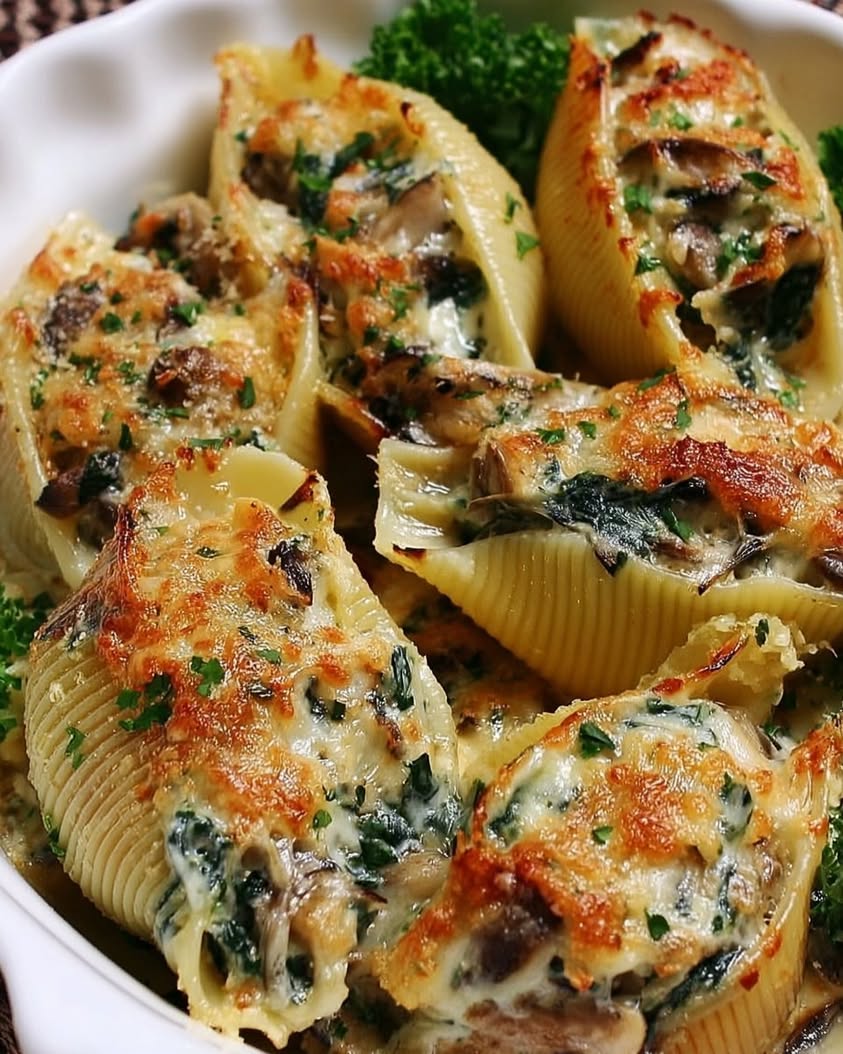
- Visual Appeal: This dish is a feast for the eyes with its vibrant colors. The deep red sauce, bright green spinach, and golden-brown cheese topping create a stunning presentation. Served in a ceramic dish, these Easter Stuffed Shells look both rustic and elegant on any holiday table.
- Skill Level Needed: This recipe is ideal for a confident home cook. It involves several components—cooking pasta, sautéing vegetables, and assembling—but each step is straightforward. Therefore, with a little organization, even those with intermediate skills can achieve fantastic results.
- Special Equipment: You will need a large pot for boiling the pasta shells, a large skillet for sautéing, and a 9×13 inch baking dish. A sturdy spoon or a piping bag can make filling the shells easier and less messy.
Recipe Overview
- Difficulty Level: We classify these Easter Stuffed Shells as intermediate due to the multi-step process. You must coordinate cooking the pasta, preparing the filling, and assembling the dish. However, each individual technique is simple. With careful reading and mise en place, a motivated beginner can certainly succeed.
- Category: This dish fits perfectly into several categories. Primarily, it is a spectacular vegetarian main course. Additionally, it serves as a hearty side dish or a luxurious pasta bake for any special occasion beyond the Easter holiday.
- Cuisine: The recipe draws inspiration from Italian-American cuisine, featuring classic ingredients like ricotta, Parmesan, and marinara. The use of wild mushrooms and artichokes, however, adds a modern, gourmet twist that elevates the traditional stuffed pasta concept.
- Cost: The cost is moderate, largely depending on your choice of wild mushrooms. Using a mix of cremini and shiitake keeps it affordable, while adding porcini or chanterelles increases the price. Artichoke hearts (canned or frozen) and spinach are typically budget-friendly, making the overall dish a good value for a special meal.
- Season: This recipe is ideal for spring, especially around Easter, when its ingredients symbolize new growth. Nevertheless, it is comforting and satisfying year-round. You can easily find high-quality artichokes and mushrooms in any season, making it a versatile choice.
- Occasion: While designed for Easter, these stuffed shells are perfect for any celebratory dinner. They are excellent for holiday gatherings, Sunday family suppers, potlucks, or when you simply want to treat yourself to a restaurant-quality meal at home.
Why You’ll Love This Recipe
First and foremost, the taste and texture of these Easter Stuffed Shells are utterly captivating. Each component brings something unique: the creamy ricotta, the salty Parmesan, the meaty mushrooms, the tender artichokes, and the fresh spinach. When combined, they create a symphony of flavors that is both rich and balanced. The marinara sauce adds a touch of sweetness and acidity that cuts through the richness perfectly. Every forkful is a delightful experience, making it a dish that guests will remember and request again.
From a convenience standpoint, this recipe offers significant preparation benefits. You can prepare the entire dish ahead of time and refrigerate it until ready to bake. This make-ahead flexibility is a game-changer for entertaining, as it removes last-minute stress. Additionally, the filling can be made while the pasta cooks, streamlining the process. While there are several steps, they are all simple and logical, leading to an impressive result without requiring professional chef skills.
Nutritionally, these Easter Stuffed Shells pack a powerful punch. Spinach is loaded with iron and vitamins A and C, while artichokes are an excellent source of fiber and antioxidants. Wild mushrooms provide B vitamins and selenium. Using part-skim ricotta and a moderate amount of cheese keeps the dish satisfying without being overly heavy. Consequently, you can feel good about serving a meal that is as nourishing as it is delicious.
The social and entertaining value of this dish is exceptionally high. It is visually stunning and serves a crowd effortlessly, making it the ideal centerpiece for a holiday table. Because it is a complete meal in one dish, it simplifies menu planning. Moreover, its vegetarian nature makes it inclusive for diverse dietary preferences, ensuring everyone has a spectacular main course to enjoy. It sparks conversation and truly feels like a celebratory feast.
Finally, this recipe is cost-effective and accessible. Most ingredients are pantry staples or easily found at any grocery store. While wild mushrooms sound fancy, a mix of cremini and shiitake is both flavorful and affordable. You can use frozen spinach and canned or frozen artichoke hearts with excellent results. Compared to dining out or preparing a multi-course meat-centric holiday meal, these Easter Stuffed Shells deliver gourmet flavor at a fraction of the cost.
Historical Background and Cultural Significance
The concept of stuffed pasta has deep roots in Italian culinary history, dating back centuries. Dishes like ravioli, tortellini, and cannelloni were created as a means to encase precious fillings, often using ingredients that were local and seasonal. The idea of using large shells, or “conchiglie,” for stuffing is a more modern adaptation, popularized in Italian-American cuisine during the 20th century. This format is particularly appealing because each shell becomes a self-contained package of flavor, perfect for family-style serving.
In many cultures, stuffed foods hold symbolic meaning, especially during holidays and celebrations. They often represent abundance, prosperity, and the hiding of a special treasure. For Easter, a holiday symbolizing rebirth and renewal, a dish filled with the fresh, green produce of spring is particularly fitting. These Easter Stuffed Shells, with their vibrant filling, continue this tradition of creating meaningful, celebratory food that brings people together around the table.
The evolution of this specific recipe reflects broader food trends. Traditionally, stuffed shells might feature a simple ricotta and herb filling. The incorporation of artichokes, spinach, and wild mushrooms represents a contemporary shift towards more vegetable-forward, complex flavor profiles. This evolution caters to modern palates that appreciate both comfort food and gourmet ingredients. It is a testament to how classic dishes can be adapted and elevated while retaining their soul-satisfying essence.
Regional variations of stuffed pasta are endless. In Northern Italy, you might find fillings with ricotta and Swiss chard or pumpkin. Southern Italian versions could include ricotta salata and bitter greens. The American adaptation often includes more cheese and marinara sauce. Our version with artichokes and wild mushrooms borrows from coastal and forested regional influences, creating a unique fusion that honors tradition while embracing global, modern pantry ingredients.
Ingredient Deep Dive
Jumbo Pasta Shells: These large, ridged shells are the perfect vessel for holding a generous amount of filling. Their shape allows them to nestle together in the baking dish, ensuring every bite includes pasta and filling. Look for brands that specify “jumbo” or “extra large” for stuffing. To prevent tearing, cook them just until al dente—they will soften further during baking. A tip is to drizzle them with a little oil after draining to prevent sticking while you prepare the filling.
Artichoke Hearts: Artichokes have been cultivated in the Mediterranean for millennia and are associated with spring and renewal. They are rich in fiber, vitamin C, folate, and minerals like magnesium and potassium. For this recipe, you can use canned artichoke hearts in water (well-drained and chopped) or frozen artichoke hearts (thawed and chopped). Avoid marinated artichokes, as their vinegar brine will alter the flavor of the dish. Their slightly sweet, nutty flavor and firm texture are essential to the filling’s character.
Wild Mushrooms: The term “wild mushrooms” here refers to flavorful varieties beyond the common white button mushroom. A mix of cremini (baby bellas), shiitake, and oyster mushrooms provides deep, earthy umami that mimics the richness of meat. Mushrooms are a great source of B vitamins, selenium, and antioxidants. Sauté them until they release their moisture and become golden brown; this step concentrates their flavor immensely. You can use dried wild mushrooms reconstituted in hot water for an even more intense taste.
Fresh Spinach: Spinach adds vibrant color, fresh flavor, and a wealth of nutrients like iron, calcium, and vitamins A and K. Using fresh spinach that you wilt yourself provides the best texture and flavor. Simply sauté it in the same pan used for the mushrooms until it dramatically reduces in volume. Be sure to squeeze out any excess liquid thoroughly after wilting to prevent a watery filling. You can substitute frozen chopped spinach that has been thawed and squeezed completely dry.
Ricotta Cheese: Ricotta is a fresh, mild Italian whey cheese with a creamy, slightly grainy texture. It acts as the primary binder for the stuffing, providing a lush, moist base. For the best results, use whole-milk ricotta for richness, though part-skim works well too. Always drain ricotta in a fine-mesh strainer for 15-20 minutes before using to remove excess whey, which ensures your filling is firm and not soggy.
Parmesan Cheese: Freshly grated Parmesan (Parmigiano-Reggiano) is non-negotiable for its sharp, salty, nutty flavor. It enhances the filling and creates a delicious crust on top. Pre-grated cheese often contains anti-caking agents that prevent proper melting. Invest in a wedge and grate it yourself for superior taste and texture. The rind can even be saved to add flavor to soups and sauces.
Common Mistakes to Avoid
- Overcooking the Pasta Shells: Boiling the shells until they are fully soft will cause them to tear during stuffing and become mushy after baking. Cook them only until al dente, as they will continue to cook in the oven. Immediately rinse them with cool water to stop the cooking process.
- Not Draining Ingredients Properly: Excess moisture is the enemy of a perfect stuffed shell. Failing to drain the ricotta, squeeze the spinach dry, or pat the artichokes dry will result in a watery filling and a soggy final dish. Take the time to remove as much liquid as possible from each component.
- Underseasoning the Filling: The ricotta mixture needs ample seasoning to taste vibrant. Taste the filling before you stuff the shells; it should be delicious on its own. Remember that the pasta and sauce will dilute the seasoning slightly, so be generous with salt, pepper, and herbs.
- Overfilling or Underfilling the Shells: Underfilled shells will seem sparse and dry out. Overfilled shells will burst open during baking. Aim for a heaping tablespoon of filling per shell, gently pressing it into the cavity without forcing it. The shell should close slightly but not be strained.
- Using Cold Filling: If your ricotta mixture is ice-cold from the fridge, it will be stiff and difficult to work with. Let the filling components come to room temperature before mixing, or prepare the filling first so it has time to lose its chill while you cook the pasta.
- Skipping the Sauté Step for Mushrooms and Spinach: Simply mixing raw mushrooms and spinach into the cheese will release far too much water during baking. Sautéing them first cooks off their moisture and concentrates their flavors, which is crucial for a rich, non-watery result.
- Not Preheating the Oven: Placing the assembled dish into a cold oven leads to uneven cooking and can prevent the cheese from browning properly. Always ensure your oven is fully preheated to the specified temperature before baking.
- Forgetting to Reserve Pasta Water: The starchy pasta water is a chef’s secret for adjusting sauce consistency. If your marinara seems too thick when spreading it in the dish, thin it with a few tablespoons of this magical liquid for a silkier result.
Essential Techniques
Cooking Pasta to Al Dente: This Italian phrase means “to the tooth,” describing pasta that is tender but still offers a slight resistance when bitten. Achieving this is vital for stuffed shells that hold their shape. To master it, boil the pasta in a large pot of well-salted water and set a timer for 1-2 minutes less than the package’s minimum recommended time. Start testing early. The visual cue is a shell that is pliable but still has a firm, opaque core. Immediately drain and rinse with cool water to halt cooking.
Sautéing Mushrooms to Golden Perfection: Properly sautéed mushrooms develop deep, meaty flavor through the Maillard reaction—a chemical process that browns proteins and sugars. The key is to avoid crowding the pan. If the mushrooms are piled on top of each other, they will steam and become soggy. Cook them in batches if necessary, in a single layer with a little oil, over medium-high heat. Let them sit undisturbed for a few minutes to develop a golden-brown crust before stirring. They are done when they have shrunk significantly and are richly browned all over.
Wringing Out Spinach: Removing every bit of excess liquid from wilted spinach is a non-negotiable step for a tight, creamy filling. After sautéing the spinach until fully wilted, transfer it to a clean kitchen towel or a few layers of paper towels. Once it’s cool enough to handle, gather the edges of the towel and twist it tightly over the sink, squeezing with all your might. You will be amazed at how much green liquid is released. The spinach should be a compact, dry mass before chopping and adding to the filling.
Draining Ricotta Cheese: Even seemingly dry ricotta contains whey that can waterlog your dish. To drain it, place a fine-mesh strainer over a bowl and add the ricotta. Let it sit for 15-30 minutes. You can gently press it with a spoon to encourage drainage. Alternatively, line the strainer with cheesecloth for an even more thorough job. This simple step transforms ricotta from potentially grainy and wet to beautifully thick and cohesive.
Pro Tips for Perfect Easter Stuffed Shells
First, lightly grease your baking dish before adding the sauce. This prevents any stubborn sticking and makes cleanup a breeze. A quick spray of cooking oil or a thin smear of butter does the trick.
Consider using a piping bag or a zip-top bag with a corner snipped off to fill the shells. This method is much cleaner and more precise than using a spoon, allowing you to fill each shell neatly and quickly.
For an extra flavor boost, add a pinch of red pepper flakes or a dash of freshly grated nutmeg to the ricotta filling. Nutmeg, in particular, has a magical affinity with creamy spinach dishes.
Let the assembled dish rest for 10-15 minutes after baking before serving. This allows the filling to set slightly, making the shells easier to portion and serve without falling apart.
If the cheese on top is browning too quickly during baking, simply lay a loose piece of aluminum foil over the dish. This will shield the top while allowing the heat to continue cooking the interior.
For a truly golden, bubbly top, switch your oven to broil for the final 1-2 minutes of cooking. Watch it closely, as broilers can burn food in seconds, but this technique delivers a professional-looking finish.
Toast your own breadcrumbs for the topping. Toss panko breadcrumbs with a little melted butter or olive oil and a sprinkle of the grated Parmesan, then toast in a skillet until golden. Sprinkle this over the shells before baking for incredible crunch.
Variations and Adaptations
Regional Variations: To lean into Southern Italian flavors, add chopped sun-dried tomatoes and kalamata olives to the filling, and use a spicy arrabbiata sauce. For a Northern Italian twist, incorporate sautéed leeks and fontina cheese, and top with a béchamel sauce instead of marinara.
Seasonal Adaptations: In summer, replace the mushrooms and artichokes with roasted zucchini, bell peppers, and eggplant. For a fall version, use roasted butternut squash and sage, incorporating the sage into the ricotta mixture for a warm, aromatic note.
Dietary Modifications: For a gluten-free version, use certified gluten-free jumbo shells or stuff the filling into hollowed-out zucchini boats. To make it dairy-free, substitute the ricotta with blended firm tofu or a vegan ricotta alternative, and use nutritional yeast or vegan Parmesan.
Flavor Variations: Add cooked, crumbled Italian sausage or pancetta to the filling for a meat-lover’s version. For a seafood twist, mix in lump crab meat or finely chopped cooked shrimp. A tablespoon of pesto stirred into the ricotta adds a vibrant herbal punch.
Texture Modifications: For a smoother filling, pulse the sautéed mushrooms, artichokes, and spinach in a food processor a few times before mixing with the cheeses. For more texture, add toasted pine nuts or chopped walnuts to the filling mixture.
Presentation Alternatives: Instead of a large baking dish, assemble individual portions in ramekins or small gratin dishes for an elegant, restaurant-style presentation. This is perfect for a more formal dinner party.
Serving and Presentation Guide
Plating these Easter Stuffed Shells beautifully enhances the dining experience. For family style, present the baking dish directly on the table, allowing guests to admire the golden, bubbly top. Use a large, wide spoon or a small spatula to carefully lift out portions, ensuring each serving gets 2-3 intact shells. For individual plates, place the shells slightly offset from the center and spoon a little extra warm sauce around them.
Garnishing adds the final touch of freshness and color. A sprinkle of chopped fresh parsley or basil right before serving is classic. For a more elegant look, add a few microgreens or a chiffonade of basil. A light drizzle of high-quality extra virgin olive oil or a balsamic glaze around the plate adds sophistication and a touch of acidity.
Traditional accompaniments keep the meal Italian-inspired. A simple green salad with a bright lemon vinaigrette balances the richness of the pasta. Garlic bread or focaccia is perfect for sopping up any extra sauce. For a more substantial spread, include roasted asparagus or sautéed green beans with almonds.
Modern serving suggestions might include a charcuterie board to start or a refreshing citrus sorbet for dessert. Consider serving a lighter, broth-based soup as a first course to complement the hearty main dish without overwhelming the palate.
Temperature is crucial. Serve the shells piping hot, straight from the oven after their brief rest. Warm your serving plates slightly to keep the food hot longer at the table. If serving salad, ensure it is well-chilled to provide a refreshing contrast.
Portion control is easy with this dish. Plan for 2-3 shells per person as a main course, or 1-2 as a substantial side. The recipe yields about 18-24 shells, comfortably serving 6-8 people as a main. For larger crowds, simply double the recipe and use two baking dishes.
Wine and Beverage Pairing
Wine pairings should complement the earthy mushrooms and creamy cheese. A medium-bodied Italian red like Chianti Classico or Barbera works wonderfully, as their bright acidity cuts through the richness. Alternatively, a fuller-bodied white wine such as an oak-aged Chardonnay or a rich Pinot Gris can stand up to the flavors without overpowering them. The key is to choose a wine with good acidity to cleanse the palate.
For non-alcoholic alternatives, consider sparkling water with a twist of lemon or a homemade rosemary-lemonade. An iced herbal tea, like mint or hibiscus, offers a refreshing and slightly tannic counterpoint. A rich, non-alcoholic ginger beer also pairs surprisingly well with the savory, umami notes of the dish.
While not a traditional pairing for pasta, a light roast coffee or an herbal tea like chamomile can be lovely after the meal. If serving these shells for a brunch occasion, a classic mimosa or a bellini made with peach puree provides a festive and complementary beverage option.
Always serve red wine slightly below room temperature (around 60-65°F) and white wines well-chilled. For non-alcoholic drinks, ensure they are properly iced or chilled to be refreshing. Presentation matters; use nice glassware to make the entire meal feel special.
Storage and Shelf Life
Proper storage is key to enjoying leftovers. Cool the baked shells completely to room temperature, but do not leave them out for more than two hours. Transfer them to an airtight container or cover the baking dish tightly with plastic wrap and then foil. They will keep in the refrigerator for 3-4 days.
For longer storage, these Easter Stuffed Shells freeze exceptionally well. Freeze individual portions on a parchment-lined baking sheet until solid, then transfer to a freezer bag. Alternatively, freeze the entire assembled but unbaked dish tightly wrapped. Thaw overnight in the refrigerator before baking. Frozen, baked shells will keep for 2-3 months.
Signs of spoilage include an off smell, visible mold (often fuzzy spots in white, green, or blue), or a slimy texture on the pasta or filling. When in doubt, throw it out. Dairy-based dishes are particularly susceptible to bacterial growth.
Reheating instructions are simple. For best results, reheat individual portions in the oven at 350°F until warmed through (about 15-20 minutes), covered with foil to prevent drying. You can also microwave single servings, but the texture of the pasta may become slightly softer. Adding a tablespoon of water or sauce before covering and microwaving helps keep them moist.
Make Ahead Strategies
This recipe is a fantastic candidate for make-ahead preparation, which is a major advantage for holiday cooking. You can prepare the entire dish up to 24 hours in advance. Simply assemble the stuffed shells in the sauced baking dish, cover tightly, and refrigerate. When ready to bake, you may need to add 5-10 minutes to the baking time since you are starting from a cold state.
For an even more extended timeline, you can freeze the unbaked, assembled dish. Wrap it very well in plastic wrap and then foil. It can be frozen for up to 2 months. Thaw it completely in the refrigerator for 24-48 hours before baking as directed. This is the ultimate stress-free holiday meal solution.
The quality impact of making ahead is minimal, and some argue it improves the flavor as the ingredients have time to meld. The pasta may absorb a bit more sauce, making it even more flavorful. To combat any potential dryness from the pasta absorbing liquid, you can spread a little extra sauce or a splash of water in the bottom of the dish before covering and refrigerating.
If you prefer to prep components separately, you can cook the pasta, make the filling, and prepare the sauce a day ahead. Store each component in separate airtight containers in the fridge. Then, simply assemble and bake the day of your event. This keeps the pasta from becoming too soft.
Scaling Instructions
Halving this recipe is straightforward for smaller households. Simply divide all ingredient quantities by two. Use an 8×8 inch or 9×9 inch baking dish. The prep and cook times will remain roughly the same, though you may save a few minutes on sautéing the smaller volume of vegetables.
Doubling or tripling the recipe is perfect for a large crowd. Multiply all ingredients accordingly. You will likely need to sauté the mushrooms and spinach in multiple batches to avoid steaming. Use two 9×13 inch baking dishes or one very large roasting pan. The baking time may increase slightly; rely on visual cues (bubbly sauce, golden top) rather than strict timing.
Equipment adjustments are important when scaling. For a doubled recipe, ensure you have a pot large enough to cook all the pasta shells without crowding. You may need to use multiple skillets or cook the filling in batches. A large mixing bowl is essential for combining the doubled filling.
Timing modifications are minimal when scaling up. The assembly will simply take longer. To streamline, set up an assembly line: cooked shells, bowl of filling, sauced baking dish. Enlist help to make the process fun and efficient.
Nutritional Deep Dive
This dish provides a balanced macronutrient profile. The pasta and vegetables offer complex carbohydrates for sustained energy. The ricotta and Parmesan cheeses contribute high-quality protein and calcium. The olive oil and cheese provide healthy fats. One serving (approximately 3 shells) is a satisfying and complete meal that will keep you full for hours.
The micronutrient analysis is impressive. Spinach delivers iron and vitamins A, C, and K. Artichokes are a top source of dietary fiber and folate. Mushrooms provide selenium, potassium, and B vitamins. Tomatoes in the sauce are rich in lycopene, a powerful antioxidant. Together, they make these Easter Stuffed Shells a nutrient-dense choice.
Health benefits include supporting bone health from the calcium, promoting digestive health from the fiber, and providing antioxidants that combat inflammation. The dish is also vegetarian, which can be part of a heart-healthy eating pattern when balanced with other whole foods.
For those monitoring calories or macronutrients, you can make lighter adaptations. Use part-skim ricotta, reduce the amount of Parmesan by a quarter, and increase the proportion of vegetables in the filling. These tweaks lower the calorie and fat content while maintaining great flavor and satisfaction.
Dietary Adaptations
Gluten-Free: Use certified gluten-free jumbo pasta shells. Be sure to check all other packaged ingredients, like marinara sauce, for hidden gluten. The filling is naturally gluten-free.
Dairy-Free/Vegan: Replace ricotta with a blend of firm tofu (pressed and crumbled), nutritional yeast, lemon juice, and salt. Use a vegan Parmesan alternative. For the sauce, ensure it contains no cheese. The result is a flavorful, plant-based version that captures the essence of the original.
Low-Carb/Keto: Omit the pasta shells entirely. Use the artichoke, spinach, and mushroom filling to stuff large portobello mushroom caps or bell pepper halves. Bake until the vegetable vessel is tender. This creates a delicious, vegetable-centric dish that fits low-carb guidelines.
Paleo: Similar to keto, avoid the pasta and dairy. Stuff the sautéed vegetable mixture into roasted acorn squash halves or use it as a topping for spiralized zucchini noodles (zoodles). Use a simple tomato sauce without added sugar.
Low-FODMAP: This requires more significant changes. Omit garlic and onion from the sauté and sauce (use garlic-infused oil for flavor). Use canned artichoke hearts only if labeled “hearts only” in water, and limit the quantity. Replace cremini mushrooms with oyster mushrooms, which are low-FODMAP in smaller servings. Use lactose-free ricotta if tolerated.
Troubleshooting Guide
Filling is Too Wet: If your assembled dish seems watery before baking, you likely missed a draining step. Unfortunately, you cannot fix it now, but you can salvage the meal. Carefully pour off any visible liquid from the dish. Bake as directed; the excess moisture may evaporate. For next time, be meticulous about draining ricotta and squeezing spinach.
Shells are Dry After Baking: This usually means the dish was overbaked or there was not enough sauce. To remedy, spoon a little warm marinara sauce or a splash of vegetable broth over the dry shells before serving. To prevent, ensure the shells are nestled in a good layer of sauce and cover the dish with foil for the first half of baking to trap steam.
Filling Lacks Flavor: The ricotta mixture needs aggressive seasoning. If your baked shells taste bland, serve them with extra grated Parmesan, a sprinkle of flaky sea salt, and a drizzle of good olive oil at the table. For next time, remember to taste and season the raw filling until it is delicious on its own.
Top is Browning Too Fast: If the cheese is browning before the inside is hot, your oven rack may be too high, or the oven temperature may be off. Immediately cover the dish loosely with foil and lower the oven temperature by 25°F. Use an oven thermometer to check your oven’s accuracy for future bakes.
Recipe Success Stories
Community feedback on this Easter Stuffed Shells recipe has been overwhelmingly positive. Many home cooks have shared that it became the unexpected star of their holiday meal, with guests asking for the recipe. One reader noted that her children, who typically avoid vegetables, devoured the shells because the flavors were so well integrated and the presentation was fun.
Variation successes are abundant. A reader from the Pacific Northwest shared her version using foraged morel mushrooms and stinging nettles instead of spinach, creating a truly hyper-local spring dish. Another added lump crab meat for a special anniversary dinner, reporting it was a huge hit. These adaptations show the recipe’s fantastic versatility.
Reader suggestions have also improved the recipe. Several people recommended adding a layer of mozzarella cheese on top for extra gooeyness, which we now often include in our own variations. Others suggested using a mix of ricotta and goat cheese for a tangier profile, a tip we love and pass along.
Frequently Asked Questions
Q: Can I use frozen spinach instead of fresh?
A: Absolutely. Use one 10-ounce package of frozen chopped spinach, thawed completely. It is crucial to squeeze it in a towel until it is as dry as possible to prevent a watery filling. This method can actually be more convenient and consistent.
Q: What’s the best way to fill the shells without making a mess?
A: A piping bag is the cleanest method. If you don’t have one, a gallon-sized zip-top bag works perfectly. Spoon the filling into the bag, squeeze out the air, seal it, and snip off one corner. Then, pipe the filling directly into each shell quickly and neatly.
Q: Can I make this recipe without marinara sauce?
A: Yes. A creamy Alfredo or a simple garlic-butter white wine sauce would be delicious alternatives. You could also use a pesto sauce thinned with a little pasta water. The baking method remains the same.
Q: My shells cracked while boiling. What did I do wrong?
A: This usually happens if the water is at a rolling boil when you add the shells, causing them to knock against each other violently. Add the shells to the pot, then bring the water to a boil. Stir gently at the beginning to prevent sticking. A little oil in the water can also help.
Q: How can I tell when the dish is done baking?
A: The sauce should be bubbling actively around the edges of the dish, and the cheese on top should be melted and have golden-brown spots. An instant-read thermometer inserted into the center of the filling should read at least 165°F.
Q: Is it necessary to rinse the pasta after cooking?
A: For baked pasta
Print
Easter Artichoke, Spinach, and Wild Mushroom Stuffed Shells
- Total Time: 45 minutes
- Yield: 4
Description
A festive, creamy stuffed shell dish perfect for Easter, featuring a rich filling of artichokes, spinach, and wild mushrooms baked in a savory sauce.
Ingredients
- 1 box (12 oz) jumbo pasta shells
- 2 cups ricotta cheese
- 1 cup grated Parmesan cheese
- 1 cup chopped artichoke hearts (canned or jarred, drained)
- 2 cups fresh spinach, chopped
- 1 cup wild mushrooms (such as shiitake or cremini), sliced
- 2 cloves garlic, minced
- 1 egg
- 2 cups marinara sauce
- 1 cup shredded mozzarella cheese
- 2 tbsp olive oil
- Salt and pepper to taste
- Fresh basil for garnish
Instructions
- Preheat oven to 375°F (190°C). Cook pasta shells according to package directions until al dente, then drain and set aside.
- In a skillet, heat olive oil over medium heat. Add garlic and mushrooms, sauté until mushrooms are tender, about 5 minutes. Add spinach and cook until wilted. Remove from heat and let cool slightly.
- In a large bowl, mix ricotta, Parmesan, egg, artichoke hearts, and the mushroom-spinach mixture. Season with salt and pepper.
- Spread a thin layer of marinara sauce in the bottom of a baking dish. Stuff each pasta shell with the ricotta mixture and place in the dish.
- Pour remaining marinara sauce over the stuffed shells. Sprinkle mozzarella cheese on top.
- Cover with foil and bake for 20 minutes. Remove foil and bake for an additional 10 minutes, or until cheese is bubbly and golden.
- Garnish with fresh basil before serving.
Notes
You can customize the seasonings to taste.
- Prep Time: 15 minutes
- Cook Time: 30 minutes
- Method: Main
- Cuisine: Italian-American