Vibrant Mediterranean Beef Stir-Fry with Feta and Fresh Vegetables: A 30-Minute Weeknight Wonder
Imagine a dish that captures the essence of a sunny Mediterranean coast in a single, sizzling skillet. This vibrant Mediterranean beef stir-fry with feta and fresh vegetables does exactly that. It transforms simple, wholesome ingredients into a colorful and incredibly flavorful meal that feels both indulgent and nourishing. The combination of savory beef, sweet cherry tomatoes, and tender zucchini creates a beautiful harmony on your plate. Moreover, the salty crumble of feta cheese ties everything together with a creamy, tangy finish.
This recipe is a testament to the magic of quick, high-heat cooking. It brings out the natural sweetness of the vegetables while keeping the beef juicy and flavorful. Consequently, you get a restaurant-quality meal on your table in about 30 minutes. The aroma that fills your kitchen as the garlic and oregano hit the hot pan is nothing short of intoxicating. Ultimately, this vibrant Mediterranean beef stir-fry is more than just dinner; it’s a quick escape to a simpler, brighter culinary world.
Busy weeknights demand solutions that are fast, healthy, and satisfying. This vibrant Mediterranean beef stir-fry with feta and fresh vegetables checks every box without compromising on taste. It leverages the classic flavors of the Mediterranean diet, which is celebrated for its health benefits and focus on fresh produce. Therefore, you can feel good about serving this to your family. Each bite delivers a burst of freshness, savory depth, and a touch of creamy saltiness that will have everyone asking for seconds.
Quick Recipe Highlights
- Flavor Profile: This vibrant Mediterranean beef stir-fry masterfully balances savory, sweet, and tangy notes. The umami-rich beef pairs with the natural sweetness of cherry tomatoes and zucchini. Finally, briny feta cheese and aromatic oregano provide the classic Mediterranean finish.
- Texture: You will enjoy a wonderful contrast of textures in every forkful. Expect tender, juicy beef strips alongside zucchini that is cooked to a perfect tender-crisp. Meanwhile, the cherry tomatoes soften and burst, and the feta adds delightful creamy crumbles.
- Aroma: The cooking process releases an irresistible fragrance. First, garlic and dried oregano sizzle to create a warm, earthy base. Then, the beef browns, adding a rich, savory scent that mingles with the sweet aroma of the fresh vegetables.
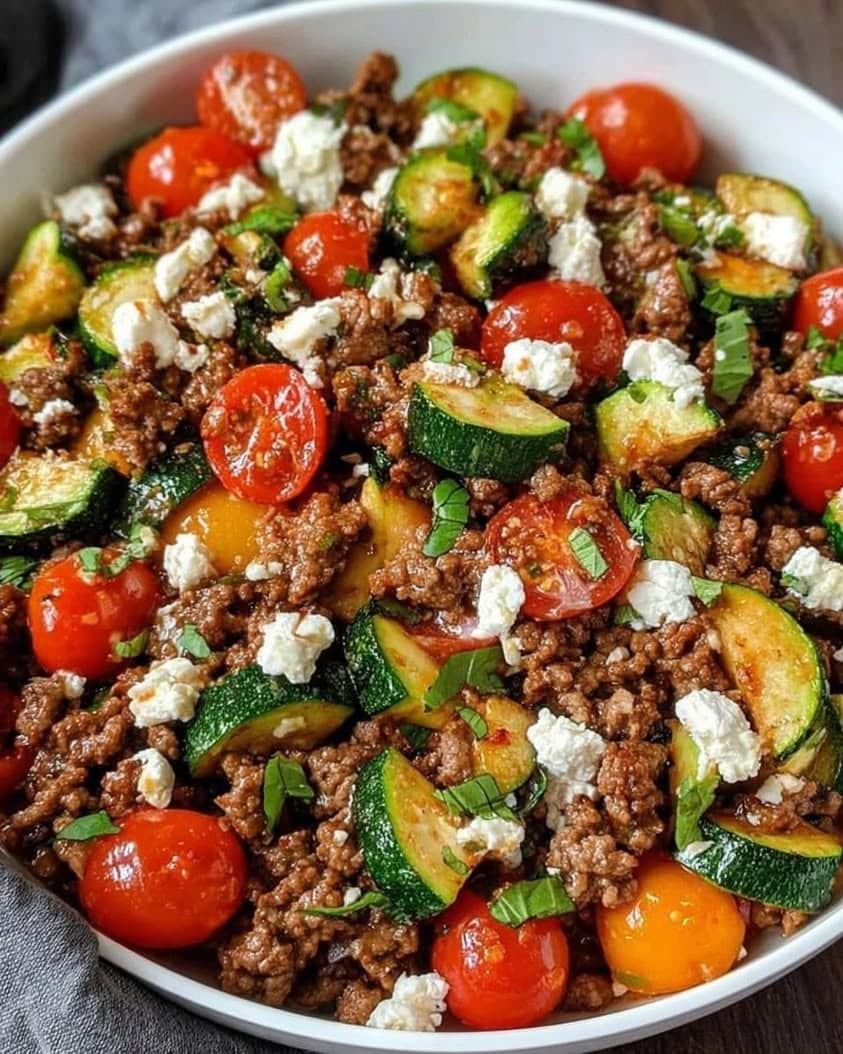
- Visual Appeal: This dish is a feast for the eyes with its vibrant color palette. The deep brown of the beef contrasts beautifully with the green zucchini, red tomatoes, and white feta. As a result, it looks stunning served straight from the skillet or plated elegantly.
- Skill Level Needed: This is an accessible recipe perfect for beginners and busy cooks alike. The primary skill is managing high-heat stir-frying to achieve a good sear without overcooking. Otherwise, it involves straightforward chopping and simple timing.
- Special Equipment: You need only a large skillet or wok and a good chef’s knife. A heavy-bottomed skillet is ideal for even heat distribution to prevent burning. Additionally, a pair of tongs makes flipping the beef and vegetables much easier.
Recipe Overview
- Difficulty Level: We rate this vibrant Mediterranean beef stir-fry as easy. The steps are sequential and simple, involving basic chopping and sautéing. There is no complex knife work or advanced techniques required. Essentially, if you can heat oil and stir ingredients, you can master this dish.
- Category: This recipe fits perfectly into the main course category for a quick dinner. It also works wonderfully as a high-protein lunch option when served over greens. Furthermore, it can be a fantastic filling for wraps or pita pockets the next day.
- Cuisine: The dish is firmly rooted in Mediterranean cuisine, drawing inspiration from Greek and coastal Italian flavors. The use of olive oil, oregano, feta, and fresh vegetables are all hallmarks of the region. However, the stir-fry method adds a modern, quick-cooking twist to these traditional ingredients.
- Cost: This is a very cost-effective meal, especially when zucchini and tomatoes are in season. Lean beef is often affordable, and the vegetables add bulk without significant expense. Overall, you can expect to feed a family of four for less than the cost of takeout.
- Season: This vibrant Mediterranean beef stir-fry shines brightest in late summer and early fall. That is when zucchini and cherry tomatoes are at their peak sweetness and most affordable. Nevertheless, it is a reliable year-round recipe thanks to the consistent availability of these vegetables.
- Occasion: It is the ultimate weeknight savior for busy evenings. Simultaneously, it is impressive enough for casual weekend dinners with friends. The colorful presentation makes it a great option for potlucks or family gatherings where you want to bring something healthy and delicious.
Why You’ll Love This Recipe
First and foremost, the taste and texture of this vibrant Mediterranean beef stir-fry are utterly captivating. Each component brings something unique to your palate. The beef delivers a savory, meaty foundation, while the zucchini offers a mild, slightly sweet crunch. Then, the burst cherry tomatoes provide juicy acidity, and the feta cheese introduces a creamy, salty punctuation. This combination creates a symphony of flavors that is both familiar and exciting. You will find yourself going back for bite after bite, discovering new layers of taste each time.
From a convenience standpoint, this recipe is a true weeknight hero. It comes together in one pan, meaning minimal cleanup after you have enjoyed your meal. The prep work is straightforward, involving mostly chopping vegetables that do not require precision. Furthermore, the cooking process is fast and active, keeping you engaged but not overwhelmed. You can realistically go from a cold skillet to a served dinner in half an hour. Consequently, it eliminates the stress of complicated meal planning on hectic days.
Nutritionally, this vibrant Mediterranean beef stir-fry with feta and fresh vegetables is a powerhouse. It is packed with lean protein from the beef, which is essential for muscle repair and satiety. The zucchini and tomatoes contribute vital vitamins, minerals, and antioxidants, along with beneficial fiber. Using olive oil adds heart-healthy monounsaturated fats to the dish. This balance makes it a meal that fuels your body properly without leaving you feeling heavy. It aligns perfectly with the principles of the celebrated Mediterranean diet.
For entertaining, this dish offers tremendous social value. It is visually stunning, sparking conversation when you bring it to the table. The recipe scales up easily to feed a crowd without multiplying your time in the kitchen exponentially. Guests will appreciate the bright, fresh flavors that feel special but not fussy. You can confidently serve it knowing it caters to a wide range of tastes. Ultimately, it allows you to spend more time with your guests and less time stuck in the kitchen.
Finally, the cost-effectiveness and accessibility of this recipe cannot be overstated. The ingredients are common and available in any standard grocery store. You can often find sales on lean beef, and the vegetables are among the most affordable produce items. Compared to ordering delivery or dining out, making this vibrant Mediterranean beef stir-fry saves a significant amount of money. It proves that eating well does not require expensive or exotic ingredients. Instead, it celebrates the magic of combining simple, quality components with bold flavors.
Historical Background and Cultural Significance
The concept of a stir-fry finds its deepest roots in Chinese cuisine, a technique honed over millennia for its speed and fuel efficiency. However, the marriage of this technique with Mediterranean ingredients is a beautiful example of modern fusion cooking. This vibrant Mediterranean beef stir-fry with feta and fresh vegetables does not have a centuries-old origin story. Instead, it represents the contemporary global kitchen, where culinary traditions intersect and inspire new creations. It is a dish born from the desire for quick, healthy meals that do not sacrifice depth of flavor. Essentially, it takes a fast-cooking method and applies it to a different flavor palette.
Culturally, the significance lies in its embodiment of Mediterranean dietary principles. The Mediterranean diet, recognized by UNESCO as an intangible cultural heritage, emphasizes fresh vegetables, lean proteins, healthy fats, and herbs. This recipe is a direct translation of those values into a quick, weeknight-friendly format. It makes the health benefits and joyful eating associated with Mediterranean lifestyles accessible to people with busy schedules. Therefore, while not traditional, it carries the cultural weight of promoting a wholesome, balanced approach to food. It celebrates vegetables as the star, with meat playing a supporting role.
The evolution of this recipe mirrors broader trends in home cooking over recent decades. As families sought faster meal solutions, the stir-fry method gained immense popularity worldwide. Creative cooks began experimenting with local ingredients within that framework. The logical step was to apply the vibrant, herb-forward flavors of the Mediterranean to this quick-cooking technique. The addition of cheese, like feta, is a non-traditional but logical flourish for added richness. This evolution shows how recipes are living entities, constantly adapting to new tastes, ingredients, and time constraints.
Regional variations of this concept are endless, which is part of its charm. In Greece, one might find a similar skillet dish with beef, tomatoes, and oregano, perhaps finished with Kefalotyri cheese. In Italy, a version might include bell peppers and a sprinkle of Parmesan. The specific combination of zucchini, cherry tomatoes, and feta used here is particularly popular in modern health-conscious circles. You can easily imagine variations with eggplant, spinach, or artichoke hearts depending on the season. This adaptability is a key feature of successful fusion cuisine, allowing cooks to make a recipe their own.
Ingredient Deep Dive
Let us start with the lean beef sirloin. This cut comes from the rear back portion of the cow and is prized for its balance of flavor and tenderness without excessive fat. Historically, sirloin was a cut for feasts and celebrations in many European cultures. Nutritionally, it is an excellent source of high-quality protein, iron, zinc, and B vitamins, crucial for energy and metabolism. For the best results in your vibrant Mediterranean beef stir-fry, look for meat with a bright red color and fine marbling. Slice it thinly against the grain while it is still slightly frozen for the most tender strips.
Zucchini, or courgette, is a summer squash that originated in the Americas but was developed into its modern form in Italy. It became a staple of Mediterranean cooking due to its mild flavor and versatility. This vegetable is low in calories but high in water, fiber, vitamin C, and potassium, supporting hydration and heart health. Choose firm, small to medium-sized zucchini with glossy, unblemished skin for the best texture. Store them unwashed in a plastic bag in the refrigerator crisper drawer. If you need a substitute, yellow squash or sliced eggplant work beautifully.
Cherry tomatoes are the sweet, juicy jewels of this dish. They are believed to have been first cultivated in South America, with the smaller cherry varieties gaining popularity for their intense flavor. They pack a significant nutritional punch, being rich in lycopene, an antioxidant linked to reduced risk of certain cancers and heart disease. For your stir-fry, seek out tomatoes that are plump, deeply colored, and still attached to their stems if possible, a sign of freshness. Keep them at room temperature until they are perfectly ripe, then refrigerate to slow further ripening. Grape tomatoes make a fine alternative, offering a slightly firmer texture.
Feta cheese is the iconic salty finish. This brined curd cheese has a history stretching back to ancient Greece and is protected by EU law; true feta must be made in Greece from sheep’s milk or a sheep-goat blend. It provides calcium and protein but is also high in sodium, so a little goes a long way. The tangy, salty flavor cuts through the richness of the beef and complements the sweet vegetables. For the best quality, look for feta sold in blocks submerged in brine. If you cannot have dairy, a good substitute is crumbled tofu marinated in lemon juice and salt.
Finally, the flavor foundation: extra virgin olive oil, garlic, and dried oregano. Olive oil is the cornerstone of the Mediterranean diet, rich in monounsaturated fats and antioxidants. Garlic has been used both culinarily and medicinally for thousands of years, adding depth and potential immune-boosting properties. Oregano, meaning “mountain joy” in Greek, is the definitive herb of the region, offering earthy, slightly bitter notes. Always use the best extra virgin olive oil you can for sautéing, as its flavor is paramount. Fresh garlic is non-negotiable for aroma, and while dried oregano is traditional, a sprinkle of fresh at the end adds brightness.
Common Mistakes to Avoid
- Crowding the Pan: Adding all the beef at once is a critical error. The meat will steam instead of sear, resulting in gray, tough beef. Always cook in a single layer in batches to achieve a flavorful, caramelized crust.
- Overcooking the Zucchini: Zucchini has high water content and can quickly turn from tender-crisp to mushy. Add it towards the end of the cooking process and stir-fry just until it loses its raw edge and brightens in color.
- Using Cold Beef: Slicing and cooking beef straight from the refrigerator hinders browning. Let the sliced beef sit at room temperature for 10-15 minutes before cooking. This allows for more even and faster searing.
- Skipping the Resting Step for Beef: Immediately slicing into the cooked beef strips causes all the precious juices to run out. Let the cooked beef rest for a few minutes after its initial sear before returning it to the pan.
- Adding Feta During Cooking: Feta cheese will melt into a greasy mess if added to the hot skillet. Always crumble the feta over the finished dish just before serving. The residual heat will soften it perfectly without causing it to disappear.
- Not Preheating the Pan: Starting with a cold pan or oil that is not shimmering hot guarantees poor searing. Wait until the oil shimmers and a drop of water sizzles violently before adding your first ingredient.
- Using Low-Quality Olive Oil: The flavor of extra virgin olive oil is a key component. Using a bland or refined oil will result in a less authentic and flavorful vibrant Mediterranean beef stir-fry.
- Neglecting to Season in Layers: Seasoning only at the end leads to bland food. Season the beef generously before cooking, and then taste and adjust the seasoning of the vegetables and final dish.
- Stirring Constantly: While it is called a stir-fry, constant stirring prevents the ingredients from developing a good sear. Allow the beef and vegetables to sit undisturbed for a minute or two to achieve caramelization.
- Forgetting to Pat the Beef Dry: Moisture on the surface of the beef creates steam. Always pat the beef strips thoroughly dry with paper towels before seasoning and cooking to ensure a proper sear.
Essential Techniques
Slicing Against the Grain: This is the single most important technique for ensuring tender beef in your stir-fry. The “grain” refers to the long muscle fibers visible in the meat. By slicing perpendicularly across these fibers, you shorten them, making the beef much easier to chew. To master it, identify the direction of the fibers on your sirloin steak. Then, using a sharp knife, cut thin strips across that direction, not parallel to it. A common pitfall is not identifying the grain correctly, which can vary in direction. Success is evident when your cooked beef strips are tender and not stringy.
High-Heat Searing: Searing at high heat creates the Maillard reaction, a complex chemical process that develops deep, savory flavors and appealing color. It is crucial for building the foundational taste of your vibrant Mediterranean beef stir-fry. To master it, ensure your pan is very hot before adding oil, and then wait for the oil to shimmer. Add the beef in a single layer without moving it for the first minute to allow a crust to form. The common pitfall is a pan that is not hot enough, leading to steaming. Visual cues for success include a audible sizzle upon contact and the beef releasing easily from the pan when a crust has formed.
Stir-Frying Vegetables to Tender-Crisp: This technique preserves the vegetables’ vibrant color, nutritional value, and pleasant texture. The goal is to cook them quickly so they soften slightly but retain a bit of crunch. Achieve this by adding vegetables to very hot oil and stirring frequently but not constantly. The high heat cooks them fast, locking in freshness. A common mistake is adding all vegetables at once; denser veggies like carrots need more time than zucchini. Success is visible when the zucchini is bright green and slightly translucent at the edges, and the cherry tomatoes have just begun to wilt and blister.
Pro Tips for Perfect Vibrant Mediterranean Beef Stir-Fry
First, partially freeze your beef sirloin for about 30 minutes before slicing. This firms up the meat, making it infinitely easier to cut into thin, uniform strips. Uniform strips ensure even cooking, so every piece is perfectly seared and tender.
Second, do not discard the fond—those browned bits stuck to the pan after searing the beef. When you add the garlic and oregano, let them sizzle for just 30 seconds to become fragrant. Then, immediately deglaze the pan with a splash of water or broth, scraping up all those bits. This liquid becomes a flavor-packed base for your vegetables.
Third, consider marinating your beef strips briefly. A simple marinade of a tablespoon of olive oil, a squeeze of lemon juice, and an extra pinch of oregano for 15-20 minutes can add another layer of flavor. However, pat the marinated beef completely dry before cooking to ensure a good sear.
Fourth, add the cherry tomatoes whole. Allowing them to heat until they just begin to blister and burst creates little pockets of sweet, juicy sauce throughout the stir-fry. Gently pressing a few with your spatula can help release their juices to coat the other ingredients.
Fifth, finish the dish with fresh herbs. While dried oregano is cooked for foundational flavor, a sprinkle of fresh oregano, parsley, or basil just before serving adds a burst of brightness and aroma that elevates the entire dish.
Sixth, let the completed stir-fry rest for two minutes off the heat before serving. This brief pause allows the intense heat to redistribute evenly and lets the flavors meld together slightly. It also prevents the vegetables from continuing to cook from residual heat and becoming mushy.
Seventh, serve with something to soak up the delicious juices. While delicious on its own, serving your vibrant Mediterranean beef stir-fry over a bed of couscous, quinoa, or crusty bread turns the flavorful pan juices into an integral part of the meal.
Eighth, use a mix of colored cherry tomatoes if available. Incorporating yellow, orange, and red tomatoes not only makes the dish visually spectacular but also can introduce subtle variations in sweetness and acidity, making the flavor profile even more complex.
Variations and Adaptations
For regional variations, you can easily take this recipe on a tour of the Mediterranean. For a Greek twist, add a handful of Kalamata olives and a sprinkle of dried mint with the oregano. For an Italian-inspired version, substitute the oregano with basil, use mozzarella pearls instead of feta, and add a splash of balsamic glaze at the end. A Turkish variation might include a pinch of cumin and a dollop of yogurt on the side.
Seasonal adaptations are straightforward and recommended. In spring, use asparagus tips and fresh peas. For a hearty winter version, substitute the zucchini with cubed butternut squash and add chopped kale. The core technique remains the same; simply adjust the cooking time for harder, seasonal vegetables by starting them a few minutes earlier.
Dietary modifications are simple to implement. For a gluten-free meal, ensure your seasonings are certified gluten-free and serve with a compliant grain. To make it dairy-free, omit the feta and add a tablespoon of capes for a similar salty, tangy punch. For a lower-carb or keto option, simply serve the stir-fry on its own or over cauliflower rice.
Flavor variations can cater to different palates. If you prefer a spicier dish, add red pepper flakes with the garlic. For a richer, deeper flavor, use a tablespoon of tomato paste after the garlic cooks for a minute. A squeeze of fresh lemon juice just before serving can add a welcome note of acidity that brightens all the other flavors.
Texture modifications are also possible. If you enjoy more crunch, add a handful of toasted pine nuts or slivered almonds as a garnish. For a creamier texture without more cheese, stir in a quarter cup of plain Greek yogurt off the heat at the very end. You can also slice the zucchini into thicker coins for a more substantial bite.
Presentation alternatives can make the same dish feel new. Instead of mixing everything, arrange the seared beef on a platter and top with the sautéed vegetables and crumbled feta. Serve the vibrant Mediterranean beef stir-fry in individual bowls or even in hollowed-out bell peppers for a fun, edible container. Skewering the beef and vegetables before serving turns it into a hands-on appetizer or main course.
Serving and Presentation Guide
Plating this dish is part of its appeal. For a family-style presentation, simply bring the entire skillet to the table—the colorful ingredients look beautiful in the pan. For individual plates, use a pair of tongs to create a high, loose mound in the center of a shallow bowl or plate. This adds height and visual interest. Avoid spreading the stir-fry flat, as this can make it look messy and steam the ingredients further.
Garnishing is your final opportunity to enhance flavor and visual appeal. Beyond the crumbled feta, a final drizzle of high-quality extra virgin olive oil adds shine. Fresh herb sprigs like oregano, parsley, or dill provide a pop of green. A light dusting of smoked paprika or sumac adds both color and a subtle flavor twist. For a touch of luxury, a few lemon zest ribbons on top are stunning.
Traditional accompaniments keep the meal light and Mediterranean. A simple side of warmed pita bread or crusty baguette is perfect for scooping. A crisp, leafy green salad with a lemon vinaigrette complements the richness of the beef. Alternatively, a bowl of plain Greek yogurt or tzatziki on the side offers a cool, creamy contrast.
Modern serving suggestions include turning the stir-fry into a grain bowl. Spoon it over a base of farro, couscous, or quinoa to make a more substantial meal. You can also use it as a hearty filling for whole-wheat wraps or pita pockets, perhaps with an extra smear of hummus. For a low-carb option, serve it over a bed of fresh arugula or spinach, which will wilt slightly from the heat.
Temperature considerations are key. This vibrant Mediterranean beef stir-fry is best served immediately, while the beef is still juicy and the vegetables retain their texture. The dish does not hold well on a steam table or under a heat lamp, as the zucchini will continue to soften. If you must hold it, keep it in a warm but not hot oven, and add the feta only at the moment of serving.
Portion control is naturally built in due to the high vegetable content. A good rule of thumb is that one recipe serving fills about one-quarter to one-third of a standard dinner plate. If serving with a grain, aim for a ratio of about two-thirds stir-fry to one-third grain. This balance ensures you are getting plenty of protein and vegetables without overloading on carbohydrates.
Wine and Beverage Pairing
Wine pairings for this vibrant Mediterranean beef stir-fry should complement its savory, herbal, and slightly tangy profile. A medium-bodied red wine like a Greek Agiorgitiko or an Italian Chianti Classico works wonderfully. Their bright acidity cuts through the richness of the beef and feta, while their herbal notes echo the oregano. If you prefer white wine, opt for a fuller-bodied option like a Vermentino or a Greek Assyrtiko. These whites have enough structure and mineral character to stand up to the dish without being overwhelmed.
Non-alcoholic alternatives can be just as sophisticated. A sparkling lemonade or limeade provides a refreshing, citrusy contrast. For something more complex, try a chilled herbal iced tea infused with mint or rosemary, which will complement the dish’s herbal notes. A high-quality ginger beer also pairs well, as its spicy sweetness balances the savory and salty elements beautifully.
While not a traditional coffee or tea dish, certain beverages can work if served after the meal. A strong, black Greek coffee would be a culturally appropriate finish. For tea, a cup of mint tea or a light, floral herbal tea like chamomile would be soothing and not clash with the meal’s flavors. The key is to avoid heavy, creamy beverages that would compete with the meal’s freshness.
Temperature considerations are straightforward: serve all beverages well-chilled or at the appropriate temperature for the type. White wines and non-alcoholic sparklers should be cold, around 45-50°F. Red wines should be slightly cooler than room temperature, around 60-65°F, to keep their acidity perceptible. Iced teas and lemonades should be served with plenty of ice to maintain their refreshing quality throughout the meal.
Serving suggestions include offering a carafe of water on the table with lemon or cucumber slices. Hydration is important, especially with a savory dish. If serving wine, plan for about one glass per adult for the meal. For non-alcoholic options, consider making a large pitcher so guests can help themselves. Presentation matters; use nice glasses even for non-alcoholic drinks to make the whole meal feel special.
Storage and Shelf Life
Proper storage is essential for maintaining quality and safety. Allow the vibrant Mediterranean beef stir-fry to cool completely before storing, but do not leave it at room temperature for more than two hours. Transfer it to an airtight container. It is best to store the components separately if possible—keep the beef and vegetable mix in one container and the feta cheese in another. This prevents the feta from dissolving and becoming rubbery upon reheating.
Temperature requirements are non-negotiable. The stored stir-fry must be refrigerated at 40°F or below. Do not store it in the refrigerator door, as the temperature fluctuates too much. For longer storage, the beef and vegetable mixture (without feta) can be frozen. Place it in a freezer-safe bag, press out all the air, and lay it flat to freeze. This method preserves texture and flavor better than a rigid container.
Container recommendations include glass containers with tight-sealing lids, as they do not absorb odors or stains. For freezing, heavy-duty freezer bags are ideal because they minimize air exposure. Always label your container with the date so you can track how long it has been stored. For the feta, keep it in its original brine if possible, or store it submerged in a saltwater solution in a separate small jar.
Signs of spoilage include an off or sour smell, a slimy texture on the meat or vegetables, or visible mold. If the stir-fry has been stored for more than 3-4 days, it is safest to discard it. Do not taste food if you suspect spoilage. When in doubt, throw it out to avoid the risk of foodborne illness.
Reheating instructions are crucial for best results. For the refrigerated beef and vegetable mix, reheat it in a skillet over medium heat with a splash of water or broth. This method helps rehydrate the ingredients and prevents them from drying out or frying further. Stir frequently until heated through. Avoid using the microwave if possible, as it can make the zucchini mushy and the beef tough. Only add the fresh crumbled feta after reheating.
Freezing guidelines suggest a maximum shelf life of 2-3 months for optimal quality. To thaw, place the frozen bag in the refrigerator overnight. Reheat it gently in a skillet as described above. Note that previously frozen zucchini will be softer upon reheating, but the flavor will still be excellent. Do not refreeze previously frozen and thawed stir-fry.
Make Ahead Strategies
A smart prep timeline can turn this 30-minute meal into a 15-minute miracle. The day before, slice your beef against the grain, pat it dry, and store it in a sealed container or bag in the refrigerator. You can also chop the zucchini and mince the garlic, storing them separately in the fridge. Keep the cherry tomatoes whole and unwashed until ready to use. This advance work means that when it is time to cook, you can move from fridge to pan in seconds.
Storage between steps is simple with proper containers. Use airtight containers or resealable bags for the prepped ingredients. To prevent the beef from sitting in its own juices, you can place a paper towel in the container with it to absorb moisture. Keep the prepped garlic in a tiny jar or wrapped tightly in plastic to prevent its odor from permeating other foods. Having everything measured and ready is called “mise en place,” and it is the secret to stress-free stir-frying.
The quality impact of make-ahead prep is minimal if done correctly. Pre-cut beef may release a little more moisture, so be extra diligent about patting it dry before cooking. Pre-cut zucchini might dry out slightly at the edges, but this does not affect the final stir-fry. Garlic’s flavor intensifies slightly after being cut, which can be a benefit. Overall, the convenience far outweighs any negligible impact on texture or flavor, especially for a weeknight meal.
Assembly tips for the cooking day are straightforward. Take your prepped ingredients out of the fridge about 10-15 minutes before cooking to take the chill off the beef. Have your skillet, oil, spatula, and seasonings ready. Because your ingredients are prepped, you can focus entirely on the cooking process—managing heat and timing—without the distraction of chopping. This leads to better searing and less risk of overcooking.
Reheating guidelines for a fully made-ahead dish differ from partial prep. If you cook the entire stir-fry ahead (without feta), cool it quickly and refrigerate. Reheat it in a hot skillet with a splash of liquid to refresh it. The texture of the zucchini will be softer than if served immediately, but the flavors will have melded beautifully. This is a good strategy for next-day lunches.
Fresh element additions are what bring a make-ahead meal to life. No matter how much you prep ahead, always add the feta cheese fresh at the end. Similarly, any fresh herb garnish like parsley or basil should be added just before serving. A final drizzle of good olive oil after reheating can also revive the dish’s aroma and richness. These last-minute touches ensure the meal tastes freshly made.
Scaling Instructions
Halving the recipe is simple for smaller households. Use half the amount of each ingredient. The cooking times will remain roughly the same, but you may need to use a slightly smaller skillet. Be vigilant, as smaller quantities can cook even faster. The key is to maintain high heat and avoid overcrowding, even with a smaller batch. This is a great way to test the recipe or make a quick dinner for one or two.
Doubling or tripling the recipe for a crowd requires some adjustments. Do not attempt to cook a double batch in one standard skillet; the pan will be too crowded, and the ingredients will steam. Instead, cook in multiple batches, or use a very large commercial-style skillet or a wok. You may need to increase the cooking time slightly for each batch as the pan temperature will drop when you add a large quantity of cold ingredients. Keep the cooked batches warm on a sheet pan in a low oven (200°F) while you finish the rest.
Equipment adjustments are necessary when scaling. For larger batches, ensure you have a spatula or tongs that can handle the volume. You might also need a larger bowl for seasoning the beef. If cooking in batches, have a clean plate ready for each batch of seared beef. For very large groups, consider setting up two burners with two skillets to streamline the process. Planning your equipment setup beforehand prevents frantic searching mid-cook.
Timing modifications are minimal when scaling up, as the active cooking time per batch remains constant. However, the total time will increase linearly with the number of batches. Factor in extra time for prepping the larger quantity of ingredients. A good strategy is to prep all the beef and vegetables before you start cooking any batch. This assembly-line approach is much more efficient than prepping and cooking each batch sequentially.
Storage considerations change with scale. If you are making a large batch for leftovers, it is even more important to cool the food quickly. Spread the finished stir-fry (without feta) in a thin layer on a baking sheet to cool it rapidly before transferring it to storage containers. This prevents bacterial growth. Label containers with the contents and date clearly. Remember that larger volumes in the refrigerator take longer to cool down, so dividing into several smaller containers is safer and more efficient.
Nutritional Deep Dive
A macro breakdown of one serving reveals a well-balanced meal. You can expect approximately 25-30 grams of high-quality protein from the beef and feta, which supports muscle maintenance and satiety. The carbohydrates, around 10-15 grams per serving, come primarily from the vegetables, making them complex and fiber-rich. The fats, roughly 15-20 grams, are a mix of saturated fat from the beef and monounsaturated fat from the olive oil. This balance makes the vibrant Mediterranean beef stir-fry suitable for various dietary goals, from weight management to athletic recovery.
The micronutrient analysis is impressive. Zucchini provides vitamin C, potassium, and manganese. Cherry tomatoes are loaded with lycopene, vitamin A, and vitamin K. Lean beef is an excellent source of heme iron, which is easily absorbed, as well as zinc and vitamin B12. Olive oil contributes vitamin E and antioxidants. Feta cheese adds calcium and phosphorus. Together, these nutrients support immune function, bone health, energy production, and cellular protection.
Specific health benefits are linked to this ingredient profile. The high vegetable and olive oil content aligns with Print
Vibrant Mediterranean Beef Stir-Fry with Feta, Zucchini & Cherry Tomatoes
- Total Time: 45 minutes
- Yield: 4
Description
A quick, colorful stir-fry featuring lean beef, fresh zucchini, and sweet cherry tomatoes, all tossed in a garlic-herb sauce and topped with crumbled feta for a Mediterranean twist.
Ingredients
- 1 lb lean beef sirloin, thinly sliced
- 2 medium zucchinis, sliced into half-moons
- 1 pint cherry tomatoes, halved
- 1 red onion, thinly sliced
- 3 cloves garlic, minced
- 2 tbsp olive oil
- 1 tsp dried oregano
- 1/2 tsp smoked paprika
- Salt and black pepper to taste
- 1/4 cup crumbled feta cheese
- Fresh parsley for garnish
Instructions
- Heat olive oil in a large skillet or wok over medium-high heat. Add beef slices and cook until browned, about 4-5 minutes. Remove and set aside.
- In the same skillet, add red onion and zucchini. Stir-fry for 5-6 minutes until slightly tender. Add garlic, oregano, and paprika, cooking for 1 minute until fragrant.
- Add cherry tomatoes and cook for 2-3 minutes until they begin to soften. Return beef to the skillet, season with salt and pepper, and toss everything together. Cook for another 2 minutes to heat through.
- Remove from heat, sprinkle with crumbled feta and fresh parsley. Serve immediately over rice or quinoa if desired.
Notes
You can customize the seasonings to taste.
- Prep Time: 15 minutes
- Cook Time: 30 minutes
- Method: Main
- Cuisine: Mediterranean